
Drug interactions and adverse effects — MCQs

On this page
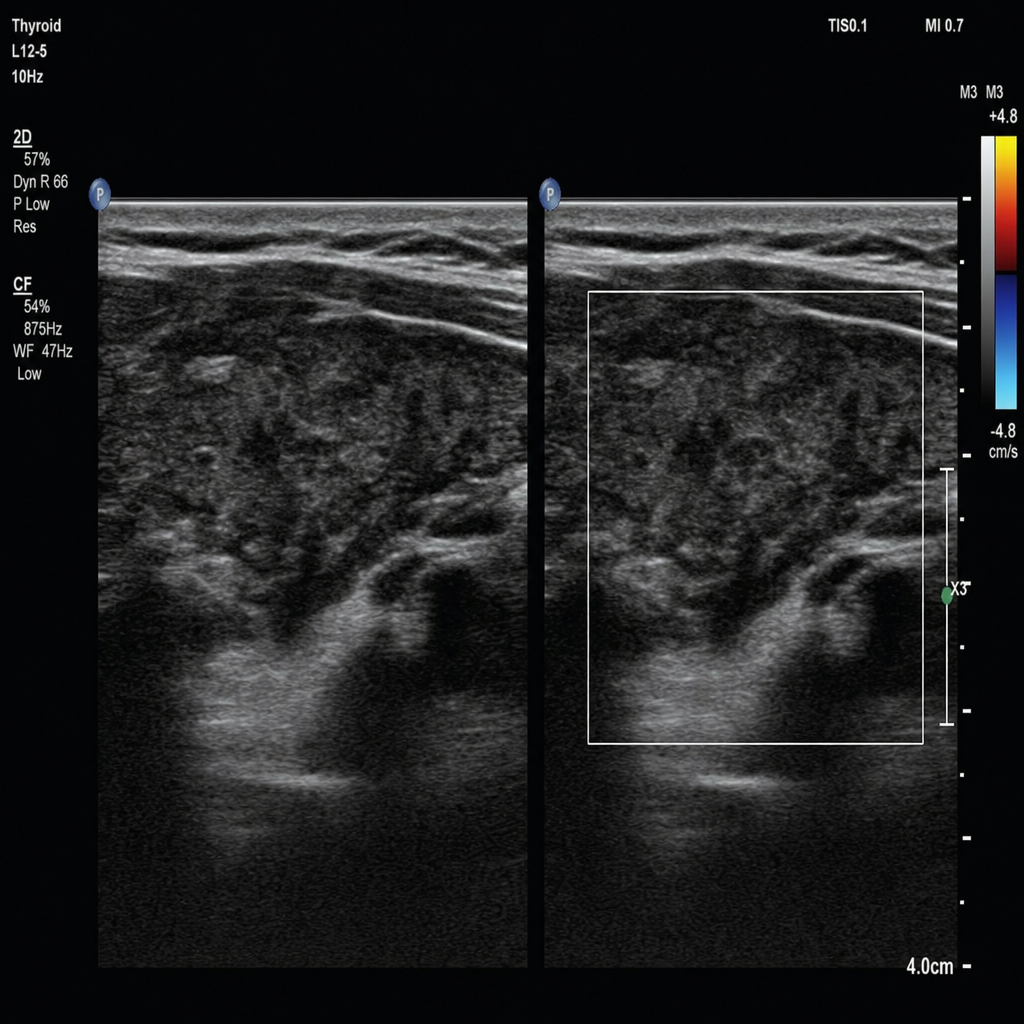
A 62-year-old man with a history of atrial fibrillation is admitted for elective cardioversion. He has been on amiodarone for rate control for the past 8 months. Laboratory results show TSH < 0.01 mIU/L, free T4 elevated, and free T3 elevated. He denies palpitations or heat intolerance. A thyroid ultrasound with color Doppler is performed and demonstrates absent vascularity within a heterogeneous gland. Which of the following best describes the underlying pathophysiology of his thyroid abnormality?
A 70-year-old man with Parkinson disease controlled on levodopa/carbidopa for 5 years develops psychotic symptoms. His neurologist considers adding an antipsychotic but is concerned about worsening parkinsonism. His family reports he has good motor control currently but the hallucinations are distressing. Evaluate the most appropriate antipsychotic choice considering the drug interaction profile.
A 35-year-old woman taking combined oral contraceptives for 2 years develops a breakthrough seizure. She is started on carbamazepine for newly diagnosed epilepsy. Four weeks later, she presents with irregular vaginal bleeding and is concerned about contraceptive failure. Apply pharmacological principles to explain the most appropriate management.
A 58-year-old man with type 2 diabetes on metformin and a recent kidney transplant on tacrolimus presents with persistent hyperglycemia. His nephrologist wants to optimize diabetic control while maintaining stable immunosuppression. His tacrolimus trough level has been stable at 8 ng/mL. Evaluate the safest approach to intensify diabetes management.
A 42-year-old woman with major depression has failed multiple SSRI trials. Her psychiatrist initiates phenelzine (MAOI). Two weeks later, she develops severe headache, diaphoresis, and hypertension (BP 210/120 mmHg) after eating at a restaurant. Which food item most likely precipitated this hypertensive crisis?
Practice by Chapter
Pharmacokinetic interaction mechanisms
Practice Questions
Pharmacodynamic interaction mechanisms
Practice Questions
CYP450 inhibition and induction
Practice Questions
P-glycoprotein interactions
Practice Questions
QT prolongation and torsades de pointes
Practice Questions
Serotonin syndrome
Practice Questions
Neuroleptic malignant syndrome
Practice Questions
DRESS syndrome and severe cutaneous reactions
Practice Questions
Drug-induced liver injury
Practice Questions
Drug-induced kidney injury
Practice Questions
Drug-food interactions
Practice Questions
Polypharmacy management
Practice Questions
Pharmacovigilance principles
Practice Questions
Want unlimited practice?
Get full access to all questions, explanations, and performance tracking.
Scan to download app