
Inflammation — MCQs

On this page
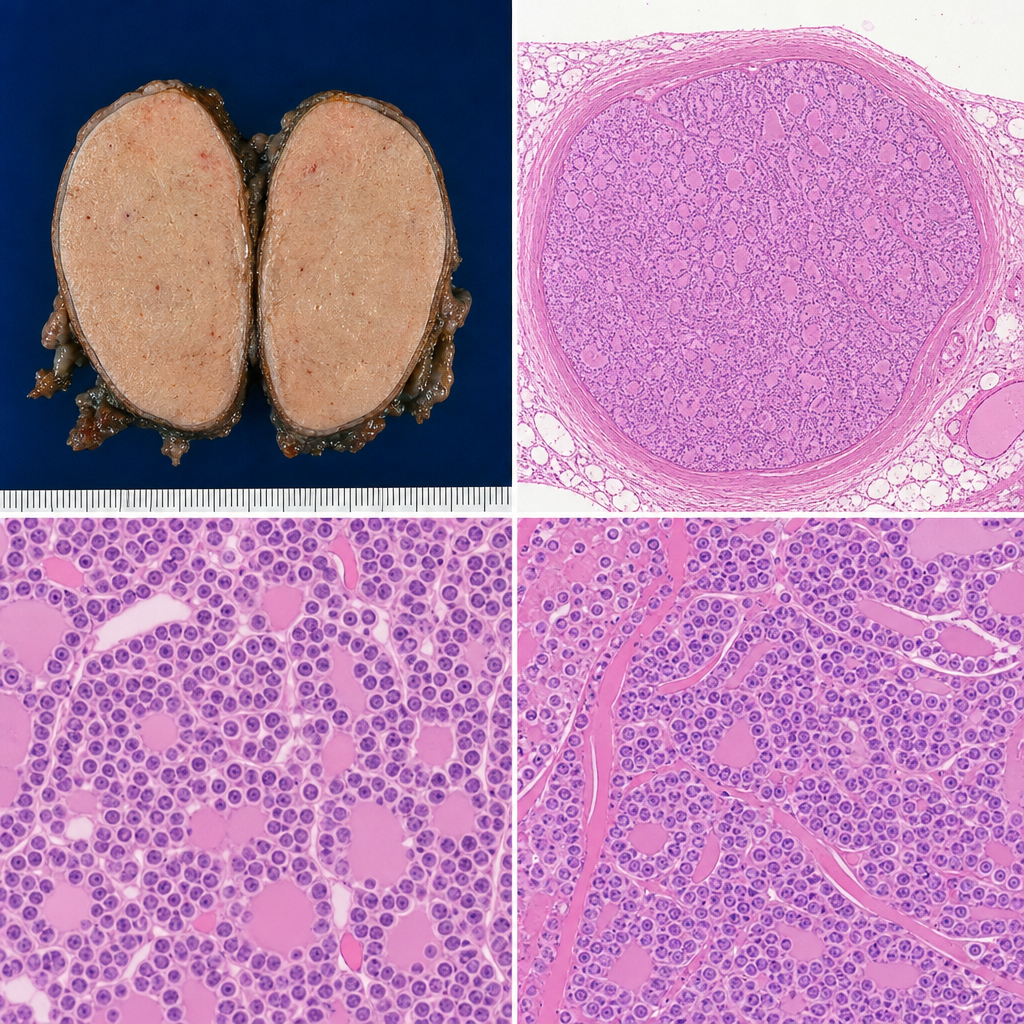
A 34-year-old woman presents with a painless neck mass that has been enlarging for 3 months. Fine-needle aspiration is performed. The aspirate shows cohesive clusters of follicular cells arranged in microfollicular and trabecular patterns. The nuclei are round to oval with evenly distributed chromatin, smooth nuclear membranes, and no grooves or intranuclear inclusions. No psammoma bodies are identified. A well-encapsulated follicular neoplasm is subsequently resected. Which of the following additional histological features would most reliably confirm malignancy in this lesion rather than indicating a benign follicular adenoma?
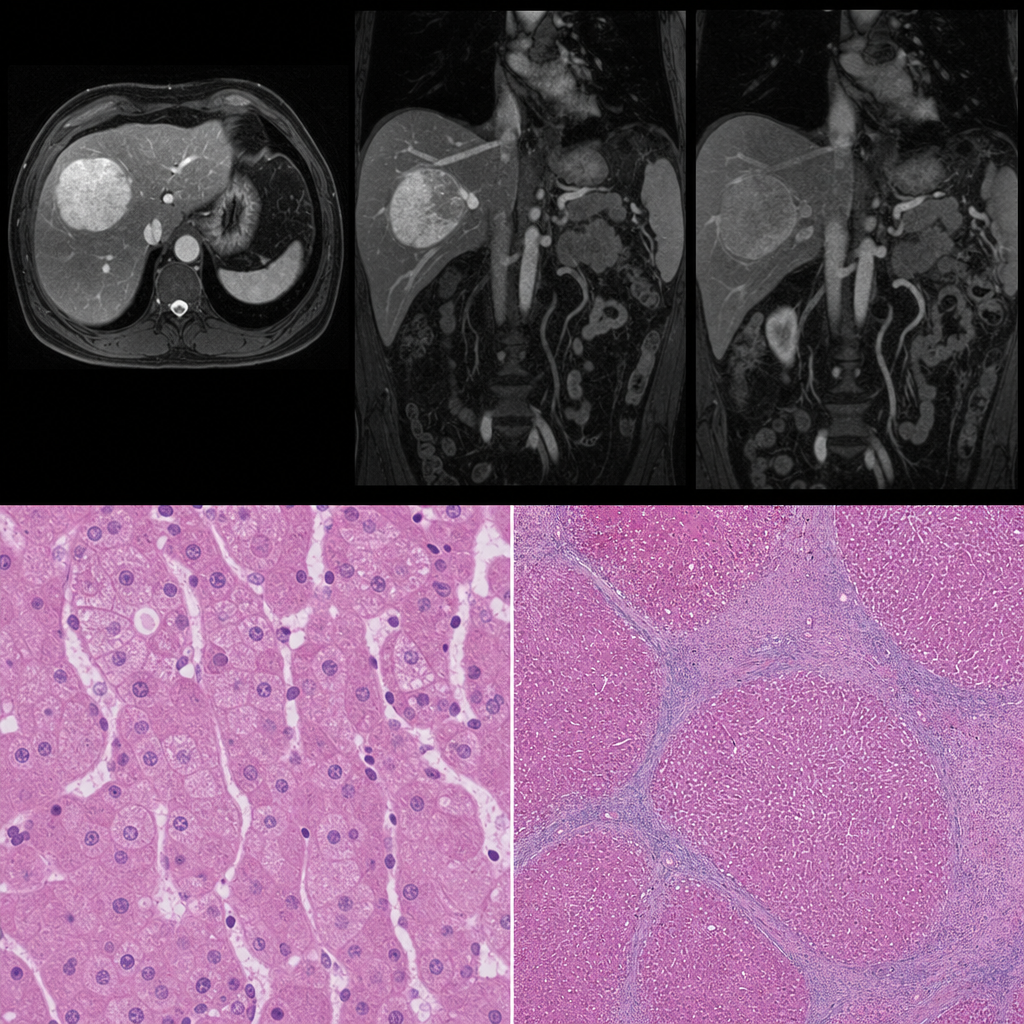
A 67-year-old man with a 30-year history of alcohol use disorder presents with jaundice, ascites, and a serum AFP of 620 ng/mL. Abdominal MRI shows a 5 cm arterially enhancing hepatic mass with washout on portal venous phase. A liver biopsy from the mass is performed. The photomicrograph shows trabeculae of large polygonal cells with abundant granular eosinophilic cytoplasm, prominent nucleoli, and intracytoplasmic hyaline globules; adjacent non-tumoral liver shows bridging fibrosis and regenerative nodules. Mallory-Denk bodies are identified in some tumor cells. Which of the following findings, if present, would most specifically distinguish this lesion from a benign hepatocellular adenoma in this biopsy?
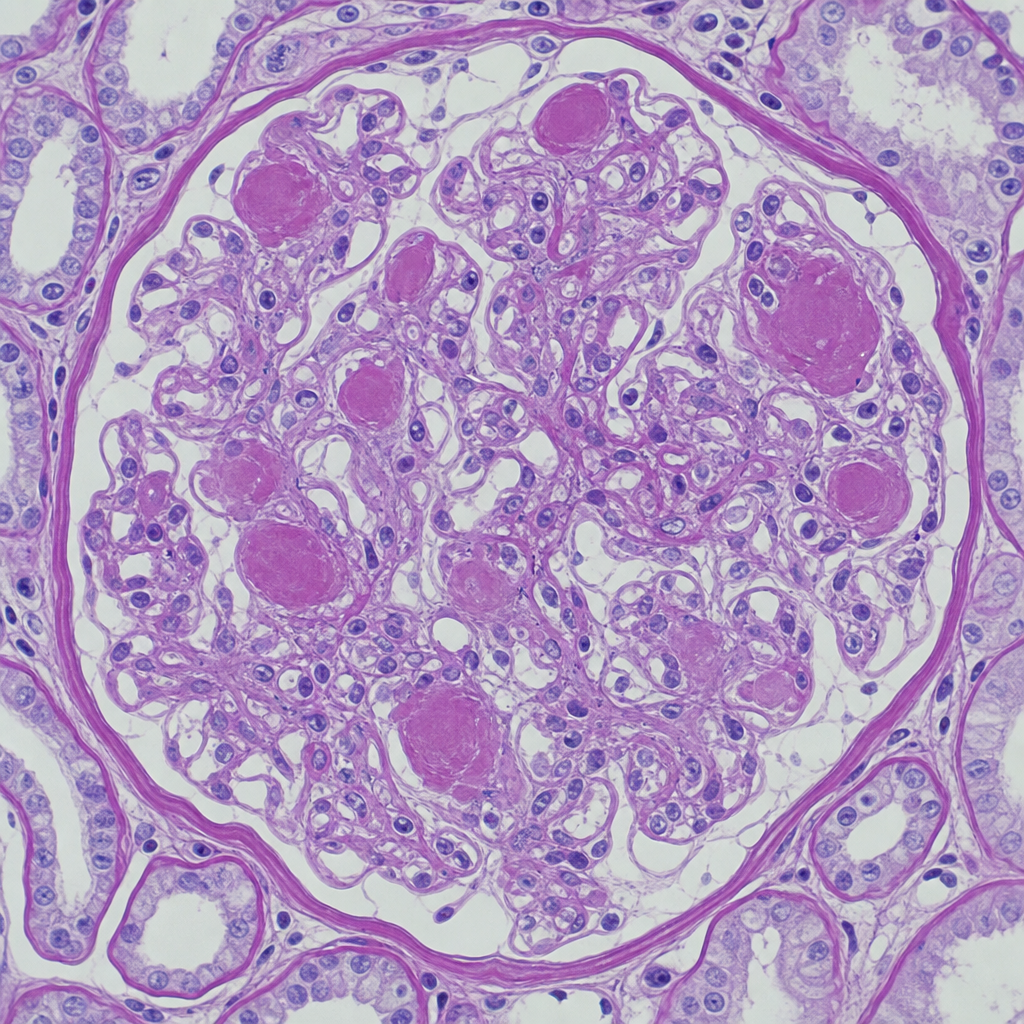
A 67-year-old man with longstanding poorly controlled type 2 diabetes mellitus and hypertension undergoes renal biopsy for nephrotic-range proteinuria and progressive renal insufficiency. He is also known to have longstanding diabetic retinopathy, and immunofluorescence staining for monoclonal light chains is negative. The photomicrograph of a PAS-stained section shows glomeruli with expanded mesangium containing ovoid, homogeneous, PAS-positive nodular deposits situated at the periphery of the glomerular tuft, compressing the adjacent capillary loops. The deposits stain negatively with Congo red. Which of the following best describes the composition and pathogenesis of these nodular deposits?
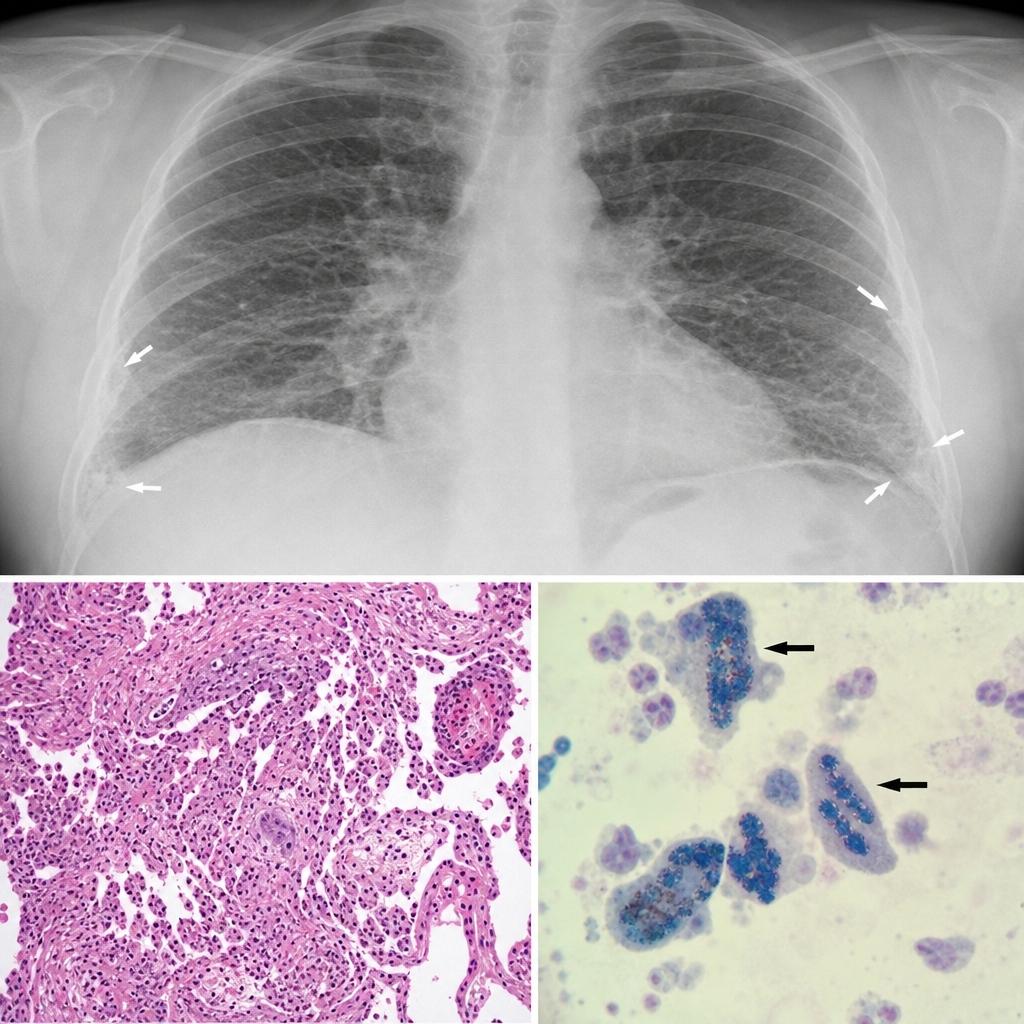
A 58-year-old man presents with progressive exertional dyspnea and a dry cough over 8 months. He worked in shipbuilding for 25 years. A chest radiograph shows bilateral lower-lobe reticular opacities and pleural plaques. A transbronchial biopsy is performed. The biopsy reveals dense interstitial fibrosis with golden-brown, beaded, dumbbell-shaped structures within alveolar macrophages that stain positively with Prussian blue. Which of the following best describes the pathological significance of the structures identified in this biopsy?
A 42-year-old man who recently immigrated from Mexico presents to the clinic with fever, a productive cough streaked with blood, back pain, and night sweats. He was found to be HIV-positive 3 years ago but does not know his most recent CD4+ count. With further questioning, the patient notes that he had previously experienced these symptoms when he was in Mexico, but he has no recollection of taking any treatment. Which of the following characteristics would best describe the histology of a lung biopsy specimen obtained from this patient?
Practice by Chapter
Acute inflammation mechanisms
Practice Questions
Vascular changes in inflammation
Practice Questions
Chemical mediators of inflammation
Practice Questions
Cellular components of inflammation
Practice Questions
Resolution of acute inflammation
Practice Questions
Chronic inflammation
Practice Questions
Granulomatous inflammation
Practice Questions
Systemic effects of inflammation
Practice Questions
Patterns of inflammatory response
Practice Questions
Inflammatory markers in laboratory testing
Practice Questions
Anti-inflammatory therapies
Practice Questions
Wound healing and repair
Practice Questions
Abnormalities in wound healing
Practice Questions
Want unlimited practice?
Get full access to all questions, explanations, and performance tracking.
Scan to download app