
Cell injury — MCQs

On this page
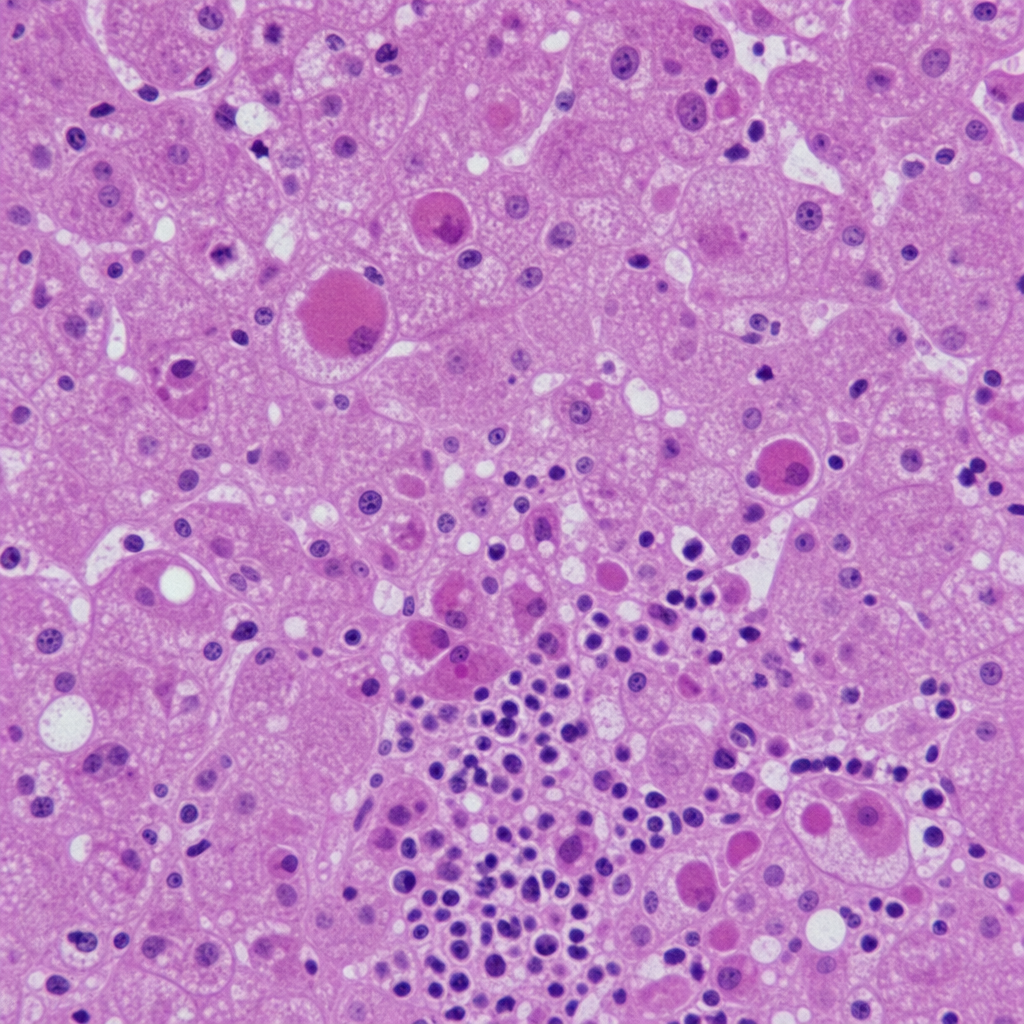
A 55-year-old man with a long history of alcohol use disorder presents with jaundice, tender hepatomegaly, and fever. A liver biopsy is performed. The biopsy demonstrates hepatocytes containing irregular rope-like eosinophilic cytoplasmic inclusions, ballooning degeneration of hepatocytes, neutrophilic infiltration predominantly in zone 3 (centrilobular region), and scattered acidophil bodies. Which of the following best identifies the cytoplasmic inclusions depicted and their composition?
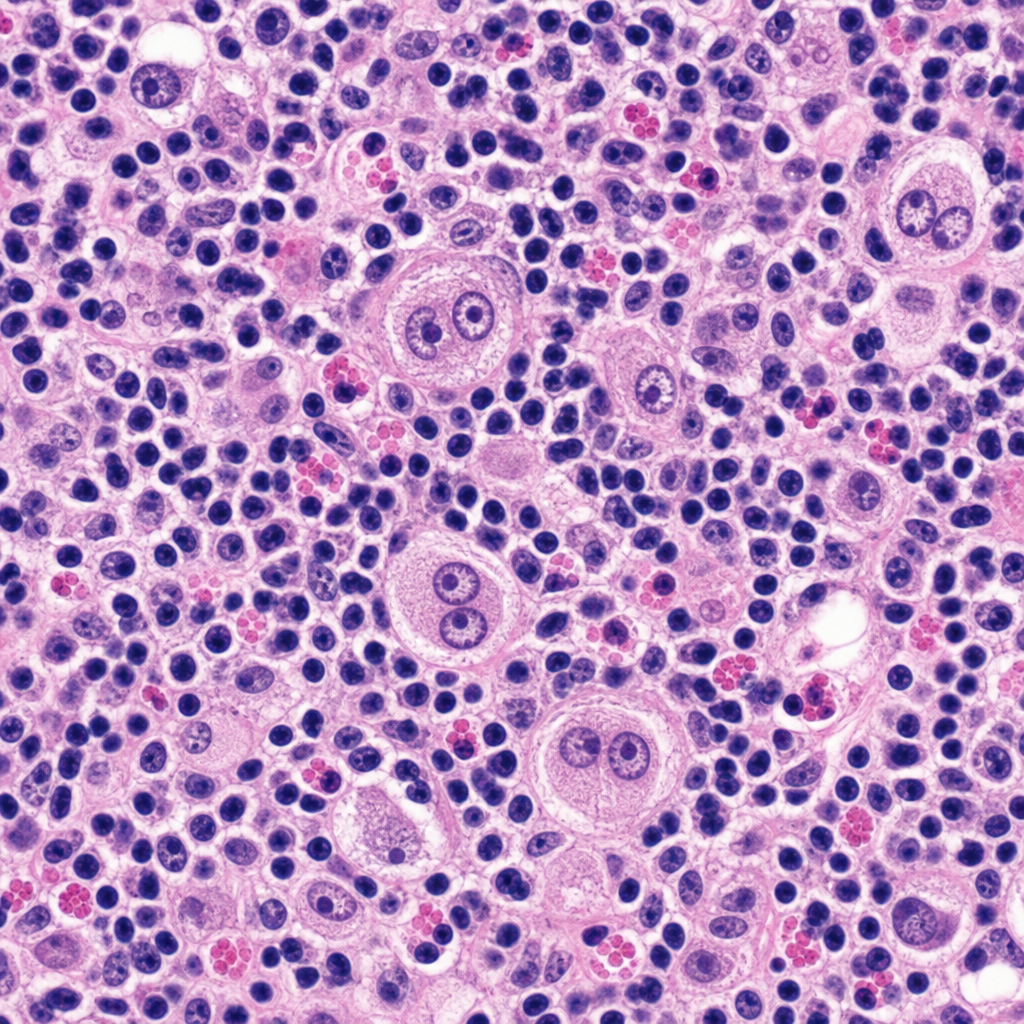
A 34-year-old woman presents with fatigue, night sweats, and a painless cervical lymph node enlargement for 3 months. A lymph node biopsy is performed. The photomicrograph shows a mixed cellular infiltrate of lymphocytes, plasma cells, eosinophils, and scattered large binucleated cells with prominent eosinophilic 'owl-eye' nucleoli; the large cells stain positive for CD15 and CD30 and negative for CD45. Which of the following cell types is the neoplastic cell of origin in this condition?
An 83-year-old woman with a history of atrial fibrillation, multiple ischemic strokes, and early dementia is found unresponsive in her apartment at her retirement community. She is believed to have not refilled any of her medications for a month, and it is determined that she passed away from a stroke nearly 2 weeks ago. The family is adamant that she receive an autopsy. Which of the following findings are most likely on brain histology?
A 64-year-old woman is brought to the emergency department 30 minutes after the onset of right-sided weakness and impaired speech. On admission, she is diagnosed with thrombotic stroke and treatment with alteplase is begun. Neurologic examination four weeks later shows residual right hemiparesis. A CT scan of the head shows hypoattenuation in the territory of the left middle cerebral artery. Which of the following processes best explains this finding?
A 38-year-old man is admitted to the hospital because of fever, yellowing of the skin, and nausea for 1 day. He recently returned from a backpacking trip to Brazil and Paraguay, during which he had a 3-day episode of high fever that resolved spontaneously. Physical examination shows jaundice, epigastric tenderness, and petechiae over his trunk. Five hours after admission, he develops dark brown emesis and anuria. Despite appropriate lifesaving measures, he dies. Postmortem liver biopsy shows eosinophilic degeneration of hepatocytes with condensed nuclear chromatin. This patient’s hepatocytes were most likely undergoing which of the following processes?
Practice by Chapter
Reversible cell injury mechanisms
Practice Questions
Irreversible cell injury (necrosis)
Practice Questions
Types of necrosis (coagulative, liquefactive, etc.)
Practice Questions
Apoptosis pathways
Practice Questions
Autophagy mechanisms
Practice Questions
Cellular adaptations (atrophy, hypertrophy)
Practice Questions
Hyperplasia and metaplasia
Practice Questions
Dysplasia
Practice Questions
Intracellular accumulations
Practice Questions
Pathologic calcification
Practice Questions
Cellular aging mechanisms
Practice Questions
Ischemia-reperfusion injury
Practice Questions
Free radical injury
Practice Questions
Want unlimited practice?
Get full access to all questions, explanations, and performance tracking.
Scan to download app