
Rheumatology (autoimmune diseases, arthritis) — MCQs

On this page
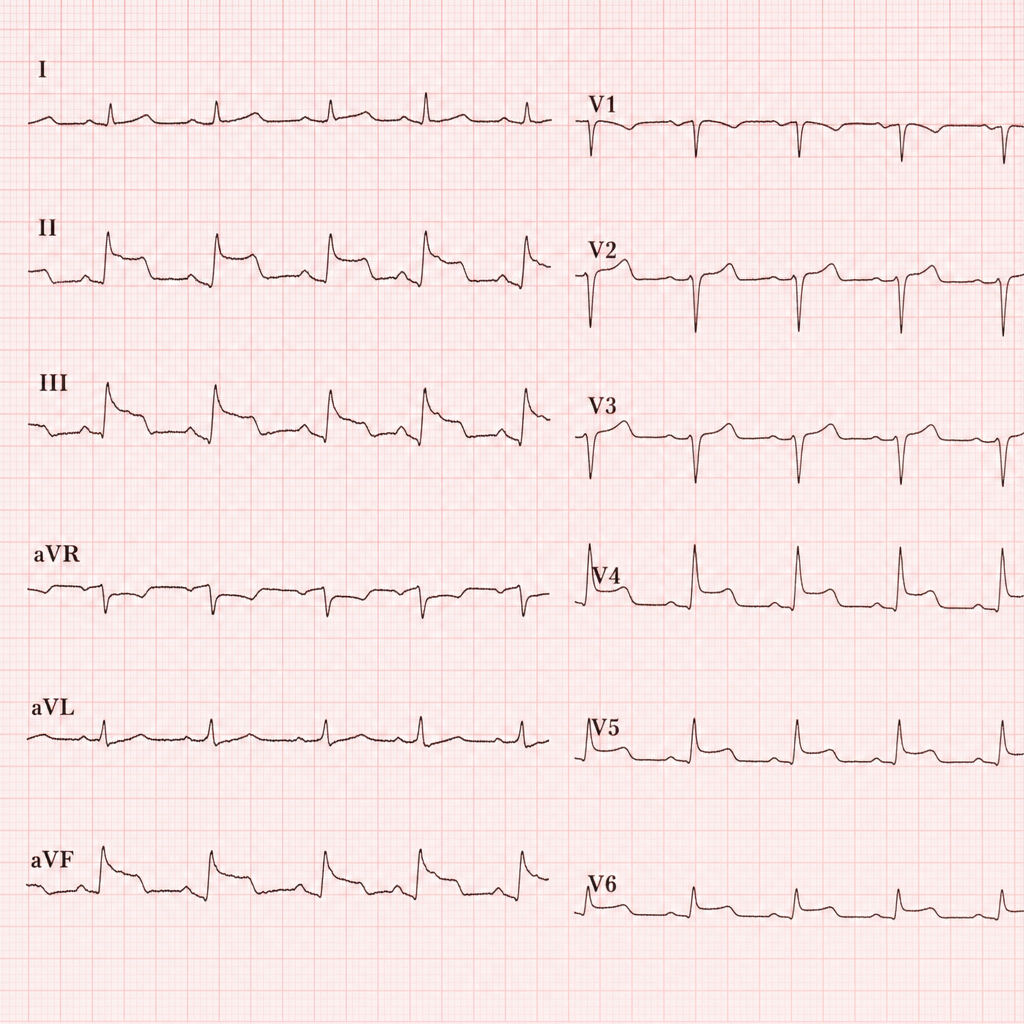
A 68-year-old woman with a history of type 2 diabetes and hypertension presents to the emergency department with 3 hours of epigastric discomfort, nausea, and diaphoresis. She denies chest pain. Her blood pressure is 148/92 mmHg, heart rate is 96 bpm, and oxygen saturation is 97% on room air. An ECG is obtained showing 2–3 mm ST-segment elevation in leads II, III, and aVF with reciprocal ST-segment depression in leads I and aVL. Physical examination reveals mild epigastric tenderness without guarding. Troponin I is pending. Which of the following is the most appropriate immediate next step in management?
A 26-year-old woman presents with 8 weeks of symmetric polyarthritis affecting hands, wrists, and feet with 90 minutes of morning stiffness. RF negative, anti-CCP negative, ANA 1:160 (homogeneous), ESR 45 mm/hr. She has no rash, oral ulcers, or systemic symptoms. Radiographs show soft tissue swelling without erosions. She desires pregnancy within the year. Apply the most appropriate initial management considering her reproductive plans.
A 58-year-old woman presents with bilateral shoulder and hip girdle pain and stiffness for 6 weeks. She has difficulty rising from a chair and combing her hair. ESR 72 mm/hr, CRP 6.8 mg/dL, CK normal, RF negative, ANA negative. She responds dramatically to prednisone 15 mg daily within 48 hours. Three months later, while tapering to 7.5 mg daily, she develops new-onset headache and scalp tenderness. ESR is now 85 mm/hr. Temporal artery biopsy shows non-specific inflammation. Apply the appropriate management modification.
A 50-year-old man with psoriatic arthritis on methotrexate 20 mg weekly presents with worsening polyarthritis despite 6 months of therapy. He has active dactylitis, enthesitis at Achilles insertion, and progressive erosive changes on hand radiographs. Liver enzymes are normal, creatinine 1.0 mg/dL. He also has moderate plaque psoriasis covering 15% body surface area. His insurance requires step therapy and has denied biologic coverage. Evaluate the most appropriate advocacy and management approach.
A 42-year-old man with ankylosing spondylitis on adalimumab for 2 years presents with progressive dyspnea. He is a non-smoker. PFTs show FVC 72% predicted, FEV1 78% predicted, FEV1/FVC 0.88, TLC 65% predicted. CT chest shows upper lobe fibrosis and cavitation. He also has new-onset heart block on ECG. Sputum cultures are negative for acid-fast bacilli after 3 samples. Analyze the most likely cause of his pulmonary and cardiac findings.
Practice by Chapter
Rheumatoid arthritis
Practice Questions
Seronegative spondyloarthropathies
Practice Questions
Systemic lupus erythematosus
Practice Questions
Systemic sclerosis (scleroderma)
Practice Questions
Inflammatory myopathies
Practice Questions
Sjögren's syndrome
Practice Questions
Vasculitides classification
Practice Questions
Large vessel vasculitis
Practice Questions
Medium vessel vasculitis
Practice Questions
Small vessel vasculitis
Practice Questions
Crystal arthropathies (gout, pseudogout)
Practice Questions
Osteoarthritis
Practice Questions
DMARDs and biologic therapies
Practice Questions
Want unlimited practice?
Get full access to all questions, explanations, and performance tracking.
Scan to download app