
Glycogen storage diseases — MCQs

On this page
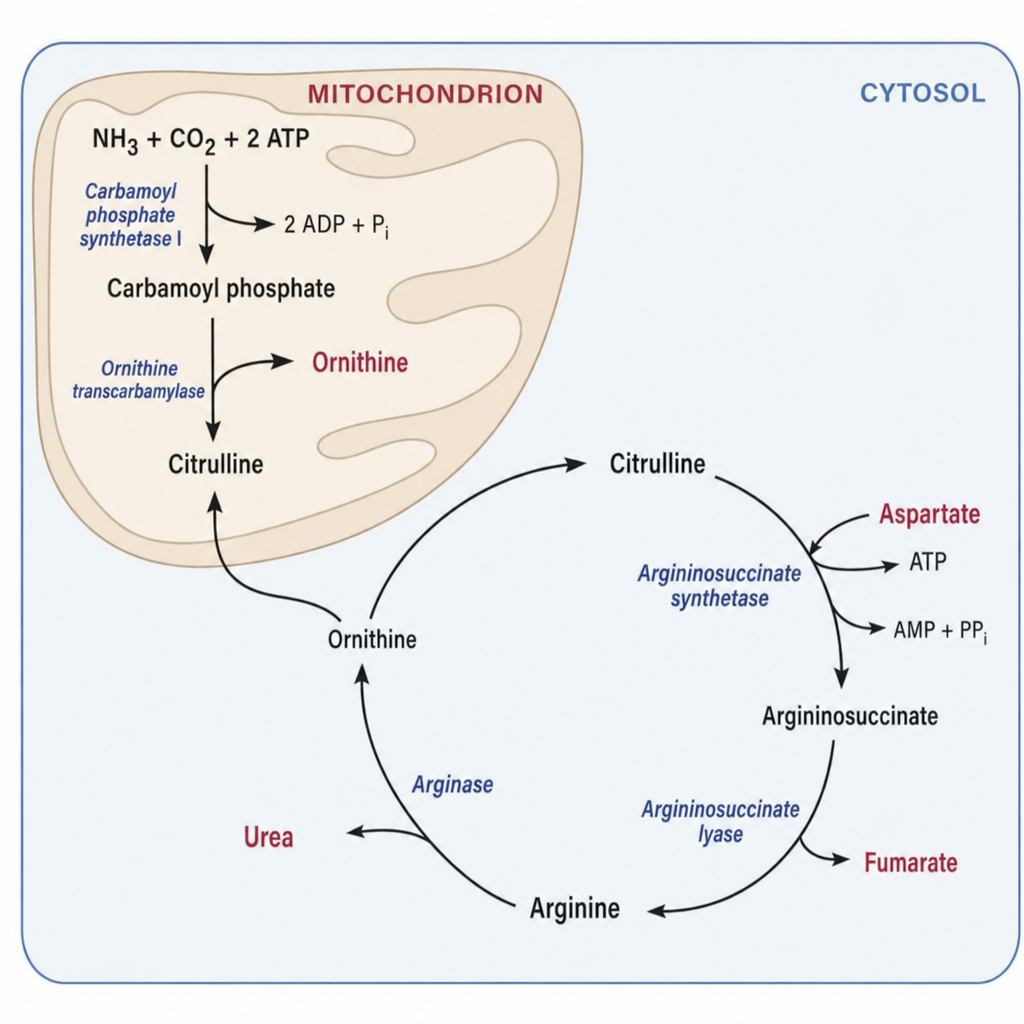
A 3-day-old male neonate born to consanguineous parents develops lethargy, poor feeding, and seizures. Laboratory results show hyperammonemia (NH3 = 380 µmol/L), elevated plasma citrulline, and markedly elevated plasma argininosuccinate. Urine organic acid analysis shows argininosuccinic aciduria. The enzymatic block in this patient prevents which of the following conversions in the urea cycle?
A pharmaceutical company is developing a novel therapy for Type I glycogen storage disease using adeno-associated virus (AAV) vectors to deliver the glucose-6-phosphatase gene. Phase I trials show successful hepatic gene transfer with 30% of normal enzyme activity, resulting in improved fasting glucose and reduced hepatomegaly. However, some patients develop immune responses to the viral vector and lose therapeutic benefit after 6 months. Synthesize the therapeutic approach and evaluate strategies to optimize long-term efficacy.
A 25-year-old woman with Type I glycogen storage disease has been managed with frequent feedings and nocturnal gastric drip feeding since childhood. She now presents for preconception counseling. Her current labs show: fasting glucose 65 mg/dL, lactate 4 mmol/L, uric acid 8 mg/dL, triglycerides 400 mg/dL, and ALT 150 U/L. Renal ultrasound shows bilateral adenomas. She desires pregnancy but is concerned about risks. Synthesize the multisystem complications and evaluate the pregnancy management approach.
A neonate presents with severe hypotonia, feeding difficulties, and respiratory distress requiring mechanical ventilation. Echocardiography reveals severe hypertrophic cardiomyopathy with left ventricular outflow obstruction. Genetic testing confirms Pompe disease, and enzyme replacement therapy (ERT) with recombinant alpha-glucosidase is initiated. At 6 months, the infant shows improved motor function and reduced cardiomegaly, but cognitive development remains delayed. The parents question the differential response. Evaluate the pathophysiological basis for this treatment response pattern.
A 15-year-old athlete undergoes genetic testing after experiencing exercise-induced myoglobinuria. Testing reveals a homozygous mutation in the PYGM gene. His younger brother, age 12, is found to be heterozygous for the same mutation and is asymptomatic. The parents request guidance on the younger brother's athletic participation. Analyze the genotype-phenotype correlation and evaluate the appropriate counseling.
Practice by Chapter
Glycogen structure and metabolism overview
Practice Questions
GSD type I (von Gierke disease)
Practice Questions
GSD type II (Pompe disease)
Practice Questions
GSD type III (Cori disease)
Practice Questions
GSD type IV (Andersen disease)
Practice Questions
GSD type V (McArdle disease)
Practice Questions
GSD type VI (Hers disease)
Practice Questions
GSD type VII (Tarui disease)
Practice Questions
Clinical manifestations by tissue involvement
Practice Questions
Diagnostic approaches to GSDs
Practice Questions
Management strategies for GSDs
Practice Questions
Genetics and inheritance of GSDs
Practice Questions
Want unlimited practice?
Get full access to all questions, explanations, and performance tracking.
Scan to download app