
Brainstem nuclei — MCQs

On this page
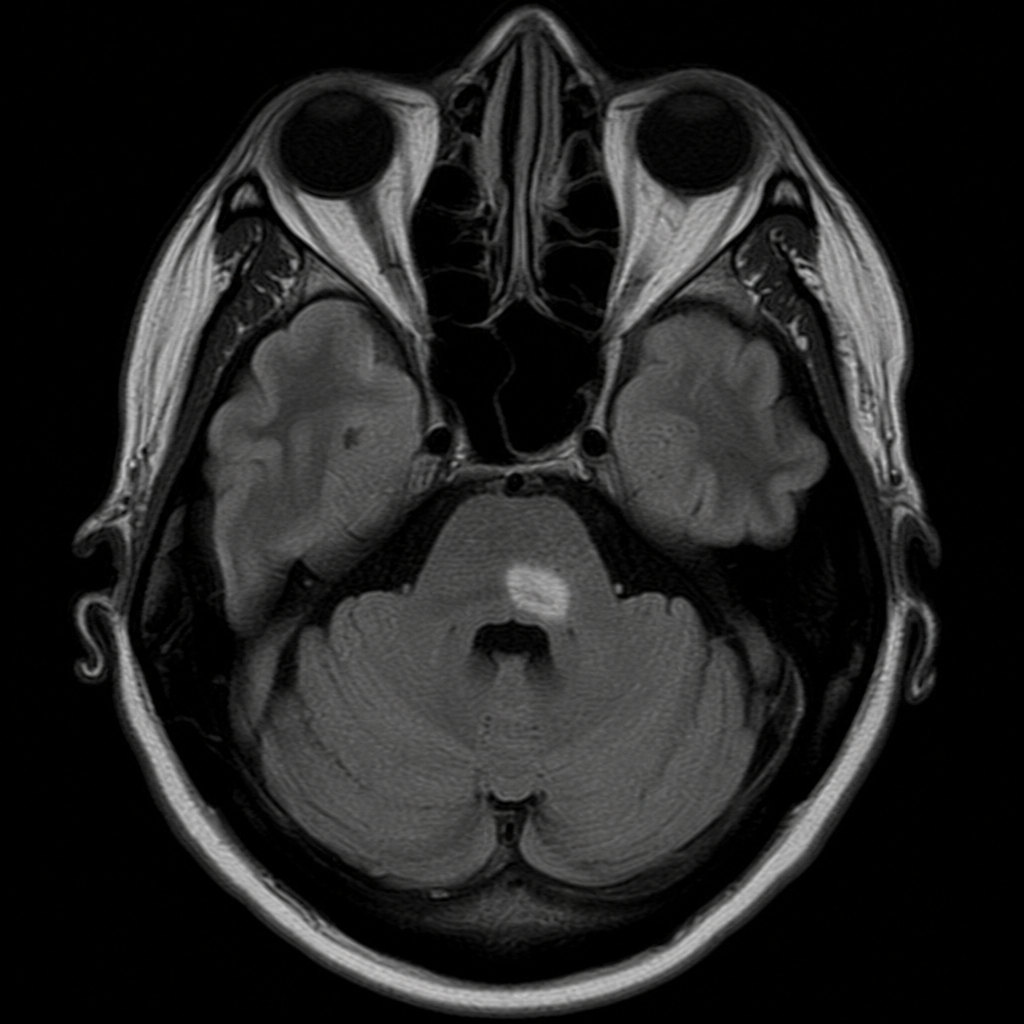
A 67-year-old man with a history of atrial fibrillation presents with sudden onset of right-sided facial droop involving the forehead, inability to conjugately gaze to the right, and left-sided hemiplegia sparing the face. His pupils are equal and reactive. An MRI is obtained. At which axial level and side does the lesion most likely reside?
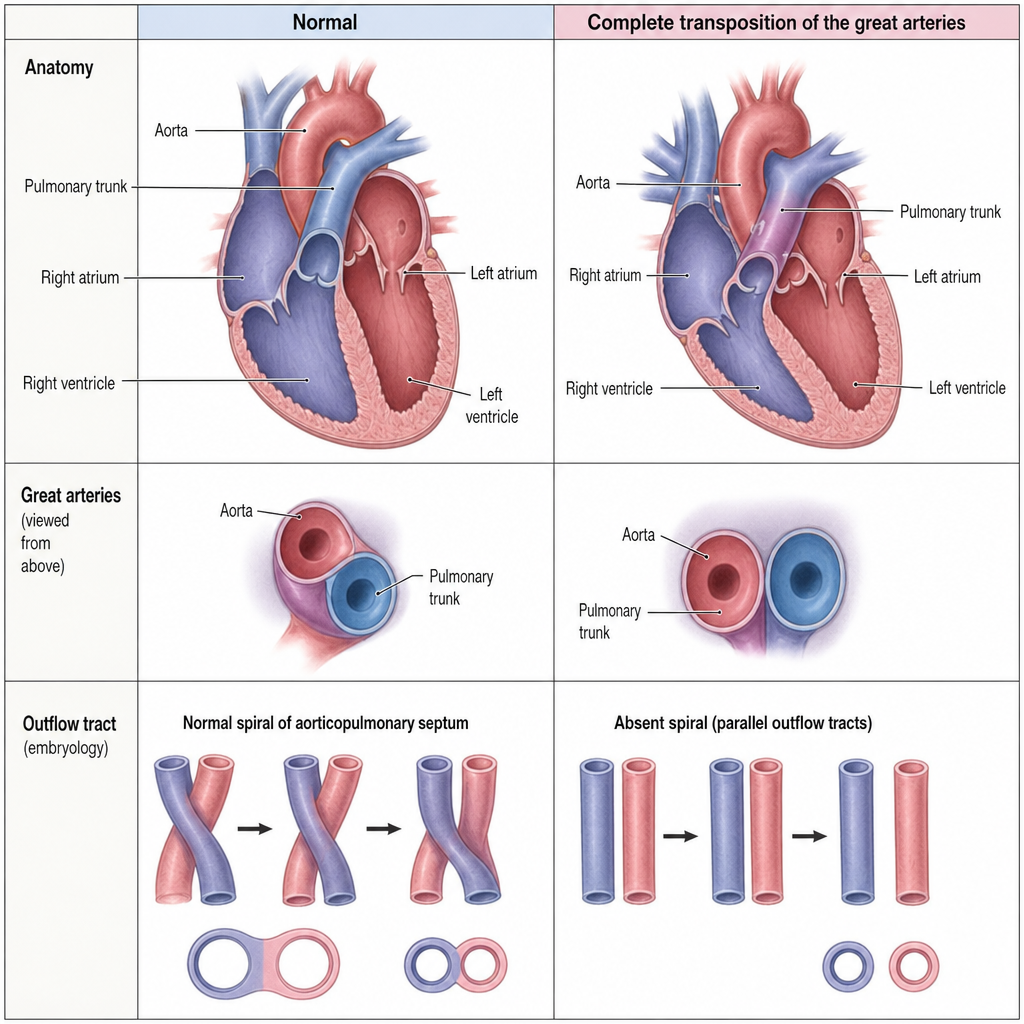
A 32-year-old woman at 28 weeks of gestation undergoes a fetal echocardiogram that reveals the aorta arising from the morphological right ventricle and the pulmonary trunk arising from the morphological left ventricle. The great vessels run parallel rather than in their normal spiral relationship. The embryological error most directly responsible for this anomaly occurred during which developmental process?
An 86-year-old woman is brought to the emergency department by her niece because the patient felt like she was spinning and about to topple over. This occurred around 4 hours ago, and although symptoms have improved, she still feels like she is being pulled to the right side. The vital signs include: blood pressure 116/75 mm Hg, pulse 90/min, and SpO2 99% on room air. Physical examination reveals right-sided limb ataxia along with hypoalgesia and decreased temperature sensation on the right side of the face and left side of the body. An urgent non-contrast CT scan of the head shows no evidence of hemorrhage. What other finding is most likely to be present in this patient?
A 60-year-old woman presents with progressive difficulty swallowing solid foods for the past 2 months. She also says her voice has gradually changed, and she has had recent episodes of vertigo associated with nausea and vomiting and oscillating eye movements while reading. She denies any problems with the movement of her face or extremities. Past medical history is significant for hypertension, managed with enalapril, and dyslipidemia, which she is managing with dietary modifications. The patient reports a 40-pack-year smoking history. Vital signs are within normal limits. On physical examination, there is decreased pain and temperature sensation on the right side of her body, and she cannot touch her nose with her eyes closed. Which of the following is the most likely site of vascular occlusion in this patient?
A 59-year-old woman with a past medical history of atrial fibrillation currently on warfarin presents to the emergency department for acute onset dizziness. She was watching TV in the living room when she suddenly felt the room spin around her as she was getting up to go to the bathroom. She denies any fever, weight loss, chest pain, palpitations, shortness of breath, lightheadedness, or pain but reports difficulty walking and hiccups. A physical examination is significant for rotary nystagmus and decreased pin prick sensation on the left side of her body. A magnetic resonance image (MRI) of the head is obtained and shows ischemic changes of the right lateral medulla. What other symptoms would you expect to find in this patient?
Practice by Chapter
Medulla oblongata nuclei
Practice Questions
Pontine nuclei
Practice Questions
Midbrain nuclei
Practice Questions
Cranial nerve nuclei
Practice Questions
Reticular formation
Practice Questions
Ascending sensory pathways in brainstem
Practice Questions
Descending motor pathways in brainstem
Practice Questions
Vestibular nuclei complex
Practice Questions
Vital centers in brainstem
Practice Questions
Brainstem lesions and clinical correlations
Practice Questions
Want unlimited practice?
Get full access to all questions, explanations, and performance tracking.
Scan to download app