Pharmacology
2 questionsWhich of the following is the only clinically available depolarizing muscle relaxant?
Which of the following drugs is an alpha 2 agonist?
NEET-PG 2015 - Pharmacology NEET-PG Practice Questions and MCQs
Question 1321: Which of the following is the only clinically available depolarizing muscle relaxant?
- A. Decamethonium
- B. Suxamethonium (Correct Answer)
- C. Mivacurium
- D. None of the options
Explanation: ***Suxamethonium*** - **Suxamethonium** (also known as succinylcholine) is currently the **only depolarizing neuromuscular blocker** available for clinical use. - It works by mimicking acetylcholine, binding to and activating nicotinic acetylcholine receptors at the **neuromuscular junction**, causing initial muscle fasciculations followed by relaxation. *Decamethonium* - **Decamethonium** is a depolarizing neuromuscular blocker but is **no longer clinically available** due to its prolonged action and side effects. - It also acts by opening nicotinic acetylcholine receptor channels, leading to depolarization and muscle paralysis. *Mivacurium* - **Mivacurium** is a **nondepolarizing neuromuscular blocker**, meaning it acts as a competitive antagonist at the acetylcholine receptor. - It is known for its **short duration of action** due to rapid hydrolysis by plasma cholinesterases but is not depolarizing. *None of the options* - This option is incorrect because suxamethonium is indeed a clinically available depolarizing muscle relaxant. - The question specifically asks for the *only* clinically available one, which suxamethonium fulfills.
Question 1322: Which of the following drugs is an alpha 2 agonist?
- A. Apraclonidine (Correct Answer)
- B. Timolol
- C. PG analogues
- D. Verapamil
Explanation: ***Apraclonidine*** - **Apraclonidine** is a synthetic **alpha-2 adrenergic agonist** that reduces aqueous humor production and increases uveoscleral outflow, thereby lowering intraocular pressure. - It is primarily used for the short-term treatment of **open-angle glaucoma** or ocular hypertension. *Timolol* - **Timolol** is a **non-selective beta-adrenergic blocker** that reduces aqueous humor production, leading to a decrease in intraocular pressure. - It does not act on alpha-2 receptors, distinguishing it from apraclonidine. *PG analogues* - **Prostaglandin analogues** (PG analogues) such as latanoprost, bimatoprost, and travoprost are primarily used to treat glaucoma by **increasing uveoscleral outflow** of aqueous humor. - They act on **prostaglandin F2α receptors**, not alpha-2 adrenergic receptors. *Verapamil* - **Verapamil** is a **calcium channel blocker** primarily used to treat hypertension, angina, and arrhythmias. - It acts by blocking calcium channels in vascular smooth muscle and the heart, and does not have significant alpha-2 adrenergic agonist activity.
Radiology
7 questionsOn CT chest, the 'halo sign' is particularly associated with which condition in immunocompromised patients?
In a patient with a tender and rigid abdomen, what is the expected finding on X-ray?
Which of the following statements about lipoma is radiologically true?
Which of the following X-ray findings is associated with Chilaiditi syndrome?
Which of the following is NOT a typical ultrasonographic finding in autosomal recessive polycystic kidney disease (ARPKD)?
Cobra head appearance on excretory urography is suggestive of?
Investigation of choice to evaluate intracranial hemorrhage of less than 48 hours is -
NEET-PG 2015 - Radiology NEET-PG Practice Questions and MCQs
Question 1321: On CT chest, the 'halo sign' is particularly associated with which condition in immunocompromised patients?
- A. Pulmonary hydatid cyst
- B. Round pneumonia
- C. Bronchiectasis
- D. Invasive pulmonary aspergillosis (Correct Answer)
Explanation: ***Invasive pulmonary aspergillosis*** - The **halo sign** on CT chest, characterized by a ground-glass opacity surrounding a nodule, is a classic radiographic finding in **invasive pulmonary aspergillosis**, especially in immunocompromised patients. - This sign represents hemorrhage around the fungal nodule and indicates active tissue invasion by *Aspergillus* species. *Pulmonary hydatid cyst* - Hydatid cysts are typically well-defined, thin-walled cystic lesions, often displaying the **water lily sign** if complicated by rupture, which is different from the halo sign. - These cysts are caused by the larval stage of *Echinococcus granulosus* and are not associated with a peripheral ground-glass opacity. *Round pneumonia* - Round pneumonia is a localized, **spherical consolidation** often seen in children, which does not typically exhibit the perilesional ground-glass opacity characteristic of the halo sign. - It usually represents bacterial infection and resolves with antibiotics, unlike the invasive fungal disease suggested by the halo sign. *Bronchiectasis* - Bronchiectasis is characterized by **irreversible dilation of the bronchi**, often appearing as "tram-track" opacities or "signet ring" signs on CT. - It is a chronic condition related to airway damage and mucus retention, and not associated with acute nodular lesions or the halo sign.
Question 1322: In a patient with a tender and rigid abdomen, what is the expected finding on X-ray?
- A. Blood under the diaphragm
- B. Air under the diaphragm (Correct Answer)
- C. Hazy lung fields
- D. Prominent vascular markings
Explanation: ***Air under the diaphragm*** - The presence of **free air** (pneumoperitoneum) beneath the diaphragm on an upright abdominal X-ray is a classic sign of **visceral perforation**. - A **tender and rigid abdomen** (peritoneal signs) indicates irritation of the peritoneum, most commonly due to a ruptured hollow viscus. *Blood under the diaphragm* - While blood can accumulate under the diaphragm (e.g., from **trauma** or a ruptured ectopic pregnancy), it typically manifests as a **hemoperitoneum** on imaging. - Blood is **fluid** and would appear as a fluid collection, not free air, on X-ray. *Hazy lung fields* - **Hazy lung fields** suggest conditions like **pulmonary edema**, pneumonia, or acute respiratory distress syndrome (ARDS). - These findings are primarily associated with pulmonary pathology and are not directly indicative of an acute abdominal emergency like perforation. *Prominent vascular markings* - **Prominent vascular markings** often indicate increased blood flow to the lungs or **pulmonary hypertension**. - This finding is unrelated to acute abdominal pain or peritoneal irritation.
Question 1323: Which of the following statements about lipoma is radiologically true?
- A. Low attenuation on CT scan (Correct Answer)
- B. Hyperechoic on ultrasound
- C. Hyperintense on fat-suppressed sequences
- D. Hyper-intense on T2-weighted MRI
Explanation: ***Low attenuation on CT scan*** - Lipomas, being composed of **fat**, appear as areas of **low attenuation** (typically -50 to -150 Hounsfield Units) on computed tomography (CT) scans. - This low attenuation is a **key diagnostic characteristic** that helps differentiate lipomas from other soft tissue masses. *Hyperechoic on ultrasound* - Lipomas typically appear **isoechoic to hypoechoic** on ultrasound, not consistently hyperechoic. - They may have a thin echogenic capsule, but the internal contents are usually similar to or less echogenic than adjacent subcutaneous fat. *Hyperintense on fat-suppressed sequences* - This is **incorrect** - lipomas show **signal dropout** (become dark/hypointense) on fat-suppressed sequences (STIR, fat-sat T1/T2). - Signal suppression on fat-saturated sequences is actually a **diagnostic feature** confirming the fatty nature of the lesion. - Note: Lipomas ARE hyperintense on standard T1-weighted imaging due to fat content. *Hyper-intense on T2-weighted MRI* - Lipomas typically show **intermediate to slightly hyperintense signal** on T2-weighted MRI, but not markedly hyperintense like fluid. - They are less bright than fluid-filled structures or highly vascular lesions on T2-weighted sequences.
Question 1324: Which of the following X-ray findings is associated with Chilaiditi syndrome?
- A. Pseudopneumoperitoneum (Correct Answer)
- B. Pseudopneumothorax
- C. Pneumothorax
- D. Hydropneumothorax
Explanation: ***Pseudopneumoperitoneum*** - Chilaiditi syndrome is characterized by the **interposition of a loop of colon (usually transverse colon) or, less commonly, small intestine** between the liver and the right hemidiaphragm. - This anatomical variation can mimic **free air under the diaphragm** on an X-ray, leading to the misdiagnosis of pneumoperitoneum. *Pseudopneumothorax* - This term describes the appearance of **air in the pleural space** that is not actually present, which is not associated with Chilaiditi syndrome. - While Chilaiditi syndrome involves misinterpretation of air, it specifically relates to the **abdominal cavity**, not the thoracic cavity. *Pneumothorax* - A **true pneumothorax** is the presence of air in the pleural cavity causing partial or complete lung collapse, which is a significant medical emergency. - It is distinct from Chilaiditi syndrome, which involves **abdominal content displacement** mimicking abdominal free air. *Hydropneumothorax* - This condition involves the presence of both **fluid and air in the pleural cavity**. - It is a pathology of the thoracic cavity and has **no direct association** with the abdominal interposition of bowel loops seen in Chilaiditi syndrome.
Question 1325: Which of the following is NOT a typical ultrasonographic finding in autosomal recessive polycystic kidney disease (ARPKD)?
- A. Increased echogenicity
- B. Cysts larger than 2 cm (Correct Answer)
- C. Enlarged kidneys
- D. Corticomedullary differentiation is lost
Explanation: **Cysts larger than 2 cm** - **ARPKD** is characterized by numerous tiny cysts (typically 1-2 mm, rarely up to 1 cm) that are microscopically dilated collecting ducts, leading to diffuse renal enlargement. - Cysts larger than 2 cm are much more typical of **autosomal dominant polycystic kidney disease (ADPKD)**, which involves macroscopic cysts of various sizes. *Enlarged kidneys* - The proliferation of dilated collecting ducts and associated interstitial fibrosis in **ARPKD** leads to significantly enlarged kidneys, which is a hallmark ultrasound finding. - This enlargement is often bilateral and can be detected prenatally or in neonates. *Increased echogenicity* - The presence of numerous tiny cysts and dense fibrous tissue throughout the renal parenchyma in **ARPKD** causes increased diffuse echogenicity on ultrasound. - This is a common and important diagnostic feature, often described as "bright" or "hyperechoic" kidneys. *Corticomedullary differentiation is lost* - In **ARPKD**, the normal distinct differentiation between the renal cortex and medulla is obliterated due to the widespread involvement of the collecting ducts and the diffuse nature of the disease. - This loss of corticomedullary differentiation is a typical finding on ultrasound for severe renal parenchymal disease, including ARPKD.
Question 1326: Cobra head appearance on excretory urography is suggestive of?
- A. Horseshoe kidney
- B. Duplication of renal pelvis
- C. Simple cyst of kidney
- D. Ureterocele (Correct Answer)
Explanation: ***Ureterocele*** - A **cobra head appearance** on excretory urography is a classic sign of a **ureterocele**, which is a cystic dilation of the distal ureter that protrudes into the bladder. - This appearance is due to the dilated ureter appearing like an oval or round filling defect within the bladder lumen, surrounded by a thin radiolucent halo created by the ureteral wall and urine. *Horseshoe kidney* - A horseshoe kidney is characterized by the fusion of the lower poles of the kidneys, causing a **"U" shape** across the midline, often identified by the isthmus. - It does not present with a cobra head appearance but rather a typical anatomical variation of renal position and fusion. *Duplication of renal pelvis* - Duplication of the renal pelvis involves two separate collecting systems draining one kidney, which can be seen as two distinct pelvicalyceal systems. - This condition does not create a cobra head appearance; instead, it shows an abnormal number of collecting systems within a single kidney. *Simple cyst of kidney* - A simple renal cyst typically appears as a **well-defined, anechoic (on ultrasound) or hypodense (on CT) mass** within the kidney parenchyma. - It does not involve the ureter or bladder and thus does not produce a cobra head appearance on urograms.
Question 1327: Investigation of choice to evaluate intracranial hemorrhage of less than 48 hours is -
- A. CT scan (Correct Answer)
- B. MRI
- C. PET
- D. SPECT
Explanation: ***CT scan*** - **Non-contrast CT** is the most sensitive and rapid imaging modality for detecting acute intracranial hemorrhage, appearing as a **hyperdense** (bright) area within the brain parenchyma or subarachnoid space. - It is readily available in emergency settings and is crucial for immediate diagnosis to guide management, especially within the first **48 hours**. *MRI* - While MRI can detect hemorrhage, its sensitivity for **acute hemorrhage** (especially within the first few hours) is less than CT, and it is more time-consuming. - MRI is superior for detecting older hemorrhage or subtle lesions, but it is not the **first-line investigation** for acute bleeding. *PET* - **Positron Emission Tomography** (PET) scans are primarily used to assess metabolic activity and blood flow in the brain, often for conditions like cancer, epilepsy, or dementia. - It does not directly visualize fresh blood and therefore is not used for the diagnosis of **acute intracranial hemorrhage**. *SPECT* - **Single-Photon Emission Computed Tomography** (SPECT) is used to evaluate cerebral blood flow and neuronal activity, similar to PET but with different tracers and resolution. - It is not indicated for the rapid assessment of **acute intracranial hemorrhage** as it does not directly image blood.
Surgery
1 questionsA patient presents with abdominal pain. On physical examination there was abdominal guarding and tenderness. A plain erect chest X-ray reveals air under diaphragm. Probable diagnosis is
NEET-PG 2015 - Surgery NEET-PG Practice Questions and MCQs
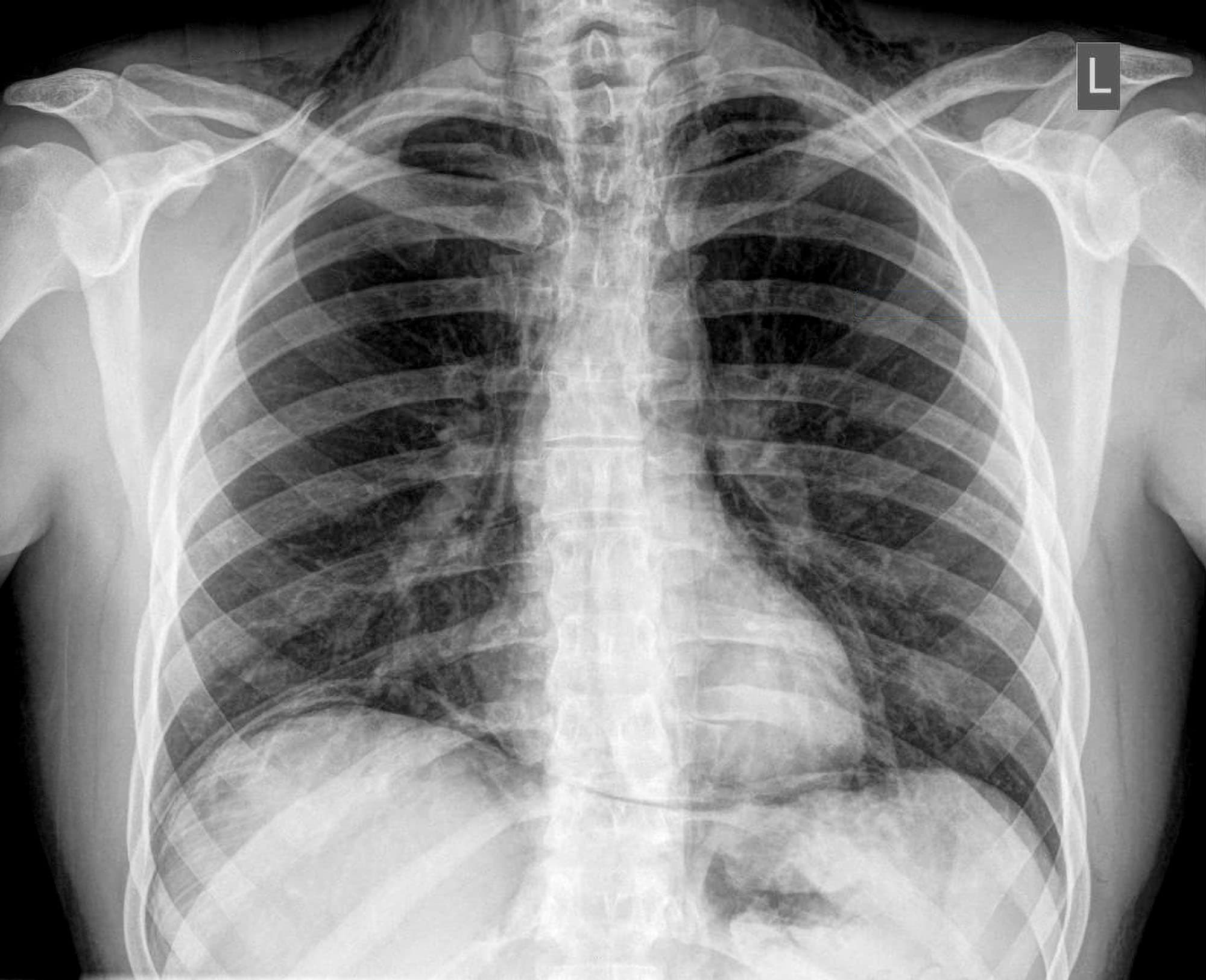
Question 1321: A patient presents with abdominal pain. On physical examination there was abdominal guarding and tenderness. A plain erect chest X-ray reveals air under diaphragm. Probable diagnosis is
- A. Perforated abdominal viscus (Correct Answer)
- B. Acute myocardial infarction
- C. Aortic dissection
- D. None of the options
Explanation: ***Perforated abdominal viscus*** - The presence of **abdominal guarding** and **tenderness** indicates peritoneal irritation, while **air under the diaphragm** on an erect chest X-ray (**pneumoperitoneum**) is a classic sign of a perforated hollow abdominal organ. - This combination strongly suggests a **perforated abdominal viscus**, such as a **perforated peptic ulcer** or perforated diverticulitis, leading to the leakage of air and intestinal contents into the peritoneal cavity. *Acute myocardial infarction* - Acute myocardial infarction primarily presents with **chest pain**, radiation to the arm/jaw, and shortness of breath, not typically severe abdominal pain with guarding. - While it can cause some epigastric discomfort, it would not explain the **pneumoperitoneum** seen on the chest X-ray. *Aortic dissection* - Aortic dissection typically causes **sudden, severe tearing chest or back pain**, often radiating to the back. - There is no direct link between aortic dissection and **air under the diaphragm** unless there's a co-existing, unrelated issue, which is not suggested by the primary symptoms. *None of the options* - Given the clear clinical and radiological findings of **pneumoperitoneum** and **peritoneal signs**, a perforated abdominal viscus is the most fitting diagnosis among the choices provided. - This option is incorrect as there is a highly probable diagnosis among the given choices.