
Pharmacokinetics and Pharmacodynamics — MCQs

On this page
Comparing cisplatin and carboplatin, which factor primarily accounts for the difference in nephrotoxicity between these two chemotherapeutic agents?
Which of the following statements is most accurate regarding why fentanyl is preferred over morphine for acute pain management in emergency settings?
In a drug exhibiting first-order kinetics, how would an increase in dose affect the time required to reach the steady-state concentration?
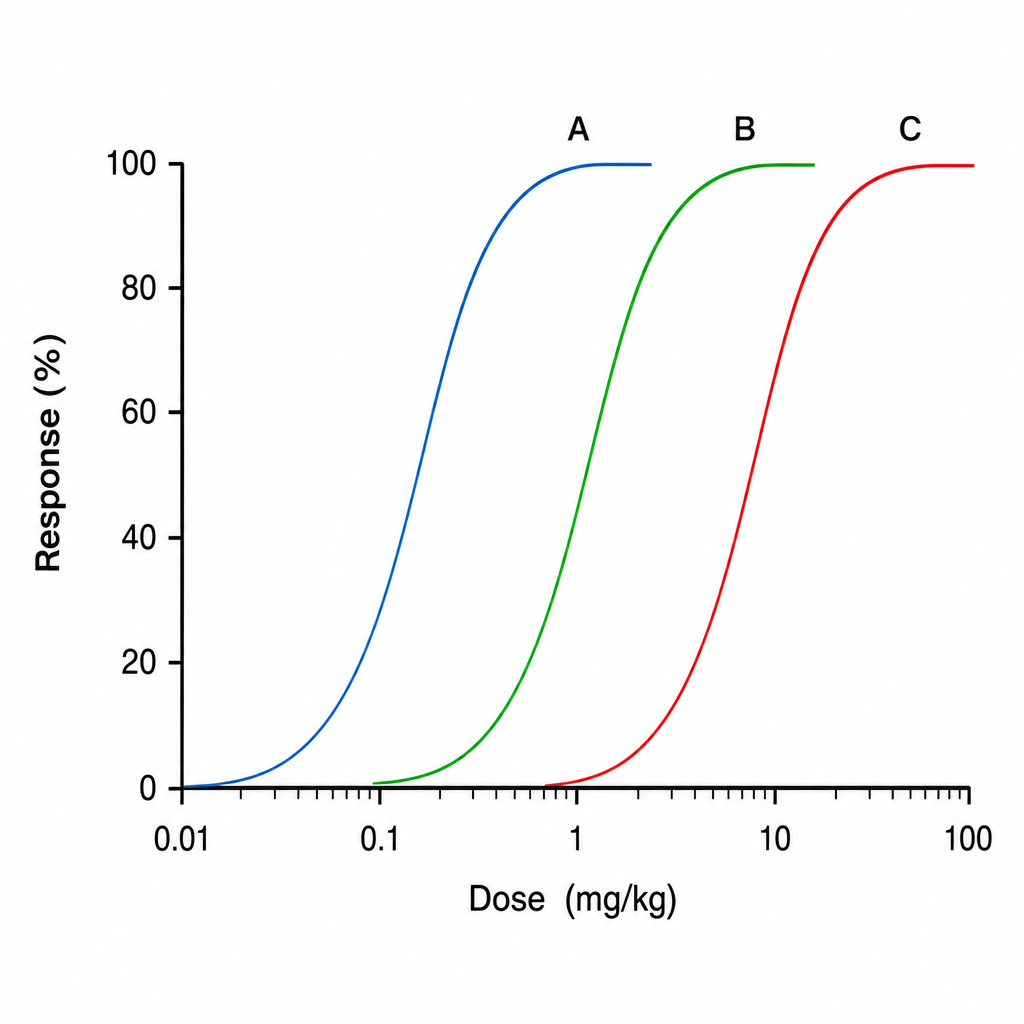
The graph below shows dose-response curves for three drugs A, B, and C. Which of the following drugs has the highest potency?
Which of the following statements is false regarding intracellular receptors?
What is the role of oxidation in biotransformation?
Which of the following is the longest acting oral anticoagulant?
Glucuronidation takes place in?
Most common enzyme for drug metabolism and detoxification reactions?
A young child weighing 20 kg is administered a drug at a dose of 100 mg/kg body weight. Given that the plasma concentration of the drug is 2 mg/dL and the clearance is 13,860 mL/hr, calculate the time required to reach steady state plasma concentration.
Practice by Chapter
Absorption and Bioavailability
Practice Questions
Drug Distribution and Protein Binding
Practice Questions
Biotransformation and Metabolism Pathways
Practice Questions
Renal and Non-renal Excretion
Practice Questions
Compartment Models
Practice Questions
Dose-Response Relationships
Practice Questions
Drug Efficacy and Potency
Practice Questions
Drug Tolerance and Tachyphylaxis
Practice Questions
Population Pharmacokinetics
Practice Questions
Pharmacokinetic Variability
Practice Questions
Want unlimited practice?
Get full access to all questions, explanations, and performance tracking.
Scan to download app