
Cardiology — MCQs

On this page
All are true regarding tricuspid atresia except –
Most characteristic feature of TOF is
A child after 4 weeks of birth, is acyanotic. Ejection systolic murmur detected on auscultation. Probable diagnosis is:
In the evaluation of congenital heart disease, which of the following findings is considered the LEAST specific diagnostic indicator?
A young boy presents to you with history of breathlessness on exertion. You being an intern proceed with auscultation of the patient's chest. Your findings are ejection systolic murmur in the left 2nd intercostal space, S1 is normal and has wide and fixed split S2. You then send the patient for an ECG, what would be the most likely finding in the ECG report?
NOT an indication for surgery in a Ventricular septal defect
Commonest congenital heart disease is:
The following cardiac defects are characterized by ductus dependent blood flow except –
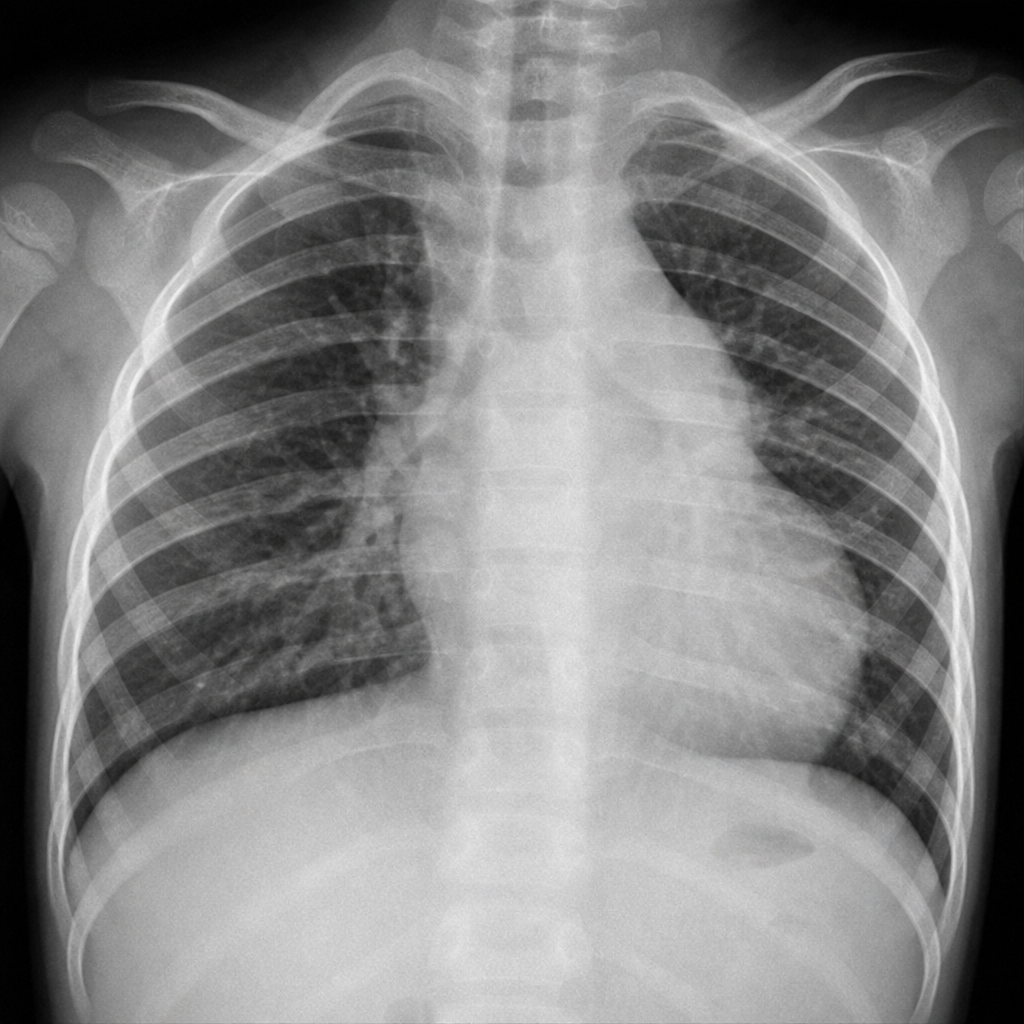
A child comes with cyanotic spells and chest X-ray was as shown below; What is the most probable diagnosis?
A five-year-old girl presents with fever and conjunctivitis. Physical examination is significant for oral erythema and fissuring along with a generalized maculopapular rash and cervical lymphadenopathy. What is the most likely diagnosis?
Practice by Chapter
Congenital Heart Diseases: Cyanotic
Practice Questions
Congenital Heart Diseases: Acyanotic
Practice Questions
Rheumatic Heart Disease
Practice Questions
Kawasaki Disease
Practice Questions
Infective Endocarditis
Practice Questions
Myocarditis and Cardiomyopathies
Practice Questions
Arrhythmias in Children
Practice Questions
Heart Failure in Children
Practice Questions
Pulmonary Hypertension
Practice Questions
Systemic Hypertension
Practice Questions
Dyslipidemia in Children
Practice Questions
Cardiac Evaluation and Diagnostics
Practice Questions
Want unlimited practice?
Get full access to all questions, explanations, and performance tracking.
Scan to download app