
Hematopathology — MCQs

On this page
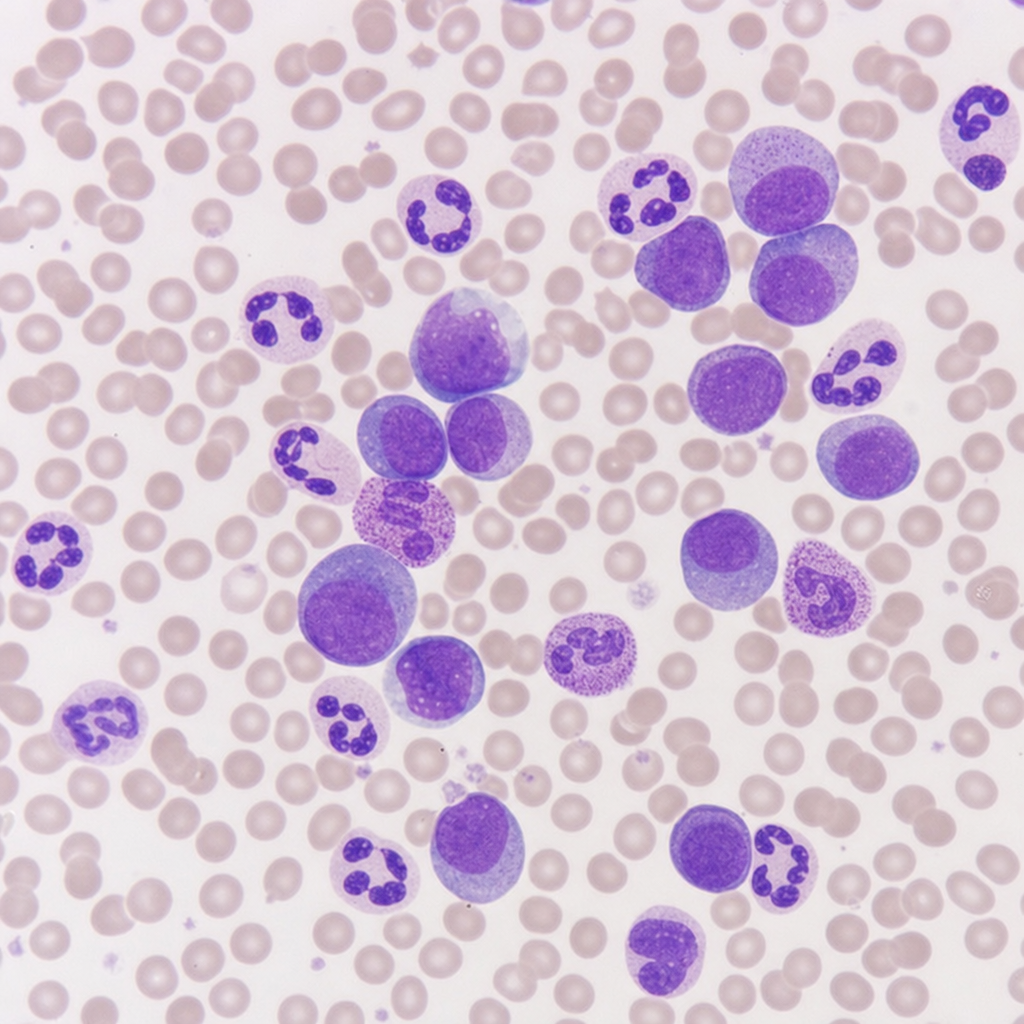
A 45-year-old male presents with fatigue, weight loss, and a dragging sensation in the left upper abdomen for 3 months. Examination reveals massive splenomegaly. CBC shows WBC 1,20,000/µL with haemoglobin 9 g/dL. The peripheral blood smear is shown in Image 1. Which cytogenetic abnormality is most directly responsible for the constitutively active tyrosine kinase driving this disease?
A 53-year-old male presents with an enlarged supraclavicular lymph node. Examination reveals enlargement of the Waldeyer ring of oropharyngeal lymphoid tissue. There is no hepatosplenomegaly. Lymph node biopsy reveals replacement by a monomorphous population of large lymphoid cells with enlarged nuclei and prominent nucleoli. The CBC is normal except for mild anemia. Immunohistochemical staining and flow cytometry of the node reveals that most lymphoid cells are CD19+, CD10-, CD3-, CD15-, and TdT negative. What is the most likely diagnosis?
The nucleotide triplet CTC in the sixth position of the beta-globin chain in DNA forms the complementary nucleotide on mRNA that codes for glutamic acid. A point mutation on the beta-globin chain resulting in the nucleotide triplet CAC forms a complementary nucleotide on mRNA that codes for valine. In sickle cell anemia, what is the expected complementary nucleotide triplet on mRNA, read 5' to 3'?
Purpura fulminans is seen in?
What is the cause of alpha thalassemia?
Which one of the following lymphomas is associated with the translocation of the c-myc gene on chromosome 8?
The 'hair on end' appearance on peripheral blood smear is characteristic of which of the following conditions?
A young boy presented with dyspnea and was found to have a mediastinal mass. Which of the following conditions is known to produce mediastinal lymphadenopathy?
A 45-year-old woman has experienced worsening arthritis of her hands and feet for the past 15 years. On physical examination, there are marked deformities of the hands and feet, with ulnar deviation of the hands and swan-neck deformities of the fingers. Laboratory studies show an elevated level of rheumatoid factor. CBC shows hemoglobin, 11.6 g/dL; hematocrit, 34.8%; MCV, 87 mm3; platelet count, 268,000/ mm3; and WBC count, 6800/ mm3. There is a normal serum haptoglobin level, serum iron concentration of 20 mg/ dL, total iron-binding capacity of 195 mg/dL, percent saturation of 10.2, and serum ferritin concentration of 317 ng/mL. No fibrin split products are detected. The reticulocyte concentration is 1.1%. What is the most likely mechanism underlying this patient's hematologic abnormalities?
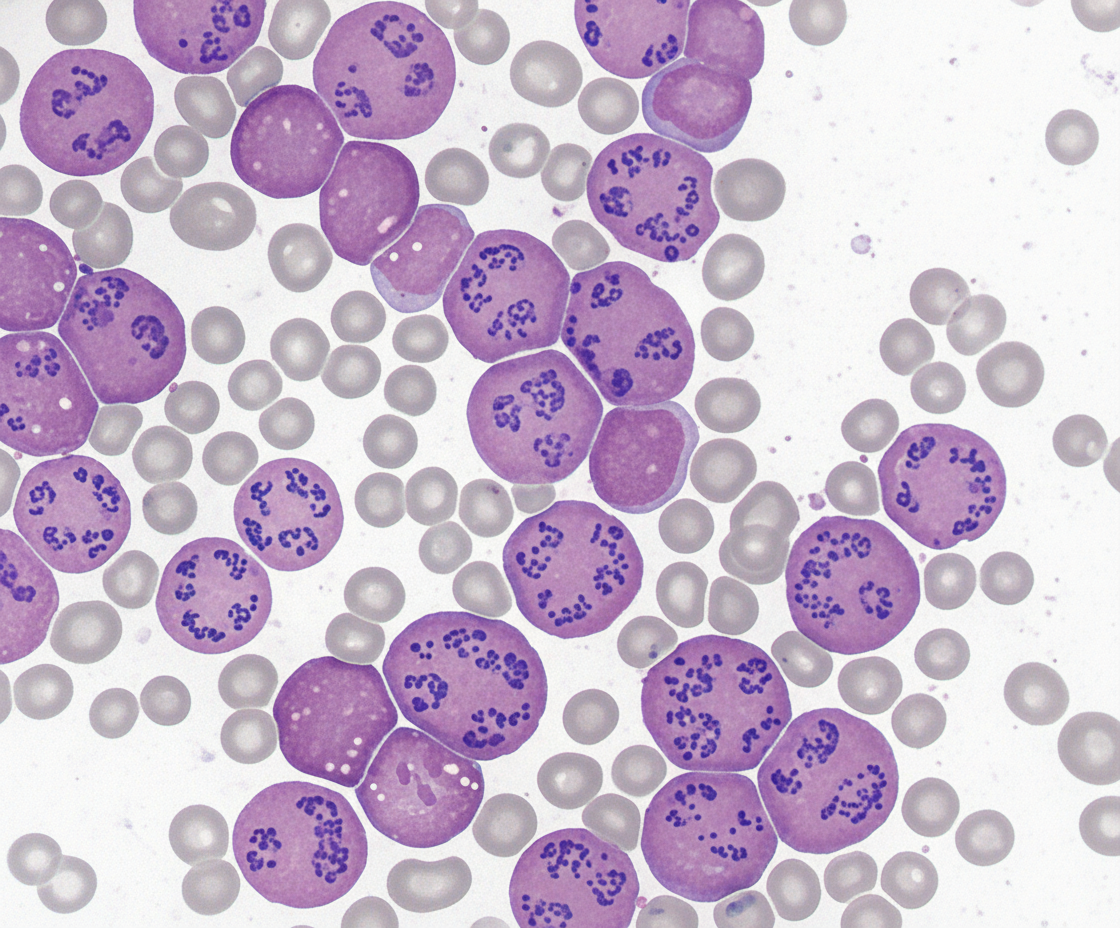
Spot the diagnosis?
Practice by Chapter
Anemias: Classification and Approach
Practice Questions
Hemolytic Anemias
Practice Questions
Myeloproliferative Neoplasms
Practice Questions
Myelodysplastic Syndromes
Practice Questions
Acute Leukemias
Practice Questions
Chronic Leukemias
Practice Questions
Lymphomas and Lymphoid Neoplasms
Practice Questions
Plasma Cell Disorders
Practice Questions
Bleeding Disorders
Practice Questions
Thrombotic Disorders
Practice Questions
Want unlimited practice?
Get full access to all questions, explanations, and performance tracking.
Scan to download app