
Cardiology — MCQs

On this page
An 18-year-old man is admitted to the hospital with acute onset of substernal chest pain that began abruptly 30 minutes ago. The pain radiates to his neck and right arm. He has otherwise been in good health. On physical examination, he is diaphoretic and tachypnoeic. His BP is 102/48 mmHg and heart rate is 112 bpm, with a regular rhythm but is tachycardiac. A 2/6 holosystolic murmur is heard best at the apex and radiates to the axilla. His lungs have bilateral rales at the bases. The ECG demonstrates 4 mm of ST elevation in the anterior leads. In the past, he was hospitalized for some problem with his heart when he was 4 years old. His mother, who accompanies him, reports that he received aspirin and gamma globulin as treatment. Since that time, he has required intermittent follow-up with echocardiography. What is the most likely cause of this patient's acute coronary syndrome?
Which of the following findings is NOT seen in primary pulmonary hypertension?
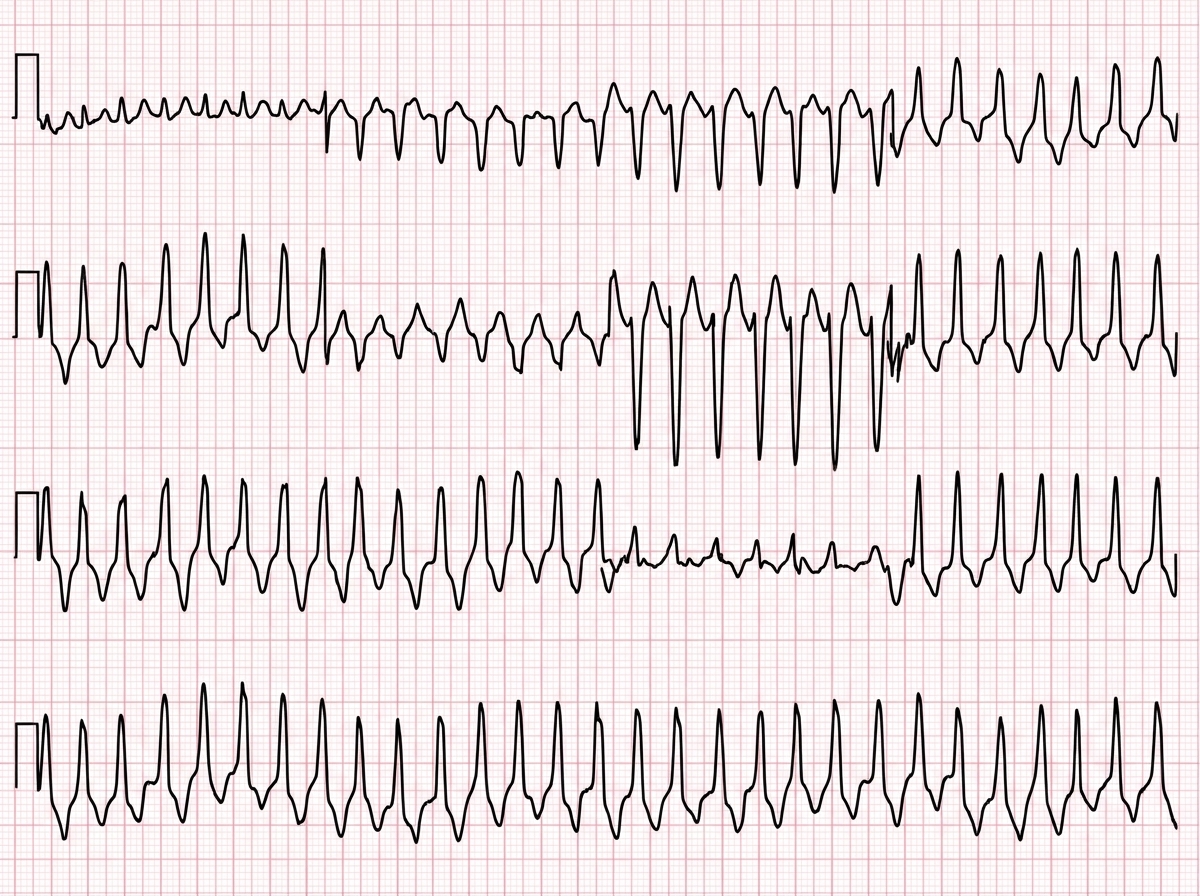
What is the best drug for the rhythm disorder shown below?
What is the best treatment for multifocal atrial tachycardia?
What percentage of critical narrowing of coronary blood vessels is generally considered significant?
Pulsus paradoxus is present in all of the following conditions EXCEPT:
A 45-year-old man presents with exertional dyspnea and pitting pedal edema. His neck veins are dilated. A diagnosis of superior vena cava (SVC) syndrome is made. What is the next diagnostic step?
Atrial myxoma is associated with which of the following clinical manifestations, except?
Left axis deviation is seen in all except?
A 22-year-old woman presents with sharp chest pain, exacerbated by lying down, especially on her left side. One week prior, she experienced flu-like symptoms with fevers, chills, and myalgias. Her past medical history is negative, and she takes no medications. On physical examination, blood pressure is 130/80 mm Hg, heart rate is 100/min, with no pulsus paradoxus. Heart sounds are normal, but a pericardial rub is heard best at the apex in the left lateral decubitus position. Lungs are clear, and there is no peripheral edema. Which of the following features determines the patient's clinical course and prognosis?
Practice by Chapter
Coronary Artery Disease and Angina
Practice Questions
Acute Coronary Syndromes
Practice Questions
Heart Failure
Practice Questions
Cardiac Arrhythmias
Practice Questions
Valvular Heart Diseases
Practice Questions
Cardiomyopathies
Practice Questions
Pericardial Diseases
Practice Questions
Congenital Heart Disease in Adults
Practice Questions
Hypertension and Hypertensive Emergencies
Practice Questions
Pulmonary Hypertension
Practice Questions
Non-invasive Cardiac Diagnostics
Practice Questions
Preventive Cardiology
Practice Questions
Want unlimited practice?
Get full access to all questions, explanations, and performance tracking.
Scan to download app