
Anesthesia for Non-Operating Room Procedures — MCQs

On this page
A hospital is designing a protocol for anesthesia services in the interventional radiology suite. Cases include hepatic chemoembolization, biliary interventions, and vascular procedures. Which combination of factors makes general anesthesia more appropriate than conscious sedation?
A radiation oncology department is planning to start providing anesthesia for pediatric patients undergoing radiotherapy. Which is the most critical infrastructure requirement specific to this non-OR anesthesia location?
During endoscopic retrograde cholangiopancreatography (ERCP) under sedation, a patient develops sudden bradycardia and hypotension after sphincterotomy. Vitals: HR 45/min, BP 80/50 mmHg. What is the most likely mechanism?
A 45-year-old patient scheduled for electroconvulsive therapy (ECT) is on phenelzine for depression. Which anesthetic agent should be avoided?
A 24-year-old female complains of suicidal ideation following the loss of her family in a car accident. She has had problems focusing on her work and has been making errors due to poor judgment, leading to her layoff. She has been rescued from suicidal attempts multiple times and has been prescribed electroconvulsive therapy. What is the intravenous anesthetic of choice for electroconvulsive therapy?
Which of the following inducing agents is preferred for Electroconvulsive Therapy?
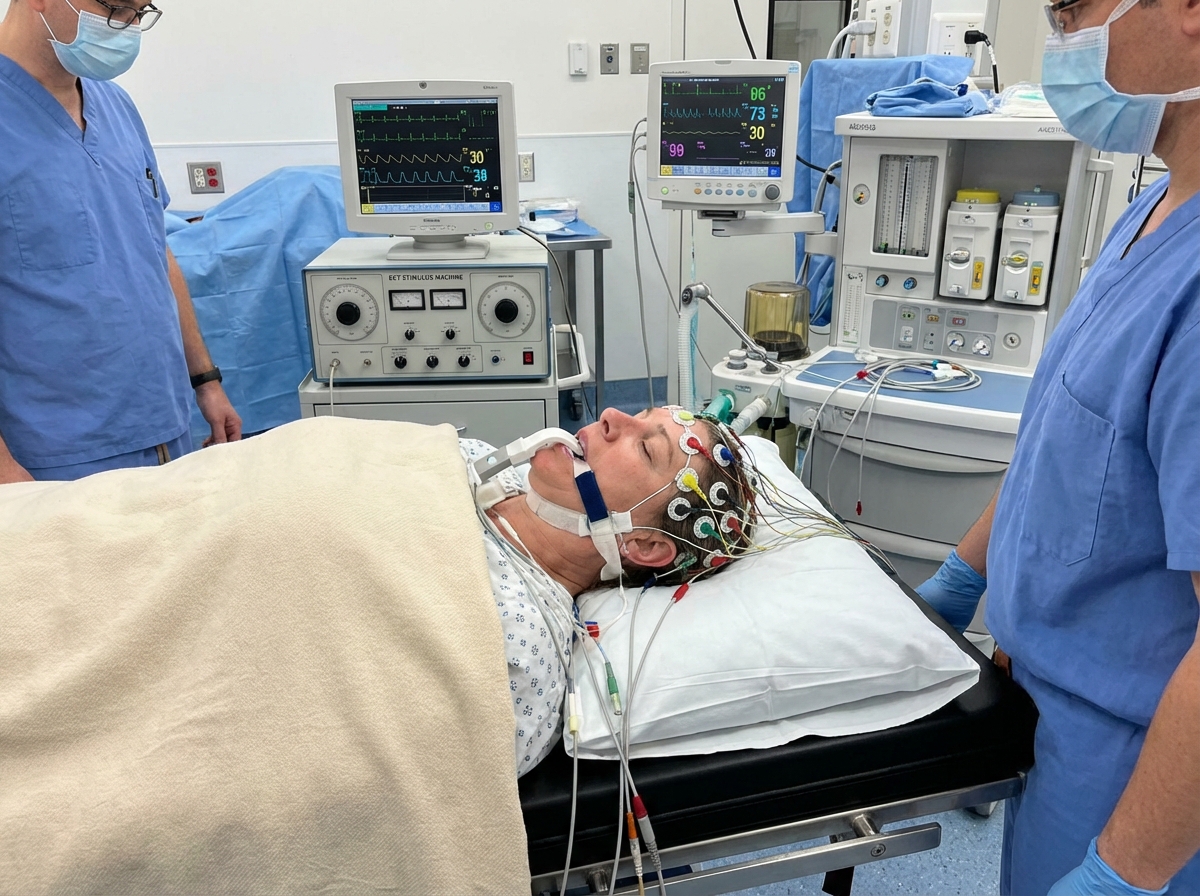
Which intravenous anesthetic agent is the drug of choice for the given procedure?
A 60-year-old male with a history of atrial fibrillation is undergoing colonoscopy under conscious sedation. Which medication is the most appropriate for sedation in this patient?
Intravenous anesthetic agent of choice for this procedure is?
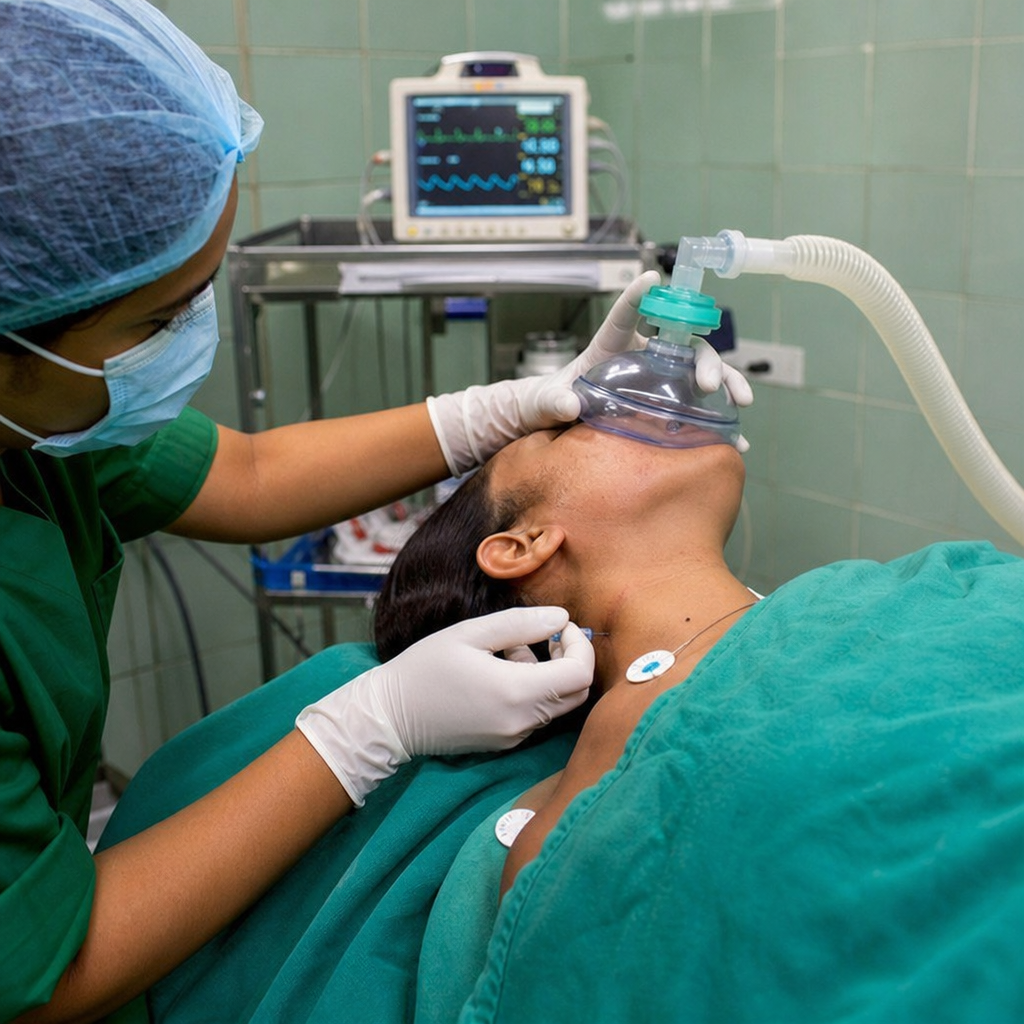
Catheter ablation for supraventricular tachycardia (SVT) is most commonly performed under which type of anesthesia?
Practice by Chapter
Anesthesia for Interventional Radiology
Practice Questions
Anesthesia for Gastrointestinal Endoscopy
Practice Questions
Anesthesia for Bronchoscopy
Practice Questions
Anesthesia for Cardioversion
Practice Questions
Anesthesia for Electroconvulsive Therapy
Practice Questions
Anesthesia for MRI and CT
Practice Questions
Anesthesia for Cardiac Catheterization
Practice Questions
Anesthesia for Interventional Cardiology
Practice Questions
Monitored Anesthesia Care
Practice Questions
Sedation Scales and Monitoring
Practice Questions
Remote Location Challenges
Practice Questions
Safety Considerations in Non-Operating Room Anesthesia
Practice Questions
Want unlimited practice?
Get full access to all questions, explanations, and performance tracking.
Scan to download app