
Autonomic/CV Drugs — MCQs

On this page
A 52-year-old male with ischemic cardiomyopathy presents to his cardiologist for worsening shortness of breath on exertion. He denies any recent episodes of chest pain and has been compliant with his medications, which include metoprolol, lisinopril, spironolactone, and furosemide. The patient’s vitals signs are as follows: Temperature is 98.7 deg F (37.1 deg C), blood pressure is 163/78 mmHg, pulse is 92/min, respirations are 14/min, and oxygen saturation is 98% on room air. A repeat echocardiogram reveals a stable LVEF of 25-35%. The physician decides to start hydralazine and isosorbide dinitrate. Which of the following is true regarding this medication combination?
A 52-year-old man presents to the emergency department with nausea, palpitations, and lightheadedness after consuming a drink prepared from the leaves of yellow oleander (Thevetia peruviana). He had read somewhere that such a drink is healthy. As he liked the taste, he consumed 3 glasses of the drink before the symptoms developed. He also vomited twice. There is no past medical history suggestive of any significant medical condition. On physical examination, he is disoriented. The temperature is 36.5°C (97.8°F), the pulse is 140/min and irregular, the blood pressure is 94/58 mm Hg, and the respiratory rate is 14/min. Auscultation of the heart reveals an irregularly irregular heartbeat, while auscultation of the lungs does not reveal any significant abnormalities. The abdomen is soft and the pupillary reflexes are intact. An electrocardiogram shows peaked T waves. A botanist confirms that yellow oleander leaves contain cardiac glycosides. In addition to controlling the airway, breathing, and circulation with supportive therapy, which of the following medications is indicated?
A group of researchers wish to develop a clinical trial assessing the efficacy of a specific medication on the urinary excretion of amphetamines in intoxicated patients. They recruit 50 patients for the treatment arm and 50 patients for the control arm of the study. Demographics are fairly balanced between the two groups. The primary end points include (1) time to recovery of mental status, (2) baseline heart rate, (3) urinary pH, and (4) specific gravity. Which medication should they use in order to achieve a statistically significant result positively favoring the intervention?
A 57-year-old woman with a history of diabetes and hypertension accidentally overdoses on antiarrhythmic medication. Upon arrival in the ER, she is administered a drug to counteract the effects of the overdose. Which of the following matches an antiarrhythmic with its correct treatment in overdose?
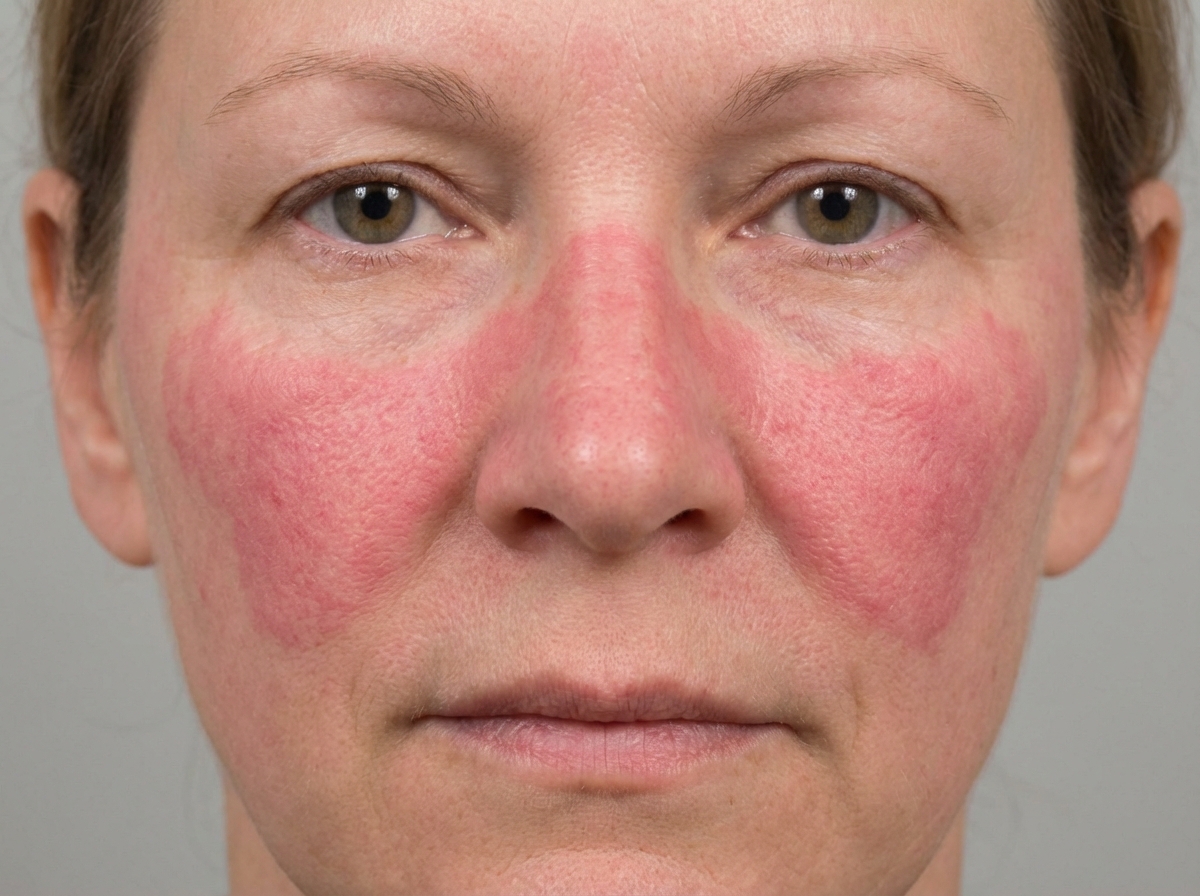
A 20-year-old woman presents with shortness of breath and chest pain for 1 week. She says the chest pain is severe, sharp in character, and aggravated upon deep breathing. She says she becomes short of breath while walking upstairs in her home or with any type of exertion. She says she frequently feels feverish and fatigued. No significant past medical history and no current medications. Review of systems is significant for a weight loss of 4.5 kg (10.0 lb) over the past month and joint pain in her wrists, hands, and knees. Vital signs are within normal limits. On physical examination, there is a pink rash over her face which is aggravated by sunlight (shown in the image). There are decreased breath sounds on the right. A chest radiograph reveals evidence of a right-sided pleural effusion. Routine urinalysis and urine dipstick are normal. Serum antinuclear antibody (ANA) and anti-double-stranded DNA levels are positive. The patient is started on prednisone therapy and 2 weeks later her CBC is obtained and compared to the one on admission: On admission Leukocytes 8,000/mm3 Neutrophils 60% Lymphocytes 23% Eosinophils 2% Basophils 1% Monocyte 5% Hemoglobin 10 g/dL Creatinine 0.8 mg/dL BUN 15 mg/dL 2 weeks later Leukocytes 13,000/mm3 Neutrophils 90% Lymphocytes 8% Eosinophils 0% Basophils 0% Monocyte 1% Hemoglobin 12g/dL Creatinine 0.8 mg/dL BUN 15 mg/dL Which of the following best describes the most likely mechanism that accounts for the difference between these 2 complete blood counts (CBCs)?
A 14-year-old boy has undergone kidney transplantation due to stage V chronic kidney disease. A pre-transplantation serologic assessment showed that he is negative for past or present HIV infection, viral hepatitis, EBV, and CMV infection. He has a known allergy for macrolides. The patient has no complaints 1 day after transplantation. His vital signs include: blood pressure 120/70 mm Hg, heart rate 89/min, respiratory rate 17/min, and temperature 37.0°C (98.6°F). On physical examination, the patient appears to be pale, his lungs are clear on auscultation, heart sounds are normal, and his abdomen is non-tender on palpation. His creatinine is 0.65 mg/dL (57.5 µmol/L), GFR is 71.3 mL/min/1.73 m2, and urine output is 0.9 mL/kg/h. Which of the following drugs should be used in the immunosuppressive regimen in this patient?
A 10-year-old boy presents to the emergency department with a swollen and painful elbow after accidentally bumping his arm into the kitchen table. His mom notes that he seems to bruise and bleed easily, but this is the first time he has had a swollen joint. She also remembers that her uncle had a bleeding disorder, but cannot remember the diagnosis. Physical exam reveals a warm and tender elbow joint, but is otherwise unremarkable. Based on clinical suspicion, a bleeding panel is ordered with the following findings: Bleeding time: 3 minutes Prothrombin time (PT): 13 seconds Partial thromboplastin time (PTT): 54 seconds Which of the following treatments would most likely be effective in preventing further bleeding episodes for this patient?
A 45-year-old woman, suspected of having colon cancer, is advised to undergo a contrast-CT scan of the abdomen. She has no comorbidities and no significant past medical history. There is also no history of drug allergy. However, she reports that she is allergic to certain kinds of seafood. After tests confirm normal renal function, she is taken to the CT scan room where radiocontrast dye is injected intravenously and a CT scan of her abdomen is conducted. While being transferred to her ward, she develops generalized itching and urticarial rashes, with facial angioedema. She becomes dyspneic. Her pulse is 110/min, the blood pressure is 80/50 mm Hg, and the respirations are 30/min. Her upper and lower extremities are pink and warm. What is the most appropriate management of this patient?
A 60-year-old man comes to the emergency room for a persistent painful erection for the last 5 hours. He has a history of sickle cell trait, osteoarthritis, insomnia, social anxiety disorder, gout, type 2 diabetes mellitus, major depressive disorder, and hypertension. He drinks 1 can of beer daily, and smokes marijuana on the weekends. He takes propranolol, citalopram, trazodone, allopurinol, metformin, glyburide, lisinopril, and occasionally ibuprofen. He is alert and oriented but in acute distress. Temperature is 36.5°C(97.7°F), pulse is 105/min, and blood pressure is 145/95 mm Hg. Examination shows a rigid erection with no evidence of trauma, penile discharge, injection, or prosthesis. Which of the following is the most likely cause of his condition?
A 56-year-old man comes to the physician for a follow-up examination. One month ago, he was diagnosed with a focal seizure and treatment with a drug that blocks voltage-gated sodium channels was begun. Today, he reports that he has not had any abnormal body movements, but he has noticed occasional double vision. His serum sodium is 132 mEq/L, alanine aminotransferase is 49 U/L, and aspartate aminotransferase is 46 U/L. This patient has most likely been taking which of the following drugs?
Practice by Chapter
Antiarrhythmic classification and mechanisms
Practice Questions
Class I antiarrhythmics (sodium channel blockers)
Practice Questions
Class II antiarrhythmics (beta blockers)
Practice Questions
Class III antiarrhythmics (potassium channel blockers)
Practice Questions
Class IV antiarrhythmics (calcium channel blockers)
Practice Questions
Other antiarrhythmic agents
Practice Questions
Antianginal drugs
Practice Questions
Positive inotropic agents
Practice Questions
Phosphodiesterase inhibitors
Practice Questions
Cardiac glycosides
Practice Questions
Vasopressors and inotropes
Practice Questions
Pulmonary hypertension therapies
Practice Questions
Peripheral vascular disease therapies
Practice Questions
Want unlimited practice?
Get full access to all questions, explanations, and performance tracking.
Scan to download app