
Autonomic/CV Drugs — MCQs

On this page
A 49-year-old woman presents to the family medicine clinic with concerns about her weight. She has been constantly gaining weight for a decade now as she has not been able to control her diet. She has tried exercising but says that she is too lazy for this method of weight loss to work. Her temperature is 37° C (98.6° F), respirations are 15/min, pulse is 67/min, and blood pressure is 122/88 mm Hg. Her BMI is 30. Her labs from her past visit show: Fasting blood glucose: 149 mg/dL Glycated hemoglobin (HbA1c): 9.1% Triglycerides: 175 mg/dL LDL-Cholesterol: 102 mg/dL HDL-Cholesterol: 35 mg/dL Total Cholesterol: 180 mg/dL Serum creatinine: 1.0 mg/dL BUN: 12 mg/dL Serum: Albumin: 4.2 gm/dL Alkaline phosphatase: 150 U/L Alanine aminotransferase: 76 U/L Aspartate aminotransferase: 88 U/L After discussing the long term issues that will arise if her health does not improve, she agrees to modify her lifestyle and diet. Which of the following would be the best pharmacotherapy for this patient?
A 57-year-old presents to your clinic complaining of baldness. He is overweight, has been diagnosed with BPH, and is currently taking atorvastatin for hyperlipidemia. The patient has tried several over-the-counter products for hair-loss; however, none have been effective. After discussing several options, the patient is prescribed a medication to treat his baldness that has the additional benefit of treating symptoms of BPH as well. Synthesis of which of the following compounds would be expected to decrease in response to this therapy?
29-year-old construction worker is brought to the emergency department after falling 10 ft (3 m) from the scaffolding at a construction site. He reports that he landed on his outstretched arms, which are now in severe pain (10/10 on a numeric scale). He has a history of opioid use disorder and is currently on methadone maintenance treatment. His pulse is 100/min, respirations are 20/min, and blood pressure is 140/90 mm Hg. Pulse oximetry on room air shows an oxygen saturation of 98%. He is diaphoretic and in distress. Physical examination shows a hematoma on the patient's right forearm. X-ray of the right arm shows a nondisplaced fracture of the ulna. A CT of the abdomen and pelvis shows no abnormalities. The patient requests pain medication. In addition to managing the patient's injury, which of the following is the most appropriate next step in management?
A 44-year-old man presents to the clinic worried about his risk for bladder cancer. His best friend who worked with him as a painter for the past 20-years died recently after being diagnosed with transitional cell carcinoma. He is worried that their long and heavy cigarette smoking history might have contributed to his death. He also reports that he has been feeling down since his friend's death 2 months ago and has not been eating or sleeping as usual. He took time off from work but now is running past due on some of his bills. He feels like he is moving a lot slower than usual. He would like to stop smoking but feels like it's impossible with just his willpower. What side-effect is most likely if this patient were started on his appropriate pharmacotherapy?
A 72-year-old man is brought in by ambulance to the hospital after being found down at home. On presentation, he appears cachectic and is found to be confused. Specifically, he does not answer questions appropriately and is easily distracted. His wife says that he has been losing weight over the last 3 months and he has a 40 pack-year history of smoking. His serum sodium is found to be 121 mEq/L and his urine osmolality is found to be 415 mOsm/kg. Chest radiograph shows a large central mass in the right lung. Which of the following treatments would be effective in addressing this patient's serum abnormality?
A 66-year-old man was referred for endoscopic evaluation due to iron deficiency anemia. He has had anorexia and weight loss for two months. Three years ago, the patient had coronary artery bypass grafting and aortic mechanical valve replacement. He has a 12-year history of diabetes mellitus and hypertension. He takes warfarin, lisinopril, amlodipine, metformin, aspirin, and carvedilol. His blood pressure is 115/65 mm Hg, pulse is 68/min, respirations are 14/min, temperature is 36.8°C (98.2°F), and blood glucose is 220 mg/dL. Conjunctivae are pale. Heart examination reveals a metallic click just before the carotid pulse. Which of the following is the most appropriate switch in this patient’s drug therapy before the endoscopy?
A 69-year-old African American man is brought to the emergency department with sudden onset lower limb paralysis and back pain. He has had generalized bone pain for 2 months. He has no history of severe illnesses. He takes ibuprofen for pain. On examination, he is pale. The vital signs include: temperature 37.1°C (98.8°F), pulse 68/min, respiratory rate 16/min, and blood pressure 155/90 mm Hg. The neurologic examination shows paraparesis. The 8th thoracic vertebra is tender to palpation. An X-ray of the thoracic vertebrae confirms a compression fracture at the same level. The laboratory studies show the following: Laboratory test Hemoglobin 9 g/dL Mean corpuscular volume 95 μm3 Leukocyte count 5,000/mm3 Platelet count 240,000/mm3 ESR 85 mm/hour Serum Na+ 135 mEq/L K+ 4.2 mEq/L Cl− 113 mEq/L HCO3− 20 mEq/L Ca+ 11.5 mg/dL Albumin 4 g/dL Urea nitrogen 18 mg/dL Creatinine 1.2 mg/dL Serum electrophoresis shows a monoclonal protein level of 38 g/L. To reduce the likelihood of fracture recurrence, it is most appropriate to administer which of the following?
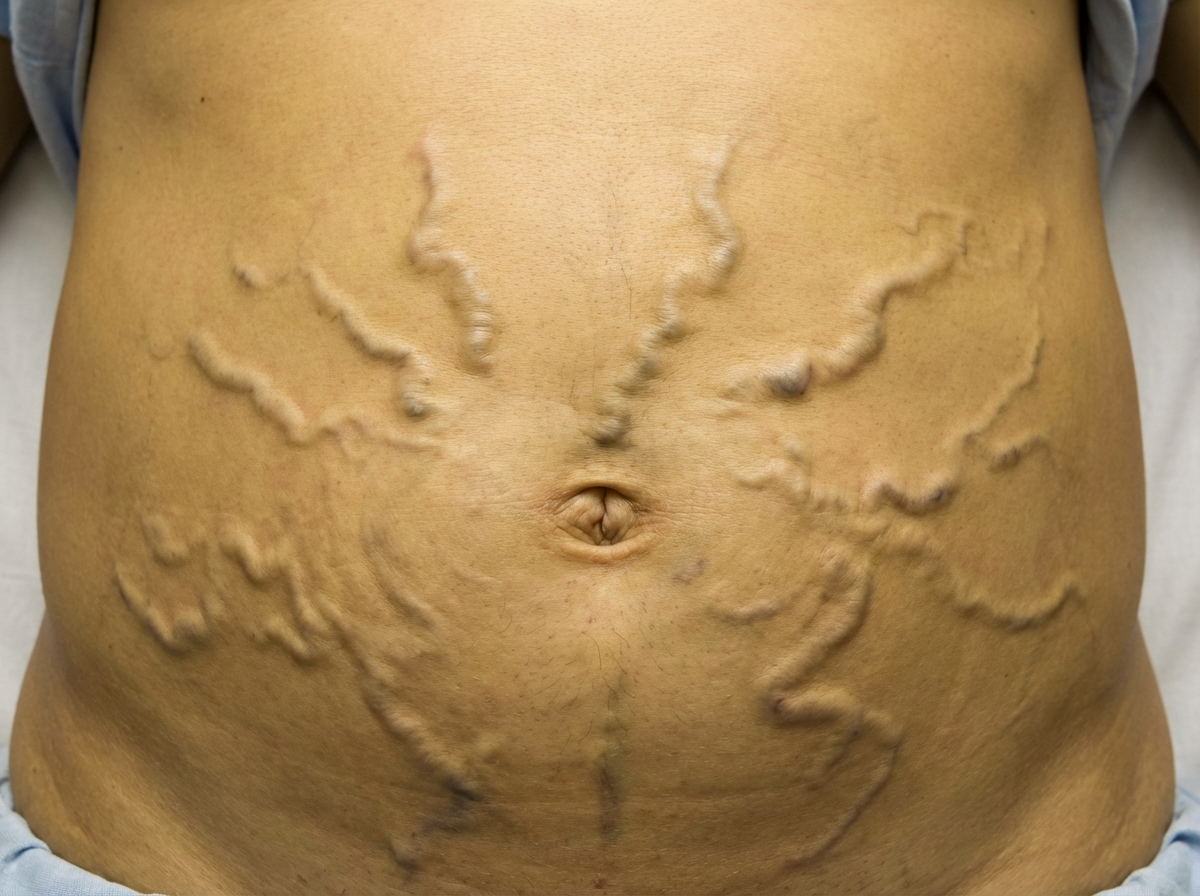
A 56-year-old homeless male presents to a free clinic for a health evaluation. He states that he has not seen a physician in over 25 years but finally decided to seek medical attention after he noticed recent chronic fatigue and weight gain. Upon questioning, he endorses drinking 2 handles of whiskey per day. On exam, the physician observes the findings shown in Figures A-D. Which of the following findings would also be expected to be observed in this patient?
One week after starting a new medication, a 16-year-old girl is brought to the emergency department by her mother because of a painful, blistering rash. She has a history of bipolar disorder. Her temperature is 39°C (102°F). Physical examination shows numerous coalescing bullae with epidermal detachment covering the face, trunk, and extremities. There are hemorrhagic erosions on the hard palate and buccal mucosa. When lateral pressure is applied to healthy-appearing skin at the edge of a bulla, a blister starts to form. Which of the following drugs is most likely responsible for this patient's current condition?
A 34-year-old woman presents with blurred vision and ringing in her ears. She says she has a 6-month history of recurrent worsening bilateral pulsatile headaches that she manages with ibuprofen, which does very little to relieve the pain. For the past week, she says she has vomited nearly every morning and missed work due to the pain in her head. She first noticed vision problems 3 months ago that has occurred several times since then. Past medical history is significant for uncomplicated urinary tract infection for which she has just finished a course of antibiotics. She has a history of a mild urticarial reaction when she takes penicillin. Her vital signs include: blood pressure 115/74 mm Hg, pulse 75/min, and respiratory rate 16/min. Her body mass index (BMI) is 36 kg/m2. Physical examination is significant for bilateral peripheral visual field loss with preservation of visual acuity. Fundoscopic examination reveals blurring of the disc margins with vessel tortuosity. The remainder of her physical examination is unremarkable. A magnetic resonance image (MRI) of the brain is normal. Lumbar puncture (LP) is remarkable for a markedly elevated opening pressure. Which of the following is the next best step in the treatment of her condition?
Practice by Chapter
Antiarrhythmic classification and mechanisms
Practice Questions
Class I antiarrhythmics (sodium channel blockers)
Practice Questions
Class II antiarrhythmics (beta blockers)
Practice Questions
Class III antiarrhythmics (potassium channel blockers)
Practice Questions
Class IV antiarrhythmics (calcium channel blockers)
Practice Questions
Other antiarrhythmic agents
Practice Questions
Antianginal drugs
Practice Questions
Positive inotropic agents
Practice Questions
Phosphodiesterase inhibitors
Practice Questions
Cardiac glycosides
Practice Questions
Vasopressors and inotropes
Practice Questions
Pulmonary hypertension therapies
Practice Questions
Peripheral vascular disease therapies
Practice Questions
Want unlimited practice?
Get full access to all questions, explanations, and performance tracking.
Scan to download app