
Gram-positive — MCQs

On this page
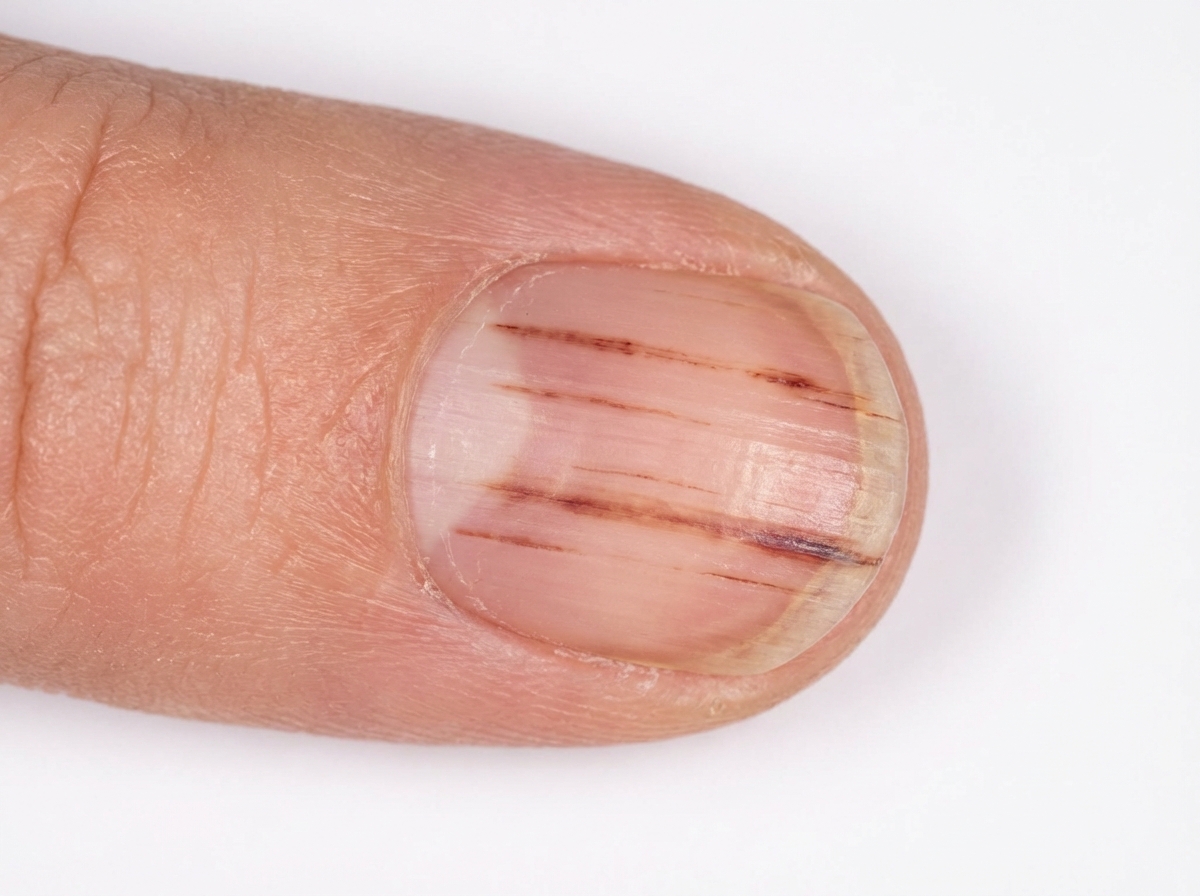
A 63-year-old man comes to the physician for evaluation of fever and a nonproductive cough for the past 2 weeks. During this period, he has also had fatigue, myalgia, and difficulty breathing. Five weeks ago, he underwent an aortic prosthetic valve replacement due to high-grade aortic stenosis. The patient has a history of hypertension, asthma, and type 2 diabetes mellitus. A colonoscopy 2 years ago was normal. The patient has smoked one pack of cigarettes daily for the past 40 years. He has never used illicit drugs. Current medications include aspirin, warfarin, lisinopril, metformin, inhaled albuterol, and a multivitamin. The patient appears lethargic. Temperature is 38.6°C (101.5°F), pulse is 105/min, and blood pressure is 140/60 mm Hg. Rales are heard on auscultation of the lungs. A grade 2/6, diastolic blowing murmur is heard over the left sternal border and radiates to the right sternal border. A photograph of his right index finger is shown. Laboratory studies show a leukocyte count of 13,800/mm3 and an erythrocyte sedimentation rate of 48 mm/h. Which of the following is the most likely causal organism?
A 25-year-old man with no significant past medical history is brought in by ambulance after a witnessed seizure at home. On physical exam, temperature is 102.3 deg F (39.1 deg C), blood pressure is 90/62 mmHg, pulse is 118/min, and respirations are 25/min. He is unable to touch his chin to his chest and spontaneously flexes his hips with passive neck flexion. Appropriate empiric treatment is begun. CT head is unremarkable, and a lumbar puncture sample is obtained. Gram stain of the cerebrospinal fluid (CSF) reveals gram-positive diplococci. Which of the following would you expect to see on CSF studies?
A 22-year-old woman at 30 weeks gestation presents to the obstetrician with the sudden onset of fever, headache, anorexia, fatigue, and malaise. She mentioned that she had eaten ice cream 3 days ago. Blood cultures show gram-positive rods that are catalase-positive and display distinctive tumbling motility in liquid medium. What is the most likely diagnosis?
A 59-year-old man presents to the emergency room for a fever that has persisted for over 4 days. In addition, he has been experiencing weakness and malaise. His past medical history is significant for a bicuspid aortic valve that was replaced 2 years ago. Physical exam reveals nailbed splinter hemorrhages, tender nodules on his fingers, and retinal hemorrhages. An echocardiogram shows aortic valve vegetations and culture reveals a gram-positive alpha-hemolytic organism that grows as cocci in chains. The organism is then exposed to optochin and found to be resistant. Finally, they are seen to ferment sorbitol. The most likely cause of this patient's symptoms is associated with which of the following?
A 30-year-old woman comes to the emergency department because of fever, watery diarrhea, and abdominal cramping for the past 24 hours. She recently went to an international food fair. Her temperature is 39°C (102.2°F). Physical examination shows increased bowel sounds. Stool cultures grow gram-positive, spore-forming, anaerobic rods that produce alpha toxin. The responsible organism also causes which of the following physical examination findings?
A previously healthy 3-month-old girl is brought to the physician because of fever, irritability, and rash for 3 days. The rash started around the mouth before spreading to the trunk and extremities. Her temperature is 38.6°C (101.5°F). Examination shows a diffuse erythematous rash with flaccid bullae on the neck, flexural creases, and buttocks. Gentle pressure across the trunk with a gloved finger creates a blister. Oropharyngeal examination shows no abnormalities. Which of the following is the most likely underlying mechanism of these skin findings?
A 25-year-old woman has dysuria, pyuria, increased frequency of urination, and fever of 1-day duration. She is sexually active. Urine cultures show gram-positive bacteria in clusters that are catalase-positive and coagulase-negative. The patient is started on trimethoprim-sulfamethoxazole. Which of the following characteristics is used to identify the offending organism?
A 71-year-old man comes to the physician because of a 2-week history of fatigue and a cough productive of a blood-tinged phlegm. Over the past month, he has had a 5.0-kg (11-lb) weight loss. He has hypertension and type 2 diabetes mellitus. Eight months ago, he underwent a kidney transplantation. The patient does not smoke. His current medications include lisinopril, insulin, prednisone, and mycophenolate mofetil. His temperature is 38.9°C (102.1°F), pulse is 88/min, and blood pressure is 152/92 mm Hg. Rhonchi are heard at the right lower lobe of the lung on auscultation. There is a small ulceration on the left forearm. An x-ray of the chest shows a right lung mass with lobar consolidation. Antibiotic therapy with levofloxacin is started. Three days later, the patient has a seizure and difficulty coordinating movements with his left hand. An MRI of the brain shows an intraparenchymal lesion with peripheral ring enhancement. Bronchoscopy with bronchoalveolar lavage yields weakly acid-fast, gram-positive bacteria with branching, filamentous shapes. Which of the following is the most appropriate initial pharmacotherapy?
A 25-year-old woman comes to the physician because of a 2-day history of a burning sensation when urinating and increased urinary frequency. She is concerned about having contracted a sexually transmitted disease. Physical examination shows suprapubic tenderness. Urinalysis shows a negative nitrite test and positive leukocyte esterases. Urine culture grows organisms that show resistance to novobiocin on susceptibility testing. Which of the following is the most likely causal organism of this patient's symptoms?
A 2980-g (6.6-lb) female newborn is brought to the emergency department by her mother because of worsening lethargy. The newborn was delivered at home 10 hours ago. The mother has had no prenatal care. The newborn's temperature is 39.7°C (103.5°F). Physical examination shows scleral icterus. Her leukocyte count is 36,000/mm3 (85% segmented neutrophils). An organism is isolated from the blood. When grown together on sheep agar, the isolated organism enlarges the area of clear hemolysis formed by Staphylococcus aureus. Which of the following is the most likely causal organism?
Practice by Chapter
Staphylococcus aureus
Practice Questions
Coagulase-negative staphylococci
Practice Questions
Streptococcus pneumoniae
Practice Questions
Group A streptococci
Practice Questions
Group B streptococci
Practice Questions
Viridans group streptococci
Practice Questions
Enterococci
Practice Questions
Bacillus species
Practice Questions
Listeria monocytogenes
Practice Questions
Corynebacterium species
Practice Questions
Clostridium species
Practice Questions
Actinomyces and Nocardia
Practice Questions
MRSA and VRE
Practice Questions
Want unlimited practice?
Get full access to all questions, explanations, and performance tracking.
Scan to download app