
Vascular Surgery — MCQs

On this page
A policeman of 45 years presented with Lipodermatosclerosis over lower medial aspect of left leg, along with a healed venous ulcer. As per the CEAP (Clinical-etiology-anatomy-pathophysiology) classification his clinical classification will be:
Indications for carotid endarterectomy in symptomatic patients are all of the following EXCEPT:
Which of the following statements regarding lymphoedema are correct? 1. Patients experience constant dull ache and even severe pain sometimes 2. Manual lymphatic drainage has a role 3. Primary lymphoedema is caused by congenital lymphatic dysplasia 4. Nonne Milroy's disease is a type of primary lymphoedema Select the correct answer using the code given below:
Left Internal Mammary Artery (LIMA) has become the conduit of choice for Left Anterior Descending (LAD) artery during coronary artery bypass grafting because:
A 52-year-old man with end-stage renal disease on hemodialysis presents with his arteriovenous fistula no longer functioning. Physical examination shows a thrill and bruit over the fistula site, but dialysis access is inadequate. What is the most likely cause of fistula dysfunction?
A 68-year-old man with a 6 cm abdominal aortic aneurysm presents with sudden onset of severe back pain and hypotension. CT shows a retroperitoneal hematoma. His blood pressure is 90/60 mmHg, and heart rate is 110/min. What is the most critical factor in determining immediate management?
A 75-year-old man with multiple medical comorbidities develops acute mesenteric ischemia. CT angiography shows superior mesenteric artery occlusion with bowel wall thickening. His family history includes poor outcomes with major surgery. Laboratory studies show elevated lactate and leukocytosis. Evaluate the management approach considering patient factors and family concerns.
A 70-year-old man with severe aortic stenosis and coronary artery disease requires both cardiac surgery and removal of a large abdominal aortic aneurysm. He has limited physiologic reserve and high surgical risk. The cardiac surgeon recommends TAVR first, while the vascular surgeon suggests simultaneous repair. Evaluate the optimal staging and approach.
A 60-year-old diabetic man with end-stage renal disease presents with acute limb ischemia of the right leg. He has a thrombosed arteriovenous fistula, is on hemodialysis, and has limited vascular access options. Angiography shows acute thrombosis of a previously placed femoral-popliteal bypass graft. He faces competing needs for limb salvage and dialysis access. Evaluate the management priority and approach.
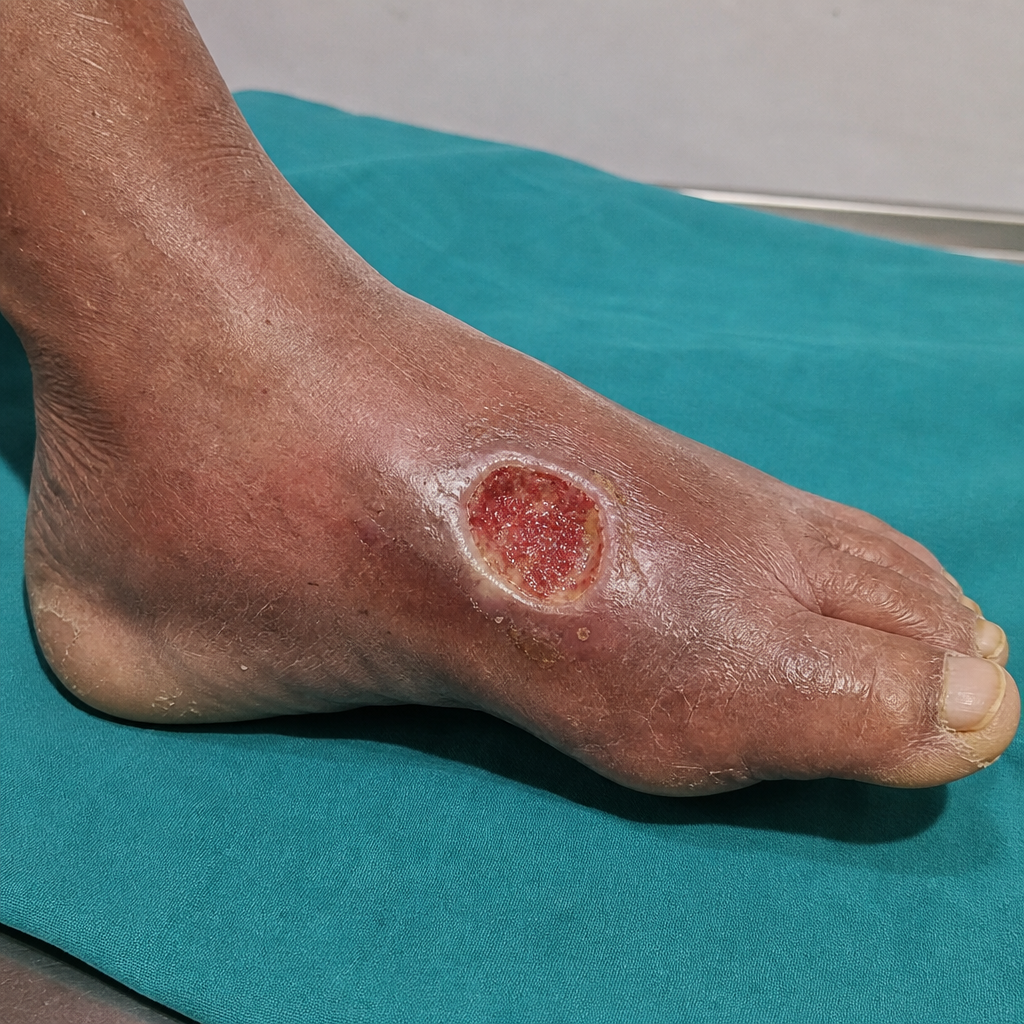
What type of ulcer is shown below?
Practice by Chapter
Atherosclerotic Disease
Practice Questions
Aortic Aneurysms
Practice Questions
Peripheral Arterial Disease
Practice Questions
Carotid Artery Disease
Practice Questions
Venous Thromboembolism
Practice Questions
Chronic Venous Insufficiency
Practice Questions
Mesenteric Vascular Disease
Practice Questions
Vascular Trauma
Practice Questions
Vascular Access for Hemodialysis
Practice Questions
Endovascular Techniques
Practice Questions
Diabetic Foot Vascular Disease
Practice Questions
Vasculitis
Practice Questions
Want unlimited practice?
Get full access to all questions, explanations, and performance tracking.
Scan to download app