
Special Populations Considerations — MCQs

A 72 year old lady is severely depressed. For the past 2 days she has suicidal thoughts with an actual intent to die. Which of the following is best suitable to alleviate the symptoms?
A 45-year-old patient with a history of depression was initially being treated with sertraline, but his symptoms were not adequately controlled. His medication regimen was changed to include an MAO inhibitor and amitriptyline. Shortly after the change in medication, the patient developed agitation, seizures, hyperreflexia, and tremor. Which of the following is the most appropriate treatment for this patient?
Which of the following medications is primarily an antipsychotic rather than a mood stabilizer and is NOT typically used for long-term prophylaxis in bipolar disorder? Chlorpromazine, Lithium, Carbamazepine, Sodium Valproate.
Which of the following is the most appropriate treatment for an overactive bladder in a patient with dementia?
A 29 year old lady came to psychiatry OPD with symptoms of hypomania. She has a past history of manic episode. Now, she is planning to conceive. Which drug should be avoided for being highly teratogenic to the fetus?
The preferred drug for treating ADHD in a 7-year-old boy, whose father has a history of substance abuse:
Which antihypertensive is considered the first-line treatment with the most extensive safety data for chronic hypertension in pregnancy?
Match the following drugs in Column A with their contraindications in Column B. | Column A | Column B | | :-- | :-- | | 1. Morphine | 1. QT prolongation | | 2. Amiodarone | 2. Thromboembolism | | 3. Vigabatrin | 3. Pregnancy | | 4. Estrogen preparations | 4. Head injury |
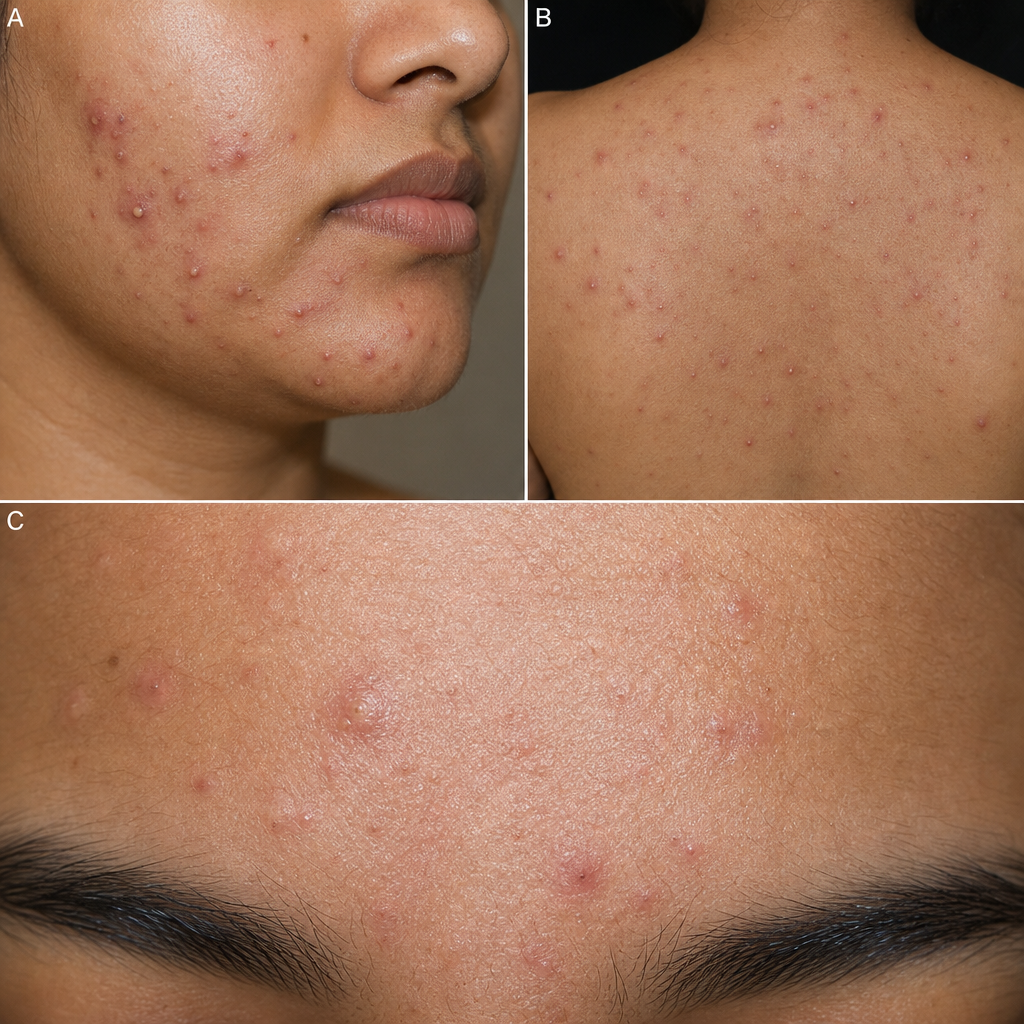
A 34-year-old woman with bipolar I disorder has been maintained on lithium carbonate 900 mg/day for the past 18 months with good mood stabilisation. She presents to the outpatient clinic complaining of a worsening skin condition that began approximately 3 months after starting lithium. Her serum lithium level is 0.8 mEq/L (therapeutic range). She has no prior personal or family history of skin disease. Over the past 6 weeks, she has been using a moderate-potency topical corticosteroid prescribed by her dermatologist with no meaningful improvement; the eruption has continued to spread and now involves the face, scalp, and upper back, causing significant distress and social impairment. A dermatology referral photograph is shown (Image 1). Which of the following is the most appropriate next step in management?
A 35-year-old woman started on haloperidol for acute psychosis develops fever (102°F/38.9°C), severe muscle rigidity, altered mental status, and autonomic instability 3 days after medication initiation. Laboratory studies show creatine kinase of 15,000 U/L and white blood cell count of 16,000/mm³. Apply the most appropriate management approach.
Want unlimited practice?
Get full access to all questions, explanations, and performance tracking.
Scan to download app