
Respiratory Diseases — MCQs

On this page
A 7-year-old child presents with acute shortness of breath that began while playing sports, characterized by paroxysms of wheezing and coughing. The child is found sitting, leaning forward, using accessory respiratory muscles, and is tachypneic and tachycardic. Auscultation reveals a prolonged expiratory phase with high-pitched wheezes. Which of the following medications will have the fastest onset of action for this acute attack?
A 3-month-old child presents with moderate fever, non-productive cough, and mild dyspnea. After a course of antibiotics, the child showed transient improvement but subsequently developed high fever, productive cough, and increased respiratory distress. Chest X-ray reveals hyperlucency, and Pulmonary Function Tests (PFTs) show an obstructive pattern. What is the most probable diagnosis?
A 12-year-old boy presents with intermittent shortness of breath over the past 6 months. He is not on any medications and has no significant family history. Vitals are within normal limits and lungs are clear to auscultation. Lung function tests reveal a FEV1/FVC ratio of 82%. Which of the following would be most helpful in excluding a diagnosis of asthma in this patient?
A 12-year-old girl with leukemia develops a lower respiratory tract infection with hemoptysis that is shown to be due to right-sided bronchiectasis. In addition to treatment for the underlying leukemia, what management should this patient receive?
A 2-year-old child presented with the following X-ray finding. What is the most likely diagnosis?
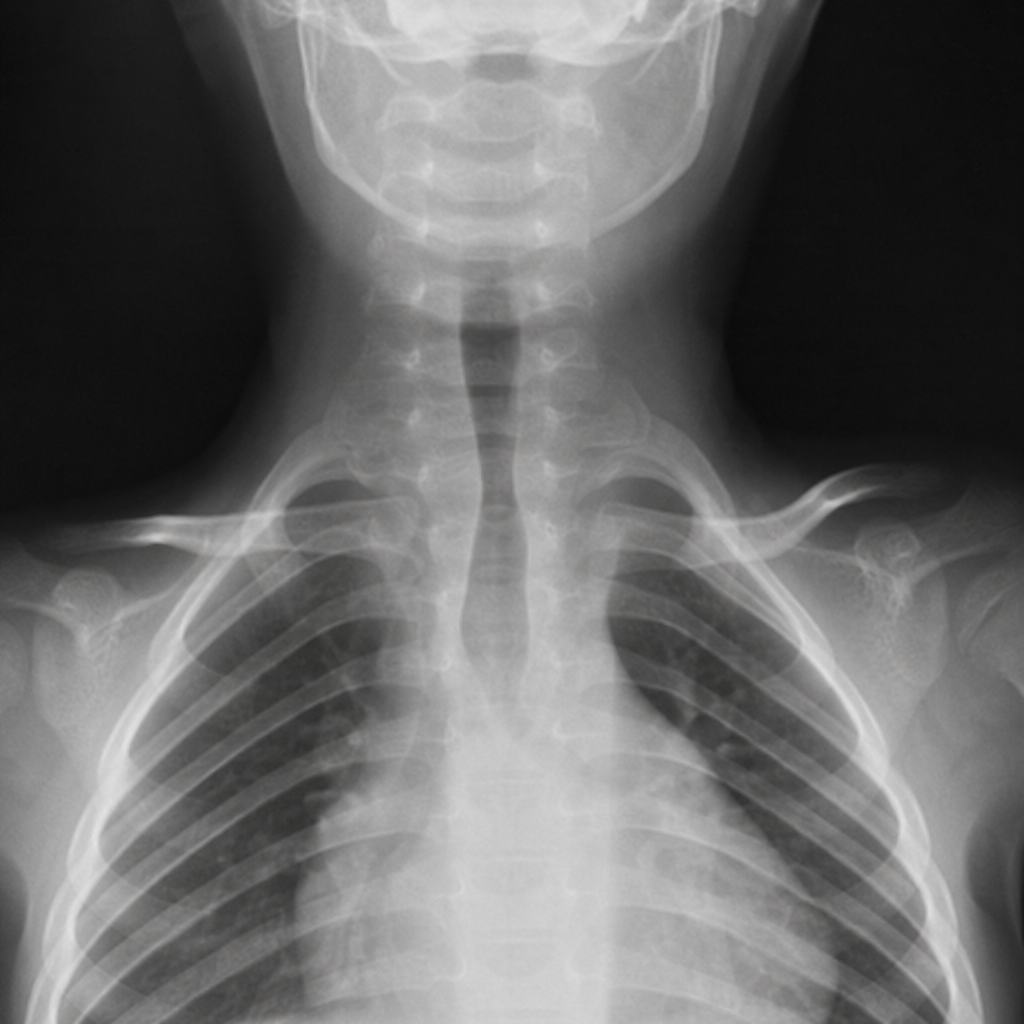
What is the commonest sign of an intrabronchial foreign body in children?
All of the following criteria classify a child aged 11 months as having severe pneumonia, except:
A 4-year-old child with bronchial asthma presents with 3 or more episodes of wheezing during the daytime in a week and 2 wheezing episodes during the night in a month. How will you grade this asthma?
A 3-month-old child presents with biphasic stridor and barking cough. All of the following are true regarding this condition EXCEPT:
In a 3-year-old child, what respiratory rate is classified as Pneumonia?
Practice by Chapter
Upper Respiratory Tract Infections
Practice Questions
Lower Respiratory Tract Infections
Practice Questions
Asthma Management
Practice Questions
Cystic Fibrosis
Practice Questions
Bronchiolitis
Practice Questions
Foreign Body Aspiration
Practice Questions
Sleep-Disordered Breathing
Practice Questions
Congenital Lung Malformations
Practice Questions
Pleural Diseases
Practice Questions
Tuberculosis in Children
Practice Questions
Chronic Lung Disease in Premature Infants
Practice Questions
Pulmonary Function Testing
Practice Questions
Want unlimited practice?
Get full access to all questions, explanations, and performance tracking.
Scan to download app