
Neurology — MCQs

On this page
Sudden onset of tics and obsessive-compulsive symptoms in a child after Scarlet fever is most likely due to which of the following mechanisms?
A 12-year-old girl presents with headache, unsteadiness, and hearing loss that has worsened over the past 5 years. Her father has a history of brain surgery and has been deaf since age 35. What is the most likely diagnosis in the child?
A 12-year-old boy presents with progressive muscular weakness and is unable to get up from a squatting position. He is diagnosed with a hereditary muscular disorder. What is the mode of inheritance in this disorder?
An infant presents with hypotonia and hyporeflexia. During the intrauterine period, there was polyhydramnios and decreased fetal movements. What is the most probable diagnosis?
Which of the following is NOT a characteristic of typical febrile seizures?
A 6-month-old child presents with multiple episodes of focal seizures, developmental delay, learning difficulties, and ADHD. Examination reveals macrocephaly, hemianopsia, a facial lesion, glaucoma with buphthalmos, and conjunctival and episcleral hemangiomas. Which of the following genes is most likely mutated?
Which one of the following is the most common cause of congenital hydrocephalus?
A 7-year-old boy, who gets easily distracted in class with poor academic performance, experiences a seizure episode after hyperventilation. What is the diagnosis suggested by the EEG findings shown in the image?
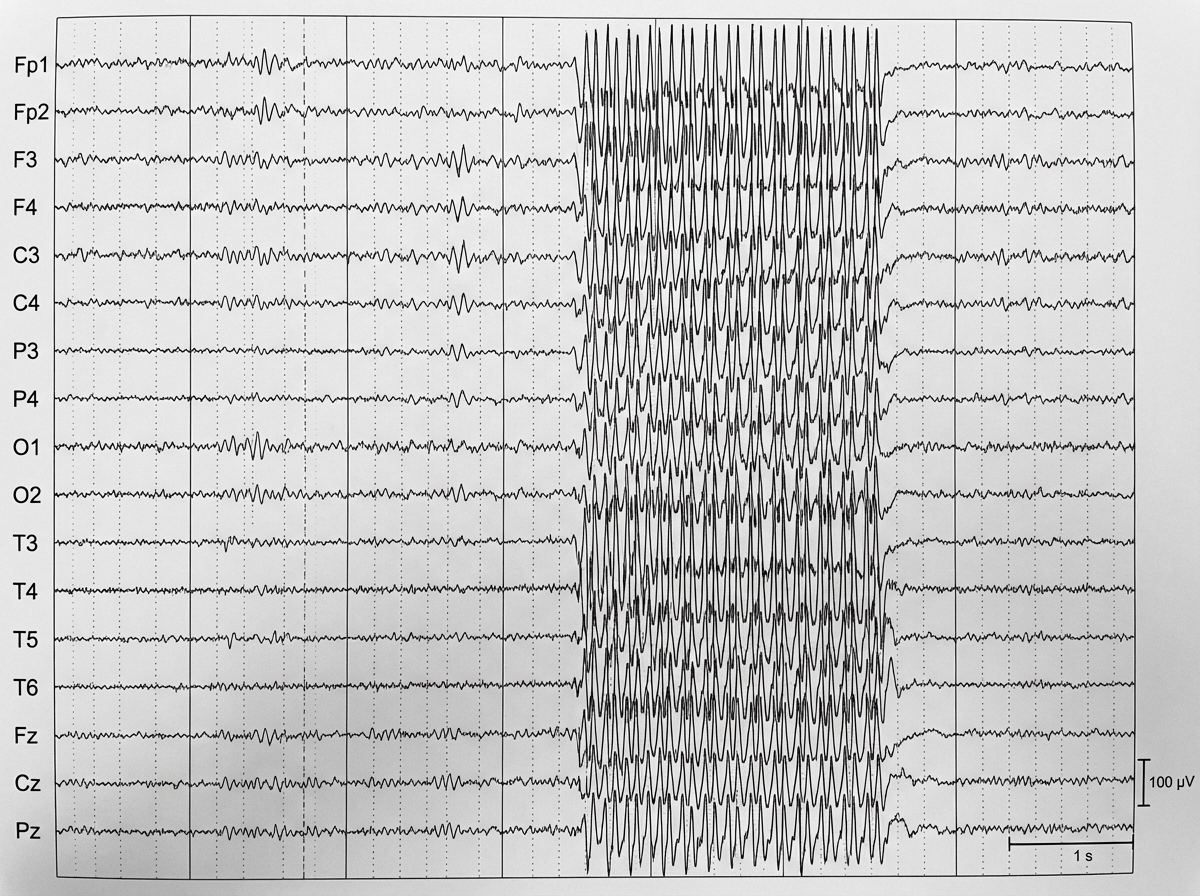
A 10-year-old girl develops ataxia and hydrocephalus. A CT scan shows a midline cerebellar mass. Which of the following is the most likely diagnosis?
What is the most common age group for febrile seizures?
Practice by Chapter
Seizure Disorders and Epilepsy
Practice Questions
Febrile Seizures
Practice Questions
Headache Disorders
Practice Questions
Cerebral Palsy
Practice Questions
Neural Tube Defects
Practice Questions
Neuromuscular Disorders
Practice Questions
Neurodegenerative Disorders
Practice Questions
CNS Infections
Practice Questions
Hydrocephalus
Practice Questions
Movement Disorders
Practice Questions
Traumatic Brain Injury
Practice Questions
Neuroimaging in Pediatrics
Practice Questions
Want unlimited practice?
Get full access to all questions, explanations, and performance tracking.
Scan to download app