
Neurology — MCQs

On this page
Which of the following is NOT associated with an increased risk of future seizures in a child with a history of febrile seizures?
A teenager has a long history of "daydreaming" in school. EEG reveals evidence of a generalized seizure disorder, but there has never been a history of convulsive muscular activity. For the above patient with clinical symptoms and signs, select the most likely seizure type.
A 9-year-old girl has had difficulty combing her hair and climbing stairs for 6 months. On examination, Gower sign is positive, and a maculopapular rash is present over the MCP joints. What is the next appropriate investigation to be done?
A 6-year-old child presents with abnormal twitching of the face during sleep, which is noticed by the mother. EEG shows spikes over the centro temporal area. What is the diagnosis?
A child presented with mental retardation and spastic limbs with a history of perinatal distress. What is the most likely diagnosis?
Which of the following is NOT a treatment for infantile spasms?
A 6-year-old boy presents with progressive weakness in muscles and difficulty walking upstairs. He has difficulty walking on his toes and exhibits a waddling gait. Calf muscle hypertrophy is noted, and his CPK levels are 10,000 LU. Which of the following is the most appropriate diagnosis?
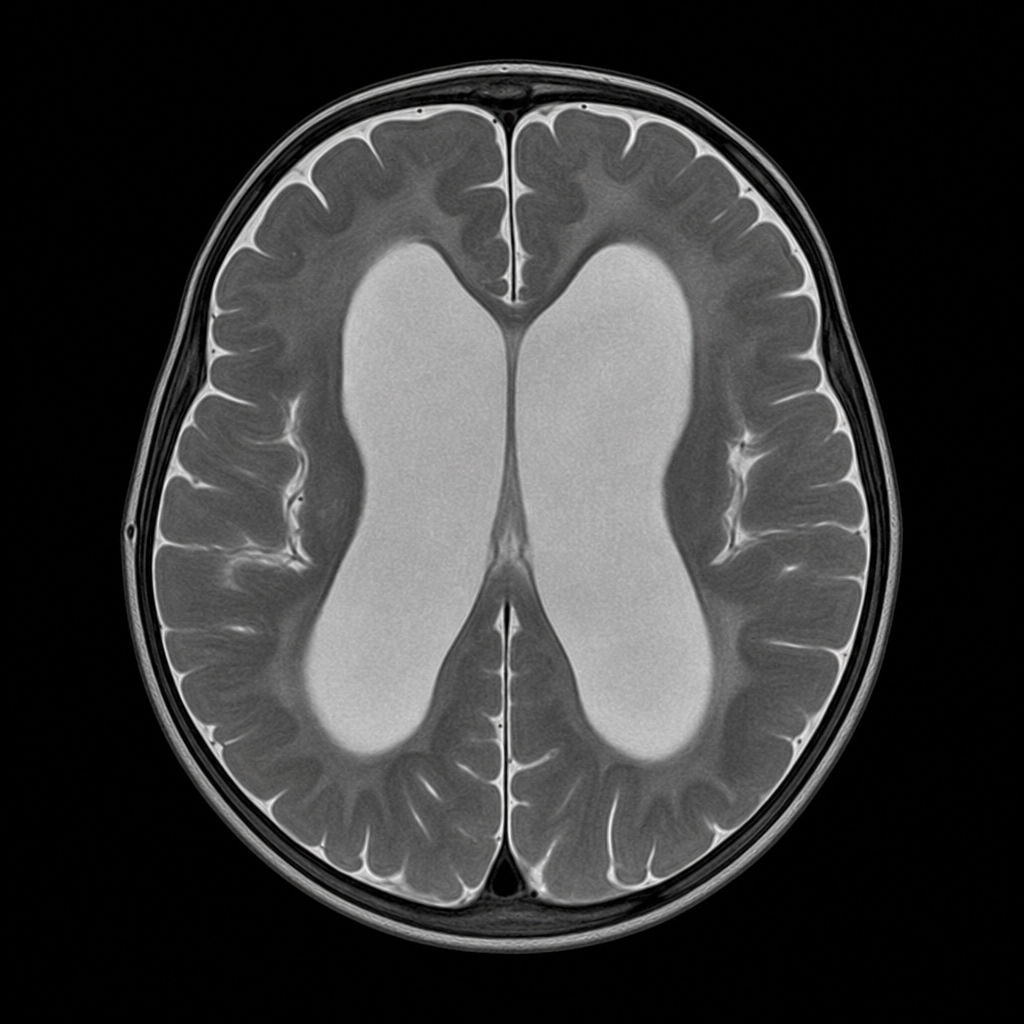
An infant presented with mental retardation, regression of motor skills, problems with feeding, impaired head control, and macrocephaly. MRI of the infant is shown below. What is the most probable diagnosis?
A 9-year-old boy presents with a several-day history of progressive arm and leg weakness. He had an upper respiratory infection two weeks prior to presentation. The patient is alert and oriented. On repeated examination, the heart rate varies between 60 and 140 beats/minute and the blood pressure varies between 90/60 and 140/90 mm Hg. Respirations are shallow with a rate of 50/minute. There is symmetric weakness of the face and all four extremities. Deep tendon reflexes are absent. Sensation is intact. What is the most likely diagnosis?
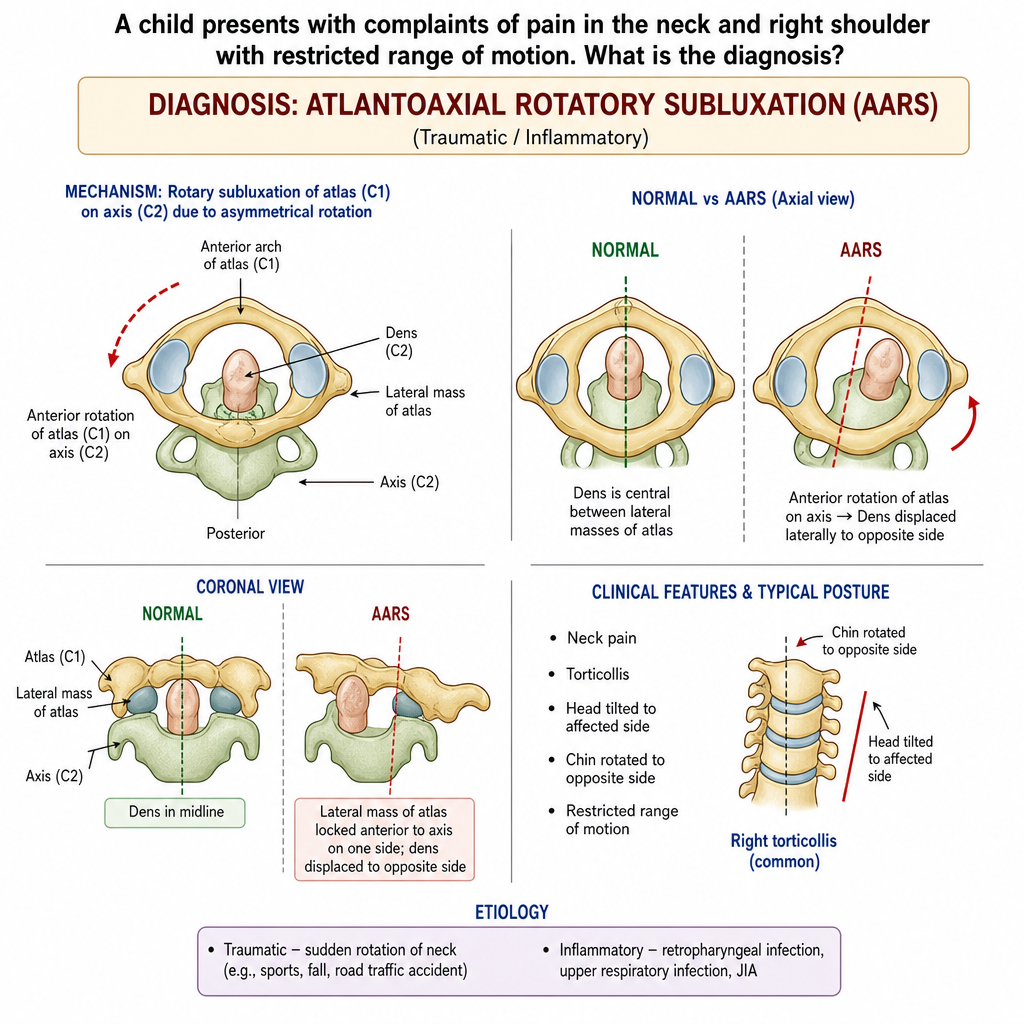
A child presents with complaints of pain in the neck and right shoulder with restricted range of motion. What is the diagnosis?
Practice by Chapter
Seizure Disorders and Epilepsy
Practice Questions
Febrile Seizures
Practice Questions
Headache Disorders
Practice Questions
Cerebral Palsy
Practice Questions
Neural Tube Defects
Practice Questions
Neuromuscular Disorders
Practice Questions
Neurodegenerative Disorders
Practice Questions
CNS Infections
Practice Questions
Hydrocephalus
Practice Questions
Movement Disorders
Practice Questions
Traumatic Brain Injury
Practice Questions
Neuroimaging in Pediatrics
Practice Questions
Want unlimited practice?
Get full access to all questions, explanations, and performance tracking.
Scan to download app