
Neurology — MCQs

On this page
A child presents with ascending flaccid paralysis. There is subsequent respiratory muscle involvement. CSF examination shows albuminocytological dissociation. Treatment of choice is:
What is the most common cause of hydrocephalus in children?
In a child with Rett syndrome, all of the following are seen except:
A 1-year-old child presented with myoclonic jerks. What does the EEG show?

Which of the following is NOT a feature of Moebius syndrome?
A tuft of hair over the lumbosacral region in a newborn is most commonly suggestive of:
A 2-week-old female infant has a head circumference of 40 cm, which is greater than the 98th percentile, along with a large, tense fontanelle and downward deviation of the eyes. She has been vomiting her formula and is irritable. Which of the following is the least likely cause of her symptoms?
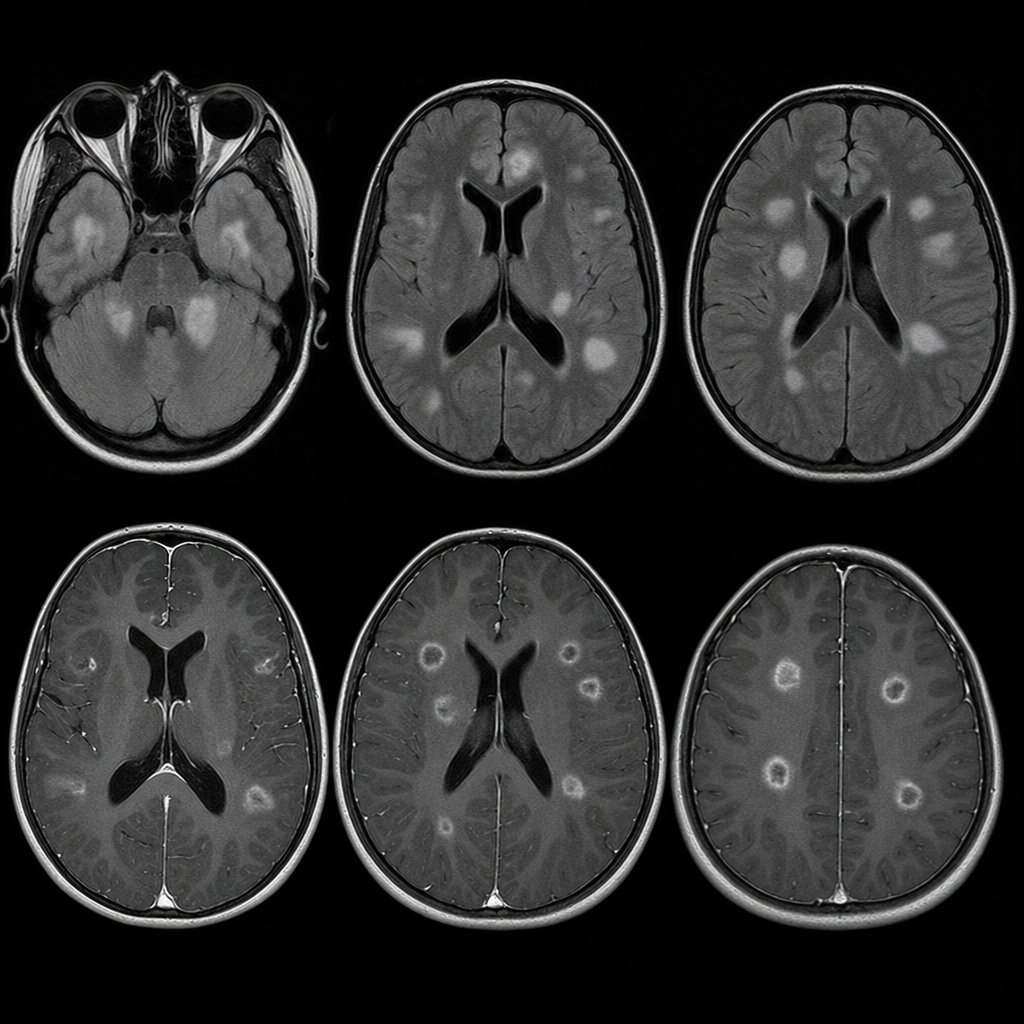
The 7-year-old boy, who is now in your office, was last seen 2 weeks ago with a mild viral upper respiratory tract infection. However, he presents today with fever, ataxia, weakness, headache, and vomiting. In the office, he experiences a 3-minute left-sided tonic-clonic seizure. After sending him to the hospital and ordering a magnetic resonance imaging (MRI) with contrast of the brain, the results of which are shown, his likely diagnosis is which of the following?
The following are recognized signs and symptoms of raised intracranial tension in a 9-month-old infant, except which of the following?
Which of the following is the most common cause of a bulging anterior fontanelle in infants?
Practice by Chapter
Seizure Disorders and Epilepsy
Practice Questions
Febrile Seizures
Practice Questions
Headache Disorders
Practice Questions
Cerebral Palsy
Practice Questions
Neural Tube Defects
Practice Questions
Neuromuscular Disorders
Practice Questions
Neurodegenerative Disorders
Practice Questions
CNS Infections
Practice Questions
Hydrocephalus
Practice Questions
Movement Disorders
Practice Questions
Traumatic Brain Injury
Practice Questions
Neuroimaging in Pediatrics
Practice Questions
Want unlimited practice?
Get full access to all questions, explanations, and performance tracking.
Scan to download app