
Neonatology — MCQs

On this page
Which of the following is NOT a way to prevent intraventricular hemorrhage in a preterm neonate?
A 4-week-old newborn presents with jaundice and clay-white stools. A liver biopsy shows giant cells with ballooning degeneration of the cytoplasm. What is the most likely diagnosis?
A female newborn presents with vaginal bleeding four days after birth. What is the appropriate management?
The sole of a newborn baby is suggestive of what condition?
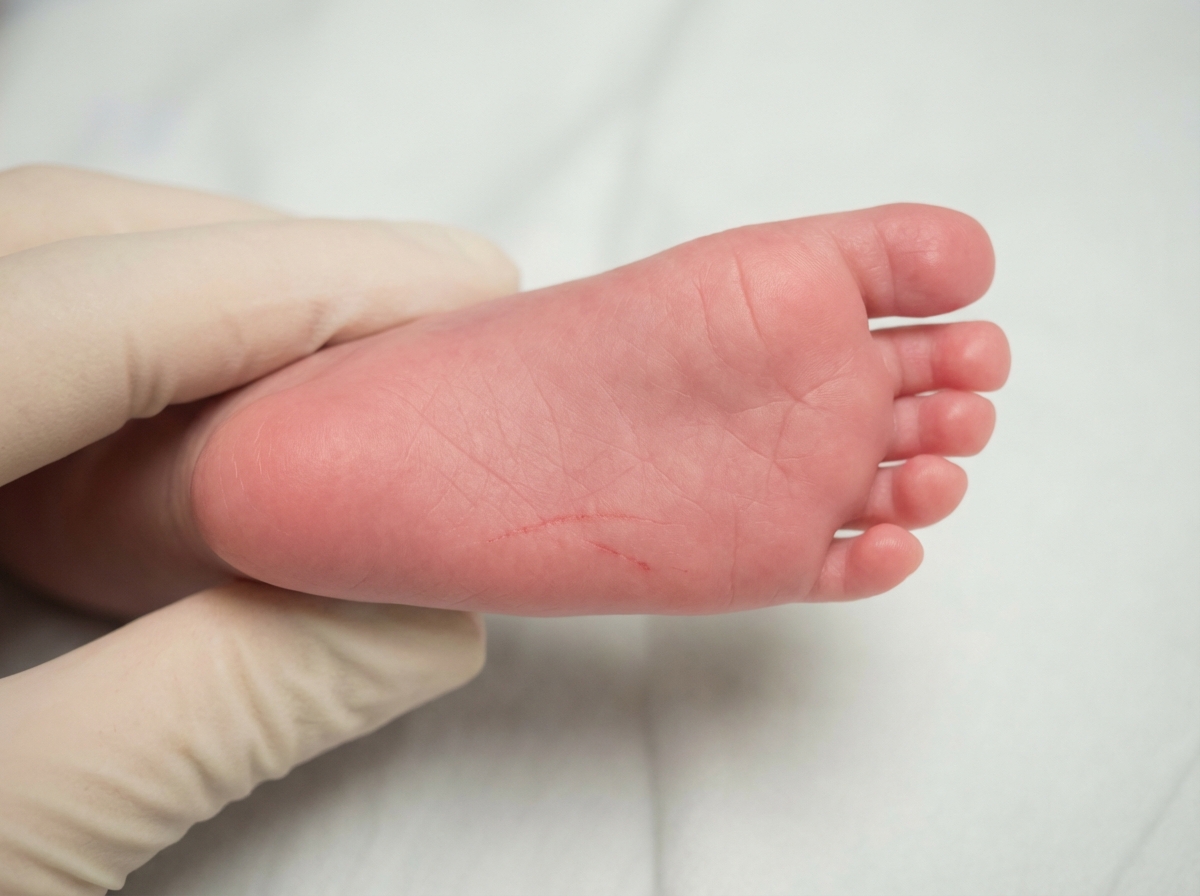
Unconjugated hyperbilirubinemia of the newborn is caused by all of the following EXCEPT:
All of the following are congenital infections EXCEPT:
A mother has been infected with rubella during pregnancy. Which of the following fetal congenital malformations can occur?
Vomiting on the first day of a baby's life can be caused by all of the following except?
Late onset hemorrhagic disease of the newborn is characterized by all of the following features except?
A patient was induced for being post-term at 42 3/7 weeks. Immediately following the delivery, you examine the baby and note the following on physical exam: a small amount of cartilage in the earlobe, occasional creases over the anterior two-thirds of the soles of the feet, 4-mm breast nodule diameter, fine and fuzzy scalp hair, and a scrotum with some but not extensive rugae. Based on this physical exam, what is the approximate gestational age of this male infant?
Practice by Chapter
Neonatal Resuscitation
Practice Questions
Care of the Normal Newborn
Practice Questions
Prematurity and Low Birth Weight
Practice Questions
Respiratory Distress Syndrome
Practice Questions
Neonatal Jaundice
Practice Questions
Neonatal Sepsis
Practice Questions
Necrotizing Enterocolitis
Practice Questions
Intraventricular Hemorrhage
Practice Questions
Persistent Pulmonary Hypertension
Practice Questions
Perinatal Asphyxia
Practice Questions
Neonatal Seizures
Practice Questions
Congenital Anomalies
Practice Questions
Want unlimited practice?
Get full access to all questions, explanations, and performance tracking.
Scan to download app