
Thrombocytopenia — MCQs

Cause of ITP is
A 5-year-old boy has recurrent infections, low platelet count, and rash as shown below. What is the likely diagnosis?
An 8-year-old boy presents with petechiae, azotemic oliguria and altered sensorium, in casualty. There is a history of diarrhoea for the past 5 days. The clinical diagnosis is –
Which of the following is not a characteristic of Fanconi's anemia?
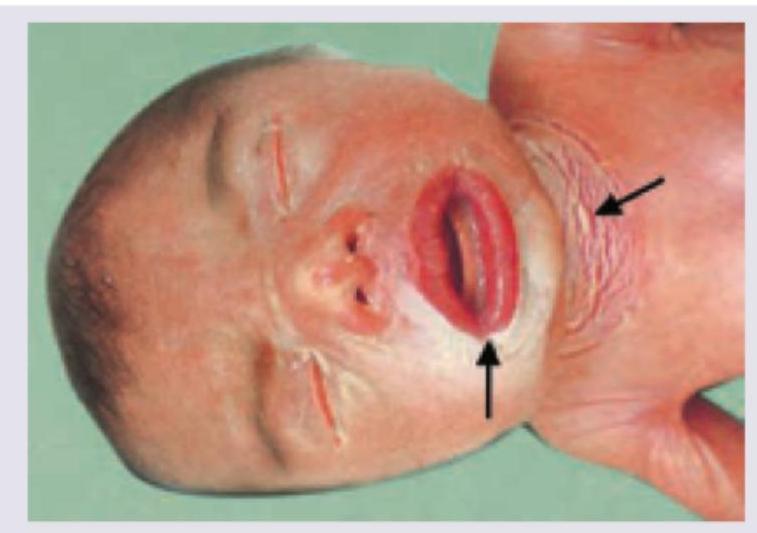
A neonate presents with the condition shown in the image below. This condition has all of the following features EXCEPT:
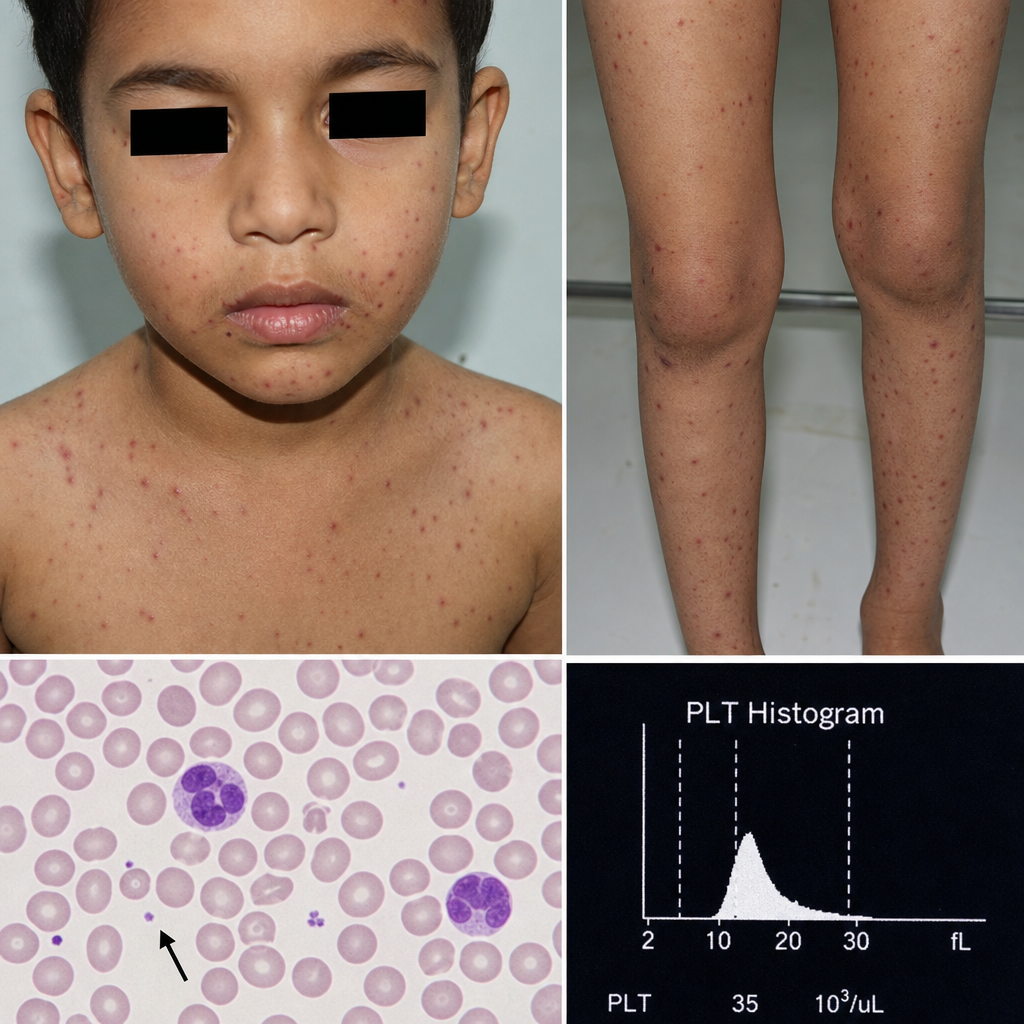
A 5-year-old boy presents with petechial bleeding and bruising on his torso and limbs. He has no other signs or symptoms and does not appear ill. His mother reports a gastrointestinal infection several weeks prior to the onset of petechiae and bruising. Complete blood count reveals thrombocytopenia (<20 x 10^9/L), with other parameters within the expected range for his age. Prothrombin time, partial thromboplastin time, and metabolic panels are all within the reference range. What is the expected outcome of this blood disorder?
A 9-year-old girl develops widespread pinpoint skin hemorrhages after recovering from a flu-like illness 1 week earlier. Laboratory findings reveal a platelet count of 20,000/mL with no other abnormalities. Her bone marrow shows an increased number of megakaryocytes. The platelet count is normal after 2 months. Which of the following is the appropriate diagnosis?
A patient presents with ecchymoses and petechiae all over the body and no hepatosplenomegaly. Which of the following statements is NOT true?
A 2-year-old child presents with discharge, seborrheic dermatitis, polyuria, and hepatosplenomegaly. Which of the following is the most likely diagnosis?
An 8-year-old boy presented with altered sensorium, nausea, vomiting, severe headache, and right-sided weakness. There was no history of trauma. On further examination, it was observed that the joints of the child were tender and stiff. The mother gave a history of easy bruising along with frequent episodes of epistaxis and hematemesis. Lab findings revealed normal hematocrit with a normal platelet count and PT, and an abnormally prolonged aPTT. Which of the following drugs is approved in the mild and moderate variants of the above disease?
Want unlimited practice?
Get full access to all questions, explanations, and performance tracking.
Scan to download app