
Respiratory Pathology — MCQs

On this page
What is the most common benign tumor of the lung?
Scar carcinoma of the lung is most commonly seen following which conditions?
The mucus seen in chronic bronchitis patients is derived from which of the following cell types?
A 33-year-old man suddenly develops severe dyspnea with wheezing. On physical examination, his vital signs are temperature, 37°C; pulse, 95/min; respirations, 35/min; and blood pressure, 130/80 mm Hg. A chest radiograph shows increased lucency in all lung fields. Arterial blood gas analysis shows PO2, 65 mm Hg; PCO2, 30 mm Hg; and pH, 7.48. A sputum cytologic specimen shows Curschmann spirals, Charcot-Leyden crystals, branching septate hyphae, and eosinophils in a background of abundant mucus. What is the most likely risk factor predisposing him to this illness?
What is the characteristic histological finding of chronic radiation pneumonitis?
A 65-year-old chronic smoker presented with a central lung mass with distal bronchiectasis and recurrent pneumonia. A greyish white tumor was resected. Which of the following histopathological finding is most likely to be seen?
Which of the following cell types is most commonly associated with chronic allergic asthma?
Hyaline membrane in the lung is seen in which condition?
A 22-year-old biker sustained a severe injury in a road traffic accident. After admission to the hospital, his condition suddenly worsened, leading to death. A pathological specimen was provided. What is the likely cause of death?
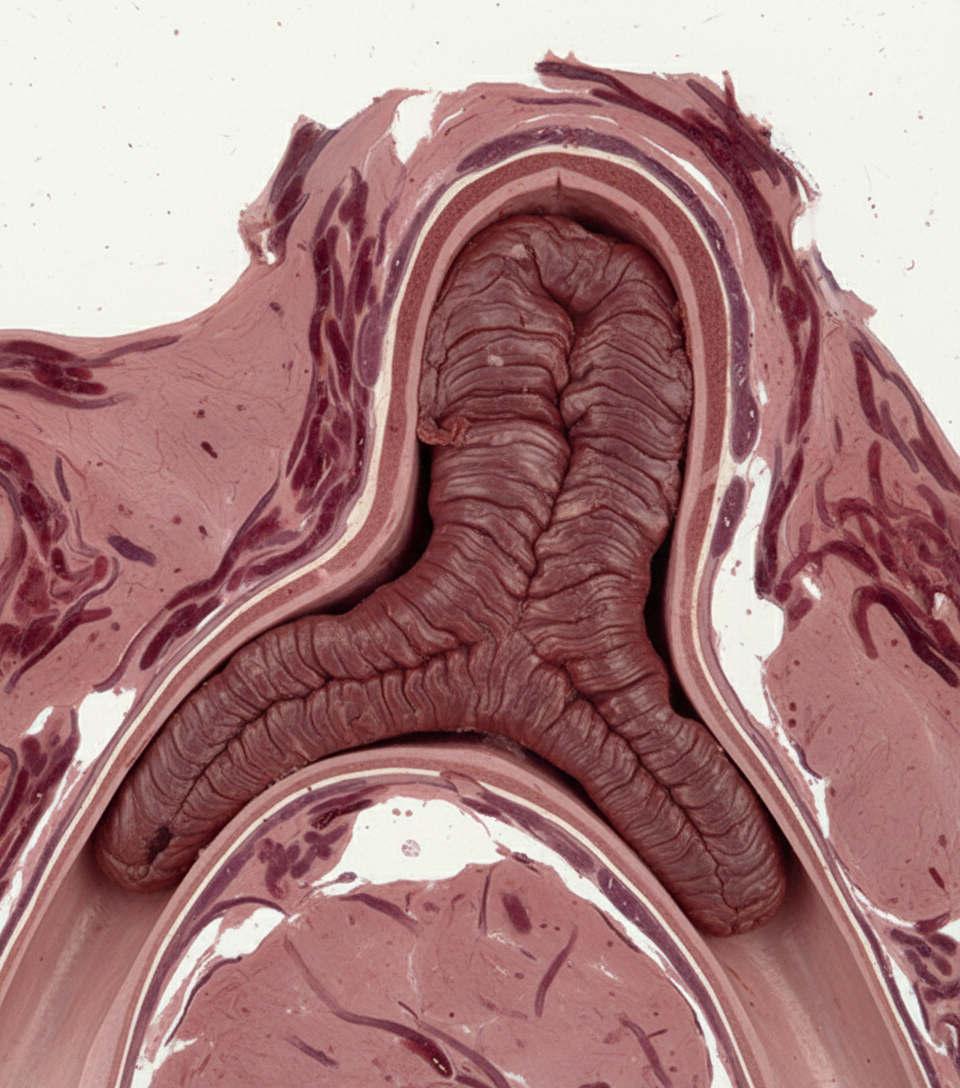
Which of the following is NOT a cavitating lesion in the lungs?
Practice by Chapter
Congenital Anomalies
Practice Questions
Atelectasis and Acute Lung Injury
Practice Questions
Obstructive Pulmonary Diseases
Practice Questions
Restrictive Pulmonary Diseases
Practice Questions
Lung Infections
Practice Questions
Pulmonary Vascular Diseases
Practice Questions
Lung Tumors
Practice Questions
Pleural Diseases
Practice Questions
Interstitial Lung Diseases
Practice Questions
Occupational Lung Diseases
Practice Questions
Want unlimited practice?
Get full access to all questions, explanations, and performance tracking.
Scan to download app