
Cartilage Biology and Physiology — MCQs

Which type of collagen is most abundant in hyaline cartilage?
Which of the following is NOT required for gluconeogenesis from lactate?
All of the following contribute to the intervertebral disc EXCEPT:
In Articular cartilage, most active chondrocytes are seen in ?
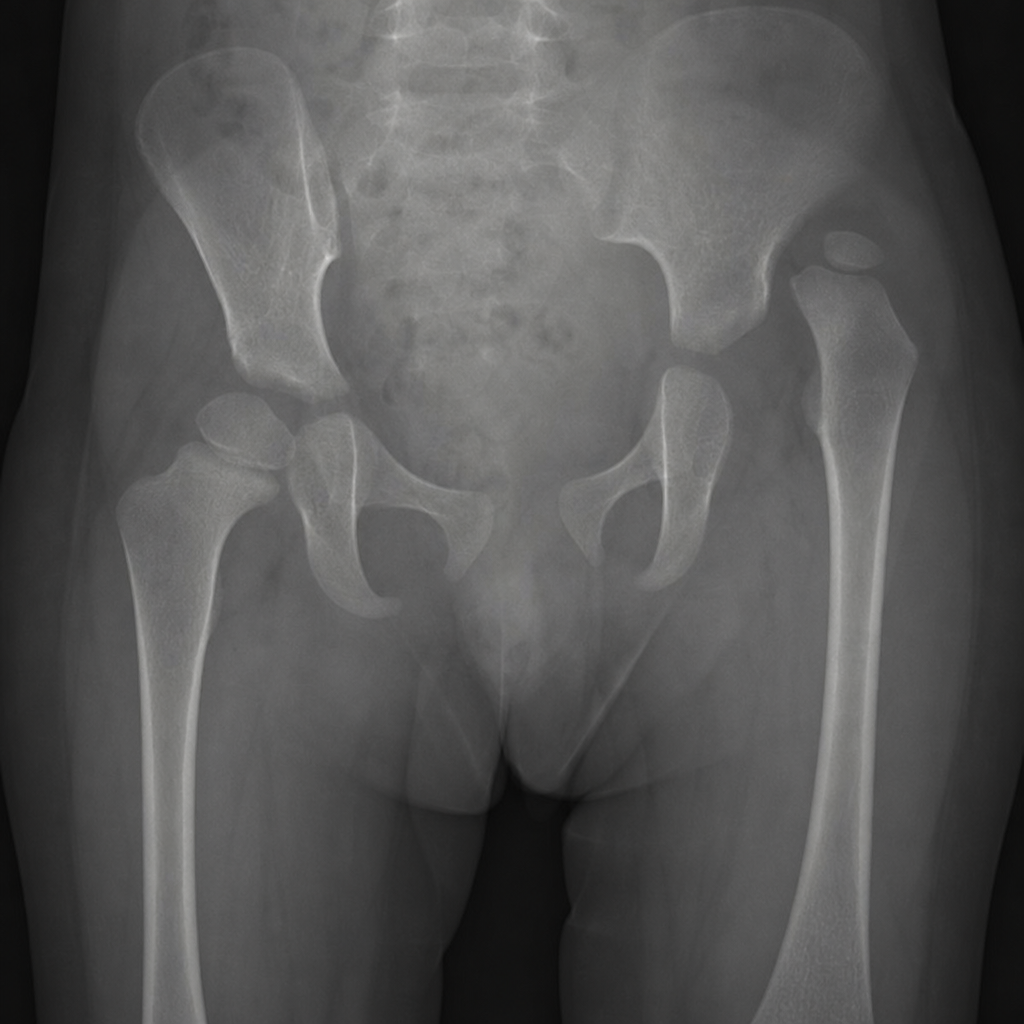
A 9-month-old girl is brought by her mother who noticed asymmetric skin folds on the thighs and difficulty abducting the left hip during diaper changes. She was a firstborn, delivered in breech presentation. Examination reveals limited abduction of the left hip to 30 degrees. The pelvis radiograph is shown (Image 1). Which of the following is the most appropriate next step in management?
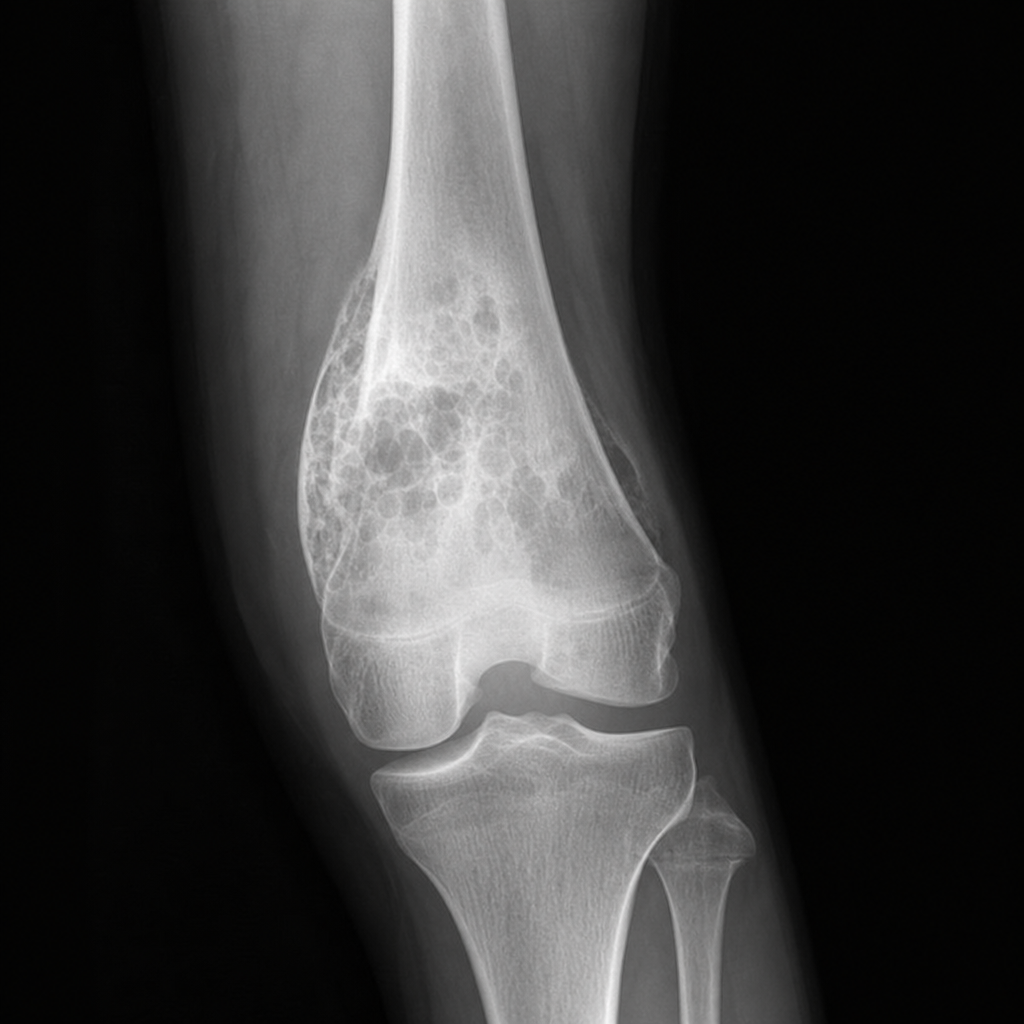
A 16-year-old boy presents with a 6-week history of progressively worsening pain and swelling around the right knee. He denies any trauma. On examination there is a firm, tender, warm swelling over the distal femur. Serum alkaline phosphatase is markedly elevated. The plain radiograph is shown in Image 1. Which of the following is the most appropriate next step in management?
Which of the following diagnostic studies is NOT useful in the evaluation of upper-extremity pain?
What is the most important factor in fracture healing?
A patient operated for a forearm fracture under general anesthesia with a tourniquet was unable to move his fingers and had sensory loss over the entire hand postoperatively. What is the most common type of nerve injury in this scenario?
What is Neurapraxia?
Want unlimited practice?
Get full access to all questions, explanations, and performance tracking.
Scan to download app