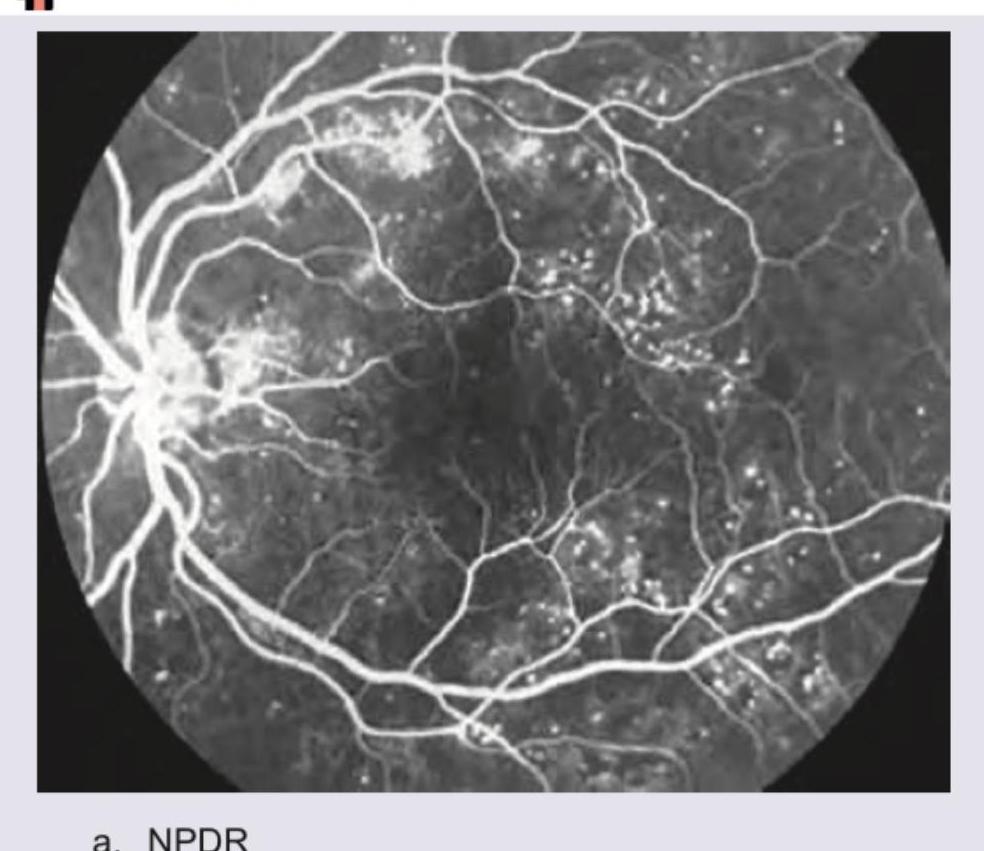
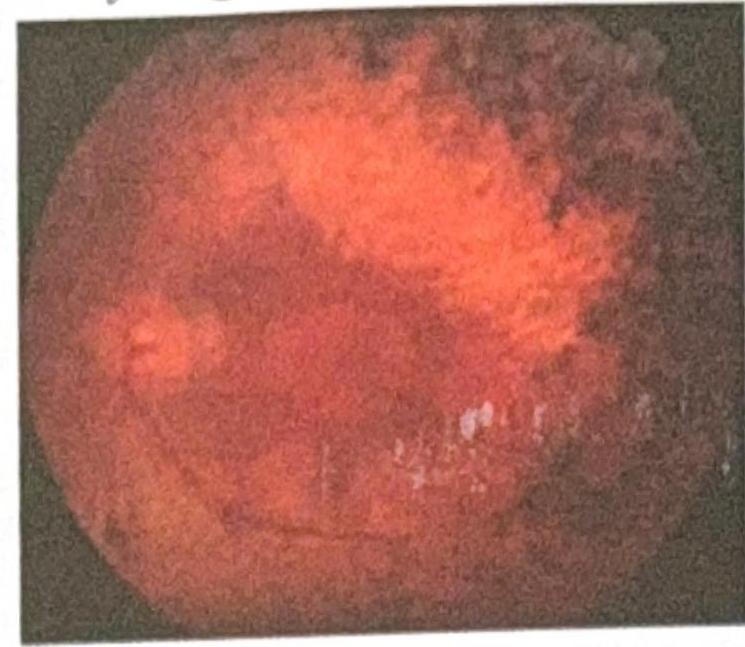
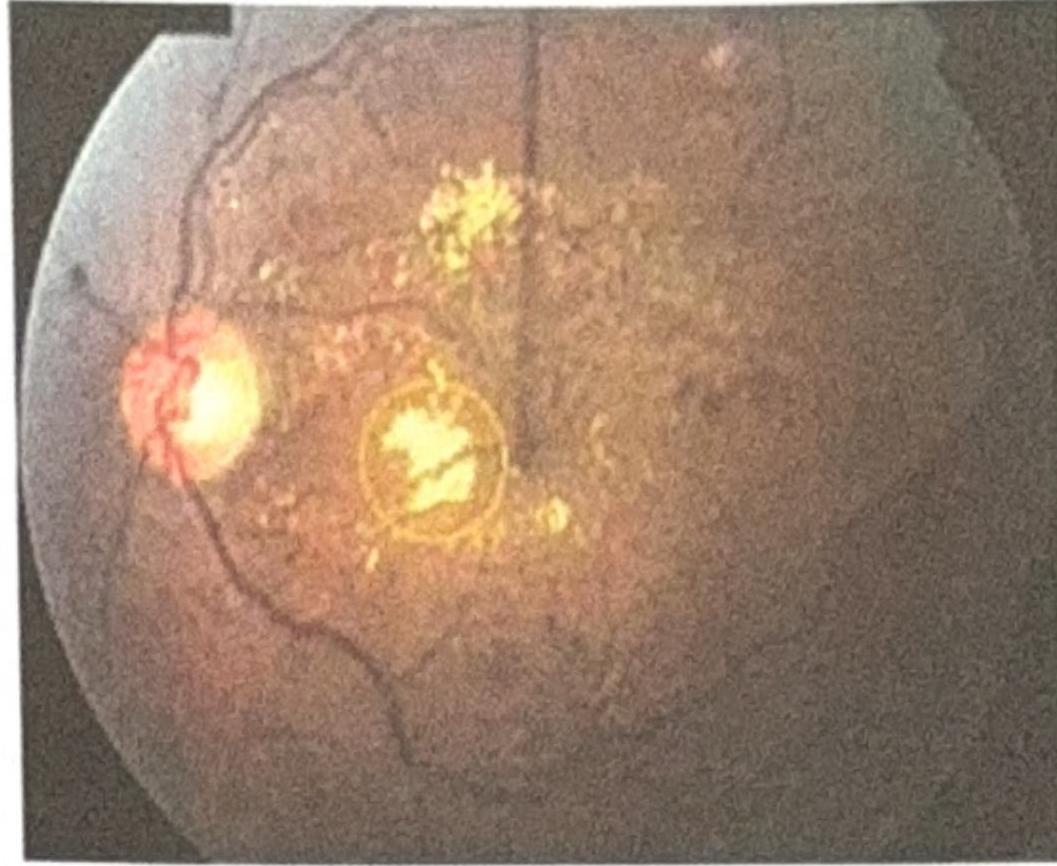
Which of the following is seen in proliferative diabetic retinopathy?
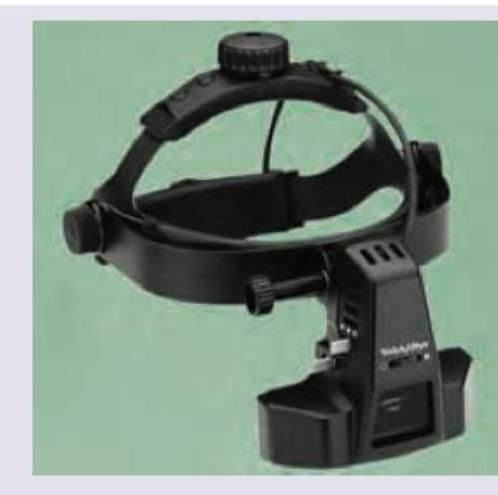
Which of the following investigations allows examination of all layers of the retina?
A 40-year-old AIDS positive patient complains of seeing floaters followed by progressive reduction in visual acuity over next weeks. Fundus examination was performed. All are true about the causative agent except: (Recent NEET Pattern 2016-17)

What is incorrect about the disease shown below?

What is the fundus finding shown below?

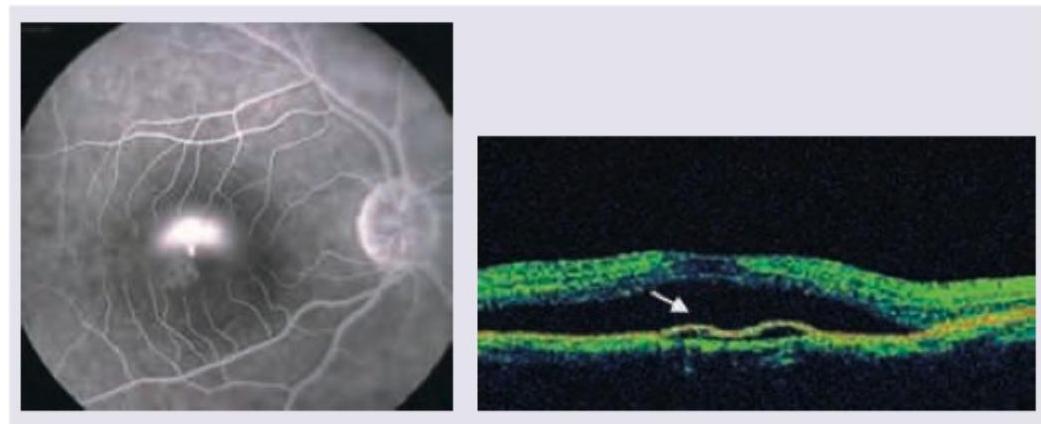
The FFA given below shows:

Identify the appearance:

Identify the fundus appearance seen on examination:

The fundus shown below indicates presence of:

What is the diagnosis based on this fundus examination?

Explanation: ### **Explanation: Diabetic Retinopathy and Retinal Detachment** The hallmark of **Proliferative Diabetic Retinopathy (PDR)** is **Neovascularization** (growth of new, fragile vessels) in response to chronic retinal ischemia. #### **Why Tractional Retinal Detachment (TRD) is Correct:** In PDR, neovascularization is accompanied by the proliferation of **fibrovascular membranes**. These membranes grow along the posterior hyaloid face and into the vitreous cavity. Over time, these fibrous bands undergo **contraction**, exerting mechanical "pull" or traction on the sensory retina. This pulls the neurosensory retina away from the underlying Retinal Pigment Epithelium (RPE), leading to **Tractional Retinal Detachment**. * **Key Feature:** TRD in PDR typically has a **concave configuration** and is non-rhegmatogenous (no hole/tear initially). #### **Why Other Options are Incorrect:** * **Exudative Retinal Detachment:** This occurs due to fluid leakage from the choroid (e.g., tumors, VKH syndrome, or inflammatory conditions). While PDR involves leakage (edema), it does not typically cause a full exudative detachment. * **Rhegmatogenous Retinal Detachment (RRD):** This is caused by a **full-thickness retinal break** (hole/tear) allowing liquefied vitreous to enter the subretinal space. While a TRD can occasionally progress to a "Combined" detachment if a tear forms, the primary mechanism in PDR is tractional. * **No Retinal Detachment:** This describes Non-Proliferative Diabetic Retinopathy (NPDR) or very early PDR before fibrous proliferation occurs. --- ### **High-Yield Clinical Pearls for INI-CET:** * **Management of TRD:** The gold standard treatment for a tractional detachment involving the macula is **Pars Plana Vitrectomy (PPV)** with membrane peeling. * **Indications for PRP:** Pan-retinal photocoagulation is indicated in **High-Risk PDR** to regress neovascularization. * **Vitreous Hemorrhage:** The most common cause of sudden, painless vision loss in a long-standing diabetic is vitreous hemorrhage (secondary to PDR). * **NVI:** Neovascularization of the Iris (Rubeosis Iridis) can lead to **Neovascular Glaucoma**, a dreaded complication of PDR.
Explanation: ### **Explanation** **Optical Coherence Tomography (OCT)** is the correct answer because it functions as an **"optical biopsy"** of the retina. It uses low-coherence interferometry (near-infrared light) to produce high-resolution, **cross-sectional images**. This allows clinicians to visualize and measure all **ten layers of the retina** individually, from the Internal Limiting Membrane (ILM) to the Retinal Pigment Epithelium (RPE) and even the underlying choroid. #### **Why the other options are incorrect:** * **B-scan Ultrasonography:** This is a two-dimensional acoustic imaging technique. While excellent for detecting gross structural changes (like retinal detachment or intraocular tumors) when the ocular media is opaque (e.g., dense cataract or vitreous hemorrhage), it lacks the resolution to distinguish individual retinal layers. * **Perimetry:** This is a **functional** test (not structural) used to map the visual field. It identifies blind spots (scotomas) but cannot visualize the anatomical layers of the retina. * **Fundus Fluorescein Angiography (FFA):** This is a dynamic study of the **retinal vasculature**. While it is the gold standard for detecting leaks, neovascularization, and capillary non-perfusion, it provides a "top-down" view and cannot differentiate the depth or thickness of specific retinal layers. --- ### **High-Yield Clinical Pearls for INI-CET:** * **OCT Principle:** Based on **Michelson Interferometry**. * **Resolution:** OCT has a resolution of **5–10 microns**, which is significantly higher than B-scan (~150 microns). * **Key Indications:** Best for diagnosing **Macular Hole**, **Epiretinal Membrane**, and **Cystoid Macular Edema (CME)**. * **Inverted Image:** In OCT, the RPE is the most hyper-reflective (brightest) outer band. * **Swept-Source OCT (SS-OCT):** The newest generation that uses longer wavelengths to penetrate deeper into the **choroid**.
Explanation: ***Eosinophilic intranuclear inclusions*** - The causative agent of **CMV retinitis** (Cytomegalovirus) typically forms **basophilic intranuclear inclusions** (owl's eye inclusions), not eosinophilic ones. - This statement is therefore incorrect regarding CMV. *Shed in semen* - **CMV** is commonly shed in various bodily fluids, including **semen**, urine, and saliva, contributing to its transmission. - This is a true characteristic of CMV. *Largest virus in human herpes virus* - **CMV** (Human herpesvirus 5) is indeed the **largest virus in the human herpesvirus family**, both in terms of genome size and virion size. - This is a true characteristic of CMV. *Leads to pizza pie retinopathy* - The classic description of **CMV retinitis** on fundus examination is often referred to as "**pizza pie retinopathy**" or "cottage cheese and ketchup" appearance, due to its characteristic retinal hemorrhages and white, necrotic areas. - This is a true clinical manifestation of CMV retinitis.
Explanation: ***Blood and thunderstorm fundus*** - This is **NOT** a feature of Retinitis Pigmentosa shown in the image, making it the correct answer. - "Blood and thunderstorm" fundus describes the appearance of **Central Retinal Vein Occlusion (CRVO)**, characterized by widespread retinal hemorrhages, dilated tortuous veins, cotton-wool spots, and optic disc edema. - The image shown is characteristic of **Retinitis Pigmentosa**, which presents with **bone-spicule pigmentation**, **attenuated retinal vessels**, and a **waxy pale optic disc** - completely different from CRVO. *Night blindness* - This **IS** a feature of Retinitis Pigmentosa, making it an incorrect answer choice. - Night blindness is often the **earliest symptom** of RP, caused by progressive degeneration of **rod photoreceptors**. - It refers to difficulty seeing in low light conditions, a hallmark of the disease. *Thin arteries* - This **IS** a feature of Retinitis Pigmentosa, making it an incorrect answer choice. - **Retinal vascular attenuation**, particularly of the arteries, is a classic sign of advanced RP. - This thinning reflects the underlying widespread retinal atrophy and reduced metabolic demand. *Pale disc* - This **IS** a feature of Retinitis Pigmentosa, making it an incorrect answer choice. - A **waxy pallor of the optic disc** is a characteristic finding in RP, indicative of optic nerve atrophy. - This results from the chronic degeneration of retinal ganglion cells and their axons.
Explanation: ***Cotton wool spots*** - The image shows multiple **whitish, fluffy lesions** scattered across the retina, which are characteristic of cotton wool spots. - These lesions represent **microinfarcts** in the nerve fiber layer caused by occlusion of precapillary arterioles, leading to accumulation of axoplasmic debris. - Commonly seen in **diabetic retinopathy**, **hypertensive retinopathy**, and **HIV retinopathy**. *Astrocytic hamartoma* - Astrocytic hamartomas (retinal astrocytomas) are typically seen in **tuberous sclerosis** and appear as **mulberry-like lesions** on the optic disc or retina. - These are well-defined, often calcified nodular masses that are more raised and discrete than cotton wool spots. - The findings in the image do not resemble these characteristic hamartomas. *Hemorrhagic retinitis* - **Hemorrhagic retinitis**, as seen in **CMV retinitis**, presents with a characteristic **"cheese and ketchup"** appearance due to widespread necrosis, hemorrhage, and retinal edema. - The lesions show extensive hemorrhage and areas of whitish necrosis, often following blood vessels. - The discrete white lesions in the image lack the extensive hemorrhage and necrotic areas typical of CMV retinitis. *Cattle trucking appearance* - **"Cattle trucking"** or **"boxcar segmentation"** refers to the appearance of discontinuous segments of blood in retinal veins due to extremely slow blood flow. - Often seen in conditions like **central retinal vein occlusion** or **hyperviscosity syndromes**. - This is a flow phenomenon within vessels and does not describe the white retinal lesions shown in the image.
Explanation: ***Flower petal appearance*** - This appearance is characteristic of **macular edema** on fluorescein angiography, specifically **cystoid macular edema**. - The dye leaks from perifoveal capillaries and accumulates in the intraretinal cystic spaces, outlining the **Henle's layer** in a radial, flower-petal-like pattern. *Ink blot pattern* - The **ink blot pattern** is seen in **central serous chorioretinopathy** where fluorescein leaks from a single point in the retinal pigment epithelium into the subretinal space, gradually expanding. - This differs from the multifocal cystic accumulation seen in the image. *Smoke stack pattern* - The **smoke stack pattern** is another feature of **central serous chorioretinopathy**, characterized by vertical leakage of fluorescein that expands upwards like smoke from a chimney. - This is not consistent with the diffuse, radial pattern observed in the image. *Puff of smoke appearance* - The **puff of smoke appearance** is typically associated with **moyamoya disease**, an angiographic finding of abnormal collateral vessels at the base of the brain. - This term is unrelated to retinal fluorescein angiography findings.
Explanation: ***Salt and pepper retinopathy*** - This image demonstrates diffuse **pigmentary changes** in the retina, characterized by alternating areas of **hypopigmentation** and hyperpigmentation, resembling salt and pepper. - This appearance is classically associated with certain **retinal degenerations** or congenital infections like congenital rubella. *Splashed tomato appearance* - This term describes severe **fundic hemorrhage**, typically seen in conditions like Purtscher's retinopathy or acute hemorrhagic maculopathy, which is not evident here. - It involves large, confluent areas of **blood** on the retina. *Cottage cheese and tomato ketchup appearance* - This distinctive appearance is characteristic of **cytomegalovirus (CMV) retinitis**, where white, fluffy lesions (cottage cheese) are intermingled with retinal hemorrhages (tomato ketchup), none of which are present in this image. - CMV retinitis is commonly seen in **immunocompromised individuals**. *Headlight in fog appearance* - This refers to a specific funduscopic finding in **ocular toxoplasmosis**, where a bright white active retinochoroidal lesion (headlight) is surrounded by significant vitritis (fog). - The image does not show active inflammation or dense vitreal haze.
Explanation: ***Cottage cheese and tomato ketchup appearance*** - This description is **pathognomonic for cytomegalovirus (CMV) retinitis**, particularly in immunocompromised patients (HIV/AIDS, transplant recipients, immunosuppressive therapy). - The image shows extensive **retinal infiltrates appearing white** (resembling cottage cheese, representing areas of retinal necrosis) mixed with **hemorrhages appearing red** (resembling tomato ketchup). - This is the classic appearance that confirms the diagnosis of CMV retinitis. *Splashed tomato appearance* - This term describes severe **proliferative diabetic retinopathy** with diffuse intraretinal hemorrhages, microaneurysms, and cotton wool spots. - While hemorrhages are present in the image, the extensive white necrotic infiltrates are not consistent with diabetic retinopathy. - Diabetic retinopathy lacks the confluent white areas of retinal necrosis seen here. *Headlight in fog appearance* - This describes **toxoplasmosis retinochoroiditis**, where a focal area of active inflammation (the "headlight") is surrounded by vitritis (the "fog"). - The image shows widespread, confluent retinal involvement with both necrosis and hemorrhage, not a single focal lesion with vitreous haze. - Toxoplasmosis typically presents with more localized disease. *Salt and pepper retinopathy* - This refers to a fine, speckled pattern of hyperpigmentation and depigmentation of the retinal pigment epithelium, seen in **congenital rubella syndrome** or **syphilis**. - The image shows large, confluent areas of active inflammation and hemorrhage, not the fine diffuse pigmentary changes characteristic of "salt and pepper" retinopathy. - This is an inactive, chronic pigmentary change, not acute retinitis.
Explanation: ***Forster-Fuchs' spots*** - The image shows a **dark, pigmented lesion** in the macula surrounded by a **lighter halo**, characteristic of **Fuchs' spot**, which is a sign of **choroidal neovascularization (CNV)** in **pathological myopia**. - These spots are a sign of **subretinal hemorrhage** and subsequent **fibrosis** found in very severe, **degenerative myopia**. *Papilledema* - **Papilledema** is characterized by **bilateral optic disc edema** due to increased **intracranial pressure**, causing blurring of the disc margins, venous engorgement, and often hemorrhage. - The image does not show typical signs of papilledema, such as a **swollen optic disc** with blurred margins, loss of the optic cup, and surrounding hemorrhages or exudates. *Papillitis* - **Papillitis** is an **inflammatory condition** affecting the **optic disc**, presenting as unilateral or bilateral disc edema with significant vision loss. - While it involves optic disc swelling, it is usually due to inflammation within the optic nerve head, and the image's macular changes are not consistent with primary isolated papillitis. *Optic neuritis* - **Optic neuritis** is typically an **inflammation of the optic nerve**, often causing **acute, painful vision loss** and can be associated with normal or swollen optic discs (papillitis if visible disc edema). - The fundus image displays profound **macular changes and significant degeneration**, which are not primarily characteristic of optic neuritis unless there are massive acute changes, which are not depicted here.
Explanation: ***Papilledema*** - The image shows a **swollen optic disc** with blurred margins, loss of the optic cup, and **hemorrhages** on and around the disc, all characteristic features of papilledema. - **Papilledema** is swelling of the optic disc due to increased intracranial pressure. *Optic atrophy* - **Optic atrophy** typically presents with a **pale optic disc**, sharply defined margins, and a reduction in the number of retinal nerve fibers. - There is no evidence of disc pallor or sharp margins in the provided image; instead, there is significant disc swelling and blurring. *Cupping of the disk* - **Cupping of the disc** refers to an enlargement of the physiological optic cup, often seen in glaucoma where there is a backward displacement of the lamina cribrosa. - The image clearly shows **loss of the optic cup** due to swelling, not an enlargement of it. *Silver wire appearance* - The **silver wire appearance** refers to a prominent light reflex off the blood column in retinal arterioles, indicating severe arterial narrowing and sclerosis, typically seen in advanced hypertensive retinopathy. - The primary findings in this image relate to the optic disc and surrounding tissue, not the general appearance of the retinal arterioles.
Retinal Anatomy and Physiology
Practice Questions
Age-Related Macular Degeneration
Practice Questions
Diabetic Retinopathy
Practice Questions
Retinal Vascular Diseases
Practice Questions
Retinal Detachment
Practice Questions
Hereditary Retinal Dystrophies
Practice Questions
Inflammatory Retinal Diseases
Practice Questions
Retinal Tumors
Practice Questions
Retinopathy of Prematurity
Practice Questions
Retinal Imaging Techniques
Practice Questions
Intravitreal Pharmacotherapy
Practice Questions
Vitreoretinal Surgery
Practice Questions
Get full access to all questions, explanations, and performance tracking.
Start For Free