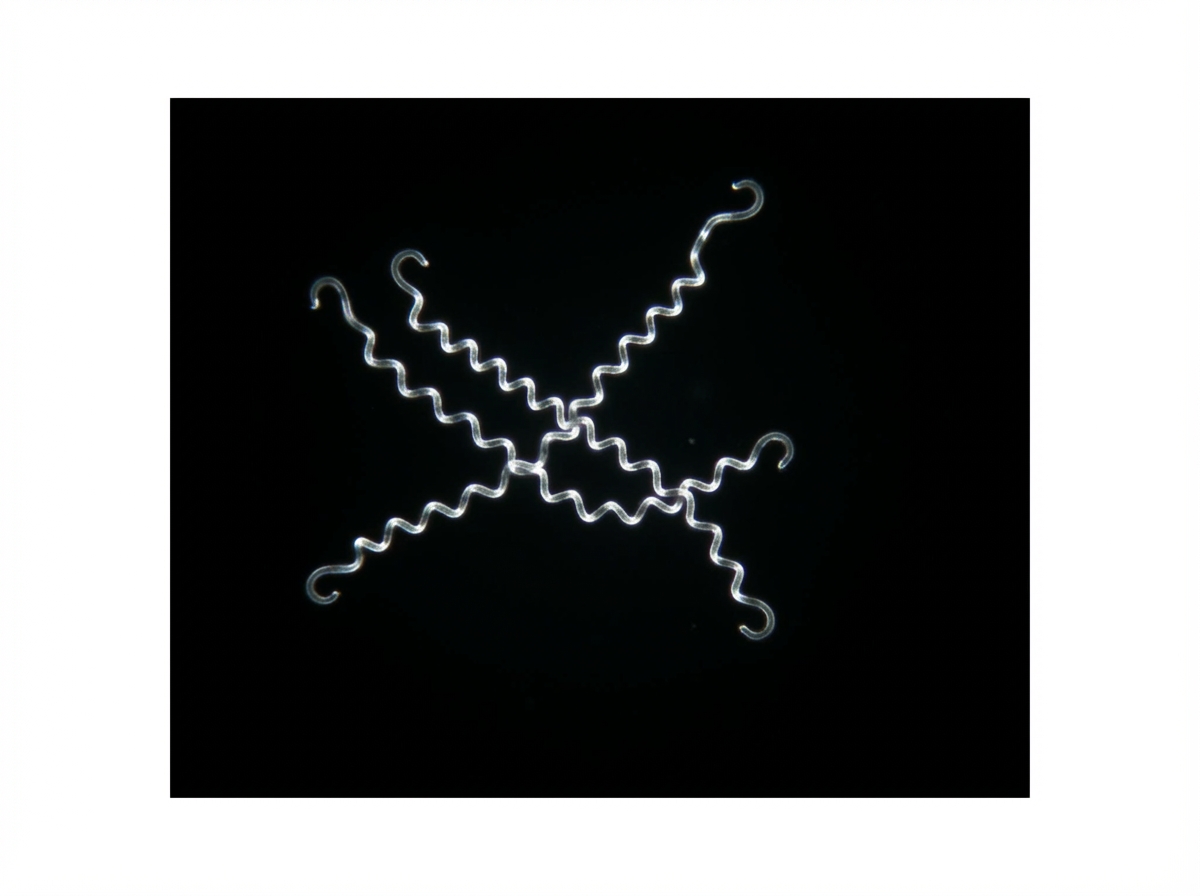
In a patient with legionellosis (including Pontiac fever or Legionnaires' disease), which specific antigen is typically detected by the standard urine antigen test?
Mycobacterium tuberculosis typically grows in Lowenstein-Jensen (LJ) media in how many weeks?
A female patient presents with complaints of thick white vaginal secretions. Which of the following can be used to identify the likely species of the causative agent?
Which culture medium is specifically used for isolating E. coli O157:H7?
Sabin-Feldman dye test is used for diagnosis of which of the following conditions:
Which culture media is specifically used for the growth of Legionella?
What is the gold standard microbiological test for diagnosing Leptospira infection?
What does the Urea Breath Test specifically detect?
HIV RNA by PCR can detect as low as
Naegler's reaction is due to:
Explanation: ***Legionella pneumophila serogroup 1 antigen*** - The standard **urinary antigen test for Legionella** specifically detects **Legionella pneumophila serogroup 1**, which accounts for **80-90% of all legionellosis cases** including both Legionnaires' disease (pneumonic form) and Pontiac fever (non-pneumonic form). - This antigen is **readily detectable in urine** within 1-3 days of symptom onset and can remain positive for weeks, even after antibiotic therapy has begun, making it an excellent diagnostic tool. - The test has **high specificity (>99%)** and **sensitivity (70-90%)** for Legionella pneumophila serogroup 1 infections, particularly in Legionnaires' disease. - **Clinical note**: While the test is available for legionellosis, it is primarily used for **Legionnaires' disease** (pneumonic form) rather than Pontiac fever, which is typically a self-limiting illness diagnosed clinically. *Legionella pneumophila serogroup 2 antigen* - While **Legionella pneumophila serogroup 2-15** can cause legionellosis, the standard commercial urinary antigen test is **designed to detect only serogroup 1**. - These other serogroups account for a much smaller proportion of human infections and require **culture or PCR methods** for definitive diagnosis. *Legionella longbeachae antigen* - **Legionella longbeachae** is a different species commonly associated with **potting soil exposure**, particularly in Australia and New Zealand. - The standard **Legionella pneumophila serogroup 1 urinary antigen test does not detect** this species. - Diagnosis requires culture, PCR, or species-specific serological testing. *Legionella micdadei antigen* - **Legionella micdadei** (formerly Pittsburgh pneumonia agent) causes infections primarily in **immunocompromised patients**. - The urinary antigen test is **specific for Legionella pneumophila serogroup 1** and does not cross-react with **L. micdadei**. - Diagnosis requires culture, direct fluorescent antibody (DFA) staining, or PCR methods.
Explanation: ***4-8 weeks*** - *Mycobacterium tuberculosis* is a **slow-growing organism** and typically requires **4 to 8 weeks** to form visible colonies on Löwenstein-Jensen (LJ) media. - This prolonged incubation period is necessary due to its **long generation time**, which is characteristic of mycobacteria. *0-14 days* - This incubation period is **too short** for typical *Mycobacterium tuberculosis* to show growth on LJ media. - Faster-growing **non-tuberculous mycobacteria** or common bacterial contaminants might appear in this timeframe, but not *M. tuberculosis*. *2-3 weeks* - While some research or enhanced media might show early signs, **2-3 weeks** is still generally **insufficient** for reliable and mature colony growth of *M. tuberculosis* on standard LJ media. - Cultures need a longer period to ensure detection and to differentiate from contaminants. *> 10 weeks* - Although *M. tuberculosis* is slow-growing, extending incubation beyond **8 weeks** is usually **not necessary** and rarely yields additional positive results if nothing has appeared by then. - Most positive cultures are detected within the 4-8 week window.
Explanation: ***CHROMagar*** - **CHROMagar Candida** is a differential and selective medium used for the isolation and presumptive identification of common yeast species, including *Candida albicans*, *Candida tropicalis*, and *Candida glabrata*, based on chromogenic reactions. - Different *Candida* species produce distinct colonies of varying colors on this medium, aiding in their **presumptive identification** directly from patient samples like vaginal secretions. *Birdseed agar* - This medium (also known as Staib's medium or Niger seed agar) is primarily used for the isolation and identification of **Cryptococcus neoformans**, which produces dark brown to black colonies due to its phenoloxidase activity. - While it's a fungal growth medium, it is not optimized for distinguishing common *Candida* species responsible for vaginal candidiasis. *Brain heart infusion agar* - **Brain heart infusion (BHI) agar** is a general-purpose, enriched non-selective medium used for the cultivation of a wide variety of fastidious bacteria, yeasts, and molds. - It does not contain differential components that would allow for the specific identification or differentiation of *Candida* species based on colony color or morphology. *Sabouraud dextrose agar* - **Sabouraud dextrose agar (SDA)** is a selective medium primarily used for the isolation and cultivation of pathogenic and nonpathogenic fungi, including yeasts and molds. - While *Candida* species will grow well on SDA, it does not provide differential characteristics (like distinct colony colors) to allow for the presumptive identification and differentiation of various *Candida* species.
Explanation: ***Sorbitol-MacConkey agar (SMAC)*** - **SMAC agar** is specifically designed to differentiate *E. coli* O157:H7 from other *E. coli* strains because O157:H7 does not ferment **sorbitol**, unlike most other *E. coli*. - On SMAC, *E. coli* O157:H7 colonies appear as **colorless** or **pale**, while sorbitol-fermenting *E. coli* appear **pink**. *Wilson and Blair medium* - This medium is primarily used for the isolation of **Salmonella typhi** and other **Salmonella** species. - It contains **bismuth sulfite** and **brilliant green** to inhibit gram-positive bacteria and most gram-negative enteric bacteria, except Salmonella. *Potassium tellurite in McLeod's medium* - **McLeod's medium** with potassium tellurite is used for the selective isolation of **Corynebacterium diphtheriae**. - Potassium tellurite inhibits the growth of most other respiratory flora, allowing *C. diphtheriae* to form distinctive **black colonies**. *Deoxycholate citrate agar (DCA)* - **DCA** is a selective medium mainly used for the isolation of **Salmonella** and **Shigella** species from fecal samples. - It contains **citrate** and **bile salts** that inhibit gram-positive bacteria and most non-pathogenic gram-negative enteric bacteria.
Explanation: ***Toxoplasmosis*** - The **Sabin-Feldman dye test** is a sensitive and specific serological test used to detect antibodies (primarily IgG) against *Toxoplasma gondii*, the parasitic causative agent of toxoplasmosis. - It measures the ability of specific antibodies in a patient's serum to prevent the **staining of live Toxoplasma tachyzoites** by methylene blue dye. *Granulomatosis with polyangiitis* - This is an autoimmune vasculitis primarily diagnosed using **biopsy** (showing granulomatous inflammation and necrotizing vasculitis) and serological testing for **antineutrophil cytoplasmic antibodies (ANCAs)**, specifically c-ANCA/PR3-ANCA. - The Sabin-Feldman dye test has no role in the diagnosis of this condition. *Hepatitis A virus infection* - Hepatitis A is a viral infection of the liver, diagnosed by detecting **IgM antibodies** to hepatitis A virus (anti-HAV IgM) in the acute phase of infection. - The Sabin-Feldman dye test is not and cannot be used for the diagnosis of viral hepatitis. *Clostridium botulinum infection* - Botulism, caused by toxins from *Clostridium botulinum*, is diagnosed by detecting the **botulinum toxin** in serum, stool, or wound samples, often through bioassays (e.g., mouse bioassay). - The Sabin-Feldman dye test is a parasitic serology test and is irrelevant to the diagnosis of bacterial toxin-mediated diseases.
Explanation: ***(BCYE) agar media*** - **Buffered charcoal yeast extract (BCYE) agar** is the specific and most widely used culture medium for the isolation and growth of *Legionella* species. - It contains **L-cysteine** and **iron salts**, which are essential growth factors for *Legionella*, along with activated charcoal to neutralize toxic metabolites. *MacConkey agar* - **MacConkey agar** is a selective and differential medium primarily used for the isolation of **Gram-negative enteric bacilli**. - It inhibits the growth of Gram-positive bacteria and differentiates lactose fermenters from non-fermenters. *Baird–Parker agar* - **Baird–Parker agar** is a selective medium specifically designed for the isolation and enumeration of **coagulase-positive staphylococci**, particularly *Staphylococcus aureus*, from food and clinical samples. - It contains tellurite, which is reduced by staphylococci to form black colonies. *Sabouraud’s agar* - **Sabouraud's dextrose agar (SDA)** is a selective medium primarily used for the cultivation of **fungi** (yeasts and molds). - Its low pH and high dextrose concentration inhibit the growth of most bacteria.
Explanation: ***Microscopic agglutination test (MAT)*** - The **Microscopic Agglutination Test (MAT)** is considered the **gold standard** for diagnosing leptospirosis due to its high sensitivity and specificity. - It detects **agglutinating antibodies** against live leptospiral serovars, allowing for both diagnosis and serovar identification. *Cold agglutination* - **Cold agglutinins** are antibodies that react with red blood cells at cold temperatures and are typically associated with **Mycoplasma pneumoniae** infections or certain autoimmune conditions. - This test is **not used** for the diagnosis of leptospirosis. *Standard agglutination* - **Standard agglutination tests** involve macroscopic observation of agglutination and are generally less sensitive and specific than microscopic methods. - While agglutination is the principle, the **MAT** specifically refers to the microscopic, highly sensitive method used for Leptospira. *ELISA test* - **ELISA (Enzyme-Linked Immunosorbent Assay)** is used for leptospirosis, primarily for screening and detecting **IgM antibodies** in acute infections. - However, it has **lower specificity** and sensitivity compared to MAT, particularly in early stages or for serovar differentiation.
Explanation: ***H.pylori*** - The **urea breath test** relies on *H. pylori's* ability to produce large amounts of the enzyme **urease**. - This urease hydrolyzes orally administered **urea** into ammonia and labeled carbon dioxide, which is then detected in the breath. *Campylobacter jejuni* - This bacterium is a common cause of **bacterial gastroenteritis** but is not detected by a urea breath test. - *Campylobacter jejuni* is typically diagnosed through **stool cultures** or **PCR** testing. *E. coli* - *Escherichia coli* is a diverse group of bacteria, some strains of which can cause **gastrointestinal illness** or urinary tract infections. - It does not produce the enzyme urease in quantities significant enough for detection by a urea breath test. *Lactobacillus* - **Lactobacillus** are generally considered **probiotic** bacteria found in the gut and are not associated with peptic ulcers or the use of **urease**. - They are typically identified through specialized **microbiological cultures** if assessed.
Explanation: ***20 copies viral RNA/ml of blood*** - Modern **HIV RNA PCR assays** such as **Abbott RealTime HIV-1** and **Roche cobas HIV-1** have a lower limit of detection of **20 copies/mL**, which is the current standard for clinical viral load monitoring. - This highly sensitive detection limit is crucial for **monitoring antiretroviral therapy (ART) effectiveness**, detecting low-level viremia, and assessing **treatment failure**. - The **20 copies/mL threshold** allows clinicians to identify persistent low-level replication that may predict virologic rebound or drug resistance. *30 copies viral RNA/ml of blood* - While 30 copies/mL was cited in some older literature, it is **not a standard clinical threshold** for modern HIV viral load assays. - Current commercial assays have achieved greater sensitivity, with **20 copies/mL** being the widely accepted lower limit of quantification. *40 copies viral RNA/ml of blood* - Some earlier generation or less sensitive HIV RNA PCR assays had detection limits around **40 copies/mL**. - This threshold has been superseded by more sensitive technologies that can reliably detect down to **20 copies/mL** in routine clinical practice. *50 copies of viral RNA/ml of blood* - A detection limit of **50 copies/mL** was common in older HIV viral load tests and is still used as the threshold for defining **virologic suppression** in many clinical guidelines. - However, for actual **detection capability**, modern assays can quantify viral RNA at much lower levels (20 copies/mL), which is important for detecting low-level viremia in patients on ART.
Explanation: ***Lecithinase*** - The **Naegler reaction** is a bacterial identification test used to detect the production of **lecithinase** (also known as alpha-toxin) by certain bacteria, particularly *Clostridium perfringens*. - This enzyme hydrolyzes **lecithin** (a lipid found in egg yolk), resulting in a visible opaque precipitate around the bacterial colonies on egg yolk agar. *Coagulase* - **Coagulase** is an enzyme produced by some bacteria (e.g., *Staphylococcus aureus*) that causes the coagulation of blood plasma. - While it is an important virulence factor, it is not involved in the **Naegler reaction**. *Hyaluronidase* - **Hyaluronidase** is an enzyme that breaks down **hyaluronic acid**, a component of connective tissue, facilitating the spread of bacteria. - It is often referred to as a **spreading factor** but is not detected by the **Naegler reaction**. *None of the options* - This option is incorrect because **Lecithinase** is directly responsible for the **Naegler reaction**.
Specimen Collection and Transport
Practice Questions
Microscopy in Microbiology
Practice Questions
Culture Methods and Media
Practice Questions
Bacterial Identification Techniques
Practice Questions
Antimicrobial Susceptibility Testing
Practice Questions
Serological Diagnosis
Practice Questions
Molecular Diagnostic Methods
Practice Questions
Rapid Diagnostic Tests
Practice Questions
Point-of-Care Testing
Practice Questions
Automation in Microbiology Laboratory
Practice Questions
Quality Control in Diagnostic Microbiology
Practice Questions
Interpretation of Microbiological Reports
Practice Questions
Get full access to all questions, explanations, and performance tracking.
Start For Free