
Infectious Diseases — MCQs

On this page
A 53-year-old female with a history of systemic lupus erythematosus on prednisone presents with fever, cough, and pleuritic chest pain. Chest X-ray shows bilateral patchy infiltrates. Laboratory results indicate a white blood cell count of 3,000 and creatinine level of 1.4. Analyze and determine the diagnosis and initial treatment.
A 55-year-old man presents with fever, chills, and hematuria. He has a history of travel to sub-Saharan Africa, and a blood smear shows schistosomes. What is the most likely diagnosis?
According to current evidence and emerging guidelines, what is the preferred primary treatment for initial Clostridium difficile infection in adults?
A patient presents with an acute onset of severe muscle pain, fever, and headache after hiking in the woods. Blood tests reveal elevated creatine kinase levels. What is the most likely diagnosis?
A 50-year-old male presents with a history of syphilis treated 10 years ago. He now complains of difficulty walking, lancinating pains in his legs, and urinary incontinence. What is the most likely diagnosis?
A 40-year-old man with HIV presents with a cough and low-grade fever. A chest X-ray shows diffuse interstitial infiltrates. What is the most likely pathogen?
A 45-year-old man presents with a clean minor wound from gardening. His vaccination record shows he completed primary tetanus immunization series in childhood and received his last tetanus booster 12 years ago. What is the next step in management?
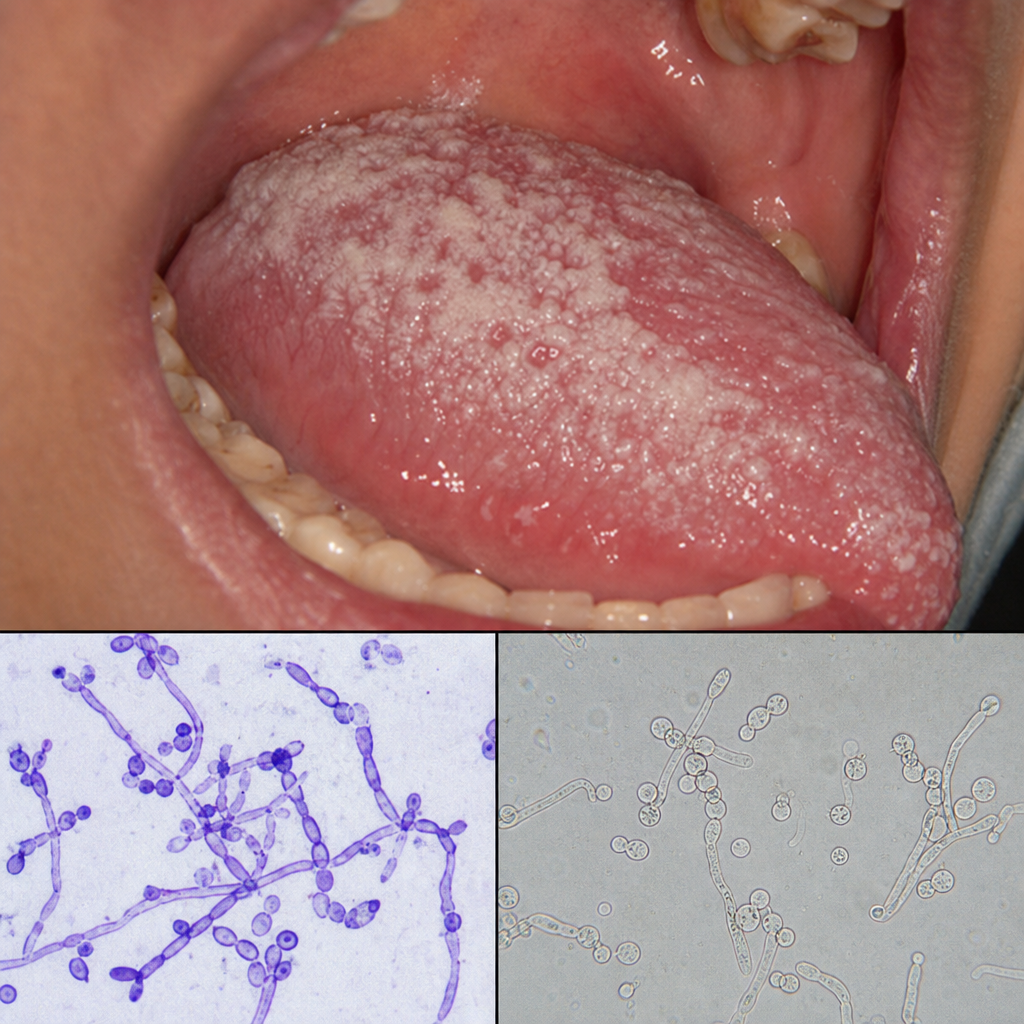
An HIV positive patient with a CD4 count of 300/cmm presents with mucosal lesions in the mouth. On microscopy, budding yeasts and pseudohyphae are seen. What is the most probable diagnosis?
Which viral infection is known to resemble the clinical features of erythroblastosis?
A bone marrow transplant recipient patient developed a chest infection. On HRCT, a 'tree-in-bud' appearance is seen. The most likely causative agent is:
Practice by Chapter
Principles of Antimicrobial Therapy
Practice Questions
Fever of Unknown Origin
Practice Questions
HIV/AIDS and Related Infections
Practice Questions
Tuberculosis and Mycobacterial Diseases
Practice Questions
Tropical and Parasitic Infections
Practice Questions
Viral Infections (Hepatitis, Herpes, etc.)
Practice Questions
Healthcare-Associated Infections
Practice Questions
Fungal Infections
Practice Questions
Sepsis and Septic Shock
Practice Questions
Infection in Immunocompromised Hosts
Practice Questions
Emerging and Re-emerging Infections
Practice Questions
Antimicrobial Resistance
Practice Questions
Vaccination Principles
Practice Questions
Want unlimited practice?
Get full access to all questions, explanations, and performance tracking.
Scan to download app