
Endocrinology — MCQs

On this page
A 25-year-old male reports episodic spells characterized by palpitations, sweating, nervousness, and feelings of anxiety. On examination, the man's blood pressure is 165/95 mm Hg. Plasma norepinephrine is 450 pg/mL (normal, 150-400 pg/mL), plasma epinephrine is 115 pg/mL (normal, 25-100 pg/mL), and 24-hour urinary VMA is 11 mg (normal, < 8 mg). Which of the following is the most likely cause of the patient's hypertension?
A perimenopausal woman presents with increasing swallowing difficulty and fatigue. Physical examination reveals a palpable goiter. Laboratory examination of her serum reveals T4 of 4.9 mg/dL, free T4 of 2.5 ng/dL, and TSH of 5.5 mIU/mL. No thyroid-stimulating immunoglobulins are identified in the serum, but antimicrosomal antibodies are present. Which one of the listed histologic findings, if present in a thyroid biopsy from this individual, would be most consistent with a diagnosis of Hashimoto's thyroiditis?
A 49-year-old man presents with recurrent episodes of drowsiness, sweating, and palpitations. During one episode, his blood glucose level was 52 mg/dL, and he recovered with intravenous 10% dextrose. His C-peptide levels are below the normal range. What is the most likely diagnosis?
What is true about Klinefelter syndrome?
Gestational hyperthyroidism occurs due to which of the following?
Which of the following has NOT been proven to delay or prevent diabetes in individuals with impaired glucose tolerance?
A young patient presents with a midline, tender swelling in the neck that occurred after an attack of sore throat. What is the most likely diagnosis?
Which of the following statements is not true regarding Hashimoto's thyroiditis?
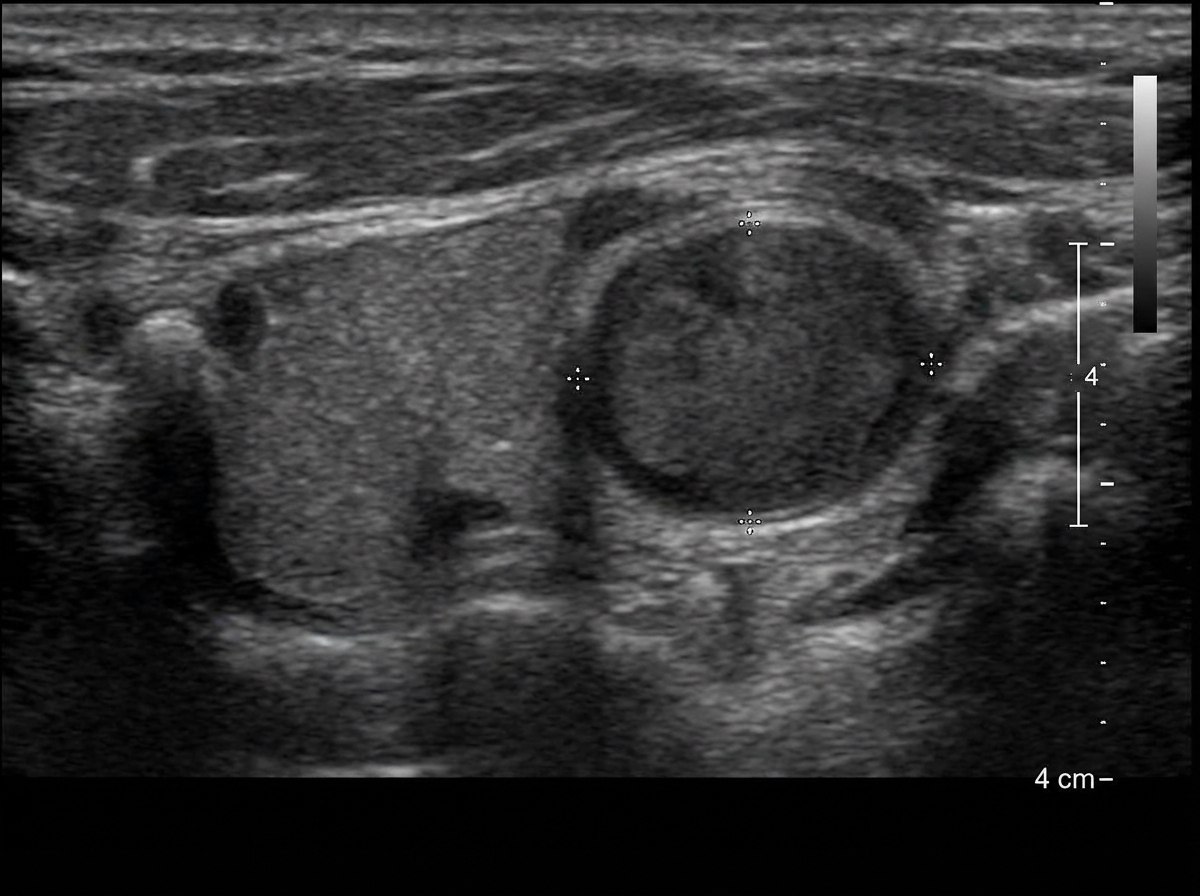
What laboratory test is most appropriate for this patient?
A 68-year-old patient, postoperative from thyroidectomy, presents with muscle cramps. Chvostek's and Trousseau's signs are noted on examination. What is the most likely finding on electrocardiogram?
Practice by Chapter
Diabetes Mellitus
Practice Questions
Thyroid Disorders
Practice Questions
Adrenal Gland Disorders
Practice Questions
Pituitary Disorders
Practice Questions
Calcium and Bone Metabolism
Practice Questions
Reproductive Endocrinology
Practice Questions
Lipid Disorders
Practice Questions
Endocrine Hypertension
Practice Questions
Multiple Endocrine Neoplasia
Practice Questions
Obesity and Metabolic Syndrome
Practice Questions
Neuroendocrine Tumors
Practice Questions
Endocrine Emergencies
Practice Questions
Want unlimited practice?
Get full access to all questions, explanations, and performance tracking.
Scan to download app