
Mass Grave Investigation — MCQs

What is the forensic method of identification that utilizes lip prints?
During autopsy of a fetal death case, what is the correct order of examination to differentiate between live birth and stillbirth?
Most accurate method to determine time since death in early post-mortem period?
Casper's Dictum is used for
Which method is considered the most reliable for fingerprint identification?
Preauricular sulcus is useful for determination of:
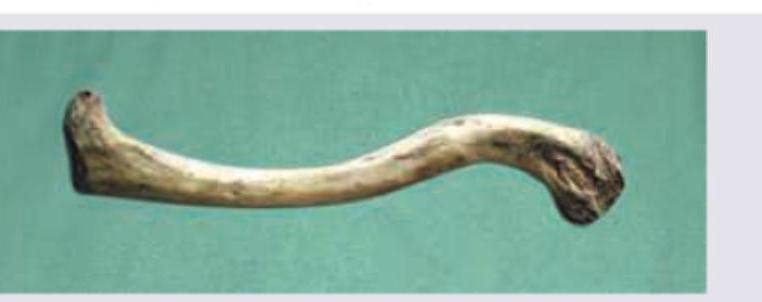
Estimate the stature of the person whose following bone was provided to you:
Ancestry determination in forensic anthropology primarily uses which of the following indices:
With respect to the dating of a bone, a bone more than 100 years old contains?
Which formula is used to determine stature?
Mass Grave Investigation Indian Medical PG Practice Questions and MCQs
Question 1: What is the forensic method of identification that utilizes lip prints?
- A. Trichology
- B. Dactylography
- C. Poroscopy
- D. Cheiloscopy (Correct Answer)
Explanation: ***Cheiloscopy*** - **Cheiloscopy** is the scientific study of lip prints for human identification, based on the unique patterns of furrows on the human lips. - These patterns are considered individual and permanent, making them useful in forensic investigations. *Dactylography* - **Dactylography** is the study of fingerprints, which involves analyzing the unique patterns of ridges and furrows on the fingertips for identification. - It is one of the most widely used and reliable methods for personal identification in forensic science, but does not involve lip prints, *Poroscopy* - **Poroscopy** is a forensic technique that involves the examination of the pores on the ridges of fingerprints. - It is used to individualize fingerprints when there is insufficient ridge detail, but it focuses on pores, not lip prints. *Trichology* - **Trichology** is the scientific study of hair and scalp. - In forensics, it involves analyzing hair samples to determine characteristics such as origin, race, and presence of toxins, but not lip prints.
Question 2: During autopsy of a fetal death case, what is the correct order of examination to differentiate between live birth and stillbirth?
- A. Thorax > head > abdomen
- B. Abdomen > thorax > head
- C. Thorax > abdomen > head
- D. Head > thorax > abdomen (Correct Answer)
Explanation: ### Explanation: Order of Fetal Autopsy The correct sequence for a fetal autopsy to determine live birth is **Head > Thorax > Abdomen**. #### 1. Why "Head First"? The primary goal in determining live birth is to assess the **Hydrostatic (Raygat’s) Test** and the **Stomach-Bowel (Breslau’s) Test**. * If the **thorax** or **abdomen** is opened first, blood from the large vessels (like the superior vena cava or portal vein) can drain downwards due to gravity. * Opening the **head first** allows the blood to drain from the cranial sinuses, effectively **decongesting the thoracic and abdominal organs**. This prevents artificial congestion and ensures that when the lungs and intestines are later tested for air, the results are not confounded by excessive blood volume or accidental trauma to the diaphragm. #### 2. Analysis of Incorrect Options * **Thorax > Head > Abdomen (A & C):** Opening the thorax first is the standard procedure in adult autopsies but is avoided in fetuses. Manipulating the chest before the head can cause blood to pool in the thoracic cavity, potentially obscuring signs of respiration or causing artifacts in the hydrostatic test. * **Abdomen > Thorax > Head (B):** While the abdomen contains the stomach (Breslau’s test), opening it first does not provide the necessary decompression of the venous system that the cranial opening provides. #### 3. High-Yield Clinical Pearls for INI-CET * **Hydrostatic Test:** Based on the principle that lungs that have breathed will float in water. **False positives** occur in putrefaction (gas formation); **False negatives** occur in secondary atelectasis or pneumonia. * **Wredin’s Test:** Presence of air in the **middle ear** indicates the infant lived long enough to perform swallowing/breathing actions. * **Breslau’s Second Life Test:** If the stomach and intestines float, it indicates the child survived long enough to swallow air. * **Spalding’s Sign:** An X-ray finding in *intrauterine* death showing overlapping of cranial bones due to liquefaction of the brain (occurs 4–7 days after death).
Question 3: Most accurate method to determine time since death in early post-mortem period?
- A. Algor mortis
- B. Livor mortis
- C. Rigor mortis
- D. Potassium in vitreous humor (Correct Answer)
Explanation: **Potassium in vitreous humor** - **Potassium concentration in the vitreous humor** increases at a relatively consistent rate after death, making it one of the most reliable methods for estimating time since death, particularly in the **early post-mortem period**. - The vitreous humor is an isolated compartment, less affected by environmental factors compared to other body parts, leading to more **predictable and stable changes**. *Algor mortis* - Refers to the **cooling of the body** after death, which is highly influenced by environmental factors such as ambient temperature, clothing, and body size. - Its accuracy diminishes rapidly, especially after the first few hours, due to these variable influencing factors. *Livor mortis* - Involves the **gravitational settling of blood** in capillaries, leading to discoloration of the skin. - While it helps determine body position at death and whether the body has been moved, its onset (30 minutes to 2 hours) and fixation (8-12 hours) are too broad for precise time estimation in the early post-mortem period. *Rigor mortis* - Describes the **stiffening of muscles** due to the depletion of adenosine triphosphate (ATP) after death. - Its onset (2-6 hours), progression, and resolution (24-84 hours) are highly variable and affected by factors such as muscle activity before death, temperature, and body build, making it less accurate for precise early time estimation.
Question 4: Casper's Dictum is used for
- A. Identification of Body
- B. Estimation of time since death (Correct Answer)
- C. Establishing cause of death
- D. Establishing weapon of injury
Explanation: ***Estimation of time since death*** - **Casper's Dictum** is a principle used in **forensic pathology** to estimate the time of death, particularly in cases involving different environments (air, water, earth). - It posits that a body decomposes at approximately **eight times slower in water** and **twice as slow in earth** compared to decomposition in air. *Identification of Body* - Body identification typically relies on methods like **fingerprints**, **dental records**, **DNA analysis**, or distinctive physical features. - Casper's Dictum focuses on the **rate of decomposition**, not on the unique characteristics required for identification. *Establishing cause of death* - The **cause of death** is the specific disease or injury that led to death, determined through autopsy findings, toxicology, and scene investigation. - Casper's Dictum aids in determining **when** death occurred, not **why** it occurred. *Establishing weapon of injury* - Determining the **weapon of injury** involves analyzing wounds, tool marks, and crime scene evidence. - Casper's Dictum's purpose is limited to **estimating the postmortem interval**, and it offers no information about the implement used to inflict injury.
Question 5: Which method is considered the most reliable for fingerprint identification?
- A. Gustafson method
- B. Galton method (Correct Answer)
- C. Anthropometry
- D. Scars
Explanation: ***Galton method*** - The **Galton method**, or **Galton's details**, refers to the unique patterns of **ridges and minutiae** (e.g., bifurcations, endings, dots) in fingerprints. - This method focuses on the **individual characteristics** and arrangements of these features, which are considered **highly individualizing** and form the basis of modern fingerprint analysis. *Gustafson method* - The **Gustafson method** is used in **forensic odontology** (dental forensics) for **age estimation** based on the examination of teeth. - It involves analyzing six morphological criteria of tooth changes, such as **attrition, secondary dentin deposits, and cementum apposition**, which are unrelated to fingerprint identification. *Anthropometry* - **Anthropometry** is the scientific study of the **measurements and proportions of the human body**. - It was historically used for identification (e.g., **Bertillonage system**) but was found to be less reliable than fingerprints due to the variability and commonality of body measurements. *Scars* - While **scars** can be unique bodily marks, they are **not considered a primary method for definitive identification** in the same way fingerprints are. - Scars can change over time, are not always present or uniformly documented, and lack the detailed, unchangeable patterns found in friction ridge skin.
Question 6: Preauricular sulcus is useful for determination of:
- A. Sex (Correct Answer)
- B. Stature
- C. Age
- D. Race
Explanation: ***Sex*** - The **preauricular sulcus**, also known as the sulcus preauricularis, is a groove found on the ilium near the sacroiliac joint. - This feature is generally more pronounced and frequently present in **females**, particularly those who have given birth, making it a useful indicator for **sex determination** in skeletal remains. *Stature* - **Stature estimation** typically involves measuring the lengths of long bones (e.g., femur, tibia, humerus) and applying population-specific regression formulas. - The preauricular sulcus is a morphological feature of the pelvic bone and does not directly correlate with an individual's overall height. *Age* - **Age estimation** in adults often relies on degenerative changes in joints, sternal rib ends, pubic symphysis morphology, or dental wear. - While the presence of a preauricular sulcus is more common in females and can be associated with childbearing, it is not a primary or reliable indicator for estimating an individual's chronological age. *Race* - **Racial (ancestral) determination** in forensic anthropology is primarily based on craniofacial features, such as nasal aperture shape, orbital morphology, and facial prognathism. - The preauricular sulcus is not recognized as a distinguishing characteristic for differentiating between various ancestral groups.
Question 7: Estimate the stature of the person whose following bone was provided to you:
- A. Length of bone X 5
- B. Length of bone X 8
- C. Length of bone X 11.1 (Correct Answer)
- D. Length of bone X 20
Explanation: ***Length of bone X 11.1*** - This multiplication factor appears in some **older forensic medicine references** for clavicular stature estimation, though it represents a **rough approximation** rather than precise methodology. - Among the given options, this provides the most reasonable estimate, though **modern forensic anthropology** strongly prefers **regression equations** over simple multiplication factors. - Standard regression formulas: Stature = **(4.62 × clavicular length + 105.35 cm)** for males and **(3.55 × clavicular length + 116.25 cm)** for females, with population-specific variations. *Length of bone X 5* - This multiplication factor is appropriate for **long bones of the lower limb**, particularly the **femur** (the longest bone in the body). - The **clavicle** is much shorter relative to body height and requires a **higher multiplication factor** for stature estimation. - Using this factor would result in significant **underestimation** of stature from clavicular measurements. *Length of bone X 8* - This factor is more suitable for **mid-length long bones** like the **humerus** or **tibia** in certain population groups. - Still **inadequate for clavicular estimation**, as the clavicle represents a much smaller proportion of total body height compared to these bones. - Would produce underestimated stature values when applied to clavicle length. *Length of bone X 20* - This factor would produce **grossly overestimated** stature measurements that exceed realistic human proportions. - **No established forensic anthropology method** uses such high multiplication factors for any skeletal element including the clavicle. - Modern practice uses precise **population-specific regression equations** with accuracy of ±4-5 cm rather than crude multiplication factors.
Question 8: Ancestry determination in forensic anthropology primarily uses which of the following indices:
- A. Corporo Basal index
- B. Cephalic index (Correct Answer)
- C. Medullary index
- D. Ischiopubic index
Explanation: ***Cephalic index*** - The **cephalic index** (or cranial index) is a ratio of the maximum width of the head to its maximum length, multiplied by 100. - This index is a classic anthropometric measurement used in forensic anthropology to help determine **ancestry** by categorizing head shapes (e.g., dolichocephalic, brachycephalic). *Corporo Basal index* - This index is not a recognized or commonly used term in forensic anthropology for **ancestry determination**. - While other indices use body measurements, this specific term does not correlate to established methods for identifying ancestry. *Medullary index* - The **medullary index** is primarily used in the analysis of hair to determine if the hair is human or animal in origin. - It measures the ratio of the diameter of the medulla to the diameter of the hair shaft and is not used for **ancestry determination** within humans. *Ischiopubic index* - The **ischiopubic index** is a measurement derived from the pelvis, primarily used in forensic anthropology for **sex determination**. - It reflects the relative lengths of the ischium and pubis and is not a direct indicator of **ancestry**.
Question 9: With respect to the dating of a bone, a bone more than 100 years old contains?
- A. 7 amino acids (Correct Answer)
- B. 9 amino acids
- C. 6 amino acids
- D. 8 amino acids
Explanation: **Explanation:** The dating of skeletal remains in forensic anthropology often relies on the analysis of **amino acid content**, which degrades predictably over time. Fresh bone typically contains a full complement of approximately 20 amino acids. As the bone ages and undergoes decomposition, these proteins break down, and the variety of detectable amino acids decreases. **Why Option A is Correct:** According to established forensic standards (Knight’s Forensic Pathology), bones that are **more than 100 years old** typically show a significant reduction in protein content, leaving only **7 specific amino acids** detectable. These usually include glycine, alanine, valine, leucine, isoleucine, proline, and hydroxyproline. This serves as a critical biochemical marker to differentiate relatively modern remains from those of historical or archaeological significance. **Analysis of Incorrect Options:** * **Option B (9 amino acids):** This number is associated with bones that are relatively "fresher," typically less than 50 to 100 years old. * **Options C and D (6 and 8 amino acids):** These do not correspond to the standard forensic benchmarks used for the century-mark threshold in bone dating. **High-Yield Clinical Pearls for NEET-PG:** * **Nitrogen Content:** Fresh bone contains about 4–5% nitrogen. If nitrogen content is **<2.5%**, the bone is likely more than 350 years old. * **Benzidine Test:** A positive benzidine test (indicating blood pigments) usually suggests the bone is less than 100–150 years old. * **Fluorescence:** Fresh bones show a bluish-white fluorescence under UV light. This property is lost from the periphery inward as the bone ages (usually lost after 100 years). * **Immunological Activity:** Specific serum proteins (like albumin) are generally not detectable in bones older than 50–100 years.
Question 10: Which formula is used to determine stature?
- A. Hasse
- B. Widmark
- C. Trotter and Gleser (Correct Answer)
- D. Locard
Explanation: **Explanation:** **1. Why Trotter and Gleser is Correct:** The **Trotter and Gleser formula** is the gold standard in forensic anthropology for estimating the **stature (height)** of an individual from the measurements of long bones (e.g., femur, tibia, humerus). It uses regression equations based on the principle that there is a linear correlation between the length of long bones and the total height of a person. These formulas are population-specific, accounting for variations in race, sex, and age. **2. Analysis of Incorrect Options:** * **Hasse’s Rule:** Used to determine the **age of a fetus** in months based on its length. (For the first 5 months: $\text{Month}^2 = \text{Length in cm}$; for the last 5 months: $\text{Month} \times 5 = \text{Length in cm}$). * **Widmark’s Formula:** Used in forensic toxicology to calculate the **Blood Alcohol Concentration (BAC)** or the amount of alcohol ingested based on body weight and gender. * **Locard’s Exchange Principle:** The fundamental principle of forensic science stating that **"every contact leaves a trace,"** forming the basis for trace evidence collection. **3. High-Yield Facts for NEET-PG:** * **Most Reliable Bone for Stature:** The **Femur** is the most accurate long bone for height estimation. * **Multiplication Factors (MF):** If regression formulas aren't used, stature can be estimated by multiplying the length of a bone by its specific MF (e.g., Femur $\approx 3.7$, Humerus $\approx 5.3$). * **Pearson’s Formula:** Another historical method for stature estimation, though less commonly used today than Trotter and Gleser. * **Cephalic Index:** Used for determining **race** from the skull (Breadth/Length $\times 100$).
Want unlimited practice?
Get full access to all questions, explanations, and performance tracking.
Start For Free