
Acute Rhinosinusitis — MCQs

An ICU patient is suffering from Rhinovirus infection. How do we treat the patient?
Which of the following is NOT an indication for immediate referral to an ENT specialist in a case of epistaxis?
All are major symptoms of sinusitis except?
A patient with a recent upper respiratory infection develops worsening facial pain, purulent nasal discharge, and tenderness over the maxillary sinuses. Symptoms have now persisted for more than 10 days without improvement. What is the most appropriate initial treatment?
Allergic salute is seen in -
Which of the following is not a feature of ethmoidal polyp?
Red flags in chronic rhinosinusitis include all EXCEPT:
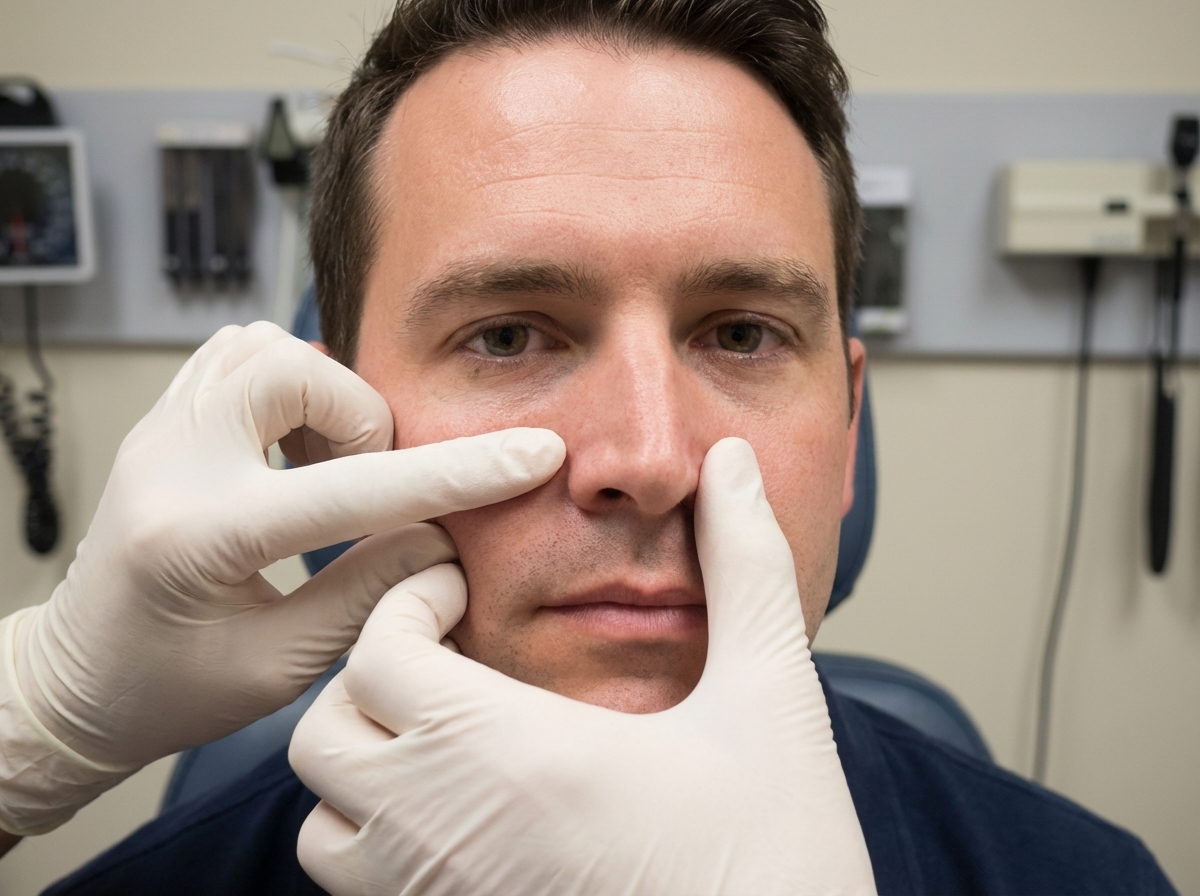
The following test is done for the evaluation of:
What is the first-line treatment for sinus bradycardia in the context of myocardial infarction?
Which of the following is NOT typically associated with acute bacterial sinusitis?
Acute Rhinosinusitis Indian Medical PG Practice Questions and MCQs
Question 1: An ICU patient is suffering from Rhinovirus infection. How do we treat the patient?
- A. Piperacillin + Tazobactam + Azithromycin
- B. Clarithromycin
- C. Cephalosporin + Ganciclovir
- D. Supportive care only (Correct Answer)
Explanation: ***Supportive care only*** - **Rhinovirus** is a common cause of the **common cold**, and there is no specific antiviral treatment available for it. [1] - Management focuses on alleviating symptoms such as fever, congestion, and cough to ensure patient comfort and prevent secondary complications, especially in an ICU setting. *Piperacillin + Tazobactam + Azithromycin* - This combination is a broad-spectrum antibiotic regimen (piperacillin/tazobactam is an extended-spectrum penicillin, and azithromycin is a macrolide) targeting bacterial infections. [2] - **Rhinovirus is a virus**, and antibiotics are ineffective against viral infections, making this an inappropriate treatment. *Clarithromycin* - **Clarithromycin** is a macrolide antibiotic primarily used to treat bacterial infections, such as respiratory tract infections caused by **atypical bacteria** or community-acquired pneumonia. [2] - It has no activity against **Rhinovirus**, a common cold virus. *Cephalosporin + Ganciclovir* - **Cephalosporins** are a class of beta-lactam antibiotics used for various bacterial infections. [2] - **Ganciclovir** is an antiviral agent specifically used to treat **cytomegalovirus (CMV)** infections, not Rhinovirus.
Question 2: Which of the following is NOT an indication for immediate referral to an ENT specialist in a case of epistaxis?
- A. Uncontrolled bleeding
- B. Suspected nasal tumor
- C. Bleeding despite nasal packing
- D. Mild bleeding resolved with pressure (Correct Answer)
Explanation: ***Mild bleeding resolved with pressure*** - This scenario suggests a **self-limiting epistaxis** episode that responds to standard first-aid measures. - No indication for **ENT specialist intervention**, as the problem has already been successfully managed. *Uncontrolled bleeding* - **Persistent bleeding** despite initial management attempts (e.g., direct pressure, vasoconstrictive sprays) warrants immediate ENT referral. - This indicates a potentially **larger vessel involvement** or an underlying coagulopathy requiring specialized intervention. *Suspected nasal tumor* - **Recurrent or persistent epistaxis**, especially when unilateral or accompanied by other nasal symptoms (e.g., obstruction, pain, anosmia), raises suspicion for a **nasal or sinonasal malignancy**. - An ENT specialist is crucial for thorough evaluation, including **endoscopy and biopsy**, to rule out or diagnose a tumor. *Bleeding despite nasal packing* - If **bleeding persists** or recurs after appropriate nasal packing (anterior or posterior), it signifies a failure of initial specialized management. - This situation requires urgent **ENT assessment** to identify the source and consider more advanced interventions like **cautery or surgical ligation**.
Question 3: All are major symptoms of sinusitis except?
- A. Nasal blockage
- B. Facial congestion
- C. Halitosis (Correct Answer)
- D. Anosmia
Explanation: ***Halitosis*** - While **halitosis** (bad breath) can be a symptom associated with sinusitis due to post-nasal drip and bacterial overgrowth, it is generally considered a **minor symptom** or a secondary effect rather than one of the primary, defining features. - Major symptoms focus on those directly caused by inflammation and obstruction of the sinuses. *Nasal blockage* - **Nasal blockage** or congestion is a cardinal symptom of sinusitis, resulting from inflammation and swelling of the nasal and sinus mucosa. - It often leads to difficulty breathing through the nose and contributes to a feeling of fullness. *Facial congestion* - **Facial congestion** or pressure is a key symptom of sinusitis, caused by the buildup of fluid and inflammation within the sinus cavities. - This symptom can manifest as pain or pressure around the eyes, cheeks, and forehead. *Anosmia* - **Anosmia**, or the loss of smell, is a significant symptom of sinusitis, particularly chronic sinusitis. - It occurs due to the inflammation and obstruction of the nasal passages, preventing odorants from reaching the olfactory receptors.
Question 4: A patient with a recent upper respiratory infection develops worsening facial pain, purulent nasal discharge, and tenderness over the maxillary sinuses. Symptoms have now persisted for more than 10 days without improvement. What is the most appropriate initial treatment?
- A. Amoxicillin-clavulanate (Correct Answer)
- B. Corticosteroid
- C. Antihistamine
- D. Topical decongestant
Explanation: ***Amoxicillin-clavulanate*** - Symptoms persisting >10 days with **purulent nasal discharge** and **facial pain** meet criteria for **acute bacterial rhinosinusitis**, making this the **first-line empirical antibiotic treatment**. - Provides broad-spectrum coverage against common pathogens including **Streptococcus pneumoniae**, **Haemophilus influenzae**, and **beta-lactamase producing organisms**. *Topical decongestant* - While it may provide temporary **symptomatic relief** by reducing nasal congestion, it does not address the underlying **bacterial infection**. - Prolonged use (>3-5 days) can lead to **rhinitis medicamentosa** with rebound congestion, worsening the clinical picture. *Antihistamine* - Primarily effective for **allergic rhinitis** by blocking histamine-mediated symptoms like sneezing and watery discharge. - **Ineffective against bacterial infections** and may worsen symptoms by drying mucous membranes and impairing **mucociliary clearance**. *Corticosteroid* - **Intranasal corticosteroids** may serve as adjunctive therapy to reduce inflammation but are insufficient as **monotherapy** for bacterial sinusitis. - Does not provide antimicrobial coverage needed for the suspected **bacterial pathogen** causing the persistent purulent symptoms.
Question 5: Allergic salute is seen in -
- A. Nasal Myiasis
- B. Allergic rhinitis (Correct Answer)
- C. Chronic sinusitis
- D. Chronic conjunctivitis
Explanation: ***Allergic rhinitis*** - The **allergic salute** is a characteristic physical finding in allergic rhinitis [1], where individuals repeatedly push their nose upward with their hand to relieve nasal itching and clear obstruction. - This repetitive gesture can lead to a visible transverse crease on the dorsum of the nose, known as the **nasal crease**. *Nasal Myiasis* - **Nasal myiasis** is an infestation of the nasal cavity by fly larvae, causing symptoms like nasal discharge, epistaxis, and local pain. - It does not involve nasal itching that would provoke the "allergic salute" action. *Chronic sinusitis* - **Chronic sinusitis** is a prolonged inflammation of the sinuses, causing facial pain/pressure, nasal obstruction, and discharge. - While it can cause nasal obstruction, it typically doesn't present with the intense nasal itching that would lead to the "allergic salute." *Chronic conjunctivitis* - **Chronic conjunctivitis** is an inflammation of the conjunctiva, primarily affecting the eyes with symptoms like redness, itching, and discharge. - It does not directly affect the nasal passages or provoke nasal symptoms like itching that would result in an allergic salute.
Question 6: Which of the following is not a feature of ethmoidal polyp?
- A. Common in adults
- B. Commonly bilateral
- C. Associated with chronic rhinosinusitis
- D. Commonly found as a single polyp (Correct Answer)
Explanation: ***Commonly found as a single polyp*** - **Ethmoidal polyps** are typically **multiple** and bilateral, originating from the ethmoid sinuses. - They rarely present as a single, isolated polyp, which is more characteristic of antrochoanal polyps. - This is the key distinguishing feature that makes this statement INCORRECT. *Common in adults* - **Ethmoidal polyps** are indeed **more prevalent in adults** than in children. - Peak incidence occurs between 30-50 years of age. - Their incidence tends to increase with age, often associated with chronic rhinosinusitis. *Commonly bilateral* - **Ethmoidal polyps** almost invariably present as **bilateral polyps**, involving both sides of the nasal cavity. - This bilateral nature is a key differentiating feature from antrochoanal polyps, which are typically unilateral. - Bilateral presentation is one of the hallmark characteristics of ethmoidal polyps. *Associated with chronic rhinosinusitis* - **Ethmoidal polyps** are strongly associated with **chronic rhinosinusitis with nasal polyposis (CRSwNP)**. - They arise from chronic mucosal inflammation of the ethmoid sinuses. - Often associated with conditions like aspirin-exacerbated respiratory disease (AERD/Samter's triad) and non-allergic eosinophilic inflammation.
Question 7: Red flags in chronic rhinosinusitis include all EXCEPT:
- A. Bloody discharge
- B. Orbital complications
- C. Frontal headache (Correct Answer)
- D. Unilateral symptoms
Explanation: ***Frontal headache*** - A frontal headache is a common symptom of chronic rhinosinusitis itself, often due to **sinus pressure** or inflammation. - While it can be bothersome, it is not considered a "red flag" indicating a **serious complication** or alternative diagnosis. *Bloody discharge* - **Bloody nasal discharge** or epistaxis, especially when unilateral or persistent, can be a red flag for more serious underlying conditions, such as **nasal malignancy**. - It warrants further investigation to rule out neoplasms or other vascular pathologies. *Orbital complications* - Orbital complications, such as **periorbital edema**, proptosis, vision changes, or ophthalmoplegia, indicate spreading infection beyond the sinuses. - These are red flags because they suggest **severe infection** that can lead to permanent vision loss or intracranial spread. *Unilateral symptoms* - **Unilateral nasal obstruction**, discharge, pain, or facial swelling are significant red flags that should prompt concern for **nasal polyps**, tumors, or fungal infections. - Unilateral symptoms suggest a localized process that is less likely to be typical chronic rhinosinusitis unless proven otherwise.
Question 8: The following test is done for the evaluation of:
- A. Abnormality of nasal valve (Correct Answer)
- B. Cheek tenderness in maxillary sinusitis
- C. Severity of proptosis
- D. Skin pinch for dehydration
Explanation: ***Abnormality of nasal valve*** - The image demonstrates the **Cottle test**, where fingers are placed on the cheek lateral to the nose and gently pulled laterally to open the **internal nasal valve**. - If breathing improves with this maneuver, it indicates **nasal valve dysfunction** or collapse, helping diagnose nasal obstruction. *Cheek tenderness in maxillary sinusitis* - Assessment of **maxillary sinusitis** involves direct palpation over the maxillary sinus area below the eye, not lateral traction on the cheek. - **Tenderness on palpation** would be elicited by pressing directly over the sinus, not by pulling the cheek laterally as shown. *Severity of proptosis* - **Proptosis** (exophthalmos) is measured using an **exophthalmometer** to quantify eyeball protrusion. - The lateral traction maneuver shown has no relevance to assessing **ocular protrusion** or orbital pathology. *Skin pinch for dehydration* - The **skin turgor test** for dehydration involves pinching skin on the back of the hand, forearm, or abdomen, not the cheek area. - **Poor skin turgor** is assessed by delayed return of pinched skin to normal position, which is not the technique demonstrated.
Question 9: What is the first-line treatment for sinus bradycardia in the context of myocardial infarction?
- A. Atropine (Correct Answer)
- B. Digoxin
- C. Calcium channel blocker
- D. Propranolol
Explanation: ***Atropine*** - **Atropine** is a parasympatholytic agent that blocks the action of acetylcholine at muscarinic receptors, leading to an **increased heart rate**. - It is the **first-line pharmacological treatment** for symptomatic *sinus bradycardia* in the context of an acute myocardial infarction because it can rapidly reverse vagal tone. *Digoxin* - **Digoxin** is a cardiac glycoside primarily used to treat **heart failure** and **atrial fibrillation** by increasing myocardial contractility and slowing AV nodal conduction. - It can actually **worsen bradycardia** due to its vagotonic effects and is contraindicated in acute bradycardia. *Calcium channel blocker* - **Calcium channel blockers** like verapamil or diltiazem slow AV nodal conduction and can **decrease heart rate and contractility**. [1] - They would be **contraindicated** in *sinus bradycardia* as they would further depress the heart rate and could worsen cardiac output. [1] *Propranolol* - **Propranolol** is a non-selective **beta-blocker** that decreases heart rate and myocardial contractility. [2] - It is used to treat conditions like **hypertension**, **angina**, and **tachyarrhythmias**, and would further **exacerbate bradycardia**. [2]
Question 10: Which of the following is NOT typically associated with acute bacterial sinusitis?
- A. Purulent nasal discharge
- B. Epistaxis (Correct Answer)
- C. Facial pain
- D. Fever
Explanation: ***Epistaxis*** - While possible due to **mucosal inflammation** or irritation from forceful blowing, **epistaxis (nosebleeds)** is not considered a typical or primary symptom of acute bacterial sinusitis. - The main symptoms revolve around pressure, discharge, and systemic signs of infection. *Purulent nasal discharge* - This is a hallmark symptom of acute bacterial sinusitis, indicating the presence of **bacterial infection** and inflammation in the sinuses. - The discharge is often thick, colored (yellow, green), and can be accompanied by a **foul odor**. *Facial pain* - **Facial pain** or pressure, especially around the cheeks, forehead, or eyes, is a characteristic symptom stemming from inflammation and fluid accumulation within the **sinus cavities**. - This pain often worsens when bending forward. *Fever* - **Fever** is a systemic sign of infection and is commonly present in acute bacterial sinusitis, especially in more severe cases. - It indicates the body's immune response to the bacterial invasion.
Want unlimited practice?
Get full access to all questions, explanations, and performance tracking.
Start For Free