
Acne Keloidalis Nuchae — MCQs

Consider the following causes of alopecia: 1. Androgenetic alopecia 2. Alopecia areata 3. Telogen effluvium 4. Lichen planopilaris. Which among the following causes non-scarring alopecia?
Which of the following best describes the current understanding of rosacea pathogenesis?
Recalcitrant acne is treated by:
Eosinophilic pustular folliculitis is a rare form of folliculitis that is seen with increased frequency in patients with what?
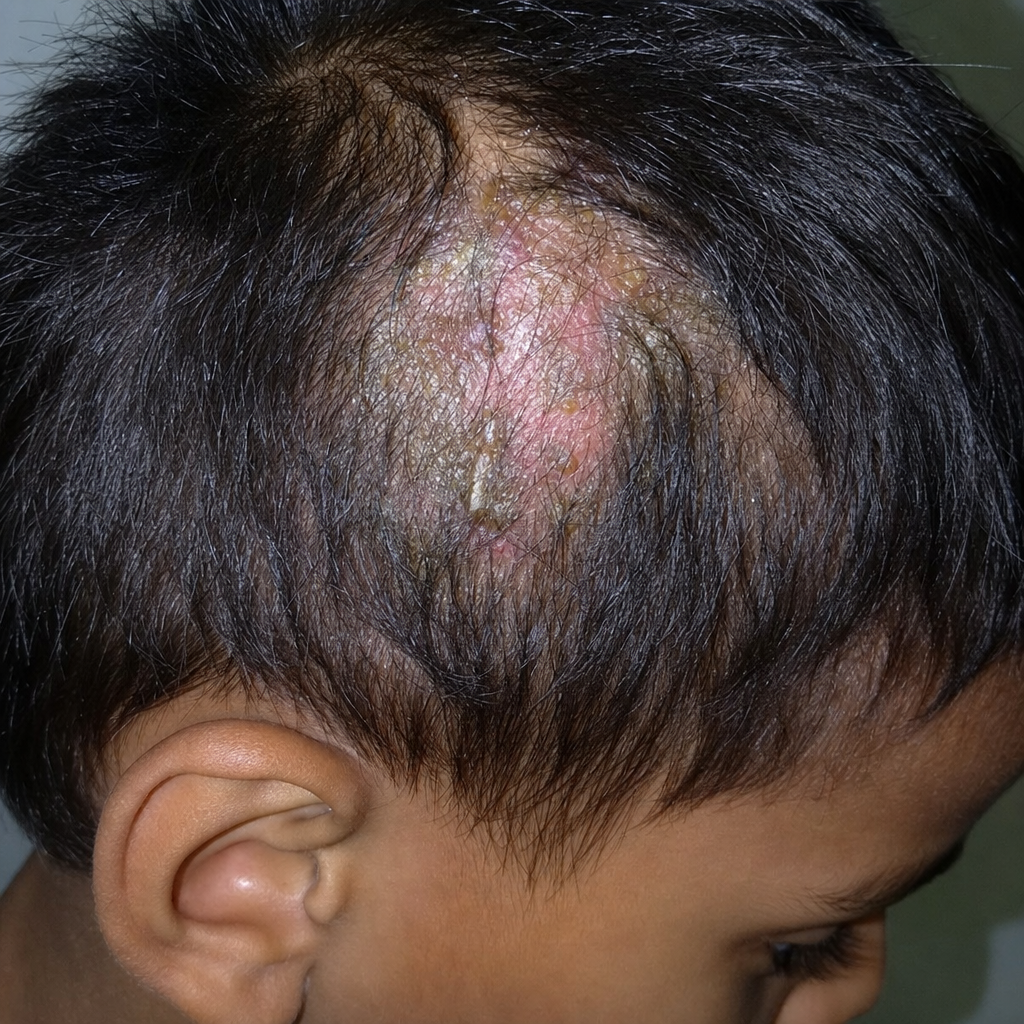
A male child presents with a mildly painful swelling on his scalp for the last 3 months, as shown in the image. The history reveals that there is a pet dog in the household. What is the most likely diagnosis?
Which of the following statements about keloids is MOST true?
Loss of lateral 1/3rd of eyebrow is seen in -
A 24-year-old woman presents with multiple nodular, cystic, and pustular lesions on her face and shoulders for 2 years. What is the drug of choice for her treatment?
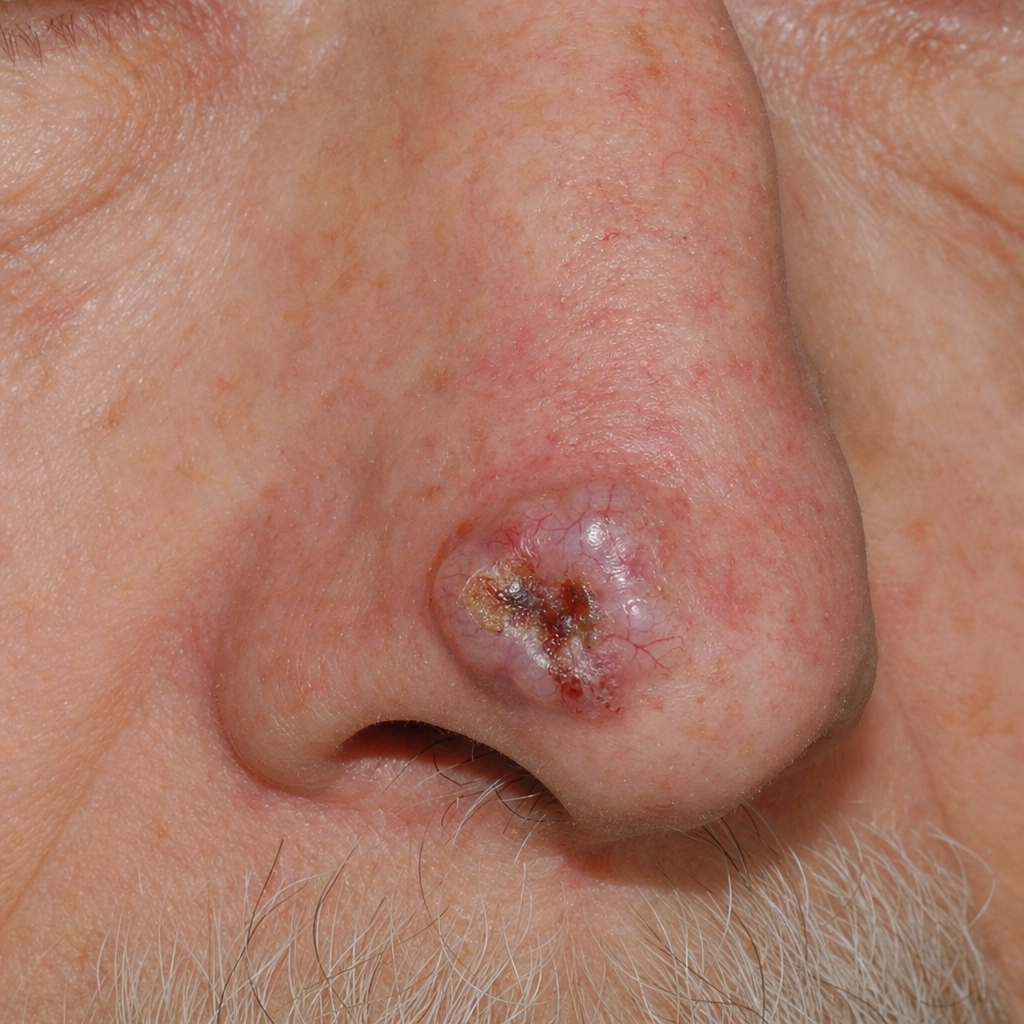
A 72-year-old fair-skinned farmer presents with a slowly enlarging, non-healing lesion on his nose that occasionally bleeds. He reports decades of outdoor sun exposure. The lesion has been present for approximately 18 months. On examination, a pearly, translucent nodule with rolled telangiectatic borders and central ulceration is noted on the nasal ala — a high-risk H-zone location. Which of the following is the most appropriate primary treatment for this lesion?
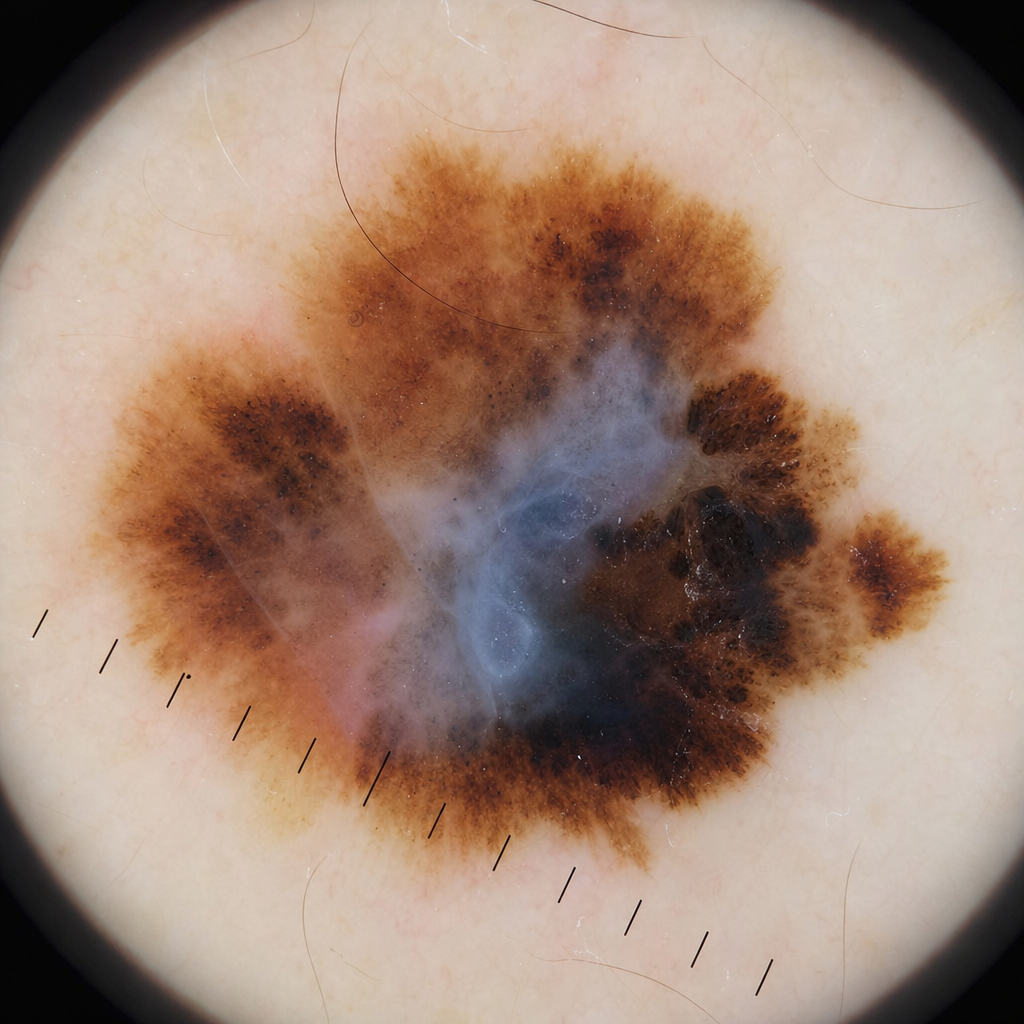
A 52-year-old fair-skinned man presents with a 1.2 cm pigmented lesion on his back that has changed in colour and border over the past 6 months. His GP referred him after noting asymmetry on clinical examination. The dermoscopy image is shown in (Image 1). Which of the following dermoscopic structures most specifically supports a diagnosis of malignancy in this lesion?
Want unlimited practice?
Get full access to all questions, explanations, and performance tracking.
Scan to download app