Under passive surveillance for tuberculosis, what is the indication for sputum microscopy?
A patient with sputum positive pulmonary tuberculosis is on ATT for the last 5 months but the patient is still positive for AFB in the sputum. This case refers to -
Which disease comes under international surveillance?
Which of the following is true about typhoid?
Under the RNTCP, sputum culture for MDR TB is to be examined for at least:
Chikungunya is transmitted by which mosquito?
Which of the following is a Category C bioterrorism agent?
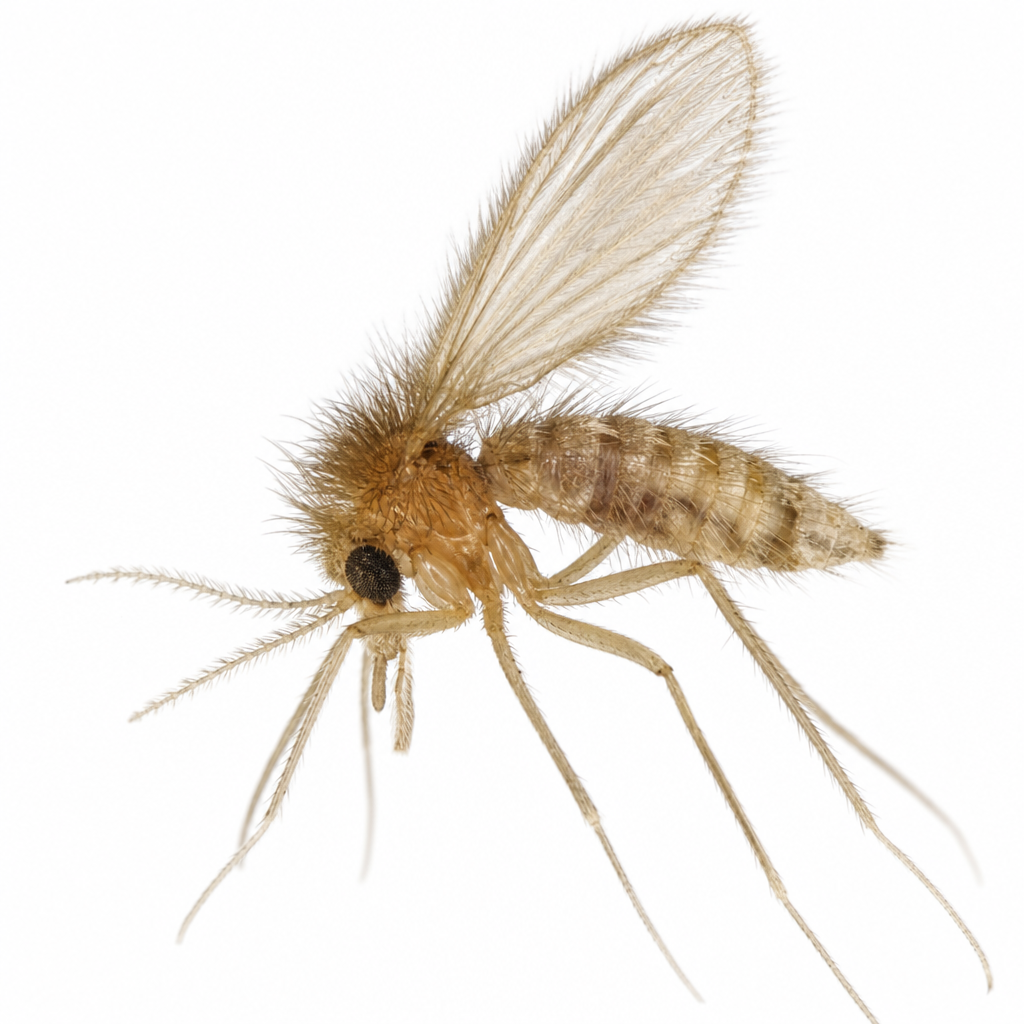
True about kala-azar -
Cyclops play an important role in the transmission of:
The limitation of movement of well persons or animals exposed to communicable diseases for a period usually not longer than the longest incubation period is known as:
Explanation: ***3 weeks*** - In **passive surveillance** for tuberculosis, symptoms present for **three weeks or more** warrant investigation with sputum microscopy. - This duration allows for the manifestation of typical TB symptoms that distinguish it from common, self-limiting respiratory infections. *8 weeks* - A period of **eight weeks** for symptom duration is typically too long for initiating sputum microscopy in suspected TB, delaying diagnosis and potential treatment. - Delayed diagnosis can lead to more severe disease progression and increased transmission. *4 weeks* - While **four weeks** might seem reasonable, the standard guideline for initiating sputum microscopy under passive surveillance is slightly shorter at three weeks. - Waiting an additional week could slightly increase the risk of disease progression or transmission. *6 weeks* - Similar to 8 weeks, a **six-week** duration for symptoms before performing sputum microscopy is often considered too long for early TB detection during passive surveillance. - Early detection is crucial for effective treatment and preventing spread.
Explanation: ***Failure case*** - A **failure case** in TB treatment is defined as a patient who remains sputum smear positive at 5 months or more after starting treatment, indicating that the initial drug regimen was unsuccessful. - This scenario suggests **drug resistance** or inadequate treatment, necessitating a re-evaluation of the treatment regimen. *Drug defaulter* - A **defaulter** is a patient who interrupts their TB treatment for two consecutive months or more. - In this patient, treatment has been continuous for 5 months, making "defaulter" an incorrect classification. *New case* - A **new case** refers to a patient who has never been treated for TB before or has received anti-TB drugs for less than one month. - This patient has already been on ATT for 5 months, so they are not a new case. *Relapse case* - A **relapse case** is a patient who was previously treated for TB, declared cured, but has become sputum smear positive again. - This patient has never been declared cured because the sputum has remained positive throughout the treatment.
Explanation: ***Polio*** - **Poliomyelitis** is under comprehensive international surveillance through the **Global Polio Eradication Initiative (GPEI)**, a partnership led by WHO, UNICEF, CDC, and Rotary International. - As a disease targeted for **global eradication**, every case of acute flaccid paralysis (AFP) is investigated worldwide, making it subject to the most intensive international surveillance system. - Under **International Health Regulations (IHR) 2005**, wild poliovirus is one of only three diseases that are **mandatorily notifiable** to WHO internationally (along with smallpox and SARS). *Measles* - While measles is under WHO surveillance for elimination efforts in various regions, the surveillance is primarily **regional and national** rather than having the same globally coordinated mandatory notification status as polio. - Measles elimination programs exist but do not have the same international surveillance infrastructure as the polio eradication program. *Hepatitis B* - **Hepatitis B** surveillance focuses on disease burden, vaccination coverage, and prevalence monitoring within countries. - It is **not under international surveillance** with mandatory notification requirements for global eradication purposes. *Typhoid* - **Typhoid fever** is monitored through national surveillance systems, especially in endemic areas. - It is **not part of international surveillance programs** with mandatory reporting to WHO for global eradication.
Explanation: ***Vi antibodies are present in about 80% of chronic carriers*** - The detection of **Vi antibodies** is a useful serological marker for identifying chronic carriers of *Salmonella Typhi*. - Approximately **80% of chronic typhoid carriers** produce measurable levels of Vi antibodies, making it a valuable screening tool. *Gall bladder usually not involved in carrier state* - The **gallbladder** is the primary site of chronic carriage for *Salmonella Typhi*, where the bacteria persist and are shed in the feces. - Presence of **gallstones** can further contribute to the persistence of infection and chronic carriage in the gallbladder. *Tetracycline is the DOC for carriers* - **Fluoroquinolones** (e.g., ciprofloxacin) or **amoxicillin** are typically the drugs of choice for treating typhoid carriers, often given for an extended period. - **Tetracycline** is generally not recommended for treating typhoid carriers due to resistance and less effective eradication rates. *Fecal carriers are less common* - **Fecal carriers** are the most common form of chronic typhoid carriage, where *Salmonella Typhi* is shed in the feces for more than a year. - Urinary carriers are less common but can occur, especially in individuals with **schistosomiasis**.
Explanation: ***8 weeks*** - Under the Revised National Tuberculosis Control Programme (RNTCP), **sputum culture for MDR TB** (Multidrug-Resistant Tuberculosis) is typically incubated and examined for a minimum of **8 weeks** to ensure optimal detection of Mycobacterium tuberculosis. - This extended incubation period is crucial because *M. tuberculosis* is a **slow-growing organism**, and a shorter period might lead to false-negative results, missing actual MDR TB cases. *4 weeks* - A 4-week incubation period is generally too short for reliable detection of *Mycobacterium tuberculosis*, especially in cases of MDR TB where growth can be further delayed. - This duration is more commonly associated with conventional culture procedures for faster-growing bacteria, not *M. tuberculosis*. *12 weeks* - While a 12-week incubation period would certainly allow for ample time for *M. tuberculosis* growth, it generally exceeds the standard recommendations for routine MDR TB sputum culture within the RNTCP. - Prolonging incubation beyond 8 weeks often does not yield significant additional benefit in detection rates and increases laboratory workload and turnaround time without substantial clinical justification. *10 weeks* - A 10-week incubation period is longer than the standard 8 weeks but is not the minimum recommended period under the RNTCP for sputum culture of MDR TB. - It would also extend the diagnostic process unnecessarily compared to the established and effective 8-week protocol.
Explanation: ***Aedes*** - **Chikungunya virus** is primarily transmitted to humans by **Aedes mosquitos**, specifically **Aedes aegypti** and **Aedes albopictus**. - These mosquitos are **day-biting** and thrive in urban and semi-urban environments, often breeding in and around human habitations. - Aedes aegypti is also the vector for **dengue**, **Zika**, and **yellow fever**. *Culex* - **Culex mosquitos** are vectors for diseases like **West Nile virus**, **Japanese encephalitis**, and **lymphatic filariasis**. - They are primarily **night-biting** mosquitos and breed in stagnant water. - Not involved in Chikungunya transmission. *Mansonia* - **Mansonia mosquitos** are vectors for **Brugia malayi**, causing **lymphatic filariasis** (especially in rural Asia). - They have unique breeding habits, attaching eggs to aquatic vegetation. - Not involved in Chikungunya transmission. *Anopheles* - **Anopheles mosquitos** are the primary vectors for **malaria**, a disease caused by Plasmodium parasites. - They are generally **night-biting** and have distinct breeding habits compared to the Aedes mosquito. - Not involved in Chikungunya transmission.
Explanation: ***Nipah virus*** - **Nipah virus** is classified as a **Category C bioterrorism agent** due to its potential for high mortality, emerging threat, and ease of genetic engineering. - These agents are emerging pathogens that could be engineered for **mass dissemination** in the future and require ongoing surveillance. *Botulism* - **Botulism**, caused by *Clostridium botulinum* toxin, is a **Category A bioterrorism agent** due to its high mortality and ease of dissemination. - Category A agents pose the greatest threat to public health and national security. *Clostridium Perfringens* - *Clostridium perfringens* is classified as a **Category B bioterrorism agent** because it can be used to contaminate food and water supplies. - Category B agents are moderately easy to disseminate and cause moderate morbidity but lower mortality than Category A agents. *Plague* - **Plague**, caused by *Yersinia pestis*, is a **Category A bioterrorism agent** because of its high mortality, potential for aerosol dissemination, and risk of causing public panic. - The CDC categorizes agents based on the risk they pose to national security.
Explanation: ***Non-human reservoirs are present*** - **Globally correct**: Visceral leishmaniasis has **non-human reservoirs** (dogs, foxes, rodents) in many endemic regions, particularly in Mediterranean countries, Brazil, and China where **zoonotic transmission** (L. infantum/L. chagasi) occurs. - **Indian context**: In the **Indian subcontinent** (India, Bangladesh, Nepal), kala-azar (L. donovani) is primarily **anthroponotic** with **humans as the main reservoir**. However, recent evidence suggests potential animal reservoirs may exist in some areas. - This option is considered **true** because non-human reservoirs do exist globally in visceral leishmaniasis, and emerging data suggests possible animal involvement even in anthroponotic regions. *All of the options* - Incorrect because not all statements are true regarding kala-azar. - Kala-azar has not been eliminated from India, and there is no consistent female predominance. *Eliminated from India* - **Incorrect**: Kala-azar has **not been eliminated** from India; it remains endemic in several districts, particularly in **Bihar, Jharkhand, Uttar Pradesh, and West Bengal**. - India launched the **National Kala-azar Elimination Program** targeting elimination (incidence <1 case per 10,000 population at block level) by 2023, but **elimination has not yet been achieved**. - Significant progress has been made with case reduction, but active transmission continues. *More common in female than male* - **Incorrect**: Kala-azar shows **equal or slight male predominance** in most epidemiological studies. - Males may have slightly higher incidence due to occupational exposure patterns and outdoor activities increasing sandfly contact. - There is no consistent evidence of higher prevalence in females.
Explanation: ***Dracunculiasis*** - **Cyclops** (copepods) are the intermediate hosts for the guinea worm (**Dracunculus medinensis**), the causative agent of **dracunculiasis**. - Humans become infected by drinking water containing Cyclops that have ingested **Dracunculus larvae**. *Typhoid* - Typhoid fever is caused by **Salmonella typhi** and is transmitted through **feco-oral contamination** of food and water. - It does not involve Cyclops or any insect intermediate host in its transmission cycle. *Ancylostomiasis* - **Ancylostomiasis** (hookworm infection) is caused by **Ancylostoma duodenale** or **Necator americanus**. - Transmission occurs when **larvae penetrate the skin**, typically from contaminated soil, not through Cyclops. *Yellow fever* - Yellow fever is a viral disease transmitted to humans primarily through the bite of infected **Aedes mosquitoes**. - Cyclops are not involved in the transmission of this arbovirus.
Explanation: ***Quarantine*** - **Quarantine** refers to the **restriction of movement** for **healthy individuals** who have been exposed to a communicable disease. - This period lasts for the **longest incubation period** of the disease to monitor for symptom development and prevent further spread. - This is a key public health measure to control disease transmission from exposed but asymptomatic contacts. *Segregation* - **Segregation** in public health refers to the general separation of groups, but it is **not a specific epidemiological term** for managing disease exposure. - It lacks the specific temporal element (incubation period) and focus on exposed well persons that defines quarantine. - Segregation is a broader term that may apply to various forms of group separation but is not the standard terminology for this specific disease control measure. *Isolation* - **Isolation** is the separation of **sick individuals** with a communicable disease from healthy individuals to prevent transmission. - This typically applies to confirmed or suspected cases showing symptoms, not healthy exposed contacts. - Key difference: isolation is for the **symptomatic/infected**, while quarantine is for the **asymptomatic/exposed**. *Modified quarantine* - **Modified quarantine** allows for some flexibility in movement, often with monitoring or specific restrictions, rather than complete limitation of movement. - It's a less stringent form compared to the complete restriction described in the classic definition of quarantine. - Examples include allowing essential work with precautions while monitoring for symptoms.
Communicable Disease Control Principles
Practice Questions
Vector-Borne Diseases
Practice Questions
Water-Borne Diseases
Practice Questions
Air-Borne Diseases
Practice Questions
Zoonotic Diseases
Practice Questions
Sexually Transmitted Infections
Practice Questions
HIV/AIDS Control Program
Practice Questions
Tuberculosis Control
Practice Questions
Leprosy Elimination
Practice Questions
Emerging and Re-emerging Infections
Practice Questions
Hospital-Acquired Infections
Practice Questions
Integrated Disease Surveillance Project
Practice Questions
Get full access to all questions, explanations, and performance tracking.
Start For Free