
Acute Respiratory Distress Syndrome — MCQs

In acute respiratory distress syndrome (ARDS), which type of cell is primarily damaged?
A 48F, COPD history is admitted with increasing dyspnea and cyanosis. Blood gas analysis reveals pH 7.32, PaCO2 60 mmHg, and PaO2 50 mmHg. Most appropriate management step?
Which of the following statements about the ABCDE approach in pediatric Advanced Life Support (PALS) is incorrect?
In which of the following conditions is Positive end-expiratory pressure (PEEP) beneficial?
A 64-year-old woman is admitted to the ICU with the clinical diagnosis of acute respiratory distress syndrome (ARDS) secondary to pneumonia. She requires intubation and mechanical ventilation. On the second ICU day, she is difficult to ventilate, requiring increased airway pressures. On physical examination, vital signs are: pulse 159 bpm; temperature 100degF; blood pressure 90/56 mm Hg. Lung exam reveals diffuse crackles, and the patient has a palpable crunch on exam of her chest wall and abdomen. Chest radiograph is shown below.. What will you do next?
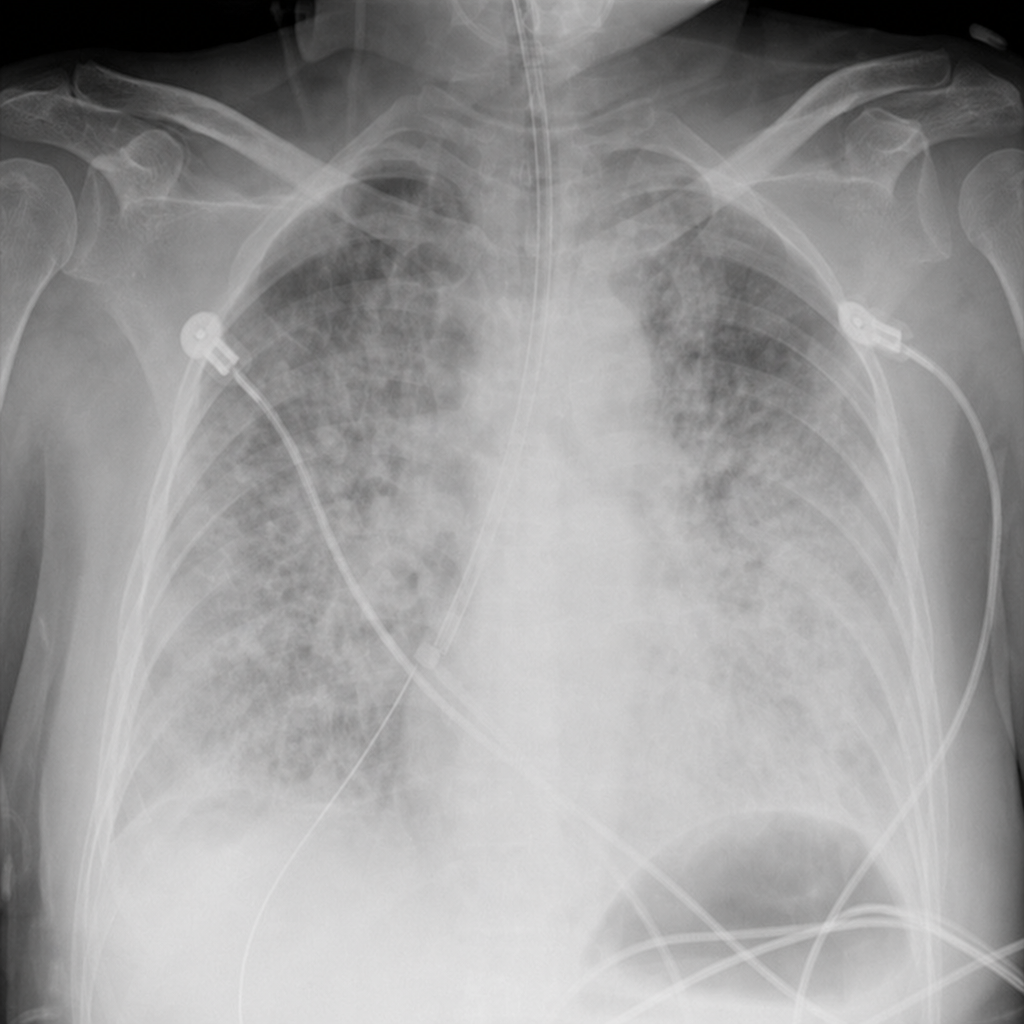
A 3-month-old child presents with indrawing of the chest and a respiratory rate of 52 breaths per minute. This condition can be classified as:
X-ray chest in a neonate may show 'ground glass' haziness in all the following conditions EXCEPT:
A patient with a known case of acute pancreatitis develops breathlessness and bilateral basal crepitations on day 4. What is the most likely diagnosis based on the chest radiography image?
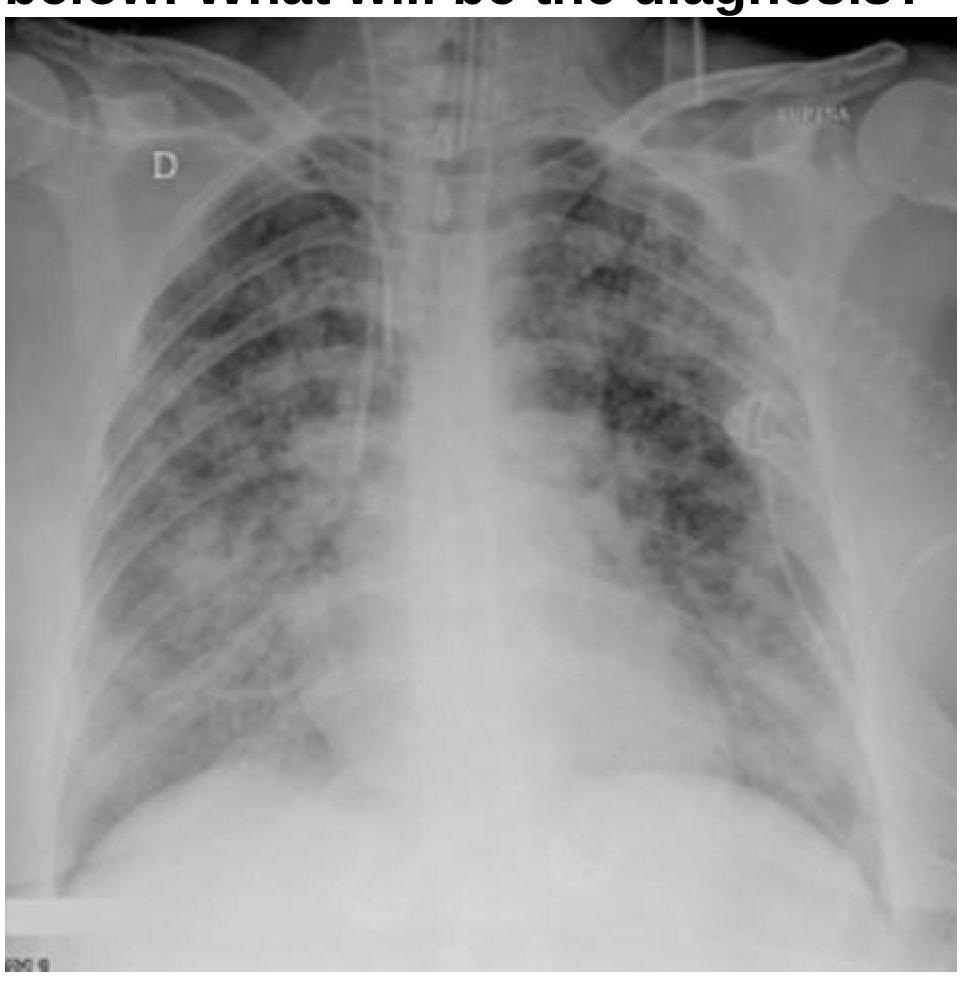
All of the following may lead to pneumatocele formation except which of the following?
Which of the following presents as mediastinal enlargement?
Want unlimited practice?
Get full access to all questions, explanations, and performance tracking.
Scan to download app