Enter your email to get your 85% OFF code and unlock the full NEET PG question bank on the app.
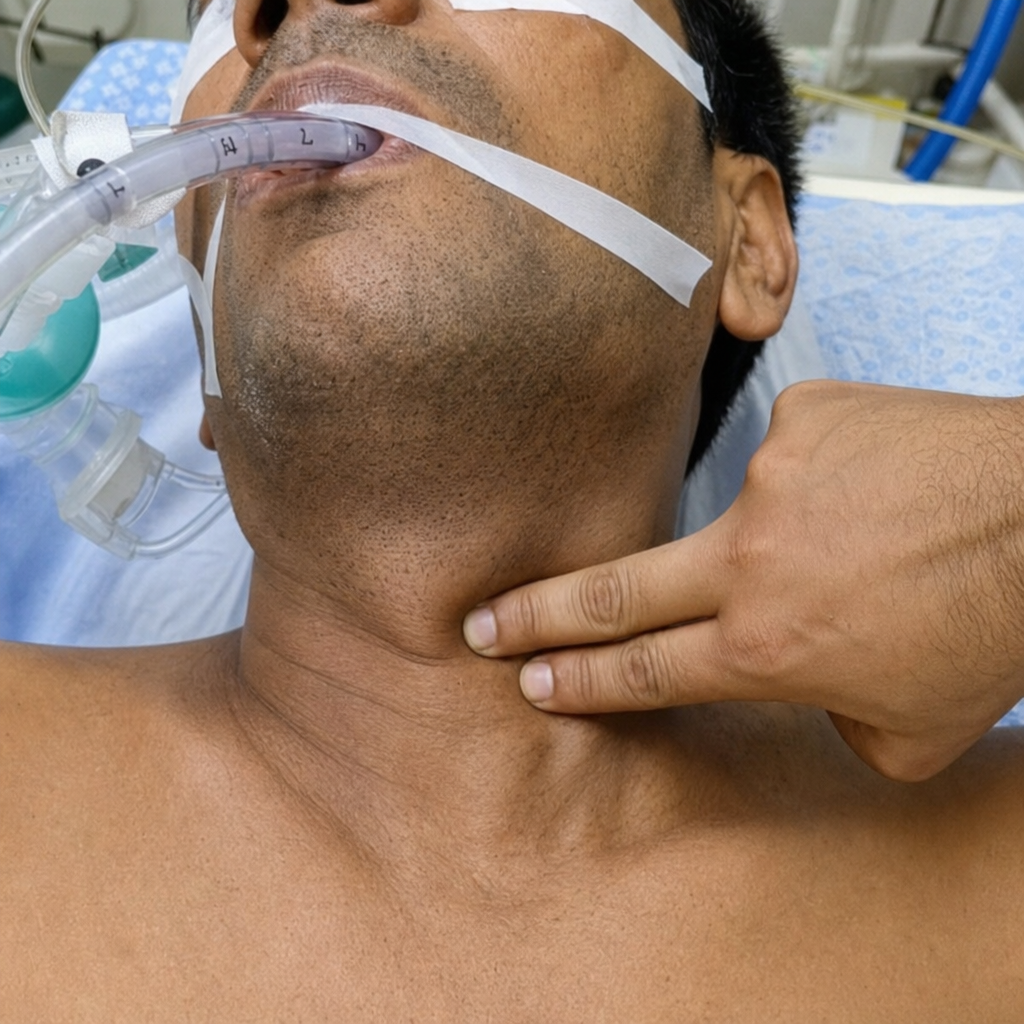
What is the pressure required to open the shown in the image?
Match the following ECG findings (1-4) with their corresponding arrhythmias (A-D): 1. Sawtooth pattern in leads II, III, aVF with regular ventricular response 2. Irregularly irregular rhythm with absent P waves 3. Narrow QRS tachycardia with abrupt onset/termination 4. Wide QRS tachycardia with AV dissociation A. Atrial fibrillation B. PSVT (Paroxysmal Supraventricular Tachycardia) C. Atrial flutter D. Ventricular tachycardia What is the correct matching?
A patient presents with shortness of breath. Vitals are HR = 120/min with BP = 90/60 mm Hg. Echocardiography shows diastolic collapse of the ventricles. What is the best management for this patient?
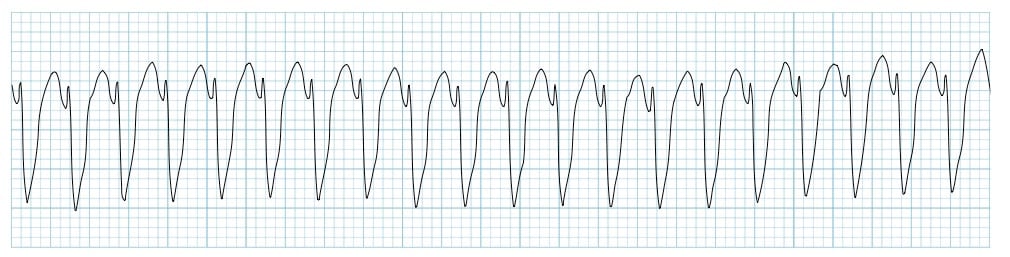
A patient is pulseless with the following rhythm shown in the ECG. What is the next best step in management?

A hypertensive patient presents with an irregularly irregular pulse and a loud P2 on auscultation. Which JVP finding is likely to be seen in this patient?
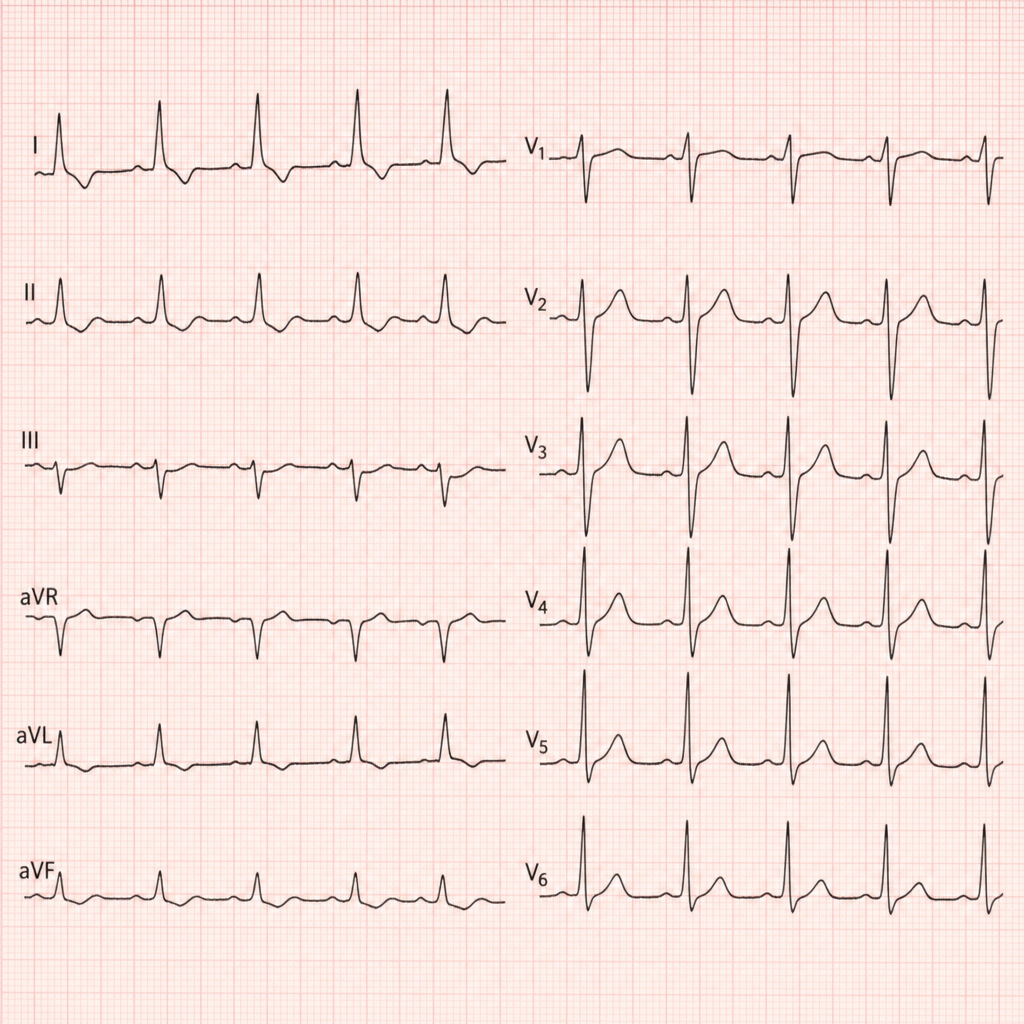
A patient with chronic kidney disease (CKD) presents with tachycardia, and the ECG is recorded as shown above. What is the most likely diagnosis?

A 60-year-old lady presents with shortness of breath (SOB) and episodes of angina pectoris. Work-up reveals aortic stenosis. Which of the following is the most likely reason behind these chest pain episodes?
A patient presents with wheezing that improves with as-needed use of albuterol. Spirometry shows FEV1 ranging from 70 % to 83 %, and the patient experiences nighttime chest tightening twice a week. What is the most appropriate treatment?
A 15-year-old patient presents with joint swelling, a pan-systolic murmur, negative rheumatoid factor (RF), and elevated ESR. The patient also reports a recent history of sore throat and exhibits subcutaneous nodules and erythema marginatum on physical examination. What is the most likely diagnosis?
A hypertensive patient presents with excruciating chest pain and unequal radial pulses. Which of the following is the correct management for this patient?