Red flags in dyspnea US Medical PG Practice Questions and MCQs
Practice US Medical PG questions for Red flags in dyspnea. These multiple choice questions (MCQs) cover important concepts and help you prepare for your exams.
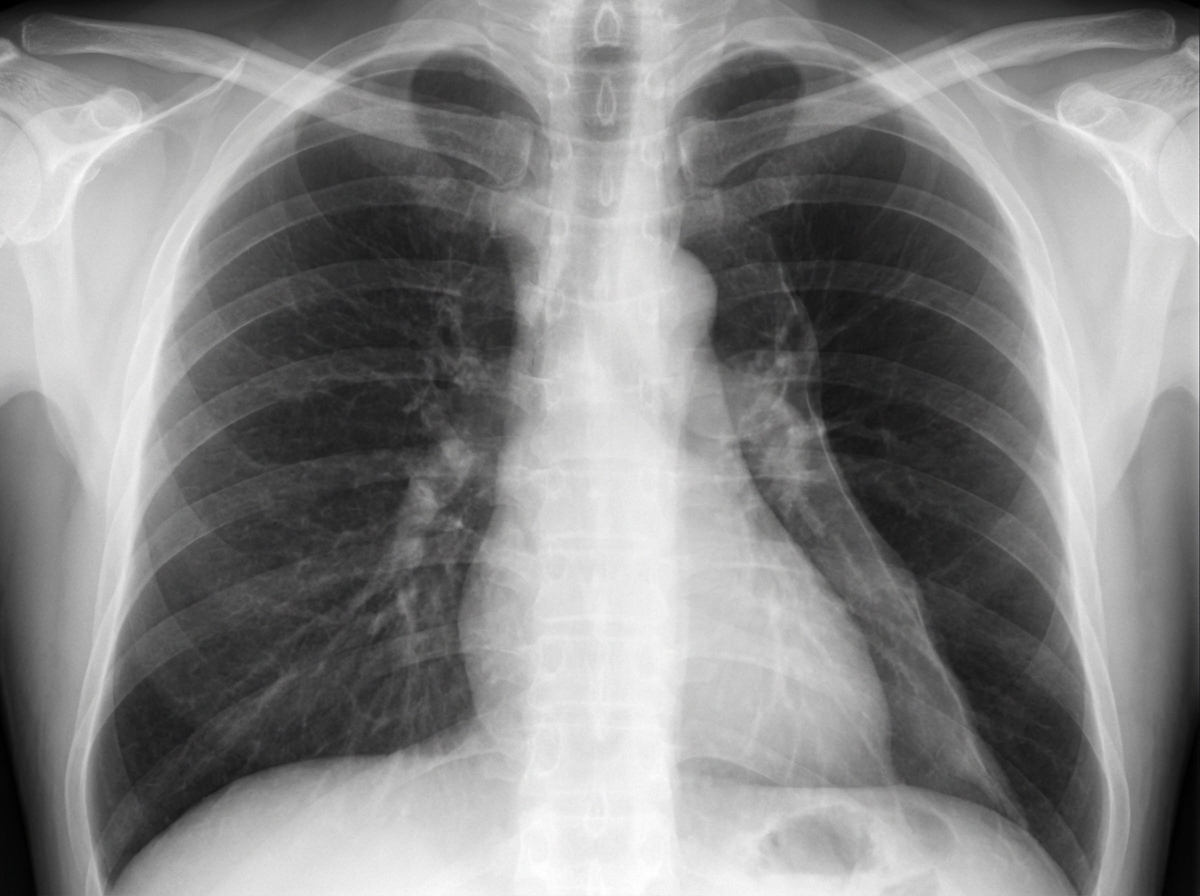
Red flags in dyspnea US Medical PG Question 1: A 19-year-old man comes to the emergency department with sharp, left-sided chest pain and shortness of breath. He has no history of recent trauma. He does not smoke or use illicit drugs. He is 196 cm (6 feet 5 in) tall and weighs 70 kg (154 lb); BMI is 18 kg/m2. Examination shows reduced breath sounds over the left lung field. An x-ray of the chest is shown. Which of the following changes is most likely to immediately result from this patient's current condition?
- A. Increased intra-alveolar pressure
- B. Increased right-to-left shunting (Correct Answer)
- C. Increased lung compliance
- D. Increased transpulmonary pressure
- E. Increased physiological dead space
Red flags in dyspnea Explanation: ***Increased right-to-left shunting***
- The patient has a **spontaneous pneumothorax** (common in tall, thin young males) causing **left lung collapse**.
- In the collapsed lung, alveoli are **not ventilated but continue to be perfused** (at least initially, before hypoxic pulmonary vasoconstriction fully develops), creating **perfusion without ventilation**.
- This represents a **low V/Q ratio approaching zero (true shunt)**, where deoxygenated blood bypasses functional gas exchange units, resulting in **increased right-to-left shunting** and immediate hypoxemia.
- This is the **immediate pathophysiologic change** that causes the patient's shortness of breath and hypoxemia.
*Increased intra-alveolar pressure*
- In a **pneumothorax**, air enters the pleural space, increasing **pleural pressure** and causing lung collapse.
- The collapsed alveoli have **reduced or zero pressure**, not increased pressure.
- Intra-alveolar pressure would only increase in a **tension pneumothorax** with a one-way valve effect, which is not described here.
*Increased lung compliance*
- **Compliance** (ΔV/ΔP) measures how easily the lung expands.
- A **collapsed lung** has **decreased compliance** because it is harder to re-expand due to loss of surfactant function and alveolar collapse.
- The chest wall compliance may increase, but lung parenchymal compliance decreases.
*Increased transpulmonary pressure*
- **Transpulmonary pressure** = alveolar pressure - pleural pressure; this is the pressure that keeps the lung inflated.
- In pneumothorax, air in the pleural space **increases pleural pressure** (makes it less negative or even positive).
- This **reduces the transpulmonary pressure gradient**, causing lung collapse, not an increase.
*Increased physiological dead space*
- **Physiological dead space** occurs when alveoli are **ventilated but not perfused** (high V/Q ratio or wasted ventilation).
- In pneumothorax, the primary immediate problem is the **opposite**: the collapsed lung has **perfusion without ventilation** (shunt, low V/Q ratio).
- While the contralateral lung may develop some dead space from compensatory hyperventilation and redistribution, the **immediate dominant change** is shunt physiology from the collapsed lung, not dead space.
Red flags in dyspnea US Medical PG Question 2: A 36-year-old man presents to the physician with difficulty in breathing for 3 hours. There is no history of chest pain, cough or palpitation. He is a chronic smoker and underwent elective cholecystectomy one month back. There is no history of chronic or recurrent cough, wheezing or breathlessness. His temperature is 38.2°C (100.8°F), pulse is 108/min, blood pressure is 124/80 mm Hg, and respirations are 25/min. His arterial oxygen saturation is 98% in room air as shown by pulse oximetry. After a detailed physical examination, the physician orders a plasma D-dimer level, which was elevated. A contrast-enhanced computed tomography (CT) of the chest shows a filling defect in a segmental pulmonary artery on the left side. Which of the following signs is most likely to have been observed by the physician during the physical examination of this patient’s chest?
- A. Pleural friction rub
- B. Bilateral wheezing
- C. Systolic murmur at the left sternal border
- D. Localized rales (Correct Answer)
- E. S3 gallop
Red flags in dyspnea Explanation: ***Localized rales***
- The patient's presentation with **sudden onset dyspnea**, risk factors (recent surgery, smoking), elevated D-dimer, and a CT scan showing a filling defect in the pulmonary artery strongly points to a **pulmonary embolism (PE)**.
- While PE often presents with normal lung auscultation, localized rales or crackles can be heard if there is an associated **pulmonary infarction** or local inflammation.
*Pleural friction rub*
- A **pleural friction rub** indicates inflammation of the pleura, which can occur in PE if the infarct involves the pleural surface.
- However, it is a less common finding than localized rales and is more characteristic of conditions like pleurisy or pneumonia.
*Bilateral wheezing*
- **Bilateral wheezing** is typically associated with diffuse airway obstruction, as seen in asthma or chronic obstructive pulmonary disease (COPD).
- This patient has no history of chronic respiratory conditions and the presentation is acute dyspnea, making diffuse airway obstruction less likely.
*Systolic murmur at the left sternal border*
- A **systolic murmur at the left sternal border** can be indicative of tricuspid regurgitation, often seen in the setting of **pulmonary hypertension** and right heart strain associated with a massive PE.
- However, with a stable blood pressure and moderate heart rate, severe right heart strain leading to a murmur is less likely in this scenario of a segmental PE.
*S3 gallop*
- An **S3 gallop** is a low-pitched sound heard during early diastole, often indicating **volume overload** or **ventricular dysfunction**.
- In the context of PE, an S3 often suggests significant **right ventricular dysfunction** due to acute pressure overload; this is more common with large or massive PEs causing hemodynamic instability, which is not indicated here.
Red flags in dyspnea US Medical PG Question 3: A previously healthy 21-year-old man is brought to the emergency department 4 hours after the sudden onset of shortness of breath and pleuritic chest pain. He has smoked 1 pack of cigarettes daily for the past 3 years. He is 188 cm (6.2 ft) tall and weighs 70 kg (154 lb); BMI is 19.8 kg/m2. Physical examination shows decreased tactile fremitus and diminished breath sounds over the left lung. Which of the following is the most likely cause of this patient's symptoms?
- A. Embolic occlusion of the pulmonary artery
- B. Inflammation of the costal cartilage
- C. Rupture of a subpleural bleb (Correct Answer)
- D. Infection with gram-positive diplococci
- E. Hyperresponsiveness of the bronchial system
Red flags in dyspnea Explanation: ***Rupture of a subpleural bleb***
- The patient's presentation with **sudden onset shortness of breath**, **pleuritic chest pain**, and physical findings of **decreased tactile fremitus** and **diminished breath sounds** on one side are classic for **spontaneous pneumothorax**.
- A **tall, thin young male smoker** is a typical demographic for a **primary spontaneous pneumothorax**, which results from the rupture of subpleural blebs.
*Embolic occlusion of the pulmonary artery*
- While **pulmonary embolism** can cause sudden shortness of breath and pleuritic chest pain, it wouldn't typically manifest with **decreased tactile fremitus** or **diminished breath sounds** as a primary finding.
- Pulmonary embolism is less likely without risk factors like prolonged immobility, surgery, or hypercoagulable states, although smoking is a minor risk factor.
*Inflammation of the costal cartilage*
- **Costochondritis** causes localized chest pain, often reproducible with palpation, but does not present with **sudden onset dyspnea** or significant changes in lung examination findings like **diminished breath sounds**.
- Systemic symptoms like shortness of breath and physical exam findings of reduced lung sounds are not characteristic of costochondritis.
*Infection with gram-positive diplococci*
- This suggests **bacterial pneumonia**, which typically presents with fever, productive cough, and more gradual onset of symptoms.
- While pneumonia can cause pleuritic chest pain and shortness of breath, the physical exam would likely show **bronchial breath sounds** or **crackles**, not diminished breath sounds, and tactile fremitus would be increased, not decreased.
*Hyperresponsiveness of the bronchial system*
- This refers to **asthma**, which causes **wheezing**, cough, and shortness of breath due to bronchoconstriction.
- Asthma would typically present with **diffuse wheezing** on auscultation, not diminished breath sounds on one side, and wouldn't lead to decreased tactile fremitus.
Red flags in dyspnea US Medical PG Question 4: A 55-year-old man is brought to the emergency department 30 minutes after the sudden onset of severe, migrating anterior chest pain, shortness of breath, and sweating at rest. He has hypertension, hypercholesterolemia, and type 2 diabetes mellitus. Medications include atorvastatin, hydrochlorothiazide, lisinopril, and metformin. He has smoked one pack of cigarettes daily for 25 years. He is in severe distress. His pulse is 110/min, respirations are 20/min, and blood pressure is 150/85 mm Hg. Pulse oximetry on room air shows an oxygen saturation of 98%. Cardiac examination shows a grade 3/6, high-pitched, blowing, diastolic murmur heard best over the right sternal border. The lungs are clear to auscultation. Femoral pulses are decreased bilaterally. An ECG shows sinus tachycardia and left ventricular hypertrophy. Which of the following is the most likely diagnosis?
- A. Esophageal rupture
- B. Pulmonary embolism
- C. Aortic dissection (Correct Answer)
- D. Papillary muscle rupture
- E. Spontaneous pneumothorax
Red flags in dyspnea Explanation: ***Aortic dissection***
- The sudden onset of **severe, migrating anterior chest pain**, autonomic symptoms (sweating at rest), and **decreased bilateral femoral pulses** are highly characteristic of aortic dissection.
- The presence of a new **diastolic murmur** (indicating aortic insufficiency due to dissection extending to the aortic valve), along with a history of **hypertension** and **smoking**, further supports this diagnosis.
- **Decreased bilateral femoral pulses** suggest involvement of the descending aorta compromising flow to both lower extremities.
*Esophageal rupture*
- While esophageal rupture can cause **sudden, severe chest pain**, it typically presents with **odynophagia**, **vomiting**, and often **subcutaneous emphysema** or **Hamman's sign**, which are absent here.
- It would not explain the **diastolic murmur** or the **bilateral decreased femoral pulses**.
*Pulmonary embolism*
- **Shortness of breath** and **chest pain** can occur with pulmonary embolism, but the pain is typically **pleuritic** rather than migrating.
- It would not cause a **diastolic murmur** or **decreased peripheral pulses**.
*Papillary muscle rupture*
- Papillary muscle rupture is a complication of **myocardial infarction**, usually causing **acute severe mitral regurgitation** with a new **systolic murmur** and signs of **heart failure**.
- The patient's presentation with migrating pain and a **diastolic murmur** is inconsistent with this diagnosis.
*Spontaneous pneumothorax*
- A spontaneous pneumothorax causes **sudden, sharp, pleuritic chest pain** and **dyspnea**, often accompanied by **decreased breath sounds** on the affected side.
- It would not cause a **diastolic murmur** or **decreased femoral pulses**.
Red flags in dyspnea US Medical PG Question 5: A 58-year-old man comes to the physician because of a 5-day history of progressively worsening shortness of breath and fatigue. He has smoked 1 pack of cigarettes daily for 30 years. His pulse is 96/min, respirations are 26/min, and blood pressure is 100/60 mm Hg. An x-ray of the chest is shown. Which of the following is the most likely cause of this patient's findings?
- A. Acute respiratory distress syndrome
- B. Interstitial pneumonia
- C. Tricuspid regurgitation
- D. Pulmonary embolism
- E. Left ventricular failure (Correct Answer)
Red flags in dyspnea Explanation: ***Left ventricular failure***
- The chest x-ray shows diffuse **pulmonary edema** with **bilateral perihilar infiltrates** and prominent **vascular markings**, classic for **cardiogenic pulmonary edema** due to left ventricular failure.
- The patient's history of smoking, shortness of breath, fatigue, tachypnea, and hypotension are consistent with **acute decompensated heart failure**.
*Acute respiratory distress syndrome*
- While ARDS can cause diffuse pulmonary infiltrates, it's often more peripheral and patchy; the presented image shows a more **central perihilar distribution** typical of pulmonary edema.
- ARDS is usually characterized by a severe inflammatory response, often without the marked **cardiomegaly** that would suggest a primary cardiac cause.
*Interstitial pneumonia*
- Interstitial pneumonia typically presents with **reticular or nodular patterns** on chest x-ray, often with a more chronic course.
- The acute onset and rapid progression of symptoms, along with the specific pattern of pulmonary edema, make interstitial pneumonia less likely.
*Tricuspid regurgitation*
- **Tricuspid regurgitation** primarily affects the right side of the heart, leading to signs of **right heart failure** such as **venous congestion**, **hepatomegaly**, and **peripheral edema**.
- While it can indirectly contribute to pulmonary hypertension and congestion, it would not typically present with this specific appearance of **cardiogenic pulmonary edema** without significant left ventricular involvement.
*Pulmonary embolism*
- A **pulmonary embolism** typically causes **pleural effusions**, areas of **oligemia (Westermark sign)**, or **wedge-shaped infiltrates (Hampton hump)**, but rarely diffuse pulmonary edema.
- The patient's acute symptoms could be consistent with PE, but the x-ray findings are not typical for this condition.
Red flags in dyspnea US Medical PG Question 6: A 21-year-old man presents with fever, headache, and clouded sensorium for the past 3 days. His fever is low-grade. He says his headache is mild-to-moderate in intensity and associated with nausea, vomiting, and photophobia. There is no history of a sore throat, pain on urination, abdominal pain, or loose motions. He smokes 1–2 cigarettes daily and drinks alcohol socially. Past medical history and family history are unremarkable. His vital signs include: blood pressure 120/80 mm Hg, pulse 106/min, temperature 37.3°C (99.2°F). On physical examination, he is confused, disoriented, and agitated. Extraocular movements are intact. The neck is supple on flexion. He is moving all his 4 limbs spontaneously. A noncontrast CT scan of the head is within normal limits. A lumbar puncture is performed, and cerebrospinal fluid results are still pending. The patient is started on empiric intravenous acyclovir. Which of the following clinical features favors encephalitis rather than meningitis?
- A. Photophobia
- B. Clouded sensorium (Correct Answer)
- C. Headache
- D. Fever
- E. Nausea and vomiting
Red flags in dyspnea Explanation: ***Clouded sensorium***
- **Altered mental status**, including confusion, disorientation, agitation, and clouded sensorium, is the hallmark feature that distinguishes **encephalitis** from meningitis
- **Encephalitis** involves direct inflammation of the **brain parenchyma**, leading to impaired brain function and altered consciousness
- While meningitis can cause irritability, profound changes in consciousness like disorientation and confusion are characteristic of **brain tissue involvement** rather than isolated meningeal inflammation
- The patient's confusion, disorientation, and agitation indicate parenchymal dysfunction, making encephalitis the more likely diagnosis
*Photophobia*
- Photophobia is a common symptom in **both meningitis and encephalitis**, reflecting meningeal irritation
- It results from inflammation of the meninges and does not indicate brain parenchymal involvement
- This symptom is **not a differentiating factor** between the two conditions
*Headache*
- Headache is a prominent symptom in **both meningitis and encephalitis** due to meningeal inflammation and increased intracranial pressure
- While often severe in meningitis, it can also occur in encephalitis when meningeal irritation is present (meningoencephalitis)
- Headache alone **does not specifically favor** one diagnosis over the other
*Fever*
- Fever is a systemic response to infection and inflammation, present in **both meningitis and encephalitis**
- It reflects the body's immune response to the infectious agent
- The presence of fever **does not help distinguish** between inflammation of the meninges alone versus inflammation involving the brain parenchyma
*Nausea and vomiting*
- Nausea and vomiting can occur in **both meningitis and encephalitis**, often associated with meningeal irritation and increased intracranial pressure
- These symptoms result from stimulation of the vomiting center and are common in many CNS infections
- These symptoms are **not specific enough to differentiate** between the two conditions
Red flags in dyspnea US Medical PG Question 7: A 3-year-old boy is brought to the emergency department with fever, irritability, and refusal to walk for 12 hours. His parents report he had a fall 3 days ago but seemed fine afterward. Temperature is 39.2°C (102.5°F), pulse 140/min. He cries when his right hip is moved and holds it in flexion and external rotation. WBC is 18,000/μL, ESR 65 mm/hr, CRP 8.5 mg/dL. He appears ill and has not responded to acetaminophen. Apply clinical reasoning to determine the most appropriate next step.
- A. Blood cultures and empiric IV antibiotics while awaiting outpatient orthopedic evaluation
- B. Obtain hip radiographs and discharge with NSAIDs if normal
- C. MRI of the hip to evaluate for occult fracture from recent trauma
- D. Immediate hip ultrasound followed by emergent arthrocentesis if effusion present (Correct Answer)
- E. Presumptive diagnosis of transient synovitis; prescribe rest and follow-up in 48 hours
Red flags in dyspnea Explanation: ***Immediate hip ultrasound followed by emergent arthrocentesis if effusion present***
- The patient meets all four **Kocher criteria** (fever, non-weight bearing, ESR >40 mm/hr, WBC >12,000/μL), which indicates a high probability (>93%) of **septic arthritis**.
- Emergent **ultrasound** is used to identify a joint effusion, followed by **arthrocentesis** for synovial fluid analysis to definitively diagnose and decompress the joint.
*Obtain hip radiographs and discharge with NSAIDs if normal*
- Radiographs are often normal in early **septic arthritis** and should not be used to rule out an infection in a systemically ill child.
- Discharging the patient with **NSAIDs** is dangerous as it delays the surgical management required to prevent **permanent joint destruction**.
*Presumptive diagnosis of transient synovitis; prescribe rest and follow-up in 48 hours*
- **Transient synovitis** usually follows a viral illness, presents with lower inflammatory markers, and doesn't typically cause a **high-grade fever** or toxic appearance.
- Waiting 48 hours is inappropriate when **septic arthritis** is suspected, as irreversible **cartilage damage** can occur within 6-12 hours.
*MRI of the hip to evaluate for occult fracture from recent trauma*
- While **MRI** is sensitive, it is time-consuming and often requires sedation in a 3-year-old, leading to a delay in life-saving **surgical drainage**.
- The clinical context of **high fever** and elevated **CRP/ESR** strongly points toward infection rather than a traumatic **occult fracture**.
*Blood cultures and empiric IV antibiotics while awaiting outpatient orthopedic evaluation*
- While blood cultures are necessary, antibiotics should ideally be administered **after joint aspiration** to maximize the yield of synovial fluid cultures.
- Outpatient evaluation is never appropriate for suspected **septic arthritis**, as it is an **orthopedic emergency** requiring immediate inpatient treatment and likely surgical washout.
Red flags in dyspnea US Medical PG Question 8: A 25-year-old previously healthy woman presents with 3 days of severe diffuse abdominal pain, vomiting, and dark urine. She recently started a low-carbohydrate diet for weight loss. She appears anxious and confused. Vital signs show BP 145/95 mmHg, pulse 110/min. Examination reveals diffuse abdominal tenderness without peritoneal signs. Labs show sodium 128 mEq/L, normal white blood cell count, and urine is dark red but dipstick negative for blood. She has new-onset weakness in her upper extremities. Synthesize these findings to determine the underlying diagnosis and management approach.
- A. Psychogenic symptoms requiring psychiatric evaluation
- B. Acute hepatitis from dietary supplements requiring supportive care
- C. Rhabdomyolysis from extreme dieting requiring aggressive hydration
- D. Acute intermittent porphyria requiring IV hemin and glucose loading (Correct Answer)
- E. Lead poisoning causing abdominal crisis requiring chelation therapy
Red flags in dyspnea Explanation: ***Acute intermittent porphyria requiring IV hemin and glucose loading***
- This condition presents with the classic triad of **abdominal pain**, **neuropsychiatric symptoms** (anxiety/confusion), and **autonomic instability** (tachycardia/hypertension), often triggered by fasting or **low-carbohydrate diets**.
- Laboratory clues include **hyponatremia** (due to SIADH) and **dark red urine** that is **dipstick negative for blood**, confirming the presence of porphyrins rather than hemoglobin.
*Rhabdomyolysis from extreme dieting requiring aggressive hydration*
- While rhabdomyolysis causes dark urine, the dipstick would be **strongly positive for blood** due to the presence of **myoglobin**.
- Extreme dieting alone is an unlikely cause without excessive exercise or trauma, and it does not explain the **hyponatremia** or behavioral changes.
*Acute hepatitis from dietary supplements requiring supportive care*
- Hepatitis may cause abdominal pain and dark urine (bilirubinuria), but urine dipstick would show **positive bilirubin**, not a negative blood result.
- It typically presents with **jaundice** and does not cause **acute peripheral weakness** or the hypertensive crisis seen in this patient.
*Lead poisoning causing abdominal crisis requiring chelation therapy*
- Lead poisoning presents with abdominal pain and neurological deficits but is usually associated with **microcytic anemia** with **basophilic stippling**.
- It is not specifically triggered by a **low-carbohydrate diet**, nor does it explain the **hyponatremia** associated with porphyria crises.
*Psychogenic symptoms requiring psychiatric evaluation*
- Anxiety and confusion may appear psychogenic, but the presence of **objective tachycardia**, **hypertension**, and **upper extremity weakness** indicates an organic pathology.
- The finding of **dark urine** and **electrolyte abnormalities** (sodium 128 mEq/L) strongly points toward a metabolic rather than a primary psychiatric disorder.
Red flags in dyspnea US Medical PG Question 9: A 58-year-old diabetic man presents with fever, severe perineal pain, and malodorous discharge for 2 days. He appears toxic with temperature 39.4°C (103°F), BP 95/60 mmHg, pulse 125/min. Examination reveals crepitus and dusky discoloration of the perineal skin extending to the lower abdomen. WBC is 24,000/μL with left shift. Creatinine is 2.8 mg/dL (baseline 1.0). Synthesize the pathophysiology, complications, and required management approach.
- A. Immediate broad-spectrum antibiotics, aggressive fluid resuscitation, and emergency surgical debridement (Correct Answer)
- B. Hyperbaric oxygen therapy as primary treatment with supportive care
- C. Aggressive IV antibiotics and close observation for 24 hours to assess response
- D. CT scan of pelvis to confirm diagnosis before surgical intervention
- E. Wound culture and targeted antibiotic therapy based on sensitivities
Red flags in dyspnea Explanation: ***Immediate broad-spectrum antibiotics, aggressive fluid resuscitation, and emergency surgical debridement***
- The clinical presentation of **fever, crepitus, and dusky skin** in a diabetic patient is diagnostic of **Fournier gangrene**, a life-threatening necrotizing fasciitis of the perineum.
- Rapid management with **emergency surgical debridement** is the most critical step to stop the spread of infection, combined with **fluid resuscitation** for sepsis.
*Aggressive IV antibiotics and close observation for 24 hours to assess response*
- **Observation** is dangerous and contraindicated, as necrotizing fasciitis is a **surgical emergency** that can progress at a rate of inches per hour.
- Delaying surgery for clinical response to antibiotics significantly increases the risk of mortality from **septic shock**.
*CT scan of pelvis to confirm diagnosis before surgical intervention*
- While CT can show **gas in soft tissues**, the diagnosis of necrotizing fasciitis is primarily **clinical**, and imaging should never delay life-saving surgery.
- The patient is already showing signs of **hemodynamic instability** and **toxic appearance**, making immediate intervention the priority over confirmatory imaging.
*Hyperbaric oxygen therapy as primary treatment with supportive care*
- **Hyperbaric oxygen (HBO)** is an adjunctive therapy used in some necrotizing infections but is never a substitute for **radical surgical debridement**.
- Relying on HBO as primary treatment ignores the pathophysiological need to remove **necrotic source tissue** and control the polymicrobial spread.
*Wound culture and targeted antibiotic therapy based on sensitivities*
- Waiting for **culture results** takes 48-72 hours, which is far too long for a condition that causes **multi-organ failure** and death within hours.
- Initial therapy must be **empiric and broad-spectrum**, covering aerobes and anaerobes, rather than waiting for targeted sensitivity data.
Red flags in dyspnea US Medical PG Question 10: A 42-year-old woman presents with a 6-week history of progressive weakness, initially in her legs and now affecting her arms. She reports numbness and tingling in her hands and feet. Two weeks ago, she developed difficulty swallowing and noticed her voice becoming hoarse. Yesterday, she began having shortness of breath with minimal exertion. She had an upper respiratory infection 8 weeks ago. Vital capacity is 45% of predicted. Evaluate the most critical management priority.
- A. Start high-dose corticosteroids for presumed inflammatory neuropathy
- B. Lumbar puncture to confirm diagnosis before treatment
- C. MRI cervical spine to rule out compressive myelopathy
- D. Outpatient neurology referral for EMG and nerve conduction studies
- E. Immediate ICU admission for respiratory monitoring and possible intubation (Correct Answer)
Red flags in dyspnea Explanation: ***Immediate ICU admission for respiratory monitoring and possible intubation***
- The patient is presenting with classic symptoms of **Guillain-Barré Syndrome (GBS)** and shows signs of impending **neuromuscular respiratory failure**, indicated by a **vital capacity (VC)** falling towards the critical threshold of 15-20 mL/kg.
- Presence of **bulbar weakness** (dysphagia, hoarseness) and shortness of breath makes **stabilizing the airway** the most critical priority to prevent aspiration and sudden respiratory arrest.
*Outpatient neurology referral for EMG and nerve conduction studies*
- **GBS** is a medical emergency that can progress rapidly over hours or days; waiting for **outpatient diagnostic studies** would be life-threatening.
- While **EMG** and **nerve conduction studies** are helpful for confirmation, they should be performed once the patient is hemodynamically and respiratory-wise stable in an **inpatient setting**.
*Start high-dose corticosteroids for presumed inflammatory neuropathy*
- **Corticosteroids** have been proven **ineffective** in the treatment of Guillain-Barré Syndrome and may actually delay recovery.
- Management should instead focus on **supportive care** and disease-modifying therapies such as **IVIG** or **plasmapheresis** after the airway is secured.
*MRI cervical spine to rule out compressive myelopathy*
- The clinical picture of **ascending paralysis**, **areflexia**, and recent **viral prodrome** strongly points to a peripheral nerve process rather than a **spinal cord lesion**.
- While **compressive myelopathy** can cause weakness, it usually presents with a clear **sensory level**, hyperreflexia, and bladder dysfunction, which are not the primary features here.
*Lumbar puncture to confirm diagnosis before treatment*
- While **albuminocytologic dissociation** on a lumbar puncture can confirm GBS, treatment and stabilization should never be delayed for diagnostic procedures when **respiratory distress** is present.
- A lumbar puncture may also yield **normal results** in the first week of symptoms, making it an unreliable reason to postpone **ICU admission**.
More Red flags in dyspnea US Medical PG questions available in the OnCourse app. Practice MCQs, flashcards, and get detailed explanations.