Febrile child UK Medical PG Practice Questions and MCQs
Practice UK Medical PG questions for Febrile child. These multiple choice questions (MCQs) cover important concepts and help you prepare for your exams.
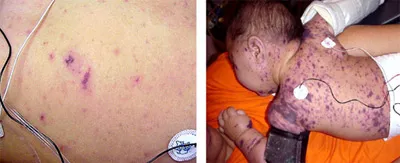
Febrile child UK Medical PG Question 1: A 8-year-old child presents with fever, irritability, and a widespread petechial rash that doesn't blanch with pressure. The child appears unwell and has neck stiffness. What is the most appropriate immediate management?
- A. Oral antibiotics
- B. IV benzylpenicillin (Correct Answer)
- C. Lumbar puncture
- D. Blood cultures
- E. CT head
Febrile child Explanation: ***IV benzylpenicillin***- The constellation of fever, irritability, widespread non-blanching petechial rash, unwell appearance, and neck stiffness is highly suggestive of **meningococcal disease** (meningitis with or without septicaemia), a medical emergency.- **Immediate empirical intravenous antibiotics**, such as **benzylpenicillin**, are critical to reduce mortality and morbidity in suspected meningococcal disease and should not be delayed by investigations. *Oral antibiotics*- The child presents with severe symptoms, including an **unwell appearance** and **non-blanching rash**, indicating a life-threatening infection requiring urgent intervention.- **Oral antibiotics** are inadequate for treating severe, rapidly progressing infections like meningococcal disease due to potentially slow absorption and insufficient blood-brain barrier penetration.*Lumbar puncture*- While a **lumbar puncture** is crucial for definitive diagnosis of meningitis, it must **not delay the immediate administration of IV antibiotics** in suspected meningococcal disease.- In a critically unwell child with signs of increased intracranial pressure (e.g., severe irritability, neck stiffness in context of severe illness), a lumbar puncture carries a risk of **herniation** and should be deferred until after antibiotics are given and/or a CT head rules out a space-occupying lesion.*Blood cultures*- **Blood cultures** are important for identifying the causative organism and guiding specific antibiotic therapy, but they should be taken **concurrently with or immediately after administering the first dose of IV antibiotics**.- Delaying antibiotic administration to obtain blood cultures can have severe consequences in a rapidly deteriorating patient with suspected **meningococcal septicaemia**.*CT head*- A **CT head** may be indicated to rule out complications like **cerebral edema** or **abscess** before a lumbar puncture, especially if there are signs of raised intracranial pressure.- However, like other investigations, a **CT head should not delay the immediate administration of life-saving IV antibiotics** in a child with suspected meningococcal disease, where time to treatment directly impacts prognosis.
Febrile child UK Medical PG Question 2: A 8-year-old child presents with fever, sore throat, and a sandpaper-like rash over the trunk and limbs. The tongue appears red with prominent papillae ("strawberry tongue"). What is the most likely diagnosis?
- A. Viral exanthem
- B. Scarlet fever (Correct Answer)
- C. Kawasaki disease
- D. Measles
- E. Erythema infectiosum
Febrile child Explanation: ***Scarlet fever***
- The presentation of fever, sore throat (streptococcal pharyngitis), and a generalized fine papular, **sandpaper-like rash** is pathognomonic for scarlet fever.
- The finding of a **strawberry tongue** (red, prominent papillae) is also highly characteristic, resulting from the systemic effects of circulating **pyrogenic exotoxins** produced by *Streptococcus pyogenes*.
*Viral exanthem*
- While many **viral exanthems** cause fever and rash, they typically lack the characteristic fine, **sandpaper texture** or the associated severe pharyngitis.
- The combination of sore throat, sandpaper rash, and specific **strawberry tongue** makes a common viral rash diagnosis highly unlikely.
*Kawasaki disease*
- This disease presents with high fever unresponsive to antipyretics and signs like **bilateral non-exudative conjunctivitis**, cracked lips, and **cervical lymphadenopathy**.
- The specific **sandpaper rash** and severe pharyngitis seen in the patient are not typical features of Kawasaki disease, which carries a risk of **coronary artery aneurysms**.
*Measles*
- Measles is characterized by the prodrome of cough, coryza, and conjunctivitis, followed by a maculopapular rash that starts on the face and spreads downwards.
- The presence of **Koplik spots** (small white spots on the buccal mucosa) precedes the rash in measles, and the rash appearance differs from the fine 'sandpaper' texture.
*Erythema infectiosum*
- This disease (Fifth Disease, caused by **Parvovirus B19**) is clinically recognized by the initial **slapped cheek appearance**.
- The rash then spreads to the extremities, developing a distinct **lacy, reticular pattern**, which contrasts sharply with the generalized, fine, sandpaper rash of scarlet fever.
Febrile child UK Medical PG Question 3: A 4-year-old child presents with fever, irritability, and neck stiffness. Lumbar puncture shows: opening pressure 25 cmH₂O, WCC 800/μL (90% neutrophils), protein 2.8 g/L, glucose 1.2 mmol/L (serum glucose 6.0 mmol/L). What is the most likely diagnosis?
- A. Viral meningitis
- B. Bacterial meningitis (Correct Answer)
- C. Tuberculous meningitis
- D. Fungal meningitis
- E. Normal CSF
Febrile child Explanation: ***Bacterial meningitis***- The constellation of **fever**, **neck stiffness**, severely elevated CSF **protein** (2.8 g/L), and profoundly low CSF **glucose** (ratio 0.2) is classic for acute bacterial infection.- The marked CSF pleocytosis (800/μL) with a predominant population of **neutrophils** (90%) indicates a rapidly progressive, pyogenic process.*Viral meningitis*- Characterized by **lymphocytic pleocytosis** (predominant lymphocytes) rather than the neutrophilic dominance seen here.- CSF glucose levels are typically **normal** or only mildly reduced, unlike the severe hypoglycemia reported in this patient.*Tuberculous meningitis*- While associated with low CSF glucose and high protein, it generally presents **subacutely** or chronically over weeks, not acutely.- CSF pleocytosis is usually **lymphocytic** or monocytic, not the acute neutrophilic predominance found in this sample.*Fungal meningitis*- This is rare in immunocompetent children, usually follows an indolent or **chronic** course, and typically presents with **lymphocytic** pleocytosis.- The acute presentation with fever, irritability, and prominent neutrophilia points strongly away from a fungal etiology.*Normal CSF*- Normal CSF findings include an opening pressure < 18 cmH₂O, WCC < 5/μL, and a CSF/serum glucose ratio > 0.6.- All measured parameters (pressure 25, WCC 800, glucose ratio 0.2) are significantly **abnormal**, definitively ruling out normal CSF.
Febrile child UK Medical PG Question 4: A 3-year-old child presents with a barking cough, inspiratory stridor, and hoarse voice. The symptoms are worse at night. The child is alert and playful. What is the most likely diagnosis?
- A. Epiglottitis
- B. Croup (Correct Answer)
- C. Bronchiolitis
- D. Pneumonia
- E. Foreign body aspiration
Febrile child Explanation: ***Croup***
- The presentation of a **barking cough**, **inspiratory stridor**, and **hoarse voice** in a 3-year-old is the classic triad for **Croup** (laryngotracheobronchitis), typically caused by the **Parainfluenza virus**.
- Symptoms are typically worse at night due to increased **vagal tone** and decreased ambient humidity, yet the child remains alert and non-toxic, which is characteristic of mild-to-moderate croup.
*Epiglottitis*
- This condition presents as a medical emergency with rapid onset of **high fever**, severe **dysphagia**, drooling, and a **muffled voice**, but usually lacks the characteristic **barking cough**.
- The child with epiglottitis typically appears **toxic**, apprehensive, and prefers the **tripod position**, unlike the alert and playful child described.
*Bronchiolitis*
- Bronchiolitis is an infection of the small airways, primarily causing **wheezing**, **tachypnea**, and signs of **lower respiratory distress**, usually without stridor or the specific barking cough.
- It predominantly affects infants under 2 years of age and is most often caused by **Respiratory Syncytial Virus (RSV)**.
*Pneumonia*
- This is an infection of the lung parenchyma, presenting with fever, **tachypnea**, and often a productive cough accompanied by focal findings like **crackles** or **dullness** on chest exam.
- Pneumonia does not typically cause prominent **inspiratory stridor** or the characteristic **barking cough** associated with upper airway swelling.
*Foreign body aspiration*
- This diagnosis usually involves a sudden onset of **choking** or coughing, and if the object is lodged in the larynx or trachea, it causes stridor, but the symptoms do not typically fluctuate and worsen specifically **at night**.
Febrile child UK Medical PG Question 5: A 2-year-old child presents with a 3-day history of cough, wheeze, and difficulty breathing. The symptoms started gradually and the child has been feeding poorly. On examination, there are widespread fine crackles and wheeze. What is the most likely diagnosis?
- A. Asthma
- B. Pneumonia
- C. Bronchiolitis (Correct Answer)
- D. Croup
- E. Foreign body aspiration
Febrile child Explanation: ***Bronchiolitis***
- This diagnosis is strongly suggested by the patient's age (2 years), gradual onset of cough, wheeze, and difficulty breathing over 3 days, combined with **poor feeding** and widespread **fine crackles** and **wheeze** on examination, which are classic features of this viral lower respiratory tract infection.
- It is the most common cause of lower respiratory tract infection in infants and young children, often caused by **Respiratory Syncytial Virus (RSV)**, leading to inflammation and obstruction of the small airways.
*Asthma*
- While asthma presents with cough and wheeze, a first presentation in a 2-year-old with a 3-day gradual onset including **poor feeding** and widespread **fine crackles** is less typical, as asthma usually involves recurrent episodes or specific triggers.
- The characteristic widespread fine crackles alongside wheeze, especially with a history of poor feeding and a clear acute illness, point away from asthma as the primary diagnosis in this context.
*Pneumonia*
- Pneumonia usually presents with more localized findings (e.g., **dullness to percussion**, **bronchial breath sounds**), **coarse crackles**, and often higher fever or more significant systemic illness, differentiating it from the generalized wheeze and fine crackles of bronchiolitis.
- The description of widespread wheeze is not a typical predominant finding in uncomplicated pneumonia in this age group.
*Croup*
- Croup is characterized by a distinctive **barking cough** and **inspiratory stridor**, indicating upper airway obstruction, which are absent in the clinical presentation provided.
- The widespread wheeze and fine crackles point to lower airway involvement, not the laryngeal and tracheal inflammation seen in croup.
*Foreign body aspiration*
- Foreign body aspiration typically has a **sudden onset** of choking or coughing, which contrasts with the gradual 3-day history described.
- While it can cause wheeze, it is often unilateral or localized and usually lacks the widespread **fine crackles** and history of poor feeding associated with a viral illness.
Febrile child UK Medical PG Question 6: A 9-year-old boy with known asthma presents to the emergency department with an acute exacerbation. Following administration of oxygen, nebulized salbutamol, ipratropium bromide, and oral prednisolone, he remains in respiratory distress with oxygen saturation 92% on high-flow oxygen, peak flow 30% of predicted, and poor respiratory effort. What is the appropriate dose and route of magnesium sulphate administration in this clinical scenario?
- A. 40 mg/kg (maximum 2 g) intravenous infusion over 20 minutes (Correct Answer)
- B. 25 mg/kg (maximum 1 g) intravenous bolus over 5 minutes
- C. 40 mg/kg nebulized with salbutamol
- D. 50 mg/kg (maximum 2.5 g) intravenous infusion over 30 minutes
- E. 150 mg nebulized with ipratropium bromide
Febrile child Explanation: ***40 mg/kg (maximum 2 g) intravenous infusion over 20 minutes***
- This patient presents with a **severe acute asthma exacerbation** (peak flow 30% predicted, poor respiratory effort, poor response to initial therapies), necessitating adjunctive intravenous magnesium sulphate.
- Current guidelines recommend **intravenous magnesium sulphate** at **40 mg/kg** (maximum 2 g) administered as a slow **infusion over 20 minutes** for children with severe refractory asthma.
*25 mg/kg (maximum 1 g) intravenous bolus over 5 minutes*
- This **dose (25 mg/kg)** is below the recommended concentration for treating **severe pediatric asthma exacerbations**, which typically calls for 40 mg/kg.
- Administering magnesium as a rapid **intravenous bolus over 5 minutes** significantly increases the risk of adverse effects like **hypotension** and cardiac arrhythmias.
*40 mg/kg nebulized with salbutamol*
- While **nebulized magnesium sulphate** has been studied, its efficacy for **life-threatening asthma exacerbations** is not as well-established as the intravenous route, especially after failure of initial nebulized bronchodilators.
- For severe, refractory asthma, **systemic (intravenous) administration** is preferred as it ensures better absorption and clinical effect compared to nebulized delivery.
*50 mg/kg (maximum 2.5 g) intravenous infusion over 30 minutes*
- This dose of **50 mg/kg** exceeds the standard **maximum recommended dose of 2 g** for intravenous magnesium sulphate in pediatric asthma, raising concerns for increased toxicity without additional therapeutic benefit.
- Although a slow infusion, the **recommended duration** is typically 20 minutes for managing acute asthma effectively while minimizing side effects.
*150 mg nebulized with ipratropium bromide*
- The dose of **150 mg** is an incorrect fixed dose for nebulized magnesium sulphate in children; dosing is typically **weight-based**, and this combination with ipratropium bromide is not standard.
- In a **life-threatening asthma exacerbation** with poor respiratory effort, **systemic (intravenous) magnesium sulphate** is the indicated adjunctive treatment, as nebulized delivery is less effective in this critical scenario.
Febrile child UK Medical PG Question 7: A 4-year-old boy presents with sudden onset high fever of 40.2°C, drooling, and severe difficulty swallowing. He is sitting upright, leaning forward with his neck extended, and appears anxious. There is inspiratory stridor and he is reluctant to speak. Oxygen saturation is 96% on air. What is the single most appropriate immediate action?
- A. Examine the throat with tongue depressor to visualize the epiglottis
- B. Obtain blood cultures and commence intravenous antibiotics immediately
- C. Contact senior anaesthetist and ENT surgeon urgently without disturbing the child (Correct Answer)
- D. Administer nebulized adrenaline and oral dexamethasone
- E. Perform lateral neck X-ray to confirm the diagnosis
Febrile child Explanation: ***Contact senior anaesthetist and ENT surgeon urgently without disturbing the child*** - The presentation of high fever, **drooling**, and **tripod positioning** is classic for **acute epiglottitis**, a life-threatening medical emergency requiring immediate airway management by specialists. - Keeping the child **undisturbed** is critical, as any agitation or distress can trigger **sudden, complete airway obstruction** and respiratory arrest.*Examine the throat with tongue depressor to visualize the epiglottis* - Instrumental examination of the throat is **strictly contraindicated** outside of a controlled operating theatre environment. - Physical manipulation of the airway can cause **laryngospasm** and immediate, irreversible airway closure.*Obtain blood cultures and commence intravenous antibiotics immediately* - While antibiotics are necessary for the underlying **Haemophilus influenzae type b (Hib)** infection, securing the **airway** takes absolute priority. - Attempting intravenous access (cannulation) is a painful procedure that can **distress the child** and precipitate acute airway collapse.*Administer nebulized adrenaline and oral dexamethasone* - These interventions are the standard of care for **croup (laryngotracheobronchitis)**, which presents with a barking cough and lower fever. - They have **no therapeutic role** in epiglottitis and delaying definitive airway stabilization to provide them is dangerous.*Perform lateral neck X-ray to confirm the diagnosis* - Diagnosis of epiglottitis is primarily **clinical**; transferring a patient to radiology or positioning them for X-rays (the **thumbprint sign**) wastes vital time. - The child must never be left unattended or laid flat for imaging, as this is associated with increased risk of **airway obstruction**.
Febrile child UK Medical PG Question 8: A 2-year-old boy with viral-induced wheeze is assessed in the emergency department. He has received salbutamol via spacer but continues to have expiratory wheeze, recession, and a respiratory rate of 50/min. Oxygen saturation is 93% on air. The parents ask whether their child will develop asthma. Which factor most strongly predicts progression from preschool wheeze to persistent childhood asthma?
- A. Male gender
- B. Eczema or allergic rhinitis in the child (Correct Answer)
- C. Early onset of wheeze in the first year of life
- D. Parental smoking in the household
- E. History of bronchiolitis requiring hospitalization
Febrile child Explanation: ***Eczema or allergic rhinitis in the child***
- Personal **atopy** (especially **physician-diagnosed eczema**) is identified as a **major criterion** in the **Asthma Predictive Index (API)** for predicting persistent asthma in school-aged children.
- A child with recurrent wheeze and allergic comorbidities has a significantly higher probability of having an **allergic phenotype** that persists, compared to isolated **viral-induced wheeze**.
*Male gender*
- While **male gender** is a risk factor for **preschool wheezing** and airway narrowing in early life, it is not a strong independent predictor of **persistence** into later childhood.
- The gender prevalence often **shifts** around puberty, where asthma becomes more common in females.
*Early onset of wheeze in the first year of life*
- Early-onset wheezing is often associated with **transient early wheezing**, typically caused by **small airway caliber** rather than an asthmatic pathology.
- Most children who wheeze only in the first year of life actually see their symptoms resolve (outgrow it) by age 3 to 6.
*Parental smoking in the household*
- **Environmental tobacco smoke** is a significant trigger for **exacerbations** and reduced lung function, but it is considered a weaker predictor for the development of chronic asthma than **atopic markers**.
- It contributes to **airway hyper-responsiveness** but does not define the underlying allergic predisposition required for an asthma diagnosis.
*History of bronchiolitis requiring hospitalization*
- A history of severe **RSV** or other viral **bronchiolitis** is associated with subsequent wheezing episodes in early childhood, but it is not a specific predictor of **persistent asthma**.
- Many infants hospitalized with bronchiolitis do not go on to develop the **atopic airway inflammation** characteristic of true bronchial asthma.
Febrile child UK Medical PG Question 9: A 15-month-old child is brought to the emergency department with fever of 39.6°C for 2 hours. The mother reports the child had a brief generalized tonic-clonic seizure lasting approximately 3 minutes at home which resolved spontaneously. The child is now alert and playful with no focal neurological signs. There are no signs of meningism. The seizure occurred on the way up in fever. What is the most important next step in management?
- A. Perform urgent lumbar puncture to exclude meningitis
- B. Administer intravenous antibiotics immediately
- C. Commence regular paracetamol and observe for further seizures
- D. Arrange urgent CT head to exclude intracranial pathology
- E. Undertake thorough clinical examination to identify source of fever (Correct Answer)
Febrile child Explanation: ***Undertake thorough clinical examination to identify source of fever***
- The child presents with a **simple febrile seizure**: it's generalized, lasted less than 15 minutes, occurred during a fever in a child within the typical age range (6 months to 5 years), and the child has returned to baseline.
- After a simple febrile seizure, the most crucial next step is to perform a **thorough clinical examination** to identify the source of the fever and treat the underlying illness, as the child is now stable and neurologically intact.
*Perform urgent lumbar puncture to exclude meningitis*
- **Lumbar puncture** is not routinely recommended for children over 12 months who are well-appearing, have no **signs of meningism** (e.g., neck stiffness), and no focal neurological signs after a simple febrile seizure.
- Given the child is
Febrile child UK Medical PG Question 10: A 5-year-old girl with poorly controlled asthma on beclometasone 400 micrograms twice daily plus montelukast presents with her fourth exacerbation in 6 months. Her mother reports good adherence but mentions they have a cat at home and the child often plays with it. Skin prick testing confirms cat allergy. Despite advice about allergen avoidance, the family is unable to rehome the pet. What is the most appropriate next step in her asthma management?
- A. Continue current therapy and arrange follow-up in 3 months
- B. Add long-acting beta-agonist to current therapy (Correct Answer)
- C. Switch to high-dose inhaled corticosteroid monotherapy
- D. Commence allergen-specific immunotherapy for cat allergy
- E. Add oral prednisolone maintenance therapy
Febrile child Explanation: ***Add long-acting beta-agonist to current therapy***- In children whose asthma is poorly controlled on **moderate-dose ICS** and a **Leukotriene Receptor Antagonist (LTRA)**, the next logical step in treatment escalation according to guidelines (e.g., BTS/SIGN, GINA) is to add a **Long-Acting Beta-Agonist (LABA)**.- This patient is experiencing frequent **exacerbations** (four in six months) despite good adherence, indicating a clear need for treatment escalation to achieve better symptom control and prevent future attacks.*Continue current therapy and arrange follow-up in 3 months*- Continuing the same regimen is inappropriate given the clear evidence of **poor asthma control** and recurrent **exacerbations**.- Delaying escalation for 3 months would leave the child at high risk for further severe **asthma attacks**, especially with ongoing **allergen exposure**.*Switch to high-dose inhaled corticosteroid monotherapy*- Increasing to **high-dose ICS** monotherapy is generally less favored in children due to increased risk of **systemic side effects** like growth suppression, compared to combination therapy.- Clinical guidelines prioritize adding a **LABA** as a more effective and safer adjunct to moderate-dose ICS before considering very high doses of **inhaled steroids** alone.*Commence allergen-specific immunotherapy for cat allergy*- While the child has a confirmed **cat allergy**, **allergen-specific immunotherapy** is typically reserved for severe, uncontrolled asthma cases in specialist centers after conventional pharmacological treatments have been optimized.- It is a long-term commitment and not the immediate next step for escalating asthma control in a child who can benefit from standard pharmacological additions.*Add oral prednisolone maintenance therapy*- **Maintenance oral steroids** are reserved for the most severe, refractory cases of asthma (often referred to as Step 5 or 6 in guidelines) due to their significant **long-term systemic toxicity**.- This drastic measure should only be considered after all other treatment options, including combination therapies and specialist referral, have been thoroughly exhausted.
More Febrile child UK Medical PG questions available in the OnCourse app. Practice MCQs, flashcards, and get detailed explanations.