Wound Healing and Care Indian Medical PG Practice Questions and MCQs
Practice Indian Medical PG questions for Wound Healing and Care. These multiple choice questions (MCQs) cover important concepts and help you prepare for your exams.
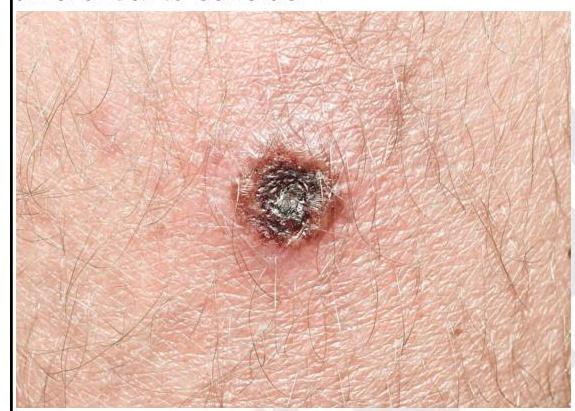
Wound Healing and Care Indian Medical PG Question 1: A forest officer develops the lesion as shown in the image. Which of the following is not a differential to consider?
- A. Cutaneous anthrax
- B. KFD (Correct Answer)
- C. Scrub typhus
- D. Healing brown recluse spider bite
Wound Healing and Care Explanation: ***KFD***
- **Kyasanur Forest Disease** (KFD) is a viral hemorrhagic fever, but it does **not** typically present with a **skin lesion** or eschar like the one shown.
- KFD is characterized by fever, headache, myalgia, and gastrointestinal symptoms, with hemorrhagic manifestations in severe cases, but not a primary cutaneous lesion.
*Cutaneous anthrax*
- **Cutaneous anthrax** commonly presents as an **eschar**, often with surrounding edema and vesicles, which can resemble the lesion in the image.
- Exposure through handling infected animal products or contact with contaminated soil is common, aligning with a forest officer's occupation.
*Scrub typhus*
- **Scrub typhus** characteristically causes an **eschar** (tache noire) at the bite site of the chigger mite.
- The lesion in the image, an ulcer with a central black crust, is highly suggestive of such an eschar seen in rickettsial infections.
*Healing brown recluse spider bite*
- A **brown recluse spider bite** can cause a **necrotic ulcer** with a central dark eschar as the wound heals, fitting the appearance of the lesion.
- The profession of a forest officer increases the likelihood of exposure to spiders in their natural habitat.
Wound Healing and Care Indian Medical PG Question 2: Which of the following is a PRIMARY indication for negative pressure wound therapy (NPWT)?
- A. After amputation
- B. Chronic osteomyelitis wound
- C. Bed sore in sacrum after debridement (Correct Answer)
- D. After split skin graft
Wound Healing and Care Explanation: ***Bed sore in sacrum after debridement***
- **Negative pressure wound therapy (NPWT)** is a **primary, well-established indication** for pressure ulcers (bedsores) after debridement.
- NPWT promotes **granulation tissue formation**, **wound contraction**, and prepares the wound bed for closure.
- It effectively reduces **exudate** and bacterial load, making it a **first-line adjunctive therapy** for clean pressure ulcers.
- **Strong evidence base** supports its use in this indication, particularly for Stage III-IV pressure ulcers post-debridement.
*After amputation*
- NPWT can be used in selected post-amputation cases to manage residual limb wounds or surgical site complications.
- However, it is **not a primary or routine indication** but rather a **secondary/adjunctive option** for specific complications.
- The main post-amputation focus is limb shaping, prosthetic preparation, and infection prevention.
*Chronic osteomyelitis wound*
- NPWT serves as **adjunctive therapy** for osteomyelitis wounds after surgical debridement to manage exudate.
- The **primary treatment** for chronic osteomyelitis is aggressive **surgical debridement** and prolonged **antibiotic therapy**.
- NPWT is supportive but **not the primary therapeutic modality** for this condition.
*After split skin graft*
- NPWT can be used post-grafting as a **graft bolster** to ensure adherence and optimal take.
- While effective, this is a **specialized application** rather than a primary indication.
- Traditional tie-over dressings remain standard in many settings, with NPWT reserved for complex cases.
Wound Healing and Care Indian Medical PG Question 3: A 43-year-old window cleaner fell off a scaffold. He sustained an open wound on the right leg. Debridement was carried out in the emergency department, and the edges of the wound were left open. Which factor is least likely to inhibit wound contraction?
- A. Radiation
- B. Transforming growth factor β (Correct Answer)
- C. Full-thickness skin graft
- D. Cytolytic drug
Wound Healing and Care Explanation: ***Transforming growth factor β***
- **TGF-β** is a potent **pro-fibrotic cytokine** that plays a crucial role in promoting wound contraction and fibrosis by stimulating **fibroblast proliferation**, **myofibroblast differentiation**, and **collagen synthesis**.
- Its presence and activity would *enhance* rather than inhibit wound contraction, making it the **least likely factor to inhibit** this process.
- In wound healing, TGF-β is essential for the contraction phase and tissue remodeling.
*Radiation*
- **Ionizing radiation** can damage cells, including **fibroblasts** and **myofibroblasts**, which are essential for wound contraction.
- This cellular damage and reduction in viable cells can significantly **impair** the contractile forces within the wound.
- Radiation therapy is a known factor that inhibits wound healing and contraction.
*Full-thickness skin graft*
- A **full-thickness skin graft** introduces a complete layer of skin, including the dermis, into the wound.
- The presence of the **dermis** within the graft provides a structural barrier and helps to **anchor the wound edges**, thereby reducing the tendency for contraction.
- In contrast, **split-thickness grafts** allow more wound contraction due to less dermal tissue.
*Cytolytic drug*
- **Cytolytic drugs** are designed to kill cells, and if applied to a wound, they would destroy **fibroblasts** and **myofibroblasts**.
- The destruction of these critical cells would directly **inhibit** the cellular machinery responsible for pulling the wound edges together, hence preventing contraction.
- These drugs impair the proliferative phase of wound healing.
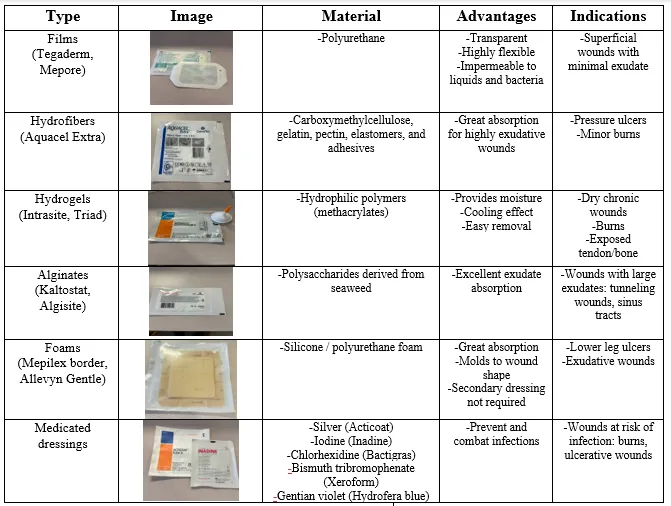
Wound Healing and Care Indian Medical PG Question 4: What type of graft or dressing is used to cover the post-burn wound shown in the image?
- A. Split thickness skin graft (Correct Answer)
- B. Full thickness skin graft
- C. VAC dressing
- D. Normal saline dressing
Wound Healing and Care Explanation: ***Split thickness skin graft***
- The image shows a **meshed pattern** on the skin graft, which is characteristic of a **split-thickness skin graft** that has been expanded to cover a larger area.
- This type of graft consists of the epidermis and a portion of the dermis, making it more flexible and able to **"take" more reliably** on various wound beds, commonly used for burn wounds.
*Full thickness skin graft*
- A **full-thickness skin graft** includes the entire epidermis and dermis and typically does not have a meshed appearance.
- They are used for smaller defects where cosmesis is a priority, but have a **lower take rate** than split-thickness grafts, making them less suitable for large burn wounds.
*VAC dressing*
- A **VAC (Vacuum-Assisted Closure) dressing** is a system that applies negative pressure to a wound to promote healing and is not a skin graft itself.
- It involves a foam or gauze dressing sealed with an adhesive film, connected to a vacuum pump, which is not what is depicted in the image.
*Normal saline dressing*
- A **normal saline dressing** is a simple wet-to-dry or wet-to-wet dressing for wound care, involving gauze soaked in normal saline.
- This is a basic wound management technique and does not involve grafting or have the characteristic meshed appearance seen in the image.
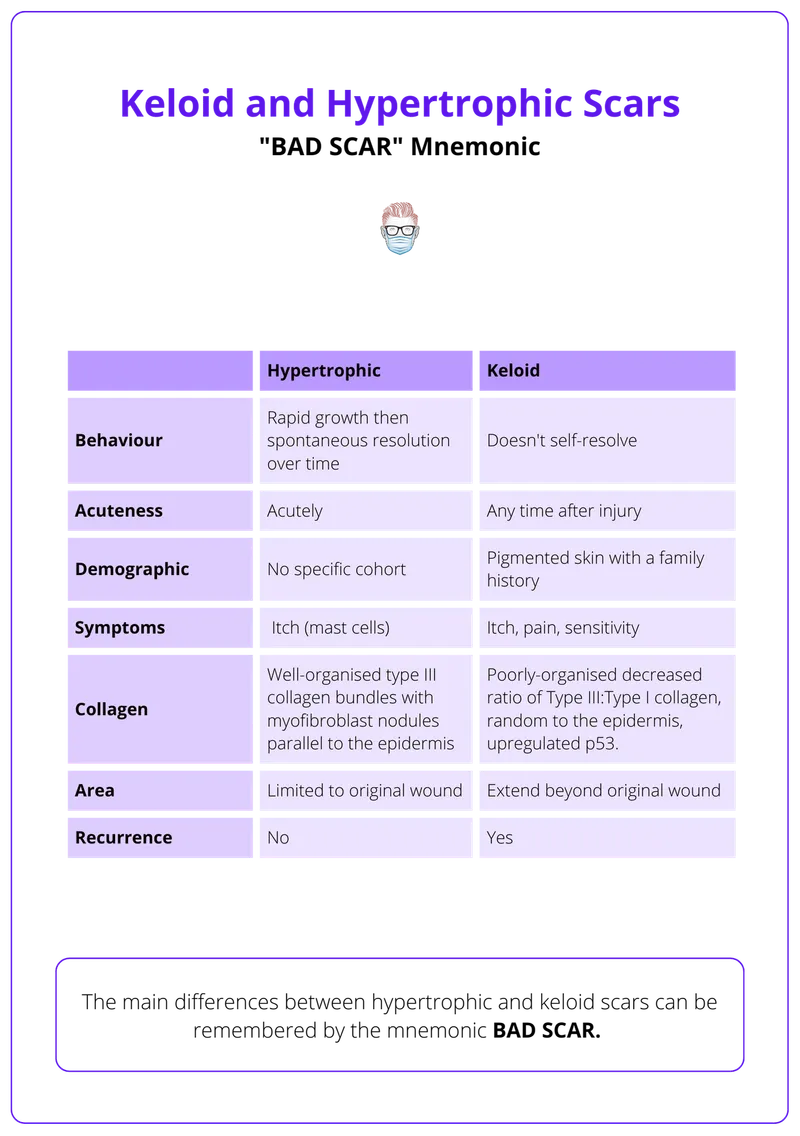
Wound Healing and Care Indian Medical PG Question 5: The following statement about keloid is true:
- A. Extended excision is the treatment of choice
- B. Elevated levels of growth factor is not seen
- C. It will have more collagen and vascularity (Correct Answer)
- D. They do not extend beyond the wound
Wound Healing and Care Explanation: ***It will have more collagen and vascularity***
- Keloid scars are characterized by an **overgrowth of dense, fibrous tissue**, primarily composed of **collagen fibers**, which explains the increased collagen content [1], [2].
- They also exhibit an increased number of **blood vessels (vascularity)** compared to normal skin, contributing to their often reddish or purple appearance.
*Extended excision is the treatment of choice*
- **Surgical excision alone** is generally **not the treatment of choice** for keloids because it has a **high recurrence rate** (often greater than 50-100%) [1].
- If excision is performed, it must be combined with **adjuvant therapies** such as corticosteroids, cryotherapy, or radiation therapy to reduce the risk of recurrence.
*Elevated levels of growth factor is not seen*
- Keloids are associated with **elevated levels of various growth factors**, such as **transforming growth factor-beta (TGF-$\beta$)** and ** basic fibroblast growth factor (bFGF)** [3].
- These growth factors play a crucial role in promoting **fibroblast proliferation** and **collagen synthesis**, contributing to the excessive scar formation [3].
*They do not extend beyond the wound*
- This statement describes a **hypertrophic scar**, not a keloid.
- **Keloids are distinctive** because they characteristically **extend beyond the boundaries of the original wound** or injury, often infiltrating surrounding healthy tissue [1].
**References:**
[1] Kumar V, Abbas AK, et al.. Robbins and Cotran Pathologic Basis of Disease. 9th ed. Inflammation and Repair, p. 121.
[2] Cross SS. Underwood's Pathology: A Clinical Approach. 6th ed. (Basic Pathology) introduces the student to key general principles of pathology, both as a medical science and as a clinical activity with a vital role in patient care. Part 2 (Disease Mechanisms) provides fundamental knowledge about the cellular and molecular processes involved in diseases, providing the rationale for their treatment. Part 3 (Systematic Pathology) deals in detail with specific diseases, with emphasis on the clinically important aspects., pp. 106-107.
[3] Kumar V, Abbas AK, et al.. Robbins and Cotran Pathologic Basis of Disease. 9th ed. Inflammation and Repair, pp. 117-119.
Wound Healing and Care Indian Medical PG Question 6: Granulation tissue is replaced by connective tissue in what stage of wound healing?
- A. 7 days (Correct Answer)
- B. 14 days
- C. 21 days
- D. 1 month
Wound Healing and Care Explanation: ***21 days***
- Granulation tissue formation is prominent until about **21 days**, after which it starts to reorganize into fibrous connective tissue [1][2].
- In this stage, collagen deposition increases, contributing to **wound strength** and integrity [2].
*1 month*
- By this time, connective tissue maturation continues but the primary transition from granulation tissue typically completes by **21 days** [2].
- It may lead to overestimation of healing progression as remodeling may still be ongoing.
*14 days*
- At **14 days**, granulation tissue is still present and not yet fully replaced by connective tissue [1].
- This stage primarily involves **vascularization** and **inflammatory responses**, not complete fibrous change [1].
*7 days*
- This early phase is characterized by **hemostasis** and **inflammation**, with granulation tissue just beginning to form [1].
- Significant connective tissue replacement has not yet occurred, as the wound healing process is still at the initial stages.
**References:**
[1] Kumar V, Abbas AK, et al.. Robbins and Cotran Pathologic Basis of Disease. 9th ed. Inflammation and Repair, pp. 117-119.
[2] Kumar V, Abbas AK, et al.. Robbins and Cotran Pathologic Basis of Disease. 9th ed. Inflammation and Repair, pp. 119-121.
Wound Healing and Care Indian Medical PG Question 7: Which of the following is absolutely essential for wound healing?
- A. Balanced diet
- B. Vitamin C (Correct Answer)
- C. Vitamin D
- D. Carbohydrates
Wound Healing and Care Explanation: ***Vit C***
- **Vitamin C** is absolutely essential for wound healing because it is a crucial cofactor for **collagen synthesis**, specifically for the hydroxylation of proline and lysine residues.
- Without adequate vitamin C, strong, stable **collagen fibers** cannot be formed, leading to impaired wound tensile strength and delayed healing.
*Balanced diet*
- While a **balanced diet** provides overall nutritional support for wound healing, it is a general principle, not a single, absolutely essential nutrient in the same way **Vitamin C** is for a specific biochemical process.
- A balanced diet incorporates many components, but specifically points to **Vitamin C's** role makes it more specific and thereby the correct answer.
*Vit D*
- **Vitamin D** plays a role in bone health and immune function but is not directly involved in the **collagen synthesis** or immediate structural integrity of new tissue formation in wound healing to the same critical extent as Vitamin C.
- Its effects on wound healing are more indirect, through modulation of inflammation and cell proliferation, rather than being an "absolutely essential" direct component of the healing process.
*Carbohydrates*
- **Carbohydrates** are important for providing energy for cellular activities during wound healing.
- However, they are not directly involved in the **structural integrity** or **collagen formation** of the healing tissue itself, unlike Vitamin C.
Wound Healing and Care Indian Medical PG Question 8: An Incisional wound heals by
- A. Primary Healing (Correct Answer)
- B. Secondary Healing
- C. Epithelialization
- D. Delayed primary Healing
Wound Healing and Care Explanation: ***Primary Healing***
- An **incisional wound** is typically a clean, sharply incised wound with **minimal tissue loss** and edges that can be approximated.
- **Primary healing** (or first intention) occurs when the wound edges are surgically closed, leading to rapid healing with minimal scarring.
*Secondary Healing*
- This type of healing occurs in wounds with **significant tissue loss** or infection, where the edges cannot be approximated.
- The wound must heal by **granulation tissue formation** and **wound contraction**, resulting in a larger scar.
*Epithelialization*
- **Epithelialization** is a vital process in all types of wound healing, where epithelial cells migrate to cover the wound surface.
- However, it describes a *process* rather than a *mode* of overall wound healing for a closed incisional wound.
*Delayed primary Healing*
- **Delayed primary healing** (or tertiary intention) involves leaving a wound open for a period (e.g., to control infection or edema) before closing it surgically.
- This approach is not typical for a clean incisional wound but is used in cases where primary closure is initially unsafe.
Wound Healing and Care Indian Medical PG Question 9: Tidy wounds inflicted by sharp instruments and containing no devitalised tissues are expected to heal by
- A. Primary healing (Correct Answer)
- B. Skin grafting
- C. Secondary healing
- D. Formation of contracture
Wound Healing and Care Explanation: ***Primary healing***
- This mode of healing occurs in **clean, surgically incised, or sharply cut wounds** with minimal tissue loss and edges that can be approximated.
- Features include minimal scarring and rapid re-epithelialization without granulation tissue formation.
*Skin grafting*
- This is a surgical procedure used to cover large wounds where **primary closure is not possible** or to repair areas with significant tissue loss.
- It involves transplanting skin from one area of the body to another, not a natural healing process for tidy wounds.
*Secondary healing*
- This occurs in wounds with **significant tissue loss, infection, or edges that cannot be approximated**, requiring the formation of granulation tissue to fill the defect.
- It results in a larger scar and takes longer to heal compared to primary healing.
*Formation of contracture*
- **Wound contracture** is a process that occurs during secondary healing, where myofibroblasts pull the wound edges together, leading to a reduction in wound size.
- While it's a part of the healing process for certain wounds, it is not the primary mode of healing for tidy, sharp wounds and can lead to functional impairment if severe.
Wound Healing and Care Indian Medical PG Question 10: Primary closure of incised wounds must be done within:
- A. 4 hours
- B. 6 hours (Correct Answer)
- C. 12 hours
- D. 2 hours
Wound Healing and Care Explanation: ***6 hours***
- Primary closure of **incised wounds** is generally recommended within **6 hours** of injury to minimize the risk of infection.
- After this timeframe, the bacterial count in the wound often increases, making **primary closure** less safe due to higher infection risk.
*4 hours*
- While closing within **4 hours** is optimal, it is not the strict upper limit for primary closure of most clean incised wounds.
- Waiting an additional two hours to 6 hours still allows for safe primary closure in many cases.
*12 hours*
- Closing a wound after **12 hours** significantly increases the risk of **wound infection** due to bacterial proliferation.
- Wounds presenting after this period are usually managed with **delayed primary closure** or left to heal by **secondary intention**.
*2 hours*
- Although closing within **2 hours** is ideal for minimizing tissue exposure, it is not the mandatory outer limit for safe primary closure.
- The window extends beyond this to effectively manage resources and patient flow.
More Wound Healing and Care Indian Medical PG questions available in the OnCourse app. Practice MCQs, flashcards, and get detailed explanations.