Ultrasound-Guided Interventions Indian Medical PG Practice Questions and MCQs
Practice Indian Medical PG questions for Ultrasound-Guided Interventions. These multiple choice questions (MCQs) cover important concepts and help you prepare for your exams.
Ultrasound-Guided Interventions Indian Medical PG Question 1: What is the next best step for a 22-year-old with a hepatic hemangioma on ultrasound?
- A. Angiography
- B. CT
- C. Biopsy
- D. MRI (Correct Answer)
Ultrasound-Guided Interventions Explanation: ***MRI***
- **Magnetic Resonance Imaging (MRI)** is the most sensitive and specific imaging modality for confirming the diagnosis of a **hepatic hemangioma** due to its characteristic enhancement patterns.
- An MRI with contrast (e.g., gadolinium) can definitively distinguish a hemangioma from other **benign or malignant liver lesions**, especially when the ultrasound findings are equivocal.
*Angiography*
- **Angiography** is an invasive procedure and is typically reserved for cases where **embolization** or surgical resection of a very large or symptomatic hemangioma is being considered.
- It is not the initial diagnostic choice for confirming a suspected hemangioma identified on **ultrasound**.
*CT*
- A **CT scan** with contrast can also characterize a hemangioma, showing peripheral nodular enhancement followed by progressive centripetal fill-in.
- However, **MRI** generally offers superior soft tissue contrast and provides more definitive diagnostic features for hemangiomas, particularly in younger patients where radiation exposure from CT is a concern.
*Biopsy*
- **Biopsy** of a suspected hepatic hemangioma is generally contraindicated due to the risk of **hemorrhage** and is rarely necessary for diagnosis.
- Imaging characteristics (especially on MRI) are usually sufficient to confirm the diagnosis without the need for an invasive procedure.
Ultrasound-Guided Interventions Indian Medical PG Question 2: Which of the following is best assessed by FAST USG?
- A. Liver
- B. Pericardium (Correct Answer)
- C. Spleen
- D. Pleural cavity
Ultrasound-Guided Interventions Explanation: ***Pericardium***
- FAST USG is **most clinically significant** for detecting **pericardial effusions** and **cardiac tamponade** in trauma patients.
- The **subxiphoid view** provides **excellent direct visualization** of the heart and pericardial space with minimal interference.
- **Small volumes** of pericardial fluid (as little as 50-100 mL) are **clinically significant** and potentially life-threatening, requiring immediate intervention.
- Cardiac tamponade is an **immediately reversible cause of shock** that demands urgent diagnosis and pericardiocentesis.
- **Sensitivity >90%** for clinically significant pericardial effusions in the trauma setting.
*Liver*
- FAST assesses the **hepatorenal space (Morison's pouch)** for free fluid, not the liver parenchyma itself.
- Requires **larger volumes of free fluid** (>200-500 mL) to be reliably detected in the peritoneal cavity.
- Detailed assessment of actual liver injury requires **contrast-enhanced CT imaging**.
*Spleen*
- FAST evaluates the **splenorenal recess** for free fluid surrounding the spleen, not splenic parenchymal injury.
- Detection depends on adequate volume of free fluid being present.
- **CT scanning** is superior for defining splenic lacerations, hematomas, and grading injury severity.
*Pleural cavity*
- While Extended FAST (eFAST) can assess **pleural spaces** for effusion or pneumothorax, this is an **extension** of the standard 4-view FAST protocol.
- Standard FAST focuses on the **four primary windows**: pericardial, perihepatic, perisplenic, and pelvic.
- **Chest X-ray** and **CT** remain primary modalities for comprehensive thoracic assessment.
Ultrasound-Guided Interventions Indian Medical PG Question 3: All are the Complication of CVP line except
- A. Haemothorax
- B. Airway injury (Correct Answer)
- C. Air embolism
- D. Septicemia
Ultrasound-Guided Interventions Explanation: ***Airway injury***
- While central venous catheterization can cause various complications, direct **airway injury** (e.g., tracheal puncture) is extremely rare and not a typical complication of the procedure itself as the insertion sites are generally not near the major airways.
- Complications usually involve vascular, pleural, or infectious issues rather than direct damage to the respiratory tree.
*Haemothorax*
- **Haemothorax** can occur if the subclavian or internal jugular vein is punctured and the needle or catheter inadvertently punctures an adjacent artery (e.g., subclavian artery), leading to bleeding into the pleural space.
- This complication presents with respiratory distress and signs of hypovolemia as blood accumulates in the thoracic cavity.
*Air embolism*
- **Air embolism** is a serious complication, especially during insertion or removal of a CVP line, if the catheter lumen is exposed to air and negative intrathoracic pressure sucks air into the venous system.
- It can lead to sudden cardiorespiratory collapse and is a recognized risk of CVP placement.
*Septicemia*
- **Septicemia** (or central line-associated bloodstream infection, CLABSI) is a common and serious complication, particularly with prolonged catheter dwelling times, poor aseptic technique, or inadequate site care.
- Bacteria can colonize the catheter surface and enter the bloodstream, leading to systemic infection.
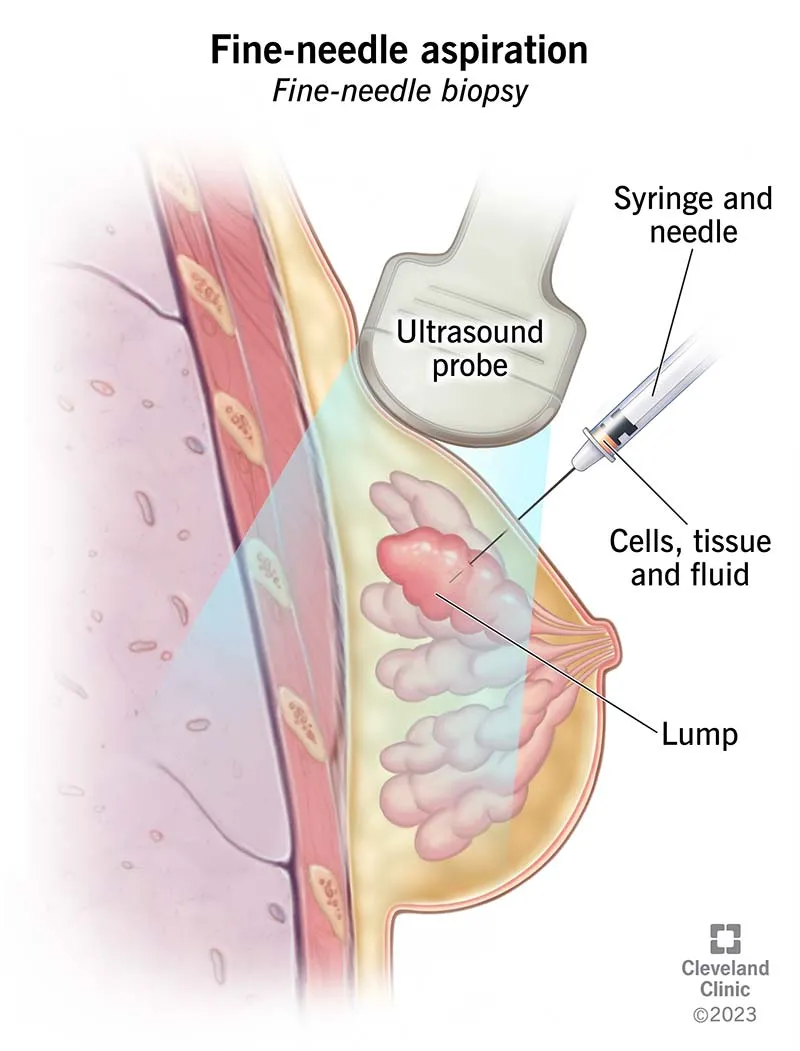
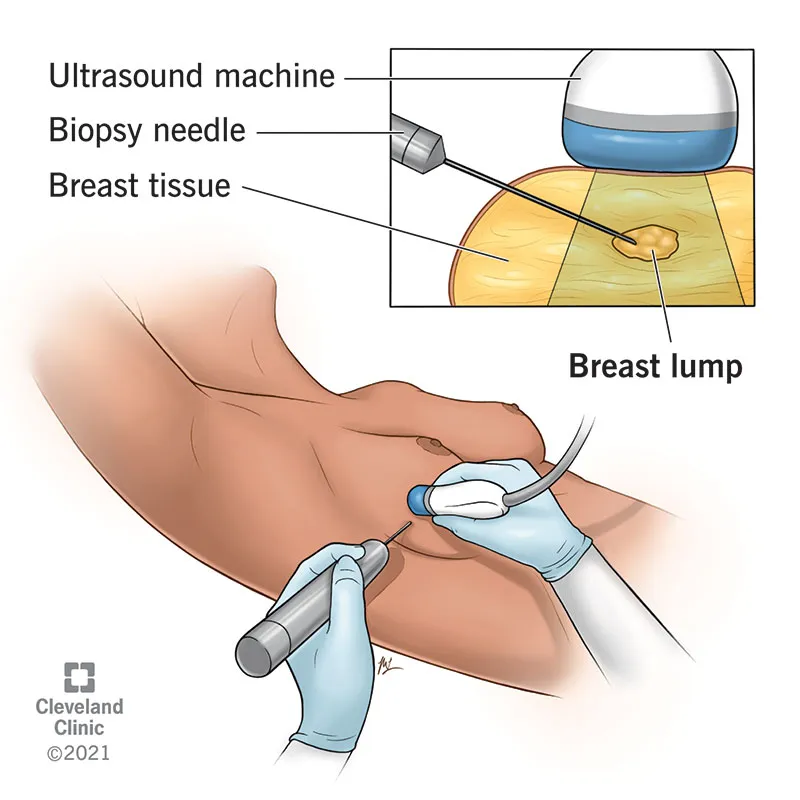
Ultrasound-Guided Interventions Indian Medical PG Question 4: What is not an advantage of USG over mammography?
- A. Can be used for guided biopsy
- B. Superior detection of microcalcifications (Correct Answer)
- C. In young females with dense breasts
- D. Can be used to differentiate solid VS cystic
Ultrasound-Guided Interventions Explanation: ***Superior detection of microcalcifications***
- **Mammography** is the gold standard for detecting **microcalcifications**, which can be a key indicator of **ductal carcinoma in situ (DCIS)** or early invasive breast cancer.
- **Ultrasound (USG)** has limited sensitivity for detecting and characterizing microcalcifications.
*Can be used for guided biopsy*
- **USG-guided biopsy** is a common and advantageous technique for obtaining tissue samples from suspicious lesions in the breast or other organs.
- This allows for **real-time visualization** of the needle, improving accuracy and reducing complications.
*Can be used to differentiate solid VS cystic*
- **USG** excels at distinguishing between **solid masses and fluid-filled cysts** due to differences in sound wave reflection.
- This capability is crucial in characterizing breast lesions and often eliminates the need for further invasive procedures for benign cysts.
*In young females with dense breasts*
- **Dense breast tissue** in young females can obscure lesions on mammography, making interpretation difficult.
- **USG** is particularly valuable in this population because it is not hindered by breast density and can provide a clearer view of underlying pathology.
Ultrasound-Guided Interventions Indian Medical PG Question 5: What is the best way to diagnose gallbladder stones?
- A. USG (Correct Answer)
- B. Oral cholecystography
- C. Percutaneous transhepatic cholangiography
- D. Intravenous cholangiogram
Ultrasound-Guided Interventions Explanation: ***USG***
- **Ultrasound (USG)** is the preferred and most **sensitive imaging modality** for detecting gallbladder stones due to its non-invasive nature and high diagnostic accuracy.
- It can effectively visualize stones as **echogenic foci** with **posterior acoustic shadowing** within the gallbladder lumen.
*Oral cholecystography*
- This method involves ingesting a contrast agent, which is then absorbed and excreted by the liver into the bile, outlining the gallbladder.
- It has largely been replaced by ultrasound due to its **lower sensitivity** for small stones, **patient inconvenience**, and potential for **adverse reactions** to the contrast.
*Percutaneous transhepatic cholangiography*
- **PTC** is an **invasive procedure** where a needle is inserted through the skin and liver into the bile ducts to inject contrast.
- It is typically reserved for cases where **other imaging modalities are inconclusive** or for **therapeutic interventions** in patients with biliary obstruction, not routine stone detection.
*Intravenous cholangiogram*
- This involves intravenous administration of a contrast agent that is concentrated in the bile and allows visualization of the bile ducts and gallbladder.
- It has also been **largely replaced by USG and ERCP** due to the risk of **allergic reactions** to contrast, **poor visualization** in cases of liver dysfunction, and lower sensitivity than ultrasound.
Ultrasound-Guided Interventions Indian Medical PG Question 6: Identify the given bone marrow biopsy instrument
- A. Jamshidi needle (Correct Answer)
- B. Salah needle
- C. Tru-cut needle
- D. Vim Silverman needle
Ultrasound-Guided Interventions Explanation: ***Jamshidi needle***
- The image displays a **Jamshidi needle**, characterized by its **tapered, beveled tip** designed to facilitate entry into the bone and procure an intact core of bone marrow.
- This needle is widely considered the **gold standard** for bone marrow biopsy due to its effectiveness in obtaining high-quality trephine samples.
*Salah needle*
- A Salah needle is primarily used for **bone marrow aspiration**, not typically for a trephine biopsy, and it has a different design meant for aspirating liquid marrow.
- It features a **shorter, sturdier design** with a sharp bevel, optimized for safely extracting marrow fluid.
*Tru-cut needle*
- The Tru-cut needle is primarily designed for obtaining **soft tissue biopsies** (e.g., liver, kidney, prostate) and is not typically used for bone marrow biopsies.
- Its mechanism involves an inner cutting stylet and an outer cutting cannula, which is unsuitable for penetrating dense bone and retrieving a bone core.
*Vim Silverman needle*
- The Vim Silverman needle is also designed for **soft tissue biopsies**, similar to the Tru-cut, and not specifically for bone marrow.
- It utilizes a split needle design to capture tissue, which is not appropriate for obtaining a solid bone marrow core.
Ultrasound-Guided Interventions Indian Medical PG Question 7: Which of the following is a contraindication to nonoperative management of splenic injury?
- A. Hemodynamic instability (Correct Answer)
- B. History of hematologic disorder
- C. HIV infection
- D. Presence of multiple solid-organ injuries
Ultrasound-Guided Interventions Explanation: ***Hemodynamic instability***
- **Hemodynamic instability** in a patient with splenic injury indicates ongoing hemorrhage, which requires immediate surgical intervention to control bleeding and prevent hypovolemic shock.
- This is a critical contraindication to non-operative management, as delaying surgery significantly increases morbidity and mortality.
*History of hematologic disorder*
- While certain **hematologic disorders** like coagulopathies can increase the risk of bleeding after splenic injury, they are not an absolute contraindication to non-operative management if the patient is hemodynamically stable and bleeding is contained.
- Close monitoring and correction of coagulopathy might be necessary, but it does not automatically preclude conservative treatment.
*HIV infection*
- **HIV infection** itself is not a contraindication to non-operative management of splenic injury. The decision for operative versus non-operative management is based on the patient's hemodynamic status and the grade of splenic injury, not their HIV status.
- While immune compromise can affect recovery, it does not directly impact the initial management decision for splenic trauma.
*Presence of multiple solid-organ injuries*
- The presence of **multiple solid-organ injuries** does not automatically contraindicate non-operative management for the splenic injury itself, provided the patient remains hemodynamically stable.
- Each organ injury is assessed individually, and the decision for surgery is usually driven by ongoing hemorrhage or other complications from one or more of the injured organs that cannot be managed conservatively.
Ultrasound-Guided Interventions Indian Medical PG Question 8: Which of the following is the initial investigation of choice for a patient presenting with a solitary nodule of the thyroid?
- A. Thyroid function test
- B. FNAC (Correct Answer)
- C. Radionuclide scan
- D. MRI
Ultrasound-Guided Interventions Explanation: ***FNAC***
- **Fine needle aspiration cytology (FNAC)** is the most important initial investigation for a solitary thyroid nodule to determine if it is benign or malignant. [1]
- It offers a highly accurate and minimally invasive method for **cytological analysis** to guide further management.
*Thyroid function test*
- While important for assessing **thyroid hormone levels** and diagnosing hyper or hypothyroidism, it does not directly evaluate the **malignant potential** of a nodule. [1]
- Normal thyroid function does **not rule out malignancy** within a nodule.
*Radionuclide scan*
- A **radionuclide scan** is useful for assessing the **functional status** of a nodule (hot or cold). [1]
- However, non-functional (**cold**) nodules are more suspicious for malignancy, but the scan doesn't provide **histological diagnosis**.
*MRI*
- **MRI** provides detailed anatomical imaging of the thyroid and surrounding structures but is generally not the **initial diagnostic test of choice** for evaluating a solitary nodule. [1]
- It is typically reserved for assessing **nodule extension** or **lymph node involvement** once malignancy is suspected or confirmed. [1]
Ultrasound-Guided Interventions Indian Medical PG Question 9: Which of the following thyroid carcinomas cannot be definitively diagnosed by fine needle aspiration cytology (FNAC)?
- A. Anaplastic carcinoma of thyroid
- B. Medullary carcinoma of thyroid
- C. Follicular carcinoma of thyroid (Correct Answer)
- D. Papillary carcinoma of thyroid
Ultrasound-Guided Interventions Explanation: ***Follicular carcinoma of thyroid***
- The definitive diagnosis of **follicular carcinoma** requires the presence of **capsular or vascular invasion**, which cannot be assessed through **fine needle aspiration cytology (FNAC)** alone [1], [5].
- FNA may show features suggestive of follicular neoplasm (e.g., hypercellularity with microfollicles), but differentiation from **follicular adenoma** requires histological examination of the excised specimen [1], [4].
*Anaplastic carcinoma of thyroid*
- **Anaplastic carcinoma** is highly aggressive and characterized by **pleomorphic, bizarre cells** that are easily identifiable on FNAC [2], [5].
- The distinctive cytological features, including **spindle cells, giant cells, and rapid cellular atypia**, allow for a relatively straightforward diagnosis via FNAC [2].
*Medullary carcinoma of thyroid*
- **Medullary carcinoma** cells have characteristic cytological features, such as **plasmacytoid appearance**, **amyloid deposition**, and **neuroendocrine granules**, which can be identified on FNAC [5].
- Confirmation can be made by **immunohistochemical staining for calcitonin** on the FNA sample [5].
*Papillary carcinoma of thyroid*
- **Papillary carcinoma** has distinct cytological features, including **orphan Annie eye nuclei**, **intranuclear grooves**, **pseudoinclusions**, and **papillary structures**, readily identified by FNAC [3].
- These features are highly specific and often allow for a definitive diagnosis of papillary thyroid carcinoma [3].
**References:**
[1] Kumar V, Abbas AK, et al.. Robbins and Cotran Pathologic Basis of Disease. 9th ed. The Endocrine System, pp. 1100-1101.
[2] Kumar V, Abbas AK, et al.. Robbins and Cotran Pathologic Basis of Disease. 9th ed. The Endocrine System, pp. 1101-1102.
[3] Cross SS. Underwood's Pathology: A Clinical Approach. 6th ed. Common Clinical Problems From Liver And Biliary System Disease, pp. 429-430.
[4] Cross SS. Underwood's Pathology: A Clinical Approach. 6th ed. Common Clinical Problems From Liver And Biliary System Disease, pp. 428-429.
[5] Cross SS. Underwood's Pathology: A Clinical Approach. 6th ed. Common Clinical Problems From Liver And Biliary System Disease, pp. 430-431.
Ultrasound-Guided Interventions Indian Medical PG Question 10: A 10 cm tumor is found on the anterior surface of the thigh. What is the most appropriate procedure to obtain a diagnosis?
- A. Incision biopsy (Correct Answer)
- B. Excision biopsy
- C. FNAC
- D. USG
Ultrasound-Guided Interventions Explanation: ***Incision biopsy***
- An **incision biopsy** is most appropriate for a large tumor (10 cm) to obtain a tissue diagnosis without performing a potentially morbid or disfiguring complete excision upfront.
- It involves removing a representative section of the tumor for histopathological analysis, providing adequate tissue for diagnosis, grading, and subtyping.
- This allows definitive treatment planning based on confirmed histopathology.
*Excision biopsy*
- **Excision biopsy** is generally reserved for smaller tumors (typically <3-5 cm) that can be completely resected with acceptable cosmetic and functional outcomes.
- Excision of a 10 cm tumor on the thigh would be a significant surgical procedure, potentially causing substantial morbidity, without a prior definitive diagnosis.
- Could compromise subsequent definitive surgery if margins are inadequate.
*FNAC*
- **FNAC (Fine Needle Aspiration Cytology)** provides only cytological diagnosis, which is insufficient for definitive diagnosis, grading, and subtyping of soft tissue tumors, especially sarcomas.
- It misses crucial architectural features and tissue patterns needed for accurate classification.
- May yield inadequate or non-diagnostic samples from large heterogeneous tumors.
*USG*
- **USG (Ultrasound)** is an imaging modality, not a tissue diagnosis procedure.
- While useful for characterizing mass features (size, location, vascularity, solid vs cystic), it cannot provide histopathological diagnosis.
- The question specifically asks for a procedure to "obtain a diagnosis," which requires tissue sampling for microscopic examination.
More Ultrasound-Guided Interventions Indian Medical PG questions available in the OnCourse app. Practice MCQs, flashcards, and get detailed explanations.