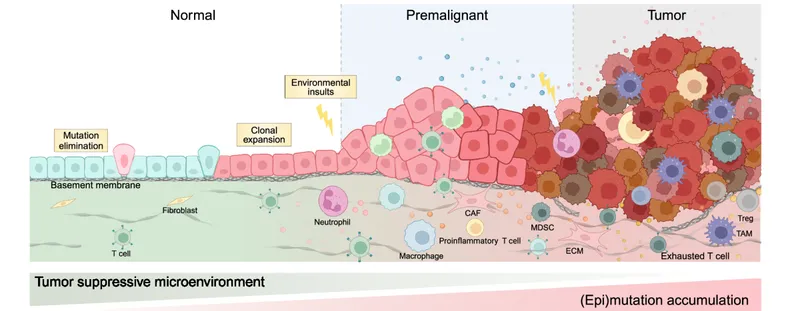
Carcinogenesis and Carcinogens Indian Medical PG Practice Questions and MCQs
Practice Indian Medical PG questions for Carcinogenesis and Carcinogens. These multiple choice questions (MCQs) cover important concepts and help you prepare for your exams.
Carcinogenesis and Carcinogens Indian Medical PG Question 1: Gastric carcinoma is associated with all of the following EXCEPT:
- A. Over expression of C-met
- B. Inactivation of p53
- C. Over expression of C-erb
- D. Activation of RAS (Correct Answer)
Carcinogenesis and Carcinogens Explanation: ***Activation of RAS***
- **RAS mutations** are relatively uncommon in gastric carcinoma compared to other gastrointestinal malignancies. While KRAS mutations can occur in approximately 10-15% of gastric cancers (particularly intestinal type), they are **far less frequent** than in **pancreatic adenocarcinoma** (~90%) or **colorectal carcinoma** (~40%).
- In the context of gastric carcinoma, RAS pathway alterations are **not considered a major oncogenic driver** compared to the other molecular changes listed, making this the **LEAST characteristically associated** alteration.
*Inactivation of p53*
- **Inactivation of the p53 tumor suppressor gene** is one of the most frequent molecular events in gastric carcinoma, occurring in approximately **50-60% of cases**.
- Loss of p53 function leads to genomic instability, uncontrolled cell proliferation, and resistance to apoptosis, contributing significantly to **tumorigenesis** and **poor prognosis**.
*Over expression of C-met*
- **Overexpression of C-MET**, a receptor tyrosine kinase for hepatocyte growth factor (HGF), is commonly observed in gastric carcinoma (30-40% of cases) and is strongly linked to **tumor growth**, **invasion**, and **metastasis**.
- C-MET amplification and overexpression promote cell proliferation, survival, migration, and angiogenesis, making it an important **therapeutic target** in advanced gastric cancer.
*Over expression of C-erb*
- **Overexpression of C-erbB-2 (HER2/neu)** is found in approximately **10-20% of gastric adenocarcinomas**, particularly the intestinal type.
- HER2 amplification or overexpression is a significant **prognostic and predictive biomarker**, and is specifically targeted by **trastuzumab** (Herceptin) therapy in HER2-positive advanced gastric cancer, improving survival outcomes.
Carcinogenesis and Carcinogens Indian Medical PG Question 2: What is a potential outcome of the integration of a viral genome into a host cell chromosome?
- A. Altered growth
- B. Malignancy
- C. Latency
- D. All of the options (Correct Answer)
Carcinogenesis and Carcinogens Explanation: ***All of the options***
- The insertion of a viral genome, known as a **provirus**, into the host chromosome can lead to a variety of sustained and complex interactions.
- This integration can cause **long-term changes** in cell behavior, including altered gene expression and cell cycle regulation, which may manifest as any of the specified outcomes.
*Malignancy*
- Viral integration can interrupt or activate host genes, such as **oncogenes** or **tumor suppressor genes**, leading to uncontrolled cell proliferation and potential tumor formation.
- An example is **human papillomavirus (HPV)** integrating into host cells, increasing the risk of cervical cancer.
*Altered growth*
- Integration can change the cell's normal growth patterns, either by promoting excessive division or by causing cell cycle arrest, impacting tissue development and function.
- This can be due to the insertion of viral promoters or enhancers near growth-regulating genes.
*Latency*
- The integrated viral genome can remain dormant within the host chromosome without producing new viral particles for extended periods, a state known as **latency**.
- During latency, the virus can be reactivated later to cause a productive infection, as seen with **herpesviruses**.
Carcinogenesis and Carcinogens Indian Medical PG Question 3: Sun damage causes malignant transformation of the skin by:
- A. Direct DNA damage
- B. Free radical formation
- C. Induction of pyrimidine dimers (Correct Answer)
- D. Mutation of p53 due to UV exposure
Carcinogenesis and Carcinogens Explanation: ***Induction of pyrimidine dimers***
- **Ultraviolet (UV) radiation** from the sun causes the formation of **covalent bonds between adjacent pyrimidine bases** (thymine or cytosine) on the same DNA strand, creating pyrimidine dimers [1].
- These dimers lead to **DNA distortion**, interfering with DNA replication and transcription, and if not repaired, can result in **mutations** that contribute to carcinogenesis [2].
*Free radical formation*
- While UV radiation can induce **reactive oxygen species** (free radicals) that cause DNA damage, the primary mechanism of malignant transformation leading to skin cancer is the direct formation of pyrimidine dimers.
- Free radicals cause a variety of oxidative damage to DNA, proteins, and lipids, but **pyrimidine dimers are unique to UV exposure** and are the main initiators of UV-induced skin cancer.
*Direct DNA damage*
- This option is too broad; while pyrimidine dimer formation is a form of direct DNA damage, it is the **most specific and significant mechanism** of malignant transformation due to sun exposure [3].
- Non-specific direct DNA damage can also occur from other sources, but the hallmark of UV-induced damage is the creation of **photoproducts like pyrimidine dimers**.
*Mutation of p53 due to UV exposure*
- **p53 gene mutations** are frequently found in skin cancers, particularly **squamous cell carcinoma**, and are indeed induced by UV radiation.
- However, the mutation of p53 is a **consequence** of the initial DNA damage (specifically pyrimidine dimers not being repaired), not the primary mechanism by which sun damage *causes* malignant transformation [2]. The induction of pyrimidine dimers *leads* to these mutations.
**References:**
[1] Kumar V, Abbas AK, et al.. Robbins and Cotran Pathologic Basis of Disease. 9th ed. Neoplasia, pp. 322-323.
[2] Kumar V, Abbas AK, et al.. Robbins and Cotran Pathologic Basis of Disease. 9th ed. Neoplasia, pp. 332-333.
[3] Cross SS. Underwood's Pathology: A Clinical Approach. 6th ed. (Basic Pathology) introduces the student to key general principles of pathology, both as a medical science and as a clinical activity with a vital role in patient care. Part 2 (Disease Mechanisms) provides fundamental knowledge about the cellular and molecular processes involved in diseases, providing the rationale for their treatment. Part 3 (Systematic Pathology) deals in detail with specific diseases, with emphasis on the clinically important aspects., pp. 220-221.
Carcinogenesis and Carcinogens Indian Medical PG Question 4: Field carcinogenesis theory is commonly seen in
- A. Head and neck cancer (Correct Answer)
- B. Cervical cancer
- C. Prostate cancer
- D. Breast cancer
Carcinogenesis and Carcinogens Explanation: ***Head and neck cancer***
- **Field carcinogenesis** refers to the concept that a large area of tissue is exposed to carcinogens, leading to multiple primary tumors or recurrences [1].
- In **head and neck squamous cell carcinoma**, extensive exposure of the mucosal lining to tobacco and alcohol promotes widespread genetic alterations [1].
*Cervical cancer*
- Primarily linked to **human papillomavirus (HPV) infection**, which causes localized lesions that may progress [2].
- While different areas of the cervix can be affected, the underlying mechanism is more focal infection rather than diffuse field exposure.
*Prostate cancer*
- Development is often associated with **age**, **genetics**, and **hormonal factors** (androgens).
- It typically arises from a single or a few distinct foci within the prostate gland, not pervasive field change [3].
*Breast cancer*
- Characterized by distinct lesions originating from ductal or lobular epithelium and influenced by **hormones** and **genetics** [4].
- While multifocal breast cancer can occur, it is generally considered the result of multiple independent events or spread from an initial lesion, not a widespread "field" of precancerous tissue in the same way as head and neck.
**References:**
[1] Kumar V, Abbas AK, et al.. Robbins and Cotran Pathologic Basis of Disease. 9th ed. The Lung, pp. 738-739.
[2] Cross SS. Underwood's Pathology: A Clinical Approach. 6th ed. (Basic Pathology) introduces the student to key general principles of pathology, both as a medical science and as a clinical activity with a vital role in patient care. Part 2 (Disease Mechanisms) provides fundamental knowledge about the cellular and molecular processes involved in diseases, providing the rationale for their treatment. Part 3 (Systematic Pathology) deals in detail with specific diseases, with emphasis on the clinically important aspects., pp. 222-223.
[3] Kumar V, Abbas AK, et al.. Robbins and Cotran Pathologic Basis of Disease. 9th ed. The Lower Urinary Tract and Male Genital System, pp. 993-994.
[4] Kumar V, Abbas AK, et al.. Robbins and Cotran Pathologic Basis of Disease. 9th ed. The Breast, pp. 1059-1060.
Carcinogenesis and Carcinogens Indian Medical PG Question 5: Which of the following is not a tumor suppressor gene?
- A. p53
- B. HER2 (Correct Answer)
- C. RB
- D. BRCA1
Carcinogenesis and Carcinogens Explanation: ***HER2***
- **HER2** (**Human Epidermal growth factor Receptor 2**) is an **oncogene**, meaning it promotes cell growth and division when overexpressed [1].
- It is a **receptor tyrosine kinase** that, when activated, signals cells to grow and divide, and its amplification is associated with aggressive forms of breast cancer [1].
*p53*
- **p53** is a well-known **tumor suppressor gene** that plays a critical role in cell cycle control and apoptosis.
- It detects DNA damage and can halt cell division or initiate programmed cell death to prevent the proliferation of damaged cells.
*BRCA1*
- **BRCA1** (**BReast CAncer gene 1**) is a **tumor suppressor gene** involved in DNA repair.
- Mutations in BRCA1 are strongly associated with increased risk of hereditary breast and ovarian cancers due to compromised DNA damage repair mechanisms.
*RB*
- The **retinoblastoma protein (RB)** is a classic example of a **tumor suppressor gene**.
- It acts as a gatekeeper for cell cycle progression from G1 to S phase, preventing uncontrolled cell division by binding to and inactivating E2F transcription factors.
**References:**
[1] Kumar V, Abbas AK, et al.. Robbins and Cotran Pathologic Basis of Disease. 9th ed. Neoplasia, pp. 291-294.
Carcinogenesis and Carcinogens Indian Medical PG Question 6: Radiation causes cell death by:
- A. Charring of nucleoproteins
- B. Ionization (Correct Answer)
- C. Disruption of cytosol
- D. Destroying their mitochondria
Carcinogenesis and Carcinogens Explanation: ***Ionization***
- Radiation, particularly **ionizing radiation**, causes cell death by directly or indirectly damaging cellular components through the process of **ionization**. [1]
- This involves the removal of electrons from atoms or molecules, leading to the formation of highly reactive **free radicals** (especially hydroxyl radicals from water radiolysis) that can damage DNA, proteins, and lipids. [1]
- The most critical lethal lesion is **DNA double-strand breaks**, which are difficult to repair and trigger apoptosis or mitotic catastrophe. [1]
*Charring of nucleoproteins*
- **Charring** typically refers to the combustion or burning of organic matter, which is not the mechanism of cell death caused by therapeutic radiation doses.
- While radiation can cause protein denaturation, it does not lead to the macroscopic charring of nucleoproteins within cells.
*Disruption of cytosol*
- While severe radiation damage can impact the entire cell, direct and selective **disruption of the cytosol** is not the primary or most impactful mechanism of radiation-induced cell death.
- The critical targets for radiation-induced cell death are primarily the **nucleus** and its DNA, not the cytoplasm. [2]
*Destroying their mitochondria*
- Although radiation can induce **mitochondrial dysfunction** and contribute to cell death through apoptosis, it is not the initial or primary mechanism of cell destruction.
- The most critical and direct damage leading to cell death is inflicted upon the **DNA** in the nucleus, particularly causing double-strand breaks. [1]
**References:**
[1] Cross SS. Underwood's Pathology: A Clinical Approach. 6th ed. (Basic Pathology) introduces the student to key general principles of pathology, both as a medical science and as a clinical activity with a vital role in patient care. Part 2 (Disease Mechanisms) provides fundamental knowledge about the cellular and molecular processes involved in diseases, providing the rationale for their treatment. Part 3 (Systematic Pathology) deals in detail with specific diseases, with emphasis on the clinically important aspects., pp. 100-102.
[2] Kumar V, Abbas AK, et al.. Robbins and Cotran Pathologic Basis of Disease. 9th ed. Central Nervous System Synapse, pp. 438-439.
Carcinogenesis and Carcinogens Indian Medical PG Question 7: Which of the following is not considered an occupational cancer?
- A. Lung
- B. Breast (Correct Answer)
- C. Liver
- D. Bladder
Carcinogenesis and Carcinogens Explanation: ***Breast***
- Breast cancer has a **limited association** with occupational exposure compared to other cancers [1], mainly influenced by genetic and hormonal factors.
- While some studies suggest minor correlations, the **impact of environment** and occupation is considerably less significant for breast cancer.
*Bladder*
- Strongly linked to **aromatic amines** from dyes and rubber manufacturing [2], as well as exposures to **chemical irritants**.
- The **occupational risk** is well-documented, particularly among workers in the chemical industry [1].
*Liver*
- Associated with **chemical exposures** such as aflatoxins and certain industrial solvents, particularly in the manufacturing and agriculture sectors.
- Significant occupational hazards, like **vinyl chloride**, have demonstrated a clear link to liver cancer [2].
*Lung*
- Closely tied to **asbestos** [1][3], **smoke**, and other pollutants, highlighting the role of industrial environments in increasing risk.
- **Occupational exposure** remains a major contributor to lung cancer rates, particularly in mining and construction [1].
**References:**
[1] Kumar V, Abbas AK, et al.. Robbins and Cotran Pathologic Basis of Disease. 9th ed. Neoplasia, p. 286.
[2] Cross SS. Underwood's Pathology: A Clinical Approach. 6th ed. (Basic Pathology) introduces the student to key general principles of pathology, both as a medical science and as a clinical activity with a vital role in patient care. Part 2 (Disease Mechanisms) provides fundamental knowledge about the cellular and molecular processes involved in diseases, providing the rationale for their treatment. Part 3 (Systematic Pathology) deals in detail with specific diseases, with emphasis on the clinically important aspects., pp. 217-218.
[3] Cross SS. Underwood's Pathology: A Clinical Approach. 6th ed. (Basic Pathology) introduces the student to key general principles of pathology, both as a medical science and as a clinical activity with a vital role in patient care. Part 2 (Disease Mechanisms) provides fundamental knowledge about the cellular and molecular processes involved in diseases, providing the rationale for their treatment. Part 3 (Systematic Pathology) deals in detail with specific diseases, with emphasis on the clinically important aspects., pp. 221-222.
Carcinogenesis and Carcinogens Indian Medical PG Question 8: The strongest occupational risk factor for hematological carcinoma is
- A. Benzene (Correct Answer)
- B. Lithium
- C. Radiation exposure
- D. Cigarette smoke
Carcinogenesis and Carcinogens Explanation: ***Benzene***
- Benzene exposure is recognized as a potent **carcinogen** linked to various hematological malignancies, including **leukemia** [1].
- It affects the **bone marrow**, leading to dysplastic changes and ultimately malignancy.
*Nicotine*
- Although nicotine is associated with **smoking-related cancers**, it is not directly linked to **hematological carcinomas**.
- Its primary role is in causing **lung cancer**, rather than blood cancers.
*Lithium*
- Lithium is primarily used for **bipolar disorder** and does not have a known link to causing hematological malignancies.
- Side effects are more related to **nephrotoxicity** rather than carcinogenic effects.
*Alcohol*
- Alcohol consumption is primarily associated with **liver cancers** and not specifically linked to hematological carcinomas [2].
- It can contribute to general malignancy development but is not a direct cause of blood cancers.
**References:**
[1] Kumar V, Abbas AK, et al.. Robbins and Cotran Pathologic Basis of Disease. 9th ed. Neoplasia, p. 286.
[2] Cross SS. Underwood's Pathology: A Clinical Approach. 6th ed. (Basic Pathology) introduces the student to key general principles of pathology, both as a medical science and as a clinical activity with a vital role in patient care. Part 2 (Disease Mechanisms) provides fundamental knowledge about the cellular and molecular processes involved in diseases, providing the rationale for their treatment. Part 3 (Systematic Pathology) deals in detail with specific diseases, with emphasis on the clinically important aspects., pp. 217-218.
Carcinogenesis and Carcinogens Indian Medical PG Question 9: Which of the following is NOT a recognized cause of Urothelial Carcinomas?
- A. Industrial solvents
- B. Exposure to thorotrast
- C. Alcohol consumption (Correct Answer)
- D. Smoking
Carcinogenesis and Carcinogens Explanation: ***Alcohol consumption***
- Research does not support a direct association between **alcohol consumption** and an increased risk of urothelial carcinomas.
- While excessive alcohol can lead to other forms of cancer, it is not a recognized risk factor for **bladder cancer** specifically.
*Smoking*
- Smoking is a well-established risk factor for **urothelial carcinomas**, significantly increasing the risk of **bladder cancer** [1].
- It is responsible for up to **50% of bladder cancer cases**, due to carcinogens in tobacco smoke [1].
*Exposure to thorotrast*
- **Thorotrast**, a radiopaque contrast medium, is associated with **radiation exposure**, which is a known risk for urothelial carcinomas [3].
- Its use has been linked to increased incidence of bladder cancer due to radioactive properties [3].
*Industrial solvents*
- Exposure to various **industrial solvents** such as **aromatic amines** has been linked to a higher risk of developing urothelial carcinomas [1][2].
- These chemicals are commonly found in **dyes**, **rubber**, and other manufacturing processes [2].
**References:**
[1] Kumar V, Abbas AK, et al.. Robbins and Cotran Pathologic Basis of Disease. 9th ed. The Lower Urinary Tract and Male Genital System, pp. 968-970.
[2] Cross SS. Underwood's Pathology: A Clinical Approach. 6th ed. (Basic Pathology) introduces the student to key general principles of pathology, both as a medical science and as a clinical activity with a vital role in patient care. Part 2 (Disease Mechanisms) provides fundamental knowledge about the cellular and molecular processes involved in diseases, providing the rationale for their treatment. Part 3 (Systematic Pathology) deals in detail with specific diseases, with emphasis on the clinically important aspects., pp. 217-218.
[3] Cross SS. Underwood's Pathology: A Clinical Approach. 6th ed. (Basic Pathology) introduces the student to key general principles of pathology, both as a medical science and as a clinical activity with a vital role in patient care. Part 2 (Disease Mechanisms) provides fundamental knowledge about the cellular and molecular processes involved in diseases, providing the rationale for their treatment. Part 3 (Systematic Pathology) deals in detail with specific diseases, with emphasis on the clinically important aspects., pp. 216-217.
Carcinogenesis and Carcinogens Indian Medical PG Question 10: In which type of lung carcinoma is the p53 mutation most commonly observed?
- A. Adenocarcinoma
- B. Squamous cell carcinoma (SCC) (Correct Answer)
- C. Large cell carcinoma
- D. Small cell carcinoma
Carcinogenesis and Carcinogens Explanation: ***Small cell carcinoma***
- **Small cell lung carcinoma (SCLC)** has the highest frequency of **p53 mutations**, occurring in approximately **90-95%** of cases.
- These mutations are associated with the **aggressive nature** and **poor prognosis** of SCLC, contributing to its rapid growth and early metastasis.
*Adenocarcinoma*
- **Adenocarcinoma** has p53 mutations in approximately **50-60%** of cases, which is less frequent than SCLC.
- This subtype is more commonly associated with **EGFR mutations** and **ALK rearrangements**, particularly in non-smokers.
*Squamous cell carcinoma (SCC)*
- **Squamous cell carcinoma** shows p53 mutations in about **70-80%** of cases, but still lower than SCLC.
- It is more strongly associated with **smoking** and often displays mutations in **CDKN2A** and **PIK3CA** pathways.
*Large cell carcinoma*
- **Large cell carcinoma** has variable p53 mutation rates, typically **40-60%** of cases.
- This subtype is less well-characterized molecularly and represents a **diagnosis of exclusion** among lung cancers.
More Carcinogenesis and Carcinogens Indian Medical PG questions available in the OnCourse app. Practice MCQs, flashcards, and get detailed explanations.