Pterygium and Pinguecula Indian Medical PG Practice Questions and MCQs
Practice Indian Medical PG questions for Pterygium and Pinguecula. These multiple choice questions (MCQs) cover important concepts and help you prepare for your exams.
Pterygium and Pinguecula Indian Medical PG Question 1: Which drug is generally contraindicated in the management of traumatic hyphema in a patient with sickle cell disease?
- A. Timolol
- B. Steroids
- C. Acetazolamide (Correct Answer)
- D. Atropine
Pterygium and Pinguecula Explanation: ***Acetazolamide***
- **Acetazolamide** is a **carbonic anhydrase inhibitor** that is **generally contraindicated** in patients with **sickle cell disease or trait**.
- It causes **systemic acidosis** by increasing renal bicarbonate excretion, which lowers blood pH.
- **Acidosis promotes sickling** of red blood cells, which can lead to **vaso-occlusion**, increased blood viscosity, and potential complications including **anterior chamber obstruction** and **secondary glaucoma**.
- Despite its usefulness in lowering intraocular pressure in other settings, this risk makes it contraindicated in sickle cell patients with hyphema.
*Timolol*
- **Timolol** is a **beta-blocker** that reduces aqueous humor production and is generally **safe and effective** for reducing **intraocular pressure** in traumatic hyphema.
- It does not cause systemic acidosis or affect red blood cell sickling.
- Commonly used in hyphema management regardless of sickle cell status.
*Steroids*
- **Topical or systemic steroids** are often used to reduce **inflammation** and anterior chamber reaction in traumatic hyphema.
- They help prevent **secondary hemorrhage** and reduce complications.
- They do not contribute to red blood cell sickling or systemic acidosis and are safe in sickle cell disease.
*Atropine*
- **Atropine** is a **cycloplegic agent** used to paralyze the ciliary body and dilate the pupil, which helps **relieve pain** and prevent **posterior synechiae** in hyphema.
- It has no adverse effects related to **sickle cell disease** or red blood cell sickling.
- Routinely used in hyphema management.
Pterygium and Pinguecula Indian Medical PG Question 2: Conjunctival mucosal overgrowth over the cornea is known as
- A. Pterygium (Correct Answer)
- B. Vernal keratoconjunctivitis
- C. Pinguecula
- D. Herbert's pits
Pterygium and Pinguecula Explanation: ***Pterygium***
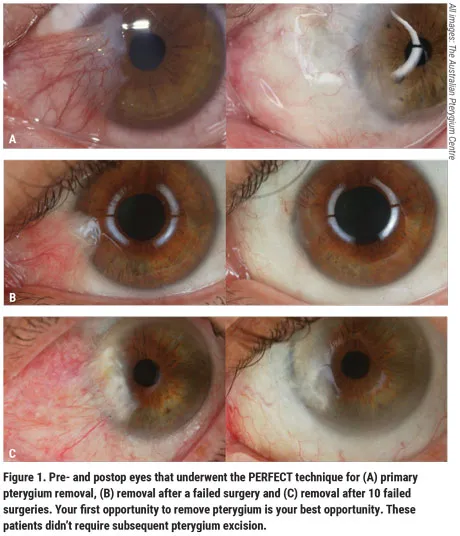
- A **pterygium** is a triangular growth of **conjunctival tissue** that extends from the conjunctiva onto the **cornea**.
- It often develops on the nasal side of the eye and is associated with **UV exposure**.
*Pinguecula*
- A **pinguecula** is a yellowish, slightly raised thickening of the **conjunctiva** that does not extend onto the cornea.
- It is a **degenerative condition** of the conjunctiva, often found interpalpebrally.
*Vernal keratoconjunctivitis*
- This is a **chronic, bilateral allergic inflammation** of the conjunctiva, often associated with seasonal allergies.
- It is characterized by **large papillae** on the upper tarsal conjunctiva and can involve the cornea, but not as a growth of conjunctival tissue over it.
*Herbert's pits*
- **Herbert's pits** are characteristic scars found at the **limbus** after the resolution of **Trachoma**, specifically after the healing of limbal follicles.
- They are depressions caused by follicular necrosis and do not represent conjunctival overgrowth.
Pterygium and Pinguecula Indian Medical PG Question 3: Gold standard procedure to reduce recurrence of pterygium after surgical excision is
- A. Thiotepa
- B. Amniotic membrane grafting
- C. Conjunctival autograft (Correct Answer)
- D. Beta-radiation
Pterygium and Pinguecula Explanation: ***Conjunctival autograft***
- **Conjunctival autografting** involves transplanting a piece of healthy conjunctiva from the superior bulbar conjunctiva to the bare scleral bed after pterygium excision, acting as a barrier to fibrovascular proliferation.
- This technique has consistently shown the **lowest recurrence rates** in comparative studies, making it the **gold standard** for preventing pterygium recurrence due to its high success rate and safety profile.
*Thiotepa*
- **Thiotepa** is an **antimetabolite** that inhibits DNA synthesis and cell proliferation, used topically post-excision to reduce recurrence by suppressing fibroblast activity.
- While it can lower recurrence rates compared to simple excision, its efficacy is generally **less than conjunctival autografting**, and it carries risks of corneal toxicity and limbal stem cell deficiency.
*Amniotic membrane grafting*
- **Amniotic membrane grafting** involves placing processed amniotic membrane over the scleral bed, which has anti-inflammatory, anti-scarring, and pro-epithelialization properties.
- It is an effective option, especially for **large pterygia** or for patients at high risk of recurrence, but its recurrence rates are generally **not as low as those achieved with conjunctival autografting**, and the graft can sometimes detach.
*B- radiation*
- **Beta-radiation** (strontium-90) is a form of adjuvant therapy applied to the scleral bed immediately after pterygium excision to inhibit fibroblast proliferation and reduce recurrence.
- It is effective but associated with potential complications such as **scleral melt**, corneal scarring, and cataract formation, making it a less preferred option than conjunctival autografting, especially in primary cases.
Pterygium and Pinguecula Indian Medical PG Question 4: Statement 1 - A 59-year-old patient presents with flaccid bullae. Histopathology shows a suprabasal acantholytic split.
Statement 2 - The row of tombstones appearance is diagnostic of Pemphigus vulgaris.
- A. Statements 1 & 2 are correct, 2 is not explaining 1 (Correct Answer)
- B. Statements 1 and 2 are correct and 2 is the correct explanation for 1
- C. Statements 1 and 2 are incorrect
- D. Statement 1 is incorrect
Pterygium and Pinguecula Explanation: ***Correct: Statements 1 & 2 are correct, 2 is not explaining 1***
**Analysis of Statement 1:**
- A 59-year-old patient with **flaccid bullae** and **suprabasal acantholytic split** on histopathology is the classic presentation of **Pemphigus vulgaris**
- The flaccid (easily ruptured) nature of bullae distinguishes it from tense bullae seen in bullous pemphigoid
- The suprabasal location of the split (just above the basal layer) with acantholysis (loss of cell-to-cell adhesion) is pathognomonic
- **Statement 1 is CORRECT** ✓
**Analysis of Statement 2:**
- The **"row of tombstones" or "tombstone appearance"** is indeed a diagnostic histopathological feature of Pemphigus vulgaris
- This appearance results from basal keratinocytes remaining attached to the basement membrane while suprabasal cells separate due to acantholysis
- The intact basal cells standing upright resemble a row of tombstones
- **Statement 2 is CORRECT** ✓
**Does Statement 2 explain Statement 1?**
- Statement 2 describes a **histopathological appearance** (tombstone pattern) that is a **consequence** of the suprabasal split
- However, it does NOT explain the **underlying cause** of the flaccid bullae or the suprabasal split
- The true explanation involves **IgG autoantibodies against desmoglein 3 (and desmoglein 1)**, which attack intercellular adhesion structures (desmosomes), causing **acantholysis**
- Therefore, **Statement 2 does NOT explain Statement 1** ✗
*Incorrect: Statement 2 is the correct explanation for Statement 1*
- While both statements describe features of Pemphigus vulgaris, the tombstone appearance is a descriptive finding, not an explanatory mechanism
*Incorrect: Statements 1 and 2 are incorrect*
- Both statements are medically accurate descriptions of Pemphigus vulgaris features
*Incorrect: Statement 1 is incorrect*
- Statement 1 correctly describes the cardinal clinical and histopathological features of Pemphigus vulgaris
Pterygium and Pinguecula Indian Medical PG Question 5: The laser procedure, most often used for treating iris neovascularization is
- A. Panretinal photocoagulation (PRP) (Correct Answer)
- B. Laser iridoplasty
- C. Laser trabeculoplasty
- D. Goniophotocoagulation
Pterygium and Pinguecula Explanation: ***Panretinal photocoagulation (PRP)***
- **PRP** is the most effective laser procedure for **iris neovascularization** and **neovascular glaucoma**, as it ablates the ischemic retina, reducing the production of **vascular endothelial growth factor (VEGF)**.
- By destroying the ischemic peripheral retina, PRP reduces the **angiogenic drive** that leads to new vessel formation on the iris and in the angle.
*Laser iridoplasty*
- This procedure involves applying laser energy to the peripheral iris to cause contraction and widen the **anterior chamber angle**, primarily used for **angle-closure glaucoma**.
- While it can open a closed angle, it does not address the underlying **ischemic drive** causing neovascularization.
*Laser trabeculoplasty*
- This procedure targets the **trabecular meshwork** to improve aqueous humor outflow, commonly used for **open-angle glaucoma**.
- It does not directly affect **iris neovascularization** or the ischemic factors driving its development.
*Goniophotocoagulation*
- This involves directly lasering new vessels in the **anterior chamber angle**, often as an adjunct to PRP, but it's not the primary treatment to prevent **iris neovascularization**.
- It treats existing vessels but does not address the underlying cause of **retinal ischemia** that promotes new vessel growth.
Pterygium and Pinguecula Indian Medical PG Question 6: Which of the following statements about pterygium is false?
- A. Arise from any part of conjunctiva (Correct Answer)
- B. Can cause astigmatism
- C. Surgery is treatment of choice
- D. UV exposure is risk factor
Pterygium and Pinguecula Explanation: ***Arise from any part of conjunctiva*** **(FALSE - Correct Answer)**
- This statement is **FALSE** and thus the correct answer.
- Pterygium characteristically arises from the **nasal (interpalpebral) bulbar conjunctiva** in 90-95% of cases.
- It does NOT arise from "any part" - it has a specific predilection for the medial (nasal) limbus in the palpebral fissure zone.
- Temporal pterygium is much less common (~10% of cases).
*Can cause astigmatism* **(TRUE)**
- This statement is TRUE.
- As a pterygium grows across the cornea, it can induce **corneal astigmatism** by altering the curvature of the cornea.
- This irregular corneal surface can blur vision, especially as the pterygium progresses towards the central visual axis.
*Surgery is treatment of choice* **(TRUE)**
- This statement is TRUE.
- **Surgical excision** is the primary treatment for pterygium when it is symptomatic, threatens vision, or causes significant cosmetic concerns.
- Indications for surgery include: growth towards the visual axis, inducing high astigmatism, significant discomfort, or cosmetic desire.
- Adjunctive measures (mitomycin C, conjunctival autograft) help reduce recurrence.
*UV exposure is risk factor* **(TRUE)**
- This statement is TRUE.
- **Ultraviolet (UV) radiation exposure** is a well-established and significant risk factor for the development and progression of pterygium.
- This explains its higher prevalence in individuals living in sunny climates (between 37° N and 37° S latitude - "pterygium belt") and those with outdoor occupations.
Pterygium and Pinguecula Indian Medical PG Question 7: Which of the following statements regarding acute conjunctivitis is FALSE?
- A. Vision is typically unaffected. (Correct Answer)
- B. The cornea may be infiltrated.
- C. Topical antibiotics are often the treatment of choice.
- D. The pupil is usually unaffected.
Pterygium and Pinguecula Explanation: ### Explanation
In the context of NEET-PG, distinguishing between various causes of a "red eye" is a high-yield clinical skill. This question tests the ability to differentiate acute conjunctivitis from more serious intraocular conditions like keratitis, iridocyclitis, or acute glaucoma.
**Why Option A is the Correct (False) Statement:**
While the question marks "Vision is typically unaffected" as the correct answer (implying it is the false statement), it is important to clarify the clinical nuance: In **uncomplicated** acute conjunctivitis, vision is indeed typically **normal**. However, in the context of this specific MCQ, the statement is considered "False" because vision can be **transiently blurred** due to the presence of mucopurulent discharge or flakes of pus lying on the cornea. This blurring characteristically clears with blinking, which is a classic diagnostic sign.
**Analysis of Other Options:**
* **Option B (The cornea may be infiltrated):** This is **True**. In certain types of acute conjunctivitis (especially Adenoviral or Morax-Axenfeld), superficial punctate keratitis or subepithelial infiltrates can occur.
* **Option C (Topical antibiotics are treatment of choice):** This is **True**. Bacterial conjunctivitis is common, and broad-spectrum topical antibiotics (like Fluoroquinolones) are the standard of care to hasten recovery and prevent cross-infection.
* **Option D (The pupil is usually unaffected):** This is **True**. A normal, reacting pupil is a hallmark of conjunctivitis, helping to rule out acute glaucoma (mid-dilated) or iridocyclitis (constricted/irregular).
**Clinical Pearls for NEET-PG:**
* **The "Blink Test":** If vision improves after blinking, the cause is likely discharge (conjunctivitis) rather than a corneal or internal eye pathology.
* **Ciliary vs. Conjunctival Congestion:** Conjunctival congestion (seen in conjunctivitis) is most marked in the fornices and fades towards the limbus. Ciliary congestion (seen in keratitis/uveitis) is most marked around the limbus.
* **Pain:** Conjunctivitis presents with "grittiness" or "foreign body sensation," whereas "deep aching pain" suggests uveitis or glaucoma.
Pterygium and Pinguecula Indian Medical PG Question 8: Condition in which the eyelid is adhered to the conjunctiva is:
- A. Ankyloblepharon
- B. Symblepharon (Correct Answer)
- C. Trichiasis
- D. Madarosis
Pterygium and Pinguecula Explanation: **Explanation:**
**Symblepharon** is the correct answer. It is a condition characterized by the partial or complete adhesion of the palpebral conjunctiva (lining the eyelid) to the bulbar conjunctiva (covering the eyeball). This occurs when two opposed areas of the conjunctiva lose their epithelial lining due to trauma or inflammation, leading to the formation of permanent adhesions during the healing process. Common causes include chemical burns (especially alkali), Stevens-Johnson Syndrome (SJS), and Ocular Cicatricial Pemphigoid (OCP).
**Analysis of Incorrect Options:**
* **Ankyloblepharon:** This refers to the adhesion of the upper and lower **eyelid margins** to each other, narrowing the palpebral fissure. It does not involve the eyeball itself.
* **Trichiasis:** This is a condition where the eyelashes are misdirected and grow inward, rubbing against the cornea or conjunctiva, often causing irritation and ulceration.
* **Madarosis:** This refers to the partial or complete loss of eyelashes (cilia) or eyebrows. Common causes include leprosy, blepharitis, and chemotherapy.
**High-Yield Clinical Pearls for NEET-PG:**
* **Pseudo-symblepharon:** A fold of conjunctiva bridges the fornix and attaches to the cornea (seen in chemical burns), but a probe can be passed beneath it (unlike a true symblepharon).
* **Prevention:** In the acute phase of chemical burns, a **glass rod** is used with lubricant to break early adhesions and prevent symblepharon formation.
* **Surgical Management:** Severe cases require the use of an **Amniotic Membrane Graft (AMG)** or Mucous Membrane Graft to reconstruct the fornix.
Pterygium and Pinguecula Indian Medical PG Question 9: Maximum density of goblet cells is seen in which part of the conjunctiva?
- A. Superior conjunctiva
- B. Inferior conjunctiva
- C. Temporal conjunctiva
- D. Nasal conjunctiva (Correct Answer)
Pterygium and Pinguecula Explanation: **Explanation:**
The conjunctival epithelium contains specialized unicellular mucous glands known as **Goblet cells**. These cells are responsible for secreting the **mucin layer** of the tear film, which is essential for maintaining the stability of the precorneal tear film and ensuring the ocular surface remains lubricated.
**Why Nasal Conjunctiva is Correct:**
Histological studies and impression cytology have demonstrated that the density of goblet cells is not uniform across the conjunctiva. The **highest concentration** is found in the **nasal conjunctiva**, specifically in the **inferonasal quadrant** and near the **caruncle/semilunar fold**. This high density is thought to facilitate the efficient trapping of debris and its transport toward the lacrimal puncta for drainage.
**Analysis of Incorrect Options:**
* **Superior and Temporal Conjunctiva:** While goblet cells are present in these regions, their density is significantly lower compared to the nasal and inferior aspects.
* **Inferior Conjunctiva:** The inferior conjunctiva (specifically the inferior fornix) has a high density of goblet cells, but it is second to the nasal quadrant.
**High-Yield Clinical Pearls for NEET-PG:**
* **Origin:** Goblet cells are derived from the basal layer of the conjunctival epithelium.
* **Staining:** They are best visualized using **PAS (Periodic Acid-Schiff)** stain due to their high carbohydrate (mucin) content.
* **Clinical Correlation:** A deficiency in goblet cells leads to **mucin deficiency dry eye**, commonly seen in conditions like **Vitamin A deficiency (Bitot’s spots)**, Stevens-Johnson Syndrome, and Ocular Cicatricial Pemphigoid.
* **Location Trend:** Density increases from the limbus toward the fornices (except at the lid margin).
Pterygium and Pinguecula Indian Medical PG Question 10: Coloured halos are seen in all, except?
- A. Mucopurulent conjunctivitis (Correct Answer)
- B. Acute anterior uveitis
- C. Tetracycline
- D. Glaucoma
Pterygium and Pinguecula Explanation: **Explanation:**
The phenomenon of **colored halos** occurs due to the diffraction of light as it passes through an edematous cornea or accumulated debris.
**Why Mucopurulent Conjunctivitis is the correct answer:**
In mucopurulent conjunctivitis, colored halos are **not** a true clinical feature. While patients may complain of blurred vision or "halos" due to mucus flakes/discharge over the cornea, these disappear immediately upon **blinking** or washing the eyes (Fincham’s Test negative). Therefore, they are considered "false halos."
**Analysis of Incorrect Options:**
* **Glaucoma (Acute Congestive):** This is the most classic cause. High intraocular pressure leads to **corneal edema**. The fluid droplets in the epithelium act as prisms, splitting white light into spectral colors (Fincham’s Test positive).
* **Acute Anterior Uveitis:** While less common than in glaucoma, inflammatory cells and protein (flare) in the aqueous humor or mild secondary corneal edema can occasionally cause light diffraction.
* **Tetracycline:** Certain drugs, including Tetracycline and Amiodarone, can cause **corneal deposits** (cornea verticillata) or lens changes that result in the perception of colored halos.
**NEET-PG High-Yield Pearls:**
1. **Fincham’s Test:** Used to differentiate Glaucomatous halos from Cataractous halos.
* Passing a stenopaic slit across the pupil: If halos persist and break into segments, it is **Cataract** (lenticular). If the halo remains intact but diminishes in intensity, it is **Glaucoma** (corneal).
2. **Differential Diagnosis of Colored Halos:**
* **Corneal Edema:** Acute Glaucoma, Bullous Keratopathy.
* **Lens Changes:** Early stages of Immature Senile Cataract.
* **Deposits:** Pigmentary dispersion syndrome, certain drugs.
3. **Key Distinguisher:** Halos in conjunctivitis are cleared by blinking; halos in glaucoma are not.
More Pterygium and Pinguecula Indian Medical PG questions available in the OnCourse app. Practice MCQs, flashcards, and get detailed explanations.