Ocular Biochemistry Indian Medical PG Practice Questions and MCQs
Practice Indian Medical PG questions for Ocular Biochemistry. These multiple choice questions (MCQs) cover important concepts and help you prepare for your exams.
Ocular Biochemistry Indian Medical PG Question 1: The crystalline lens derives its nourishment primarily from which of the following?
- A. Blood vessels
- B. Connective tissue
- C. Zonules
- D. Aqueous humor (Correct Answer)
Ocular Biochemistry Explanation: ***Aqueous humor***
- The **crystalline lens** is an avascular structure, meaning it lacks its own blood supply.
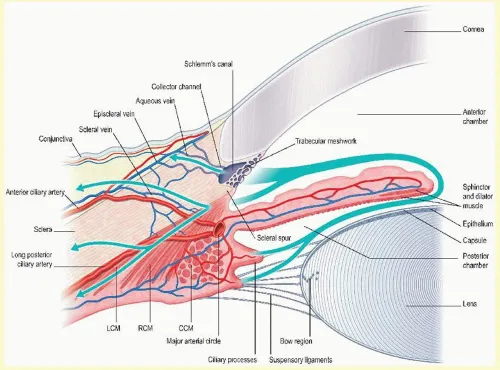
- It obtains all its metabolic needs, including **nutrients and oxygen**, and removes waste products, from the surrounding **aqueous humor**.
*Blood vessels*
- The human crystalline lens is **avascular**, lacking any direct blood supply.
- While other parts of the eye are supplied by blood vessels, the lens relies on different mechanisms for nourishment.
*Connective tissue*
- Connective tissue primarily provides structural support rather than direct nutritional supply for avascular organs like the lens.
- The lens capsule is a form of modified basement membrane, but it doesn't provide significant direct nourishment.
*Zonules*
- The **zonules of Zinn** are suspensory ligaments that hold the lens in place.
- Their primary function is to anchor the lens to the ciliary body and facilitate accommodation, not to provide nourishment.
Ocular Biochemistry Indian Medical PG Question 2: What can be prevented by inhibiting aldose reductase in diabetes mellitus?
- A. Diabetic nephropathy
- B. Diabetic cataract (Correct Answer)
- C. Deafness
- D. Diabetic neuropathy
Ocular Biochemistry Explanation: ***Diabetic cataract***
- **Aldose reductase** is the key enzyme in the **polyol pathway**, which converts glucose to **sorbitol**.
- In diabetes, high glucose levels lead to excessive sorbitol accumulation in the **lens**, causing **osmotic stress** and contributing to cataract formation.
- **Aldose reductase inhibitors are most effective** in preventing diabetic cataracts, as the lens has limited sorbitol metabolism capacity.
*Deafness*
- While diabetes can affect **hearing**, the primary mechanism is often related to **microvascular damage** rather than the direct action of aldose reductase.
- Aldose reductase inhibition is not a primary strategy for preventing diabetic hearing loss.
*Diabetic nephropathy*
- This kidney complication of diabetes is primarily caused by **glomerular hypertrophy**, **basement membrane thickening**, and **mesangial expansion**.
- While the polyol pathway might play a minor role, it's not the main driver of nephropathy, and aldose reductase inhibitors have not shown significant benefit in preventing it clinically.
*Diabetic neuropathy*
- The **polyol pathway does contribute** to diabetic neuropathy through sorbitol accumulation in peripheral nerves, causing osmotic stress and **myoinositol depletion**.
- However, neuropathy is **multifactorial**, involving **microvascular ischemia**, **oxidative stress**, and **advanced glycation end products (AGEs)**.
- While aldose reductase inhibitors have shown **some benefit** for neuropathy, they have had **limited clinical success** compared to their effectiveness in preventing cataracts, making diabetic cataract the **best answer** to this question.
Ocular Biochemistry Indian Medical PG Question 3: All of the following can be used to decrease intraocular pressure in glaucoma except?
- A. Mannitol
- B. Clonidine
- C. Dexamethasone (Correct Answer)
- D. Methazolamide
Ocular Biochemistry Explanation: ***Dexamethasone***
- **Corticosteroids** like dexamethasone are known to **increase intraocular pressure** by reducing the outflow of aqueous humor, thus exacerbating glaucoma.
- This effect is often dose-dependent and can lead to **steroid-induced glaucoma** in susceptible individuals.
*Mannitol*
- **Mannitol** is an osmotic diuretic used to **rapidly decrease intraocular pressure** by drawing fluid out of the vitreous humor.
- It is often used in acute angle-closure glaucoma or before ocular surgery.
*Clonidine*
- **Clonidine** is an alpha-2 adrenergic agonist that can **decrease aqueous humor production**, thereby reducing intraocular pressure.
- While it has been studied for glaucoma, its systemic side effects often limit its use.
*Methazolamide*
- **Methazolamide** is a **carbonic anhydrase inhibitor** that reduces the production of aqueous humor.
- This reduction in fluid production directly leads to a decrease in intraocular pressure, making it a common glaucoma treatment.
Ocular Biochemistry Indian Medical PG Question 4: Glutathione is maintained in reduced state by the help of ?
- A. Transamination
- B. HMP shunt (Correct Answer)
- C. Uronic acid pathway
- D. Glycogenesis
Ocular Biochemistry Explanation: ***HMP shunt***
- The **hexose monophosphate (HMP) shunt** produces **NADPH**, which is crucial for reducing **oxidized glutathione** back to its reduced form via **glutathione reductase**.
- **Reduced glutathione** protects cells from **oxidative damage** by detoxifying harmful **reactive oxygen species.**
*Transamination*
- **Transamination** is a process involving the transfer of an **amino group** from an amino acid to a keto acid.
- This pathway is primarily involved in **amino acid metabolism** and the synthesis of **non-essential amino acids**, not directly in glutathione reduction.
*Uronic acid pathway*
- The **uronic acid pathway** is involved in the synthesis of **glycolipids**, **sugars**, and **vitamin C** (in some animals).
- It does not directly produce **NADPH** or enzymes necessary for maintaining **glutathione** in its reduced state.
*Glycogenesis*
- **Glycogenesis** is the process of synthesizing **glycogen** from **glucose** for storage, typically occurring in the liver and muscles.
- This pathway is involved in **glucose storage** and **energy regulation**, not in the **redox state of glutathione**.
Ocular Biochemistry Indian Medical PG Question 5: A patient complained of gradual diminution of vision. On examination, the patient had dry eyes and a rough corneal surface. What deficiency is most likely causing these manifestations?
- A. Iron
- B. Protein
- C. Niacin
- D. Vitamin A (Correct Answer)
Ocular Biochemistry Explanation: ***Vitamin A***
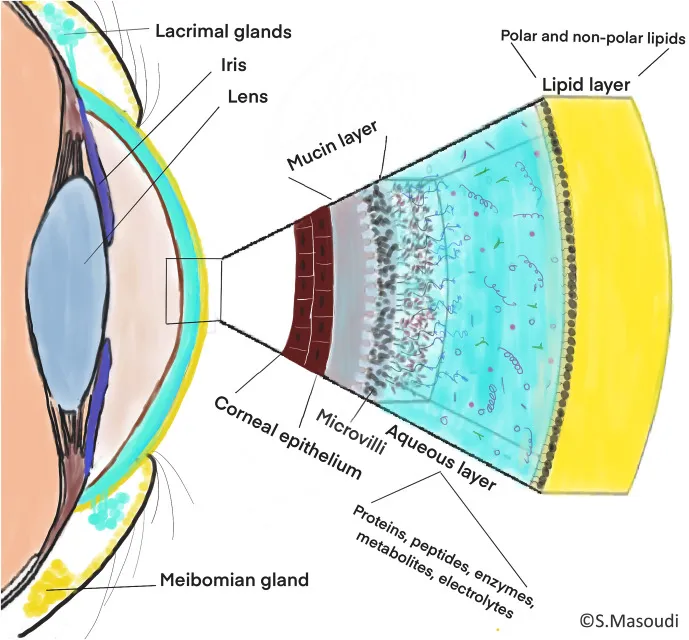
- **Vitamin A deficiency** is a common cause of **xerophthalmia**, characterized by **dry eyes** (**xerosis conjunctivae**) and roughening of the **cornea** due to impaired mucin production [1]. In vitamin A deficiency, mucus-secreting cells are replaced by keratin-producing cells [2].
- Progression of ocular epithelial keratinization can lead to **Bitot's spots**, corneal ulceration, and ultimately **blindness** [1], [2].
*Iron*
- **Iron deficiency** primarily leads to **iron-deficiency anemia**, causing fatigue, pallor, and weakness, but not directly ocular manifestations like dry eyes or rough cornea.
- While severe anemia can cause some visual disturbances, it does not typically present with the specific **xerophthalmic** changes seen here.
*Protein*
- **Protein deficiency** can lead to conditions like **kwashiorkor** (edema, muscle wasting) or **marasmus** (severe wasting), which broadly impair health and immunity.
- However, it does not directly cause the specific ocular signs of **dryness** and **corneal roughening** as a primary deficiency, though it can exacerbate other nutritional deficiencies.
*Niacin*
- **Niacin (Vitamin B3) deficiency** causes **pellagra**, characterized by the "3 Ds": **dermatitis**, **diarrhea**, and **dementia**.
- Ocular symptoms are not a common or primary feature of niacin deficiency; it does not cause **dry eyes** or **corneal roughening**.
Ocular Biochemistry Indian Medical PG Question 6: Which substance is most likely to increase in the rods of the retina when the light is turned on?
- A. Cyclic guanosine monophosphate (cGMP)
- B. Metarhodopsin II (Correct Answer)
- C. Cyclic adenosine monophosphate (cAMP)
- D. Rhodopsin
Ocular Biochemistry Explanation: ***Metarhodopsin II***
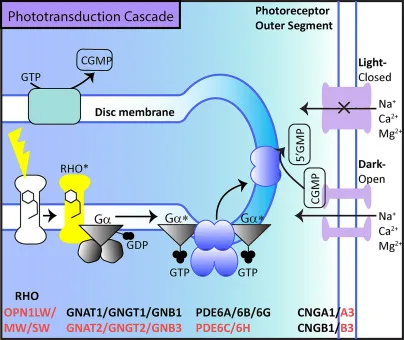
- When **light strikes rhodopsin**, it undergoes a conformational change, forming **metarhodopsin II**, which is the active form that initiates the phototransduction cascade.
- **Metarhodopsin II** activates a **G-protein (transducin)**, leading to a decrease in cGMP and subsequent rod hyperpolarization.
*Cyclic guanosine monophosphate (cGMP)*
- **Light activation** of rhodopsin triggers a cascade that **decreases cGMP concentration** in the rods, leading to closing of cGMP-gated sodium channels.
- In the **dark**, cGMP levels are high, keeping the sodium channels open and the rod depolarized.
*Cyclic adenosine monophosphate (cAMP)*
- **cAMP** is a significant second messenger in many cellular processes but is **not directly involved in the primary phototransduction pathway** in rods.
- Its levels do not acutely increase in response to light in the same manner as molecules in the phototransduction cascade.
*Rhodopsin*
- **Rhodopsin** is the **light-sensitive pigment** located in the rod outer segment membranes.
- When light is turned on, rhodopsin is **converted** into its active form, metarhodopsin II, meaning the amount of intact rhodopsin itself will decrease, not increase.
Ocular Biochemistry Indian Medical PG Question 7: A 76-year-old female presents with difficulty reading. Bilateral white opacifications consistent with cataract formation are observed. In which structure are these opacifications located?
- A. Aqueous humor
- B. Cornea
- C. Lens (Correct Answer)
- D. Optic nerve
Ocular Biochemistry Explanation: ***Lens***
- **Cataracts** are defined by the **clouding of the natural lens** of the eye, which causes blurred vision and difficulty with activities like reading.
- The condition is very common, especially among older adults, and affects the **bilateral vision** as described in the case.
*Aqueous humor*
- The **aqueous humor** is a clear fluid that fills the space between the cornea and the lens; it is not the structure that becomes opaque in cataracts.
- Problems with aqueous humor are typically associated with glaucoma (due to increased intraocular pressure) rather than cataract formation.
*Cornea*
- The **cornea** is the transparent outer layer of the eye that helps focus light, but it does not develop cataracts.
- Opacities in the cornea (e.g., from injuries or infections) would be described differently and produce different visual symptoms.
*Optic nerve*
- The **optic nerve** transmits visual information from the retina to the brain; it is a nerve, not a structure where light focuses or where cataracts develop.
- Damage to the optic nerve typically leads to vision loss or blind spots, not blurred vision from opacification.
Ocular Biochemistry Indian Medical PG Question 8: A-wave in Electroretinogram corresponds to the activity of
- A. Pigment epithelium
- B. Rods and cones (Correct Answer)
- C. Nerve fibre layer
- D. Ganglion cell layer
Ocular Biochemistry Explanation: ***Rods and cones***
- The **'a' wave** of the Electroretinogram (ERG) represents the **initial negative deflection**, primarily generated by the activity of the **photoreceptors** (rods and cones) in response to light stimulation.
- This wave reflects the **hyperpolarization** of the photoreceptor cells as they absorb light and initiate the visual transduction cascade.
*Pigment epithelium*
- The **retinal pigment epithelium (RPE)** plays a crucial role in supporting photoreceptor function and has a slower, sustained electrical response, which contributes more to the **c-wave** of the ERG.
- While the RPE is vital for retinal function, its primary electrical contribution is not represented by the initial negative a-wave.
*Nerve fibre layer*
- The **nerve fiber layer** consists of the axons of ganglion cells and does not directly contribute to the primary a-wave or b-wave of the ERG as it is involved in transmitting signals to the brain.
- Damage to this layer may affect overall visual function but is not the source of the initial photoreceptor-driven electrical response.
*Ganglion cell layer*
- The **ganglion cell layer** is responsible for sending visual information to the brain, and its activity is typically reflected in later, more complex components of the ERG or in other electrophysiological tests like pattern ERG.
- The initial photoreceptor response (a-wave) occurs upstream of the ganglion cell activity.
Ocular Biochemistry Indian Medical PG Question 9: The image shows a funnel shaped anterior chamber (deeper in the center and narrow in the periphery), which is seen in angle closure glaucoma. This is caused by:
- A. Anterior synechiae
- B. Posterior synechiae
- C. Iris bombe (Correct Answer)
- D. Pupillary block
Ocular Biochemistry Explanation: ***Iris bombe***
- **Iris bombe** occurs when there is a 360-degree adhesion between the iris and the lens (or anterior vitreous in aphakic/pseudophakic eyes), preventing aqueous humor from flowing from the posterior chamber to the anterior chamber.
- This build-up of aqueous humor in the posterior chamber pushes the entire iris anteriorly, creating a **funnel-shaped anterior chamber** that is deeper centrally and shallow peripherally, leading to angle closure.
*Anterior synechiae*
- **Anterior synechiae** are adhesions between the iris and the cornea or trabecular meshwork, directly closing the angle.
- While they cause **angle closure**, they are a consequence of the iris being pushed forward rather than the primary cause of the iris bowing shown.
*Posterior synechiae*
- **Posterior synechiae** are adhesions between the iris and the lens, specifically at the pupillary margin.
- When these adhesions are 360 degrees, they precisely lead to **iris bombe** by blocking aqueous flow from the posterior to the anterior chamber.
*Pupillary block*
- **Pupillary block** is the mechanism by which aqueous flow is obstructed at the pupil.
- It describes the functional blockage and is the underlying cause for the anatomical manifestation of **iris bombe**.
Ocular Biochemistry Indian Medical PG Question 10: Laser iridotomy is done in?
- A. Pigmentary glaucoma
- B. None of the options
- C. Angle closure glaucoma (Correct Answer)
- D. Open angle glaucoma
Ocular Biochemistry Explanation: ***Angle closure glaucoma***
- **Laser iridotomy** creates a small hole in the iris, allowing aqueous humor to flow directly from the posterior to the anterior chamber, thus relieving pupillary block and opening the angle.
- This procedure is the definitive treatment to prevent further **angle closure attacks** and is also used prophylactically in eyes at risk.
*Open angle glaucoma*
- This condition involves an **open angle** but impaired outflow of aqueous humor through the **trabecular meshwork**.
- Laser iridotomy is not indicated as it does not address the primary outflow obstruction in the trabecular meshwork.
*Pigmentary glaucoma*
- This is a type of **open-angle glaucoma** caused by pigment dispersion that clogs the trabecular meshwork, leading to increased intraocular pressure.
- While pigment can be released from the iris, the primary issue is the **trabecular meshwork obstruction**, which is not directly resolved by iridotomy.
*None of the options*
- This option is incorrect because **angle closure glaucoma** is a clear indication for laser iridotomy.
More Ocular Biochemistry Indian Medical PG questions available in the OnCourse app. Practice MCQs, flashcards, and get detailed explanations.