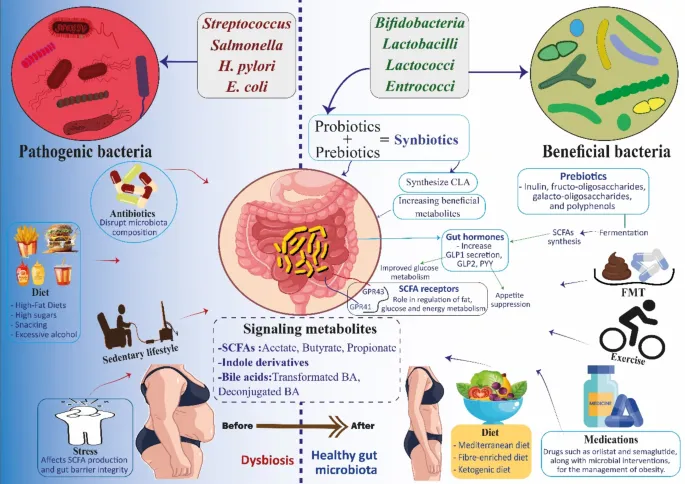
Gut Microbiome Indian Medical PG Practice Questions and MCQs
Practice Indian Medical PG questions for Gut Microbiome. These multiple choice questions (MCQs) cover important concepts and help you prepare for your exams.
Gut Microbiome Indian Medical PG Question 1: What is the physiological reflex responsible for post-meal defecation in children?
- A. Gastro colic reflex (Correct Answer)
- B. Gastro gastric reflex
- C. Vasovagal reflex
- D. Colonoileal reflex
Gut Microbiome Explanation: ***Gastro colic reflex***
- This reflex is a **physiological response** to stomach distention by food, leading to increased motility in the **colon**.
- It explains why bowel movements, especially in infants and young children, often occur shortly **after eating**.
*Gastro gastric reflex*
- This reflex primarily involves communication **between different parts of the stomach**, controlling gastric motility and emptying.
- It does not directly induce colonic contractions or defecation after a meal.
*Vasovagal reflex*
- The vasovagal reflex is a systemic response involving the **vagus nerve** that can cause a drop in heart rate and blood pressure, leading to fainting.
- While it can be triggered by various stimuli, it is not the mechanism responsible for post-meal defecation.
*Colonoileal reflex*
- This reflex occurs when the colon is distended, slowing the movement of chyme from the **ileum into the colon**.
- Its primary function is to prevent overloading the colon, not to stimulate post-meal defecation.
Gut Microbiome Indian Medical PG Question 2: Anti-microbials are given with which type of diarrhea:
- A. Secretory diarrhea
- B. Rotavirus
- C. Osmotic diarrhea
- D. Traveller's diarrhea (Correct Answer)
Gut Microbiome Explanation: Andi-microbials are often recommended for **traveler's diarrhea**, especially if symptoms are severe or there is a likely bacterial origin [1]. Common pathogens **E. coli, Salmonella, Shigella**, and **Campylobacter** are effectively treated with antibiotics, reducing duration and severity [1].
*Secretory diarrhea*
- This type of diarrhea results from increased active secretion of water and electrolytes, often due to **toxins** (e.g., cholera).
- While antimicrobials may be used in specific bacterial infections causing secretory diarrhea, the primary treatment focuses on **rehydration**, as the issue isn't always directly bacterial [2].
*Rotavirus*
- Rotavirus is a **viral infection**, and therefore, antimicrobials (antibiotics) are ineffective against it.
- Treatment for rotavirus is primarily **supportive**, focusing on hydration and symptom management.
*Osmotic diarrhea*
- Osmotic diarrhea occurs when there is an excess of **osmotically active solutes** in the gut drawing water into the lumen (e.g., lactose intolerance, laxative abuse).
- Antimicrobials are generally not indicated for osmotic diarrhea unless there is a co-occurring bacterial infection, as the underlying problem is not microbial.
Gut Microbiome Indian Medical PG Question 3: Cholera is caused by?
- A. Enterococcus
- B. E.coli
- C. Vibrio cholerae O1 (Correct Answer)
- D. Vibrio parahemolyticus
Gut Microbiome Explanation: ***Vibrio cholerae O1***
- **Cholera** is primarily caused by **toxigenic strains** of *Vibrio cholerae*, with serogroup **O1** being the most common and historically significant cause of epidemics and pandemics.
- This bacterium produces **cholera toxin**, which leads to profuse watery diarrhea by acting on the intestinal epithelial cells.
*Enterococcus*
- **Enterococcus** species are common inhabitants of the human gastrointestinal tract and are often associated with **nosocomial infections**, such as urinary tract infections, endocarditis, and bacteremia.
- They do not typically cause the severe, watery diarrhea characteristic of cholera.
*Vibrio parahemolyticus*
- *Vibrio parahemolyticus* is a common cause of **foodborne illness**, particularly associated with consuming **raw or undercooked seafood**.
- It causes a form of gastroenteritis characterized by abdominal pain, watery diarrhea, nausea, vomiting, and fever, but it is distinct from cholera.
*E.coli*
- While various strains of **Escherichia coli (E. coli)** can cause diarrheal diseases (e.g., enterotoxigenic *E. coli* causing traveler's diarrhea, enterohemorrhagic *E. coli* causing bloody diarrhea), **E. coli** is not the causative agent of cholera.
- The pathogenesis and specific toxins produced differ significantly from those of *Vibrio cholerae*.
Gut Microbiome Indian Medical PG Question 4: A cook prepares sandwiches for 10 people going for a picnic. Eight out of them develop severe gastroenteritis within 4-6 hours of consuming the sandwiches. It is likely that on investigation, the cook is found to be the carrier of -
- A. Salmonella typhi
- B. Vibrio cholerae
- C. Entamoeba histolytica
- D. Staphylococcus aureus (Correct Answer)
Gut Microbiome Explanation: ***Staphylococcus aureus***
- The rapid onset of symptoms (4-6 hours) and the development of severe gastroenteritis in multiple individuals after consuming common food items (sandwiches) strongly suggest a **preformed toxin ingestion**.
- **_Staphylococcus aureus_** is a common cause of food poisoning due to its ability to produce enterotoxins that are heat-stable and cause rapid onset of nausea, vomiting, and diarrhea.
*Salmonella typhi*
- **_Salmonella typhi_** causes typhoid fever, which typically has an incubation period of **1-3 weeks**, much longer than the 4-6 hours seen in this case.
- The symptoms of typhoid fever are also more systemic, including high fever, headache, and abdominal pain, rather than acute gastroenteritis with rapid onset.
*Vibrio cholerae*
- **_Vibrio cholerae_** causes cholera, characterized by **profuse watery diarrhea** with a typical incubation period of **1-5 days**.
- The rapid onset of symptoms in this scenario (4-6 hours) does not align with the incubation period of cholera.
*Entamoeba histolytica*
- **_Entamoeba histolytica_** causes amoebiasis, which has an incubation period ranging from **several days to weeks or even months**.
- It typically presents with **bloody diarrhea** and abdominal pain, and its slow onset is inconsistent with the acute event described.
Gut Microbiome Indian Medical PG Question 5: Which of the following bacteria is microaerophilic?
- A. Campylobacter (Correct Answer)
- B. Pseudomonas
- C. Salmonella
- D. Vibrio cholerae
Gut Microbiome Explanation: ***Campylobacter***
- **Campylobacter jejuni** is a classic example of a microaerophilic bacterium, thriving in environments with **reduced oxygen (5-10% O2)** and **increased CO2 (5-10%)**.
- This specific atmospheric requirement is crucial for its **growth** and **virulence**, often leading to gastroenteritis.
*Vibrio cholerae*
- **Vibrio cholerae** is a **facultative anaerobe**, meaning it can grow in both the presence and absence of oxygen.
- It does not require low oxygen environments; optimal growth occurs **aerobically**.
*Pseudomonas*
- **Pseudomonas aeruginosa** is an **obligate aerobe**; it requires oxygen for respiration and growth.
- It uses oxygen as the **final electron acceptor** in its electron transport chain.
*Salmonella*
- **Salmonella enterica** is a **facultative anaerobe**, capable of switching between aerobic and anaerobic respiration.
- It can grow in the presence of oxygen, as well as in **anaerobic conditions** by fermenting sugars.
Gut Microbiome Indian Medical PG Question 6: All are true about culture media except:
- A. LJ medium is used for tubercle bacilli
- B. Loeffler's serum slope is used for Corynebacterium diphtheriae
- C. The best medium for anaerobes is chocolate agar (Correct Answer)
- D. Blood agar supports fastidious organisms
Gut Microbiome Explanation: ***The best medium for anaerobes is chocolate agar***
- **Chocolate agar** is an enriched medium used for the isolation of **fastidious organisms** like *Haemophilus influenzae* and *Neisseria* species, but it is not optimized for anaerobic growth.
- Anaerobes require **anaerobic specific media** (e.g., thioglycollate broth, blood agar with reducing agents) and conditions (e.g., anaerobic jar) for optimal growth.
*LJ medium is used for tubercle bacilli*
- **Lowenstein-Jensen (LJ) medium** is a primary isolation medium specifically formulated for the growth of **mycobacteria**, including *Mycobacterium tuberculosis*.
- It contains **malachite green**, which inhibits the growth of most other bacteria, and nutrients like **egg and asparagine** to support mycobacterial growth.
*Loeffler's serum slope is used for Corynebacterium diphtheriae*
- **Loeffler's serum slope** is an enrichment medium used to isolate and presumptively identify *Corynebacterium diphtheriae*.
- It enhances the production of **metachromatic granules (Babes-Ernst granules)** by *C. diphtheriae*, which are visible upon staining.
*Blood agar supports fastidious organisms*
- **Blood agar** is an enriched medium containing 5% sheep blood, providing essential growth factors for many bacteria, including some **fastidious organisms**.
- It is used to detect **hemolytic reactions**, which are important for differentiating various bacterial species.
Gut Microbiome Indian Medical PG Question 7: Which of the following is an inflammatory bowel disease in children?
- A. Tropical sprue
- B. Cystic fibrosis
- C. Coeliac disease
- D. Regional ileitis (Correct Answer)
Gut Microbiome Explanation: ***Regional ileitis***
- Regional ileitis is another name for **Crohn's disease**, which is a type of **inflammatory bowel disease (IBD)** that can affect any part of the gastrointestinal tract, including the ileum, in children and adults.
- IBD in children presents with chronic inflammation of the digestive tract, leading to symptoms such as **abdominal pain**, **diarrhea**, and **weight loss**.
*Tropical sprue*
- Tropical sprue is a **malabsorption syndrome** characterized by abnormalities in the small intestine, but it is caused by environmental factors and infections, not considered an inflammatory bowel disease.
- It is typically seen in individuals living in or visiting tropical regions and is not classified as IBD.
*Cystic fibrosis*
- Cystic fibrosis is a **genetic disorder** that primarily affects the lungs and digestive system by producing thick, sticky mucus.
- While it causes digestive issues due to **pancreatic insufficiency**, it is not an inflammatory bowel disease.
*Coeliac disease*
- Coeliac disease is an **autoimmune condition** triggered by the ingestion of gluten, leading to damage in the small intestine.
- It is distinct from IBD as its pathology is primarily immune-mediated in response to gluten and does not involve chronic, idiopathic inflammation characteristic of IBD.
Gut Microbiome Indian Medical PG Question 8: A young girl presents with abdominal pain and a recent change in bowel habit, with passage of mucus in stool. There is no associated blood in stool and symptoms are increased with stress. The most likely diagnosis is:
- A. Amebiasis
- B. Irritable bowel syndrome (Correct Answer)
- C. Crohn's disease
- D. Ulcerative Colitis
Gut Microbiome Explanation: ***Irritable bowel syndrome***
- **Irritable bowel syndrome (IBS)** typically presents with **abdominal pain**, altered bowel habits (constipation, diarrhea, or mixed), and **mucus in stool** without blood [1].
- The symptoms are often exacerbated by **stress** and there is no evidence of structural or biochemical abnormalities [1].
*Amebiasis*
- **Amebiasis** is an infection caused by *Entamoeba histolytica*, usually leading to **bloody diarrhea** (dysentery), abdominal pain, and fever.
- The absence of blood in the stool and the presence of stress-related symptom exacerbation make amebiasis less likely.
*Crohn's disease*
- **Crohn's disease** is a type of inflammatory bowel disease characterized by **transmural inflammation** that can affect any part of the gastrointestinal tract.
- Symptoms often include **abdominal pain**, diarrhea (which can be bloody), weight loss, and fatigue, and it does not typically show a direct correlation with stress as the primary exacerbating factor.
*Ulcerative Colitis*
- **Ulcerative colitis (UC)** is an inflammatory bowel disease characterized by **continuous inflammation** of the colon, typically starting in the rectum.
- Key symptoms include recurrent **bloody diarrhea**, abdominal pain, and tenesmus, which are not described in this case, particularly the absence of blood.
Gut Microbiome Indian Medical PG Question 9: Fecal leucocytes are absent in all of the following, except:
- A. Cryptosporidiosis
- B. Clostridium perfringes infection
- C. Giardiasis
- D. Campylobacter infection (Correct Answer)
Gut Microbiome Explanation: ***Campylobacter infection***
- This infection causes **inflammatory diarrhea**, leading to the presence of **fecal leucocytes** as a response to intestinal tissue invasion.
- The inflammatory process results in disruption of the intestinal mucosa, attracting **neutrophils** and other inflammatory cells to the stool.
*Giardiasis*
- **Giardia lamblia** infection typically causes **non-inflammatory diarrhea** by interfering with nutrient absorption in the small intestine.
- Due to the non-invasive nature of the pathogen, **fecal leucocytes** are generally **absent** in the stool.
*Cryptosporidiosis*
- **Cryptosporidium parvum** primarily causes **non-inflammatory watery diarrhea** by adhering to and damaging the microvilli of the intestinal epithelium.
- While it can cause flattening of the villi, it does not typically lead to significant tissue invasion or the presence of **fecal leucocytes**.
*Clostridium perfringens infection*
- This bacterium causes **food poisoning** mainly through the production of **toxins** that affect the intestinal lining.
- The diarrhea is typically **non-inflammatory**, and **fecal leucocytes** are usually **absent** because there is no significant host immune cell invasion.
Gut Microbiome Indian Medical PG Question 10: Which of the following bacteria is classified as facultative anaerobe?
- A. Bacteroides
- B. Pseudomonas
- C. Escherichia (Correct Answer)
- D. Clostridium
Gut Microbiome Explanation: ***Escherichia***
- *Escherichia coli* (E. coli) is a classic example of a **facultative anaerobe**, meaning it can grow in the presence or absence of oxygen.
- It uses **aerobic respiration** when oxygen is available and switches to **fermentation** or **anaerobic respiration** in an anaerobic environment.
*Bacteroides*
- *Bacteroides* species are **obligate anaerobes**, meaning they can only survive and grow in the **complete absence of oxygen**.
- They are a major component of the normal human gut flora and are sensitive to oxygen exposure.
*Pseudomonas*
- *Pseudomonas* species, such as *Pseudomonas aeruginosa*, are **obligate aerobes**, requiring **oxygen for growth and metabolism**.
- They possess enzymes like cytochrome oxidase and catalase, which are essential for aerobic respiration.
*Clostridium*
- *Clostridium* species, like *Clostridium tetani* and *Clostridium perfringens*, are **obligate anaerobes**.
- They lack the enzymes (e.g., superoxide dismutase, catalase) necessary to detoxify reactive oxygen species, making oxygen lethal to them.
More Gut Microbiome Indian Medical PG questions available in the OnCourse app. Practice MCQs, flashcards, and get detailed explanations.