Examination of Infant Remains Indian Medical PG Practice Questions and MCQs
Practice Indian Medical PG questions for Examination of Infant Remains. These multiple choice questions (MCQs) cover important concepts and help you prepare for your exams.
Examination of Infant Remains Indian Medical PG Question 1: During autopsy of a 65-year-old man who collapsed while eating dinner at home, a foreign body (food bolus) is found obstructing the larynx with no other injuries. The manner of death is:
- A. Intentional harm
- B. Self-inflicted harm
- C. Unintentional injury (Correct Answer)
- D. Death from natural causes
Examination of Infant Remains Explanation: ***Unintentional injury***
- The presence of a **food bolus obstructing the respiratory tract** in a person who collapsed while eating, with **no evidence of trauma or suspicious circumstances**, is classified as **accidental/unintentional death**.
- This is the most common manner of death associated with foreign body airway obstruction, particularly in elderly individuals or those with neurological conditions affecting swallowing.
- **Café coronary syndrome** (choking on food mimicking cardiac arrest) is a classic example of accidental asphyxia.
*Intentional harm (Homicide)*
- Homicidal foreign body aspiration would require evidence of:
- **Forced insertion** of the foreign body
- **Other traumatic injuries** (bruising, struggle marks)
- **Suspicious circumstances** at the scene
- The scenario described lacks these features, making homicide unlikely.
*Self-inflicted harm (Suicide)*
- Suicide by foreign body aspiration is **extremely rare** and would require:
- **Evidence of suicidal intent** (suicide note, psychiatric history)
- Deliberate insertion beyond the gag reflex
- Accidental choking while eating does not constitute suicidal behavior.
*Death from natural causes*
- **Natural death** results from disease processes, not external physical agents.
- A foreign body causing mechanical airway obstruction is an **external cause of death**, not a natural disease process.
- Even if the person had a predisposing medical condition, the immediate cause (foreign body obstruction) makes this an unintentional injury, not natural death.
Examination of Infant Remains Indian Medical PG Question 2: Macerated foetus is indicative of:
- A. Live born
- B. Deadborn
- C. IUGR
- D. Stillborn (Correct Answer)
Examination of Infant Remains Explanation: ***Still born***
- A **macerated fetus** is characterized by the breakdown of fetal tissues due to **autolysis** in utero, which occurs when the fetus has died and remained in the womb for an extended period (usually >12-24 hours).
- This condition is the hallmark of an **intrauterine fetal death** before delivery, defining it as a **stillbirth**.
*Dead born*
- While a **stillborn** fetus is technically "dead born," the term "dead born" is less precise and does not specifically imply the tissue changes (maceration) that occur with prolonged retention in utero.
- The term **dead born** can encompass fetuses delivered immediately after death without significant tissue autolysis.
*Live born*
- A **liveborn** infant shows signs of life at birth, such as breathing, heart beat, umbilical cord pulsation, or definite voluntary muscle movement, none of which would be present in a macerated fetus.
- **Maceration** is a post-mortem finding, directly indicating the fetus was not alive at birth.
*IUGR*
- **Intrauterine growth restriction (IUGR)** refers to a fetus that has not reached its genetically determined growth potential, resulting in an estimated fetal weight below the 10th percentile for gestational age.
- While IUGR can be a risk factor for stillbirth, it is a **growth abnormality**, not a direct indicator or consequence of fetal death or maceration itself.
Examination of Infant Remains Indian Medical PG Question 3: Best criterion for determining live birth in suspected infanticide cases?
- A. Presence of milk or food in stomach
- B. Evidence of external injuries
- C. Examination of umbilical cord changes
- D. Hydrostatic test (lung float test) (Correct Answer)
Examination of Infant Remains Explanation: ***Hydrostatic test (lung float test)***
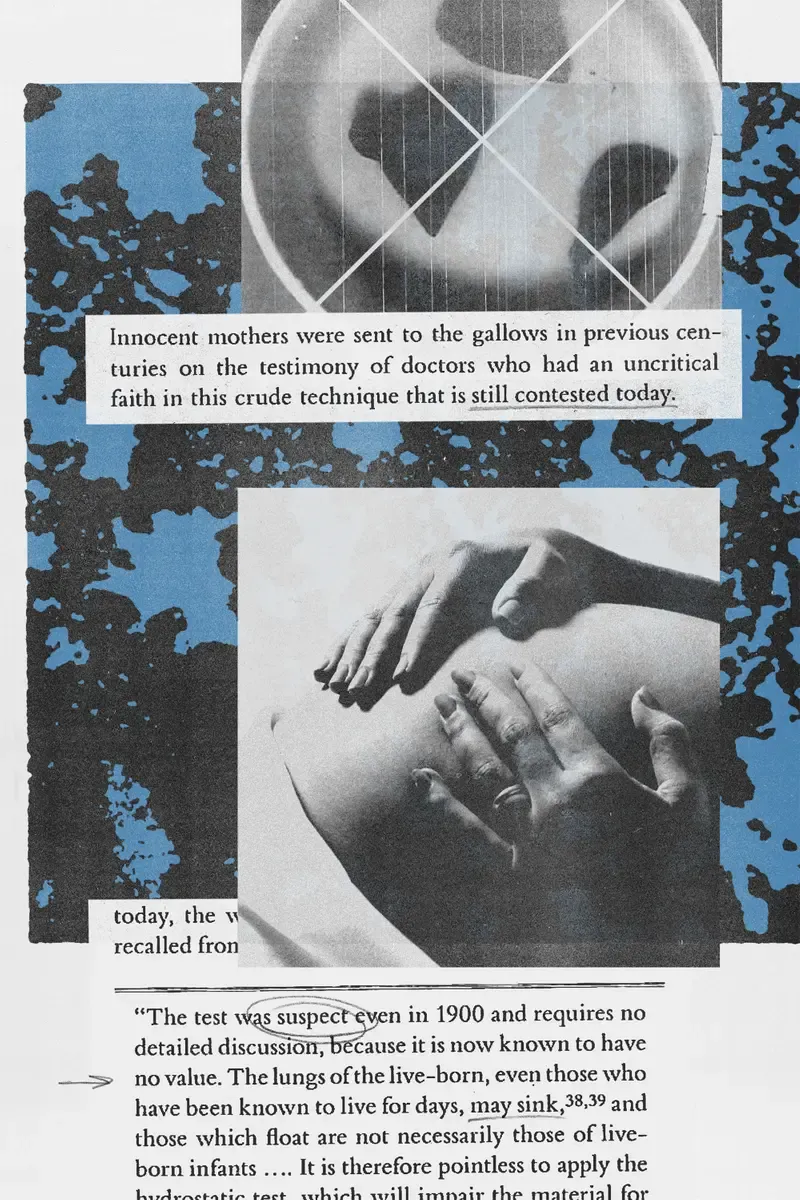
- The **hydrostatic test**, also known as the **lung float test**, is considered the most reliable criterion in forensic pathology for determining if an infant was born alive.
- A positive result (lungs float in water) indicates that the infant took at least one breath, suggesting **live birth**, as fetal lungs are solid and sink.
*Presence of milk or food in stomach*
- While the presence of milk or food indicates a period of survival after birth, it doesn't definitively prove **live birth** over stillbirth if the infant was fed immediately after a perimortem event.
- It also doesn't provide information about **respiration**, which is a key indicator of live birth.
*Evidence of external injuries*
- **External injuries** may indicate foul play or neglect, but they do not confirm that the infant was born alive.
- An infant could be **stillborn** and then subjected to injuries, or injuries could occur post-mortem.
*Examination of umbilical cord changes*
- **Umbilical cord changes**, such as desiccation or mummification, indicate the passage of time after birth but do not differentiate between **live birth** and **stillbirth**.
- These changes can occur even if the infant was stillborn, especially if there was an attempt to cut and tie the cord.
Examination of Infant Remains Indian Medical PG Question 4: Which of the following is the most important objective of a medicolegal autopsy?
- A. Manner of death
- B. Cause of death (Correct Answer)
- C. Time since death
- D. All of the options
Examination of Infant Remains Explanation: ***Cause of death***
- Ascertaining the **cause of death** is the primary objective of a medicolegal autopsy, as it identifies the disease or injury responsible for physiological derangement leading to death.
- This determination is crucial for legal proceedings and public health data, providing the foundational medical reason for the individual's demise.
*Manner of death*
- While important, the **manner of death** (homicide, suicide, accidental, natural, undetermined) is a classification based on the cause of death and other investigative findings, making it a secondary objective derived from the primary cause.
- The manner specifies how the cause of death arose, but the autopsy's direct medical contribution is establishing the cause itself.
*Time since death*
- Estimating the **time since death** is a significant aspect of a medicolegal autopsy, aiding in establishing timelines for investigations.
- However, it is a piece of crucial information that supports the investigation rather than the ultimate objective of understanding why the person died.
*All of the options*
- Although all mentioned aspects are important components of a comprehensive medicolegal autopsy report, pinpointing the **cause of death** is the singular, most fundamental objective around which other conclusions are built.
- The cause of death forms the basis for subsequent legal and public health classifications and without it, other aspects would lack their primary context.
Examination of Infant Remains Indian Medical PG Question 5: In a case of suspected infanticide, a post-mortem examination is performed, including Breslau's second life test. This test aims to detect changes in which of the following organs?
- A. Brain
- B. Heart
- C. Lung
- D. Stomach and intestines (Correct Answer)
Examination of Infant Remains Explanation: ***Stomach and intestines***
- **Breslau's second life test** examines the **stomach and intestines** by floating them in water to detect swallowed air, indicating live birth and post-natal respiration.
- The presence of air in these organs suggests the infant breathed and swallowed air after birth, distinguishing it from stillbirth.
*Brain*
- Brain examination is crucial for detecting **head trauma** or **hypoxic-ischemic encephalopathy** but is not the target of **Breslau's second life test**.
- Neurological findings help determine cause of death but cannot establish whether the infant breathed independently.
*Heart*
- Cardiac examination identifies **congenital heart defects** or circulatory abnormalities that may contribute to infant death.
- The heart's condition helps establish cause of death but is not assessed in **Breslau's second life test** for evidence of respiration.
*Lung*
- The lungs are examined in **Breslau's first life test** (hydrostatic lung test) to detect air indicating respiration, not the second test.
- While lung examination is vital for determining live birth, **Breslau's second life test** specifically targets the digestive organs.
Examination of Infant Remains Indian Medical PG Question 6: In a macerated baby, the ideal sample for genetic analysis is obtained from:
- A. Clotted fetal blood
- B. Placental Tissue (Correct Answer)
- C. Fibroblast from skin
- D. Fibroblast from Achilles tendon
Examination of Infant Remains Explanation: ***Placental Tissue***
- **Placental tissue** (chorionic villi) is preferred for genetic analysis in macerated fetuses because it is less susceptible to **autolysis** and **bacterial contamination** compared to fetal tissues.
- The placenta often retains viable cells with intact DNA even when fetal tissues have significantly degraded, making it a more reliable source for **karyotyping** or **molecular genetic studies**.
*Clotted fetal blood*
- **Clotted fetal blood** from a macerated fetus is generally unsuitable due to significant **cellular degradation** and **DNA fragmentation** caused by autolysis.
- The quality of DNA extracted from such a sample would likely be poor, leading to unreliable or unsuccessful genetic testing.
*Fibroblast from skin*
- While fibroblasts can be cultured from skin, obtaining a viable biopsy from a **macerated fetus** is challenging due to extensive **tissue degradation** and the high risk of **bacterial contamination**.
- Successful culture and growth of fibroblasts would be unlikely given the compromised state of the fetal tissue.
*Fibroblast from Achilles tendon*
- Similar to skin, obtaining viable fibroblasts from the **Achilles tendon** of a macerated fetus is difficult due to widespread **autolysis** and **tissue degeneration**.
- The degradation of cells in macerated fetuses significantly reduces the chances of culturing viable cells needed for genetic analysis from any fetal tissue, including tendons.
Examination of Infant Remains Indian Medical PG Question 7: A false negative hydrostatic test result is most likely caused by
- A. Emphysema
- B. Atelectasis (Correct Answer)
- C. Putrefaction
- D. Artificial respiration
Examination of Infant Remains Explanation: ***Atelectasis***
- **Atelectasis** is the collapse of lung tissue, reducing its volume and leading to a significant decrease in the amount of trapped air compared to a fully inflated lung.
- A small amount of trapped air due to atelectasis can cause the lung to **sink** in water, mimicking the appearance of a stillborn infant's lung in the hydrostatic test, thus leading to a **false negative** result.
*Artificial respiration*
- **Artificial respiration** before death can introduce air into the lungs, making them float and potentially causing a **false positive** result (suggesting live birth) if the infant was stillborn.
- This process inflates the lungs, which is the opposite of the condition that would cause a false negative due to inadequate air.
*Emphysema*
- **Emphysema** pathologically increases the air spaces in the lungs, leading to more trapped air.
- This condition would cause the lung to **float more easily**, potentially leading to a **false positive** result in a stillborn infant or an exaggerated floating in a live-born infant.
*Putrefaction*
- **Putrefaction** is the decomposition of tissues after death, which produces gases within the lungs and other organs.
- These gases would cause the lungs to **float**, potentially leading to a **false positive** result in a stillborn infant, making it appear as if the infant had breathed.
Examination of Infant Remains Indian Medical PG Question 8: Best method to diagnose hydrocephalus in a fetus at 24 weeks gestation is:
- A. Ultrasound (Correct Answer)
- B. X-ray
- C. CT scan
- D. MRI
Examination of Infant Remains Explanation: ***Ultrasound***
- **Fetal ultrasound** is the primary and most effective imaging modality for diagnosing hydrocephalus in a 6-month-old fetus due to its **safety**, accessibility, and ability to visualize the developing brain.
- It allows for the measurement of **ventricular size** and observation of characteristic features of hydrocephalus, such as **ventriculomegaly** and **dangling choroid plexus**.
*X-ray*
- **X-rays** use ionizing radiation, which is generally avoided in pregnant women due to potential risks to the developing fetus.
- They provide limited detail of **soft tissues** like the brain and would not be effective in diagnosing hydrocephalus.
*CT scan*
- **CT scans** also involve significant **radiation exposure**, posing risks to the fetus and limiting their use in prenatal diagnosis.
- While capable of visualizing brain structures, the benefits do not outweigh the **radiation risk** when safer and equally effective alternatives like ultrasound are available.
*MRI*
- **Fetal MRI** can provide detailed imaging of the fetal brain but is typically reserved for **further characterization** of anomalies identified by ultrasound or when ultrasound findings are inconclusive.
- It is more expensive and less readily available than ultrasound, making it a **secondary imaging tool** rather than the primary diagnostic method for initial screening.
Examination of Infant Remains Indian Medical PG Question 9: The image shows ossification centers at the lower end of the radius and ulna which are not fused, and the pisiform is present. Based on this, what is the most accurate conclusion about the age?
- A. <12 years
- B. 12-14 years
- C. 14-16 years (Correct Answer)
- D. <17.5 years
Examination of Infant Remains Explanation: **14-16 years**
- The presence of the **pisiform** and unfused epiphyses at the **distal radius and ulna** is consistent with an age range of 14-16 years. The pisiform typically begins to ossify around 10-12 years in females and 12-14 years in males, while the distal radial and ulnar epiphyses usually fuse later, completing closure around 16-18 years.
- In females, the distal radius begins ossifying around **12-14 years** and fuses around **16-17 years**. In males, it starts ossifying around 14 years and fuses around 17-18 years. The ulna follows a similar pattern, typically fusing a bit later than the radius.
*<12 years*
- While the pisiform may begin to ossify in some individuals around 10-12 years, the **distal radial and ulnar epiphyses are generally still widely open** and not yet nearing fusion at this age.
- Many carpal bones would still be in earlier stages of development, and the overall skeletal maturity would be less advanced than depicted.
*12-14 years*
- During this period, the **pisiform is usually ossified**, but the **fusion of the distal radius and ulna has not typically begun**. The image shows the epiphyses of the radius and ulna are present but not yet fused, suggesting a slightly older age than 12-14 years, especially considering the advanced development of other carpal bones.
- The epiphyses appear well-formed and distinct, indicating a stage where fusion is approaching but not yet initiated, which is usually after 14 years.
*<17.5 years*
- While this option is technically correct in that 14-16 years is less than 17.5 years, it is too broad and not the **most accurate conclusion**. The specific features like the absence of fusion in the distal radius and ulna help narrow down the age range more precisely.
- After 17.5 years, especially in males, the **distal radial and ulnar epiphyses** would typically show signs of complete or near-complete fusion.
Examination of Infant Remains Indian Medical PG Question 10: In cases of death due to road traffic accidents, what is the standard practice regarding timing of post-mortem examination in India?
- A. No mandatory waiting period - conducted as soon as possible (Correct Answer)
- B. 24 hours
- C. 72 hours
- D. 48 hours
Examination of Infant Remains Explanation: ***No mandatory waiting period - conducted as soon as possible***
- In medico-legal cases including road traffic accidents, **there is no mandatory waiting period** before conducting post-mortem examination in India.
- Post-mortem should be conducted **as soon as possible after death is confirmed** to preserve forensic evidence and establish cause of death accurately.
- Delays can lead to **decomposition, loss of vital evidence**, and compromise the medico-legal investigation.
- The body is examined after **proper identification, documentation, and legal formalities** are completed, but without arbitrary time delays.
*72 hours mandatory waiting*
- This is **incorrect** - there is no 72-hour waiting period mandated for post-mortem in RTA cases.
- Such delays would compromise forensic evidence and are **not part of standard medico-legal practice**.
- Confusion may arise from other legal timeframes, but not for autopsy timing.
*24 hours mandatory waiting*
- This is **incorrect** - no such mandatory waiting period exists in Indian forensic practice for RTA deaths.
- Post-mortems are conducted **promptly, not after arbitrary waiting periods**.
*48 hours mandatory waiting*
- This is **incorrect** - there is no mandatory 48-hour waiting period.
- Delays in autopsy are **avoided to preserve evidence quality** and expedite medico-legal investigations.
More Examination of Infant Remains Indian Medical PG questions available in the OnCourse app. Practice MCQs, flashcards, and get detailed explanations.