Screening for Disease Indian Medical PG Practice Questions and MCQs
Practice Indian Medical PG questions for Screening for Disease. These multiple choice questions (MCQs) cover important concepts and help you prepare for your exams.
Screening for Disease Indian Medical PG Question 1: Which of the following attributes are essential for an ideal screening test?
- A. Safe
- B. Reliable
- C. Valid
- D. All of the options (Correct Answer)
Screening for Disease Explanation: ***All of the options***
- An ideal screening test must possess **all three essential attributes**: safety, reliability, and validity.
- **Safe**: Minimizes harm to participants and ensures ethical implementation
- **Reliable**: Produces consistent, reproducible results with minimal random error
- **Valid**: Accurately measures what it intends to measure (high sensitivity and specificity)
- These three attributes work together as fundamental requirements for any effective screening program, ensuring that early detection benefits outweigh potential risks.
*Safe (alone)*
- While safety is absolutely essential, it is **not sufficient by itself** to make an ideal screening test.
- A test that is safe but unreliable or invalid would produce inconsistent or inaccurate results, rendering it ineffective for screening purposes.
*Reliable (alone)*
- Reliability ensures consistent results, which is crucial, but **reliability alone is insufficient**.
- A test can be highly reliable (consistently giving the same result) yet completely invalid if it measures the wrong thing or is unsafe.
*Valid (alone)*
- Validity is critical for accurate measurement, but **validity alone does not make a test ideal**.
- Even a valid test must be safe to protect participants and reliable to ensure consistency across different settings and times.
Screening for Disease Indian Medical PG Question 2: What is the correct formula for calculating the positive predictive value (PPV) of a screening test?
- A. True positives / (True positives + False negatives)
- B. False positives / (False positives + True negatives)
- C. True positives / (True positives + False positives) (Correct Answer)
- D. True negatives / (True negatives + False negatives)
Screening for Disease Explanation: ***True positives / (True positives + False positives)***
- **Positive predictive value (PPV)** indicates the probability that a patient who tests positive actually has the disease.
- It is calculated by dividing the number of **true positives** (correctly identified positive cases) by the total number of positive test results (**true positives + false positives**).
*True positives / (True positives + False negatives)*
- This formula represents the **sensitivity** of a test, which is the proportion of actual positive cases that are correctly identified.
- Sensitivity measures the ability of a test to correctly identify individuals with the disease.
*False positives / (False positives + True negatives)*
- This formula represents **1 - specificity**, or the **false positive rate**.
- **Specificity** is the proportion of actual negative cases that are correctly identified as negative.
*True negatives / (True negatives + False negatives)*
- This formula represents the **negative predictive value (NPV)**, which is the probability that a patient who tests negative actually does not have the disease.
- NPV is calculated by dividing the number of **true negatives** (correctly identified negative cases) by the total number of negative test results (**true negatives + false negatives**).
Screening for Disease Indian Medical PG Question 3: Which of the following best reflects the diagnostic power of a test?
- A. Sensitivity and specificity (Correct Answer)
- B. Specificity alone
- C. Population attributable risk of a test
- D. Predictive value of a test
Screening for Disease Explanation: ***Sensitivity and specificity***
- **Diagnostic power of a test** refers to its intrinsic ability to correctly identify individuals with and without disease, which is best reflected by **sensitivity and specificity**.
- **Sensitivity** (true positive rate) measures the test's power to detect disease when present - the ability to correctly identify diseased individuals.
- **Specificity** (true negative rate) measures the test's power to rule out disease when absent - the ability to correctly identify non-diseased individuals.
- These are **inherent properties of the test** that remain constant regardless of disease prevalence in the population, making them the true measures of diagnostic power.
- Together, they define how well a test can discriminate between diseased and non-diseased states.
*Predictive value of a test*
- **Predictive values** (positive and negative) indicate the probability of disease given a test result, but they are measures of **clinical utility**, not diagnostic power.
- Predictive values are **dependent on disease prevalence** - the same test with identical sensitivity and specificity will have different predictive values in populations with different disease prevalence.
- They answer "Given this result, what is the probability of disease?" rather than measuring the test's inherent diagnostic ability.
*Specificity alone*
- **Specificity alone** is incomplete as it only measures the test's ability to identify non-diseased individuals.
- Diagnostic power requires assessment of both the ability to detect disease (sensitivity) and to rule it out (specificity).
*Population attributable risk of a test*
- **Population attributable risk (PAR)** is an epidemiological measure that quantifies the proportion of disease in a population attributable to a specific risk factor.
- It is not a measure of diagnostic test performance and is unrelated to diagnostic power.
Screening for Disease Indian Medical PG Question 4: Which type of study is particularly vulnerable to selection bias?
- A. Case control study (Correct Answer)
- B. Cohort study
- C. Randomized controlled trial
- D. None of the options
Screening for Disease Explanation: ***Case control study***
- Due to the **retrospective nature** of case-control studies, **selection bias** can occur when choosing cases and controls based on their exposure status.
- Controls might not be truly representative of the population from which the cases arose, leading to **skewed exposure frequencies** and biased association estimates.
*Cohort study*
- While cohort studies can experience selection bias, it primarily arises from **differential loss to follow-up** rather than the initial selection process directly affecting exposure assessment.
- Participants are typically selected before the outcome occurs, reducing bias related to outcome status influencing selection.
*Randomized controlled trial*
- **Randomization** is specifically designed to minimize selection bias by ensuring that baseline characteristics, including potential confounders, are evenly distributed between intervention and control groups.
- Blinding further reduces the risk of bias from participants or researchers influencing outcomes or exposures.
*None of the options*
- This option is incorrect because **case-control studies** are indeed particularly susceptible to selection bias due to their design.
Screening for Disease Indian Medical PG Question 5: Targeted screening for communicable diseases is most commonly implemented in which population?
- A. Newborns for thyroid disease
- B. Immigrant screening (Correct Answer)
- C. Diabetes mellitus
- D. Cervical cancer screening with Pap smear
Screening for Disease Explanation: ***Immigrant screening***
- Targeted screening for communicable diseases such as **tuberculosis**, **hepatitis B**, and **HIV** is commonly implemented in immigrants due to varied disease prevalence in their countries of origin and potential for public health impact.
- This screening aims to **prevent the spread** of these diseases within the host country and ensure appropriate medical attention for new arrivals.
*Newborns for thyroid disease*
- This is an example of **universal newborn screening** for a **non-communicable disease** (congenital hypothyroidism), not targeted screening for communicable diseases.
- The purpose is early detection of conditions that can cause **developmental delays** if untreated, not preventing infection spread.
*Diabetes mellitus*
- Screening for **diabetes** focuses on a **non-communicable metabolic disorder**.
- Screening typically targets individuals with risk factors like obesity, family history, or certain ethnic backgrounds, but it's not for communicable diseases.
*Cervical cancer screening with Pap smear*
- This screens for **cancer** (a non-communicable disease) caused by the **human papillomavirus (HPV)**, but the screening itself is not primarily for a communicable disease.
- The Pap smear primarily detects **precancerous and cancerous changes** in cervical cells, rather than active HPV infection or other communicable diseases.
Screening for Disease Indian Medical PG Question 6: 34 week primigravida punjabi khatri comes with history of consanguineous marriage, with history of repeated blood transfusion to her sibling since 8 months of age. The first diagnostic test is -
- A. HPLC
- B. Bone marrow
- C. Blood smear
- D. Hb electrophoresis (Correct Answer)
Screening for Disease Explanation: ***Hb electrophoresis***
- The patient's history of **consanguineous marriage**, a sibling requiring **repeated blood transfusions** since 8 months of age, and Punjabi Khatri ethnicity strongly suggest a **hemoglobinopathy**, likely **beta-thalassemia major or intermedia**.
- **Hemoglobin electrophoresis** is the traditional gold standard for definitive diagnosis of various hemoglobin variants and thalassemia types, identifying and characterizing abnormal hemoglobin patterns (e.g., elevated HbF, HbA2).
- It remains a primary diagnostic test for hemoglobinopathies, particularly useful for pattern recognition of various thalassemia syndromes.
*HPLC*
- **High-performance liquid chromatography (HPLC)** is an equally valid and increasingly preferred method for diagnosing hemoglobinopathies, offering automated, precise quantification of hemoglobin fractions (HbA, HbA2, HbF).
- In modern practice, HPLC is often used as a first-line screening tool due to its accuracy, reproducibility, and ability to provide quantitative data crucial for thalassemia diagnosis.
- Both HPLC and Hb electrophoresis are acceptable diagnostic approaches; the choice between them depends on laboratory availability and practice patterns. For this 2013 exam, Hb electrophoresis was considered the traditional first diagnostic test.
*Blood smear*
- A **peripheral blood smear** would show morphological changes like **microcytic hypochromic red blood cells**, **target cells**, **anisopoikilocytosis**, and **nucleated RBCs**, which are suggestive of thalassemia.
- These findings are indicative but non-specific and require confirmatory tests like hemoglobin electrophoresis or HPLC to identify the specific hemoglobin disorder and establish a definitive diagnosis.
*Bone marrow*
- A **bone marrow** examination would show **erythroid hyperplasia** due to increased ineffective erythropoiesis in thalassemia but is an invasive procedure and not the initial diagnostic test for hemoglobinopathies.
- It provides details about cellularity and maturation but does not directly identify hemoglobin abnormalities, making it unsuitable as the first diagnostic step in suspected hemoglobinopathies.
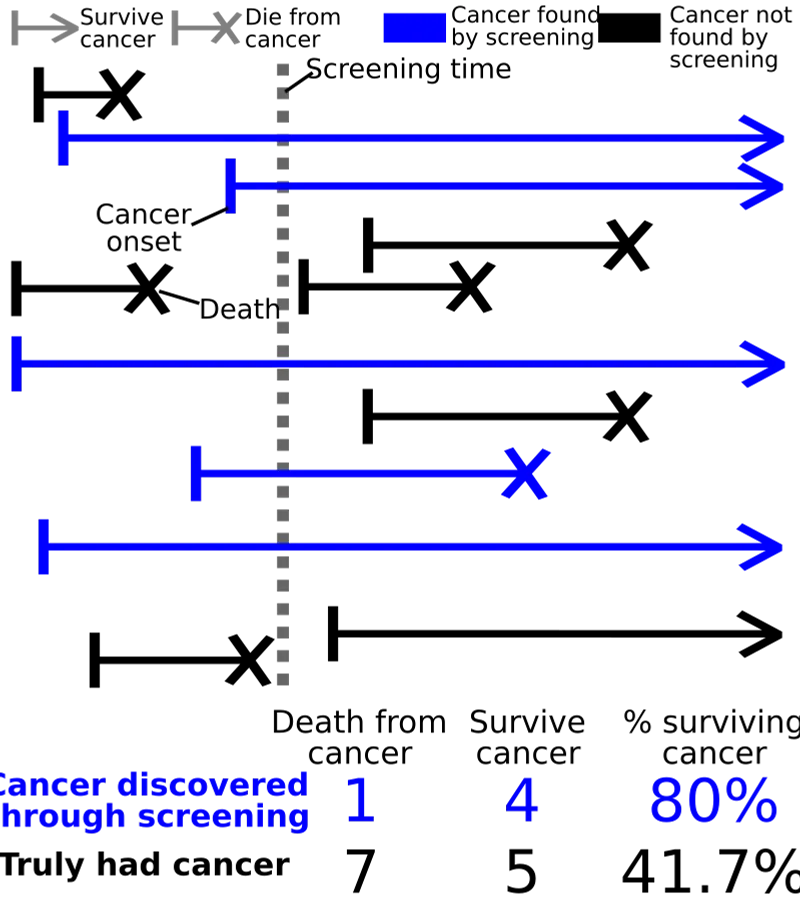
Screening for Disease Indian Medical PG Question 7: In the context of disease screening, which type of lead time is most beneficial for effective screening?
- A. Short lead time
- B. Both short and long lead times are beneficial
- C. Long lead time is beneficial for screening (Correct Answer)
- D. Lead time has no impact on screening effectiveness
Screening for Disease Explanation: ***Long lead time is beneficial for screening***
- **Long lead time** provides a greater window of opportunity between disease detection by screening and clinical symptom onset
- This extended asymptomatic detectable phase allows for **early intervention** when treatments are most effective
- Longer lead time correlates with improved prognosis and potential prevention of severe outcomes
- Essential criterion for effective screening programs per **Wilson-Jungner criteria**
*Short lead time*
- Limited time between disease detectability and clinical symptoms
- Reduces screening effectiveness as disease progresses rapidly
- Minimal opportunity for beneficial early intervention
*Both short and long lead times are beneficial*
- Only **long lead time** is beneficial for screening programs
- Short lead time actually limits screening effectiveness
- Screening benefit is directly proportional to duration of asymptomatic detectable phase
*Lead time has no impact on screening effectiveness*
- **Lead time is crucial** for determining screening program effectiveness
- Directly impacts the window for early detection and intervention
- Without adequate lead time, screening loses its preventive value
Screening for Disease Indian Medical PG Question 8: What is the most peripheral level of the healthcare system where the Reproductive and Child Health Programme is implemented?
- A. Anganwadi Center
- B. Sub-center (Correct Answer)
- C. District Level
- D. Block Level
Screening for Disease Explanation: ***Sub-center***
- The **Sub-center** is the most peripheral and first contact point between the primary healthcare system and the community.
- It is where basic Reproductive and Child Health (RCH) services, including **antenatal care**, **immunization**, and **family planning**, are delivered directly to the population.
*Anganwadi Center*
- **Anganwadi Centers** primarily focus on providing nutritional support, preschool education, and some health-related awareness.
- While they support RCH efforts (e.g., distributing supplements), they are not the main implementing level for comprehensive RCH services but rather a community-level support structure.
*District Level*
- The **District Level** (e.g., District Hospitals) serves as a referral center and provides specialized RCH services, monitoring, and program management.
- It is a higher tier that supervises and supports RCH programs, but the direct implementation at the community level happens below this.
*Block Level*
- The **Block Level** (e.g., Community Health Centers) provides comprehensive primary healthcare services and acts as a referral point for Primary Health Centers.
- While it plays a significant role in RCH service delivery and supervision, the services are actually implemented to the community at the Sub-center level, which is administratively below the block.
Screening for Disease Indian Medical PG Question 9: Which of the following is the most fundamental criterion that must be met by a disease before it is to be considered suitable for a screening programme?
1. The natural history of the disease should be adequately understood.
2. No effective treatment should exist for the disease.
3. The disease should not have a recognizable latent or asymptomatic stage.
4. There should be a test that can detect the disease prior to onset of signs and symptoms.
- A. 4. There should be a test that can detect the disease prior to onset of signs and symptoms.
- B. 3. The disease should not have a recognizable latent or asymptomatic stage.
- C. 1. The natural history of the disease should be adequately understood. (Correct Answer)
- D. 2. No effective treatment should exist for the disease.
Screening for Disease Explanation: ***The natural history of the disease should be adequately understood.***
* This is the **most fundamental criterion** because understanding the natural history (progression from asymptomatic to symptomatic disease) allows for the identification of a **critical window** for early intervention through screening.
* Without this knowledge, it's impossible to determine when to screen, what to screen for, or whether early detection will lead to a better outcome.
*There should be a test that can detect the disease prior to onset of signs and symptoms.*
* While important, the existence of a detectable test *before* symptoms is only useful if the **natural history** is understood, allowing for appropriate timing and interpretation of the test.
* A test without understanding the disease's progression might lead to **overdiagnosis** or diagnosis at a stage where intervention is no longer effective.
*The disease should not have a recognizable latent or asymptomatic stage.*
* This statement is incorrect; a disease *must* have a **recognizable latent or asymptomatic stage** to be suitable for screening.
* Screening aims to detect disease **before** symptoms appear, making the existence of such a stage essential for successful early intervention.
*No effective treatment should exist for the disease.*
* This statement is incorrect; for a screening program to be beneficial, an **effective treatment must exist** for the disease once detected.
* Screening without effective treatment options would merely lead to earlier diagnosis without improving patient outcomes, causing unnecessary anxiety and burden.
Screening for Disease Indian Medical PG Question 10: Which of the following is a true statement about screening tests for genetic diseases?
- A. Screening test has better accuracy than diagnostic test
- B. It is always invasive
- C. It defines risk of transmission of disease to the child (Correct Answer)
- D. Screening requires genetic mapping
Screening for Disease Explanation: ***Correct: It defines risk of transmission of disease to the child***
- Genetic screening aims to identify individuals or couples at risk of passing on **heritable genetic conditions** to their offspring.
- This information helps in **family planning** and provides prenatal diagnostic options if the risk is high.
- This is the **primary purpose** of genetic screening programs.
*Incorrect: Screening test has better accuracy than diagnostic test*
- **Screening tests** are designed to be broad and detect potential risks, often with lower specificity and sensitivity than diagnostic tests.
- **Diagnostic tests** are typically more accurate and definitive, confirming the presence or absence of a disease after a positive screening result.
*Incorrect: It is always invasive*
- Many genetic screening tests, such as **non-invasive prenatal screening (NIPS)** from maternal blood or carrier screening via saliva, are non-invasive or minimally invasive.
- While some diagnostic tests like **amniocentesis** or **chorionic villus sampling** are invasive, screening itself is not universally so.
*Incorrect: Screening requires genetic mapping*
- **Genetic mapping** refers to determining the relative positions of genes on a chromosome, which is a research tool for understanding genome organization.
- Genetic screening primarily involves testing for specific mutations or chromosomal abnormalities, not creating a comprehensive genetic map of an individual.
More Screening for Disease Indian Medical PG questions available in the OnCourse app. Practice MCQs, flashcards, and get detailed explanations.