Lipid Classification and Chemistry Indian Medical PG Practice Questions and MCQs
Practice Indian Medical PG questions for Lipid Classification and Chemistry. These multiple choice questions (MCQs) cover important concepts and help you prepare for your exams.
Lipid Classification and Chemistry Indian Medical PG Question 1: Which two enzymes are required for the beta oxidation of polyunsaturated fatty acids (PUFA)?
- A. Dienoyl CoA isomerase and Enoyl CoA isomerase
- B. Dienoyl CoA isomerase and 2,4 Dienoyl CoA reductase
- C. Enoyl CoA isomerase and Enoyl CoA reductase
- D. Enoyl CoA isomerase and 2,4 Dienoyl CoA reductase (Correct Answer)
Lipid Classification and Chemistry Explanation: **Enoyl CoA isomerase and 2,4 Dienoyl CoA reductase**
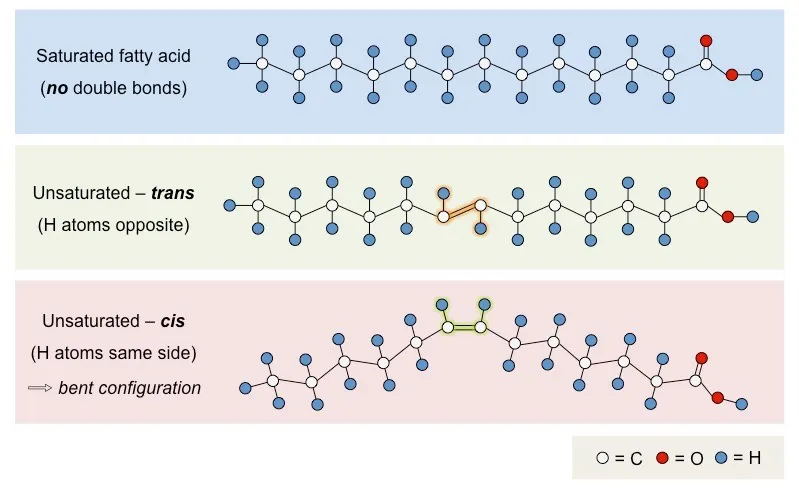
- **Enoyl CoA isomerase** is necessary to convert *cis* double bonds to *trans* double bonds at the 3,4 position, which allows the beta-oxidation enzymes to continue processing the fatty acid.
- **2,4 Dienoyl CoA reductase** is required to reduce *cis-2, cis-4* or *trans-2, cis-4* dienoyl intermediates into a single *trans-3* enoyl CoA, which can then be isomerized by enoyl CoA isomerase.
*Dienoyl CoA isomerase and Enoyl CoA isomerase*
- This option is incorrect because **Dienoyl CoA isomerase** is not a commonly recognized single enzyme directly involved in PUFA beta-oxidation in the way described. The key is to reduce a diene, which reductase does.
- While **Enoyl CoA isomerase** is crucial, pairing it with another isomerase in this context does not fully address the reduction step needed for certain PUFAs.
*Dienoyl CoA isomerase and 2,4 Dienoyl CoA reductase*
- This option incorrectly names **Dienoyl CoA isomerase** as one of the two main required enzymes. A 2,4 Dienoyl CoA reductase does exist.
- While **2,4 Dienoyl CoA reductase** is essential, the other enzyme should be Enoyl CoA isomerase to handle the initial *cis* to *trans* isomerizations.
*Enoyl CoA isomerase and Enoyl CoA reductase*
- This option is incorrect because **Enoyl CoA reductase** without the "2,4" prefix generally refers to the enzyme involved in fatty acid synthesis, not beta-oxidation of PUFAs.
- **Enoyl CoA isomerase** is correctly identified, but the other enzyme specifically for PUFA oxidation is the **2,4 Dienoyl CoA reductase**.
Lipid Classification and Chemistry Indian Medical PG Question 2: The major carrier of cholesterol in plasma is:
- A. Very-Low-Density Lipoprotein (VLDL)
- B. Low-Density Lipoprotein (LDL) (Correct Answer)
- C. Chylomicrons
- D. High-Density Lipoprotein (HDL)
Lipid Classification and Chemistry Explanation: ***Low-Density Lipoprotein (LDL)***
- **LDL** is the **major carrier of cholesterol in plasma**, transporting approximately **60-70% of total plasma cholesterol**.
- It is primarily responsible for delivering **cholesterol** from the liver to peripheral tissues for **membrane synthesis**, **steroid hormone production**, and other cellular functions.
- LDL cholesterol levels are the primary target for cardiovascular risk assessment and management.
*Very-Low-Density Lipoprotein (VLDL)*
- **VLDL** primarily transports **triglycerides** (55-65% of its content) synthesized in the liver to peripheral tissues.
- While it contains some cholesterol (~10-15%), its main function is **triglyceride delivery**, and it serves as a precursor to LDL in the circulation.
*Chylomicrons*
- **Chylomicrons** are responsible for transporting **dietary triglycerides** and **cholesterol** from the intestines to tissues.
- They are the largest lipoproteins and primarily transport **exogenous (dietary) lipids**.
- Cholesterol represents only 3-5% of chylomicron content.
*High-Density Lipoprotein (HDL)*
- **HDL** carries approximately **20-30% of plasma cholesterol** and plays a crucial role in **reverse cholesterol transport**.
- It collects excess cholesterol from peripheral tissues and returns it to the liver for excretion.
- While functionally important for cholesterol homeostasis (protective against atherosclerosis), it carries significantly less cholesterol than LDL.
Lipid Classification and Chemistry Indian Medical PG Question 3: A person switches from a high-fat diet to a low-fat diet with a compensatory increase in carbohydrates to maintain the same caloric intake. Which lipoprotein is likely to increase?
- A. Chylomicron
- B. IDL
- C. HDL
- D. VLDL (Correct Answer)
Lipid Classification and Chemistry Explanation: ***VLDL***
- A low-fat diet with increased **carbohydrates** can lead to increased hepatic synthesis of triglycerides, which are then packaged into **VLDL** particles for transport from the liver. This is because excess carbohydrates can be converted to fatty acids and then to triglycerides in the liver.
- The liver's increased triglyceride production, driven by abundant **glucose** from carbohydrates, directly corresponds to a rise in **VLDL** secretion to export these lipids.
*Chylomicron*
- **Chylomicrons** primarily transport **dietary fats** (exogenous triglycerides) absorbed from the intestine.
- Switching to a low-fat diet would typically lead to a *decrease* in chylomicron production, as less dietary fat is available for absorption.
*IDL*
- **IDL** (Intermediate-Density Lipoprotein) is a remnant of **VLDL** metabolism, formed after VLDL loses some triglycerides.
- While VLDL may increase, leading to *more* IDL formation, IDL itself is not the primary component that *increases* directly due to high carbohydrate intake; rather, the precursor **VLDL** is directly affected.
*HDL*
- **HDL** (High-Density Lipoprotein) is involved in **reverse cholesterol transport**, picking up excess cholesterol from peripheral tissues and returning it to the liver.
- High carbohydrate intake, especially refined carbohydrates, can sometimes lead to a *decrease* in HDL levels, not an increase.
Lipid Classification and Chemistry Indian Medical PG Question 4: Which of the following statements about pulmonary surfactant is correct?
- A. Maintain alveolar integrity (Correct Answer)
- B. Secreted by type I pneumocytes
- C. A structural protein in epithelial cells
- D. A component of mucus
Lipid Classification and Chemistry Explanation: **Maintain alveolar integrity**
- Pulmonary surfactant **reduces surface tension** at the air-liquid interface within the alveoli, preventing their collapse during expiration.
- This function is crucial for maintaining **alveolar stability** and efficient gas exchange.
*Secreted by type I pneumocytes*
- Pulmonary surfactant is primarily secreted by **type II pneumocytes**, also known as great alveolar cells, not type I pneumocytes.
- **Type I pneumocytes** are responsible for gas exchange due to their thin, flat structure.
*A structural protein in epithelial cells*
- Pulmonary surfactant is a complex mixture of **lipids (primarily phospholipids)** and proteins, not solely a structural protein.
- Its primary role is functional (reducing surface tension), not structural support for epithelial cells.
*A component of mucus*
- Pulmonary surfactant is an independent substance found within the alveolar lining, distinct from the **mucus** produced by goblet cells in the airways.
- Mucus primarily functions in trapping foreign particles and is found in larger airways.
Lipid Classification and Chemistry Indian Medical PG Question 5: Which is the first steroid intermediate formed in the conversion of cholesterol to steroid hormones?
- A. Glucocorticoid
- B. Mineralocorticoid
- C. Estradiol
- D. Pregnenolone (Correct Answer)
Lipid Classification and Chemistry Explanation: ***Pregnenolone***
- **Pregnenolone** is the **first steroid intermediate** formed from **cholesterol** in steroidogenesis
- The conversion occurs in mitochondria via the **cholesterol side-chain cleavage enzyme (P450scc/CYP11A1)**
- This is the **rate-limiting step** in steroid hormone biosynthesis
- From pregnenolone, all other steroid hormones are subsequently synthesized
*Progesterone*
- Progesterone is the **second intermediate**, formed from pregnenolone
- It serves as a precursor for glucocorticoids, mineralocorticoids, and androgens
- Not the first intermediate from cholesterol
*Glucocorticoid*
- Glucocorticoids (e.g., cortisol) are **end products**, not intermediates
- Formed several steps downstream from cholesterol via pregnenolone and progesterone
*Mineralocorticoid*
- Mineralocorticoids (e.g., aldosterone) are **end products**, not intermediates
- Synthesized from progesterone through multiple enzymatic steps
*Estradiol*
- Estradiol is a **late-stage product** synthesized from androgens
- Requires aromatase enzyme for conversion from testosterone
- Multiple steps removed from the initial cholesterol conversion
Lipid Classification and Chemistry Indian Medical PG Question 6: Which of the following is a true difference between gangliosides and cerebrosides?
- A. Specific carbohydrate composition
- B. Charge difference (Correct Answer)
- C. Location in the nervous system
- D. Presence of glucose
Lipid Classification and Chemistry Explanation: ***Charge difference***
- **Gangliosides** contain **sialic acid (N-acetylneuraminic acid)** residues, which are negatively charged, making gangliosides **anionic**.
- **Cerebrosides** are **neutral glycosphingolipids** as they lack charged sugar residues.
*Specific carbohydrate composition*
- While both have carbohydrate components, referring to "specific carbohydrate composition" as the *true difference* is too broad. Both have characteristic sugar groups, but the **presence of sialic acid** in gangliosides is the key differentiator in charge.
- Cerebrosides typically contain a single sugar (either glucose or galactose), whereas gangliosides have a more complex oligosaccharide chain including sialic acid.
*Presence of glucose*
- Both cerebrosides (specifically **glucocerebrosides**) and gangliosides can contain **glucose** in their carbohydrate moieties.
- This is not a distinguishing feature; the *type* and *arrangement* of sugars, particularly the presence of sialic acid, are more specific.
*Location in the nervous system*
- Both gangliosides and cerebrosides are abundant in the **nervous system**, particularly in cell membranes.
- Their presence in the nervous system is a similarity, not a differentiating factor.
Lipid Classification and Chemistry Indian Medical PG Question 7: Diffusion of lipid-insoluble substances across the cell membrane depends on all of the following factors except which one?
- A. Hydrated radius
- B. Electrical charge
- C. Lipid solubility (Correct Answer)
- D. Shape
Lipid Classification and Chemistry Explanation: ***Lipid solubility***
- This property is crucial for substances that **readily diffuse directly through the lipid bilayer**.
- Lipid-insoluble substances, by definition, **cannot diffuse through the lipid bilayer based on their lipid solubility**, requiring other mechanisms or factors like channels or carriers.
*Hydrated radius*
- The **size of a hydrated ion or molecule** is a critical determinant for its ability to pass through specific protein channels or pores in the cell membrane.
- A larger hydrated radius impedes passage through narrow channels, directly affecting the diffusion of lipid-insoluble substances.
*Electrical charge*
- For **charged lipid-insoluble substances** (ions), their movement across the membrane is significantly influenced by the **transmembrane electrical potential difference**.
- The electrical gradient can either facilitate or hinder the diffusion of these substances through channels or transporters.
*Shape*
- The **three-dimensional configuration** of a lipid-insoluble substance can affect its ability to bind to and pass through specific protein channels or carrier proteins.
- A substance's shape must complement the architecture of the transport mechanism for efficient diffusion.
Lipid Classification and Chemistry Indian Medical PG Question 8: Which of the following statements about chylomicrons is true?
- A. Chylomicrons are unrelated to triglyceride transport.
- B. Chylomicrons primarily contain cholesterol.
- C. Chylomicrons primarily contain triglycerides (TGs). (Correct Answer)
- D. Chylomicrons do not primarily contain triglycerides.
Lipid Classification and Chemistry Explanation: ***Chylomicrons primarily contain triglycerides (TGs)***
- **Chylomicrons** are the largest and least dense lipoproteins, primarily responsible for transporting **dietary triglycerides** absorbed from the intestine to peripheral tissues.
- They are synthesized in the **enterocytes** of the small intestine and released into the lymphatic system.
- Approximately **85-90%** of a chylomicron's mass is composed of **triglycerides**, making them the primary carriers of exogenous fats.
*Chylomicrons primarily contain cholesterol*
- While chylomicrons do contain some **cholesterol**, it is a minor component (~3-5%) compared to their predominant content, which is **triglycerides**.
- Lipoproteins like **LDL** and **HDL** are primarily responsible for cholesterol transport.
*Chylomicrons are unrelated to triglyceride transport*
- This statement is incorrect; chylomicrons are fundamentally involved in the **transport of dietary triglycerides** from the intestines to various tissues in the body.
- After lipoprotein lipase acts on chylomicrons in peripheral tissues, triglycerides are hydrolyzed and fatty acids are taken up by tissues.
*Chylomicrons do not primarily contain triglycerides*
- This statement directly contradicts the main function and composition of chylomicrons, which are **rich in triglycerides**.
- Without triglycerides as their primary content, chylomicrons would not be able to fulfill their physiological role in lipid transport.
Lipid Classification and Chemistry Indian Medical PG Question 9: Which protein hormone is often referred to as the 'guardian angel against obesity' due to its role in regulating metabolism?
- A. Adiponectin (Correct Answer)
- B. Fibronectin
- C. High-Density Lipoprotein (HDL)
- D. Insulin
Lipid Classification and Chemistry Explanation: ***Adiponectin***
- **Adiponectin** is a hormone secreted by **adipose tissue** that plays a crucial role in regulating glucose and fatty acid metabolism, increasing **insulin sensitivity**, and decreasing inflammation.
- Its levels are inversely correlated with body fat percentage; individuals with obesity tend to have lower adiponectin levels, leading to its nickname as the 'guardian angel against obesity'.
*Fibronectin*
- **Fibronectin** is a glycoprotein involved in cell adhesion, growth, migration, and differentiation, and is a key component of the **extracellular matrix**.
- It does not primarily function in metabolic regulation or body weight control, unlike adiponectin.
*High-Density Lipoprotein (HDL)*
- **HDL** is a type of lipoprotein that transports cholesterol from peripheral tissues back to the liver, a process known as **reverse cholesterol transport**.
- While beneficial for cardiovascular health, HDL is a lipid-carrying particle, not a protein hormone, and its primary role is not in metabolic regulation or direct obesity prevention.
*Insulin*
- **Insulin** is a peptide hormone produced by the pancreas that regulates carbohydrate and fat metabolism, primarily by facilitating glucose uptake from the blood into cells.
- While essential for metabolism, high levels of insulin in the context of insulin resistance can contribute to obesity, rather than act against it.
Lipid Classification and Chemistry Indian Medical PG Question 10: Which of the following is not a phospholipid ?
- A. Lecithin
- B. Plasmalogen
- C. Cardiolipin
- D. Ganglioside (Correct Answer)
Lipid Classification and Chemistry Explanation: ***Ganglioside***
- Gangliosides are a type of **glycosphingolipid** because their structure includes a ceramide (a sphingoid base linked to a fatty acid) and a carbohydrate portion with one or more **sialic acid** residues, but no phosphate group.
- They are primarily found in **nerve cell membranes** and are crucial for cell-cell recognition and signaling, differentiating them from phospholipids which contain a phosphate group.
*Lecithin*
- Lecithin, specifically **phosphatidylcholine**, is a common phospholipid characterized by a **phosphate group** and a **choline head group** attached to a diacylglycerol backbone.
- It plays vital roles in cell membrane structure and function and is an important emulsifier.
*Plasmalogen*
- Plasmalogens are a class of phospholipids characterized by a **vinyl ether linkage** at the *sn*-1 position of the glycerol backbone, instead of the typical ester linkage found in other phospholipids.
- They retain the defining **phosphate group** that classifies them as phospholipids.
*Cardiolipin*
- Cardiolipin is a unique phospholipid composed of **two phosphatidic acid moieties** connected by a glycerol molecule, resulting in four fatty acid chains and two phosphate groups.
- It is predominantly found in the **inner mitochondrial membrane**, essential for mitochondrial function.
More Lipid Classification and Chemistry Indian Medical PG questions available in the OnCourse app. Practice MCQs, flashcards, and get detailed explanations.