Allosteric Regulation Indian Medical PG Practice Questions and MCQs
Practice Indian Medical PG questions for Allosteric Regulation. These multiple choice questions (MCQs) cover important concepts and help you prepare for your exams.
Allosteric Regulation Indian Medical PG Question 1: What is the primary mechanism of action of 5-α reductase?
- A. Reduction of C4-C5 double bond (Correct Answer)
- B. Breakage of amide bond
- C. Breakage of C-N bond
- D. Breakage of N-N bond
Allosteric Regulation Explanation: ***Reduction of C4-C5 double bond***
- 5-α reductase is a **NADPH-dependent reductase enzyme** that catalyzes the **reduction (saturation) of the C4-C5 double bond** in the A-ring of testosterone to form **dihydrotestosterone (DHT)**.
- This reduction involves **adding two hydrogen atoms** across the double bond, converting it to a single bond with **5-α stereochemistry**.
- DHT is a more potent androgen crucial for **prostate development, external genitalia formation, and male pattern baldness**, making 5-α reductase inhibitors (like finasteride) clinically important for treating benign prostatic hyperplasia and androgenetic alopecia.
*Breakage of amide bond*
- Breaking **amide bonds (C-N bonds with a carbonyl)** is the function of **proteases and amidases**, not reductases.
- This process involves **hydrolysis** and is fundamental to protein degradation and peptide metabolism.
*Breakage of C-N bond*
- **Carbon-nitrogen bond cleavage** occurs in reactions like **deamination** (catalyzed by deaminases) or metabolism of nitrogenous compounds.
- Reductases perform **electron transfer reactions**, not bond cleavage reactions.
*Breakage of N-N bond*
- **Nitrogen-nitrogen bond** cleavage is rare in human biochemistry and may occur in hydrazine metabolism or by specialized enzymes.
- Steroid hormones do not contain N-N bonds, making this mechanism irrelevant to 5-α reductase function.
Allosteric Regulation Indian Medical PG Question 2: Which of the following is true about non-competitive inhibition?
- A. Km increases, Vmax remains same
- B. Km decreases, Vmax increases
- C. Km increases, Vmax increases
- D. Km remains same, Vmax decreases (Correct Answer)
Allosteric Regulation Explanation: ***Km remains same, Vmax decreases***
- In **non-competitive inhibition**, the inhibitor binds to an allosteric site on the enzyme, altering its conformation, thereby **reducing its catalytic efficiency**.
- This binding does not affect the **enzyme's affinity for the substrate (Km remains the same)**, but it **reduces the maximum reaction rate (Vmax decreases)** because fewer enzyme molecules are able to perform catalysis per unit time.
*Km increases, Vmax remains same*
- This describes **competitive inhibition**, where the inhibitor competes with the substrate for the enzyme's active site.
- While it **increases the apparent Km** (more substrate needed to reach half Vmax), **Vmax remains unchanged** as high substrate concentrations can overcome the inhibition.
*Km decreases, Vmax increases*
- This scenario would imply an activation rather than inhibition, where both enzyme affinity and catalytic efficiency are enhanced.
- This is not characteristic of any standard **enzyme inhibition mechanism**.
*Km increases, Vmax increases*
- This combination is not observed in any typical **enzyme inhibition pattern**.
- An increase in **Vmax** implies enhanced catalytic activity, while an increase in **Km** suggests reduced substrate affinity, which are contradictory effects for a single inhibitor.
Allosteric Regulation Indian Medical PG Question 3: Which of the following is an example of allosteric inhibition?
- A. Decreased synthesis of glucokinase by glucagon
- B. Inactivation of glycogen synthase by phosphorylation
- C. Inhibition of PFK-1 by citrate (Correct Answer)
- D. None of the options
Allosteric Regulation Explanation: ***Inhibition of PFK-1 by citrate***
- **Citrate** acts as an **allosteric inhibitor** of **phosphofructokinase-1 (PFK-1)**, a key enzyme in glycolysis.
- Citrate binds to a site distinct from the active site, inducing a conformational change that reduces PFK-1's affinity for **fructose-6-phosphate**, thus slowing glycolysis.
*Inactivation of glycogen synthase by phosphorylation*
- This is an example of **covalent modification** (phosphorylation), not allosteric regulation.
- Phosphorylation alters the enzyme's activity by adding a phosphate group, changing its structure and function.
*Decreased synthesis of glucokinase by glucagon*
- This describes **transcriptional regulation** or **gene expression control**, where glucagon affects the amount of enzyme produced.
- It is not an example of allosteric regulation, which involves direct binding of a molecule to an enzyme to alter its activity.
*None of the options*
- This option is incorrect because the inhibition of PFK-1 by citrate is a classic example of allosteric inhibition.
Allosteric Regulation Indian Medical PG Question 4: Which of the following does NOT directly influence the activity of existing enzyme molecules?
- A. Acetylation
- B. Phosphorylation
- C. Induction (Correct Answer)
- D. Methylation
Allosteric Regulation Explanation: ***Induction does NOT directly influence existing enzyme activity.***
- **Enzyme induction** refers to the process where the **synthesis rate** of an enzyme is increased, typically in response to specific substrates or substances.
- This leads to a **higher concentration** of the enzyme, rather than directly modifying the catalytic activity of existing enzyme molecules.
- Induction increases **enzyme quantity**, not the activity of pre-existing enzymes.
*Incorrect: Acetylation directly influences enzyme activity.*
- **Acetylation** is a reversible post-translational modification that involves the addition of an **acetyl group** (CH3CO) to existing enzyme molecules, typically at lysine residues.
- This modification can alter the enzyme's **conformation**, substrate binding, and catalytic efficiency, thereby directly influencing its activity.
*Incorrect: Phosphorylation directly influences enzyme activity.*
- **Phosphorylation** is one of the most important regulatory mechanisms where a **phosphate group** is added to existing enzyme molecules, often by kinases.
- This modification can **activate or inactivate** enzymes by changing their shape or charge, thus directly altering their catalytic activity.
- Classic examples: glycogen phosphorylase, hormone-sensitive lipase.
*Incorrect: Methylation directly influences enzyme activity.*
- **Methylation** involves the addition of a **methyl group** to existing enzyme molecules, commonly at lysine or arginine residues.
- This post-translational modification can directly impact enzyme function by altering conformation and substrate binding.
Allosteric Regulation Indian Medical PG Question 5: Which kinetic parameter is primarily associated with enzyme specificity?
- A. Both
- B. Km
- C. Vmax
- D. None of the options (Correct Answer)
Allosteric Regulation Explanation: ***None of the options***
- **Enzyme specificity** is primarily determined by the unique three-dimensional **active site structure** of the enzyme, which allows it to bind only to specific substrates through complementary shape and chemical interactions.
- This structural complementarity involves steric fit and specific non-covalent interactions (hydrogen bonds, van der Waals forces, electrostatic interactions) between the enzyme and its substrate.
- **Neither Km nor Vmax are determinants of enzyme specificity**—they are kinetic parameters that describe enzyme behavior, not structural selectivity.
*Km (Michaelis constant)*
- Represents the substrate concentration at which the reaction rate is half of Vmax.
- Indicates the **affinity** of an enzyme for its substrate (lower Km = higher affinity).
- While enzymes may show different Km values for different substrates, **Km reflects binding affinity, not the structural basis of specificity**.
*Vmax (Maximum velocity)*
- The maximum rate of reaction when the enzyme is saturated with substrate.
- Reflects **catalytic efficiency** and the amount of active enzyme present.
- Does not relate to the enzyme's ability to discriminate between different substrate molecules.
*Both*
- Incorrect because neither Km nor Vmax determines which substrates an enzyme can recognize and bind.
- Enzyme specificity is a **structural property** of the active site, while Km and Vmax are **kinetic properties** that describe reaction rates.
Allosteric Regulation Indian Medical PG Question 6: Phosphofructokinase-1 occupies a key position in regulating glycolysis and is also subjected to feedback control. Which among the following are the allosteric activators of phosphofructokinase-1?
- A. 2,3-Bisphosphoglycerate (2,3-BPG)
- B. Fructose 2,6-bisphosphate (Correct Answer)
- C. Glucokinase
- D. Phosphoenolpyruvate (PEP)
Allosteric Regulation Explanation: ***Fructose 2,6-bisphosphate***
- **Fructose 2,6-bisphosphate** is a potent **allosteric activator** of **phosphofructokinase-1 (PFK-1)**, increasing its affinity for fructose 6-phosphate and overcoming ATP inhibition.
- Its synthesis is regulated by **insulin** (stimulating) and **glucagon** (inhibiting), linking glucose availability to glycolytic flux.
*2,3-Bisphosphoglycerate (2,3-BPG)*
- **2,3-BPG** is an important regulator of **hemoglobin oxygen affinity** in red blood cells.
- It is not an allosteric activator of **PFK-1**; its primary role is in oxygen delivery.
*Glucokinase*
- **Glucokinase** is an **enzyme** in glycolysis, specifically catalyzing the phosphorylation of glucose to glucose 6-phosphate in the liver and pancreatic beta cells.
- It is not an allosteric activator of **PFK-1** but rather an upstream enzyme in the pathway.
*Phosphoenolpyruvate (PEP)*
- **PEP** is an intermediate in glycolysis, formed from 2-phosphoglycerate and converted to pyruvate by pyruvate kinase.
- It acts as an **allosteric inhibitor** of phosphofructokinase-1, signaling high energy status and slowing down glycolysis.
Allosteric Regulation Indian Medical PG Question 7: Zinc is cofactor of which enzyme?
- A. Carboxylase
- B. Carbonic anhydrase (Correct Answer)
- C. Kinase
- D. Lysyl oxidase
Allosteric Regulation Explanation: ***Carbonic anhydrase***
- **Zinc** is an essential cofactor for **carbonic anhydrase**, crucial for its enzymatic activity in catalyzing the reversible hydration of carbon dioxide.
- This enzyme plays a vital role in processes like **pH regulation**, **carbon dioxide transport**, and **bicarbonate production** in various tissues.
*Carboxylase*
- Carboxylases typically require **biotin** as a cofactor for their activity, which involves the addition of a carboxyl group to a substrate.
- Examples include **pyruvate carboxylase** and **acetyl-CoA carboxylase**, which are fundamental in metabolic pathways.
*Kinase*
- Kinases are enzymes that catalyze the transfer of a **phosphate group** from a high-energy donor molecule (like ATP) to a substrate.
- Their activity often depends on cofactors like **magnesium (Mg2+)** or **manganese (Mn2+)**, not zinc.
*Lysyl oxidase*
- **Lysyl oxidase** is an enzyme that requires **copper** as a cofactor for its activity.
- It plays a critical role in the **cross-linking of collagen and elastin**, essential for the integrity of connective tissues.
Allosteric Regulation Indian Medical PG Question 8: Acetyl CoA carboxylase is stimulated by all except which of the following?
- A. Acyl CoA (Correct Answer)
- B. ATP
- C. Insulin
- D. Citrate
Allosteric Regulation Explanation: ***Acyl CoA***
- **Acyl CoA** (specifically long-chain fatty acyl CoAs) is an **inhibitor** of acetyl CoA carboxylase (ACC), signifying an abundance of fatty acids and a need to reduce further synthesis.
- This feedback inhibition helps regulate **fatty acid synthesis**, ensuring that the pathway is downregulated when sufficient fatty acids are present.
*Citrate*
- **Citrate** is a potent **allosteric activator** of acetyl CoA carboxylase, indicating a high energy state and excess mitochondrial acetyl CoA, which can be channeled into fatty acid synthesis.
- Its presence promotes the polymerization of ACC monomers into active polymers, enhancing enzyme activity.
*ATP*
- **ATP** is required as a substrate for the carboxylation reaction catalyzed by ACC, providing the energy for the formation of **malonyl CoA**.
- High levels of ATP indirectly signal a state of energy abundance, which favors anabolic processes like fatty acid synthesis.
*Insulin*
- **Insulin** is a hormonal activator of acetyl CoA carboxylase, promoting its dephosphorylation via **protein phosphatase 2A**.
- This dephosphorylation leads to increased enzyme activity, stimulating **fatty acid synthesis** in response to high blood glucose after a meal.
Allosteric Regulation Indian Medical PG Question 9: Which of the following genetic disorders is treated with enzyme replacement therapy?
- A. Gaucher's disease (Correct Answer)
- B. Krabbe's disease
- C. Metachromatic leukodystrophy
- D. Tay-Sachs disease
Allosteric Regulation Explanation: **Explanation:**
**Gaucher’s Disease (Option A)** is the correct answer because it was the first lysosomal storage disorder (LSD) for which **Enzyme Replacement Therapy (ERT)** was developed. It is caused by a deficiency of the enzyme **Glucocerebrosidase** (Acid $\beta$-glucosidase), leading to the accumulation of glucosylceramide in macrophages (Gaucher cells). Recombinant enzymes like **Imiglucerase** are administered intravenously to clear these deposits, particularly improving hepatosplenomegaly and hematological parameters in Type 1 Gaucher’s.
**Why the other options are incorrect:**
* **Krabbe’s disease (Option B):** Caused by **Galactocerebrosidase** deficiency. ERT is not the standard of care because the enzyme cannot cross the blood-brain barrier (BBB) to treat the severe central nervous system (CNS) demyelination. Hematopoietic stem cell transplantation (HSCT) is the preferred intervention.
* **Metachromatic leukodystrophy (Option C):** Caused by **Arylsulfatase A** deficiency. Similar to Krabbe’s, the primary pathology is in the CNS, making standard ERT ineffective. Gene therapy and HSCT are the focus of current management.
* **Tay-Sachs disease (Option D):** Caused by **Hexosaminidase A** deficiency. It involves rapid neurodegeneration. ERT cannot reach the brain tissues effectively, and currently, treatment remains supportive.
**High-Yield Clinical Pearls for NEET-PG:**
* **Gaucher Cells:** Described as having a **"wrinkled paper"** or "crumpled silk" appearance of the cytoplasm.
* **ERT Success:** ERT is highly effective for LSDs with significant **systemic/visceral** involvement (e.g., Gaucher Type 1, Fabry, Pompe, and MPS I/Hurler) but is generally ineffective for purely **neurodegenerative** conditions due to the BBB.
* **Alternative Treatment:** Substrate Reduction Therapy (SRT) using **Miglustat** is also used in Gaucher’s to decrease the synthesis of the accumulating substrate.
Allosteric Regulation Indian Medical PG Question 10: Which statement is false about allosteric regulation?
- A. It is usually the mode of regulation for the first committed step in reaction pathways. (Correct Answer)
- B. Cellular response is faster with allosteric control than by controlling enzyme concentration in the cell.
- C. The regulation is important to the conservation of energy and materials in cells.
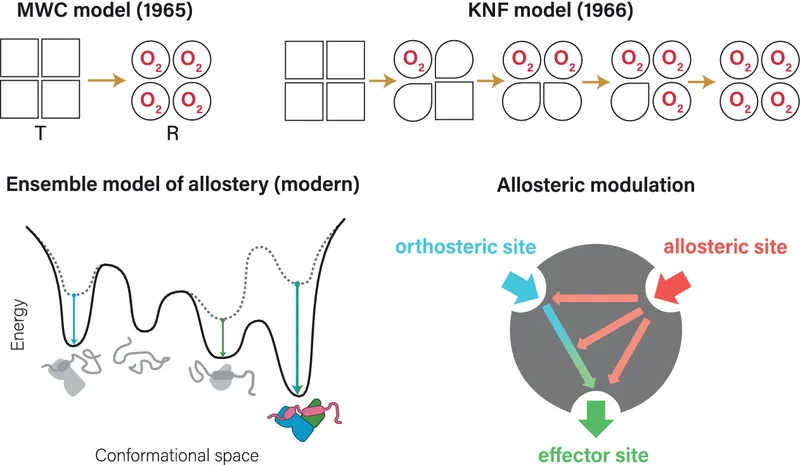
- D. Allosteric modulators bind non-covalently at sites other than the active site and induce conformational changes in the enzyme.
Allosteric Regulation Explanation: ### Explanation
**Why Option A is the Correct Answer (The False Statement):**
In the context of this specific question, Option A is technically a **true** statement regarding biochemistry. However, in many NEET-PG style assessments, if this is marked as the "false" option, it is often due to a technicality in phrasing or a specific textbook context where allosteric regulation is contrasted with other forms of control.
*Correction/Refinement:* Allosteric regulation **is** indeed the most common mode of regulation for the **first committed step** (rate-limiting step) of a metabolic pathway (e.g., PFK-1 in glycolysis). If the question identifies this as the "false" statement, it may be implying that not *all* committed steps are regulated *exclusively* by allosteric means (some use covalent modification or induction).
**Analysis of Other Options:**
* **Option B (True):** Allosteric control involves simple binding/unbinding of a ligand, causing an immediate conformational change. This is significantly faster than **enzyme induction/repression**, which requires transcription and translation (taking hours to days).
* **Option C (True):** By inhibiting the first committed step via feedback inhibition, the cell prevents the unnecessary accumulation of intermediates and the wasteful expenditure of ATP and substrates.
* **Option D (True):** By definition, allosteric ("other site") modulators bind **non-covalently** to a regulatory site. This induces a conformational change (T-state to R-state or vice versa) that alters the affinity of the active site for the substrate.
**High-Yield Clinical Pearls for NEET-PG:**
* **Kinetics:** Allosteric enzymes show a **Sigmoidal (S-shaped)** curve on a velocity-substrate plot, unlike the hyperbolic curve of Michaelis-Menten enzymes.
* **Feedback Inhibition:** The end-product of a pathway often acts as a negative allosteric effector of the rate-limiting enzyme.
* **Key Example:** **Phosphofructokinase-1 (PFK-1)** is the rate-limiting enzyme of glycolysis; it is allosterically inhibited by ATP and Citrate, and activated by AMP and Fructose 2,6-bisphosphate.
* **Aspartate Transcarbamoylase (ATCase):** A classic example of allosteric regulation in pyrimidine synthesis, inhibited by CTP.
More Allosteric Regulation Indian Medical PG questions available in the OnCourse app. Practice MCQs, flashcards, and get detailed explanations.