Molecular Mechanisms in Development Indian Medical PG Practice Questions and MCQs
Practice Indian Medical PG questions for Molecular Mechanisms in Development. These multiple choice questions (MCQs) cover important concepts and help you prepare for your exams.
Molecular Mechanisms in Development Indian Medical PG Question 1: Ewing's sarcoma is characterized by:
- A. Small round blue cell tumor with CD99 positivity (Correct Answer)
- B. Osteoid formation by malignant cells
- C. Cartilage matrix production
- D. Giant cell proliferation
Molecular Mechanisms in Development Explanation: ***Ewing's sarcoma is characterized by:***
- **Small round blue cell tumor** with characteristic **CD99 positivity** on immunohistochemistry.
- Presence of **t(11;22) translocation**, which leads to the **EWS-FLI1 fusion protein**.
*Osteoid formation by malignant cells*
- This is a hallmark feature of **osteosarcoma**, where malignant osteoblasts directly produce **osteoid** [1].
- **Ewing's sarcoma** does not produce osteoid; it's a primitive neuroectodermal tumor.
*Cartilage matrix production*
- This is characteristic of **chondrosarcoma**, a malignant tumor of cartilage-forming cells [2].
- **Ewing's sarcoma** is a bone tumor of different cellular origin and does not produce cartilage.
*Giant cell proliferation*
- While giant cells can be present in some bone tumors, **prominent giant cell proliferation** is primarily seen in **giant cell tumors of bone**, which are typically benign but locally aggressive.
- **Ewing's sarcoma** is a small round blue cell tumor and not characterized by abundant giant cells.
**References:**
[1] Cross SS. Underwood's Pathology: A Clinical Approach. 6th ed. Common Clinical Problems From Osteoarticular And Connective Tissue Disease, pp. 673-674.
[2] Kumar V, Abbas AK, et al.. Robbins and Cotran Pathologic Basis of Disease. 9th ed. Bones, Joints, and Soft Tissue Tumors, pp. 1204-1205.
Molecular Mechanisms in Development Indian Medical PG Question 2: The labia majora develop from which embryological structure?
- A. Urogenital folds
- B. Labioscrotal swellings (Correct Answer)
- C. Müllerian ducts
- D. Genital tubercle
Molecular Mechanisms in Development Explanation: ***Labioscrotal swellings***
- The **labia majora** develop from the **labioscrotal swellings**, which are paired bilateral structures that appear around week 9-10 of development [1].
- These swellings arise lateral to the urogenital folds and do not fuse in females, forming the labia majora.
- In males, these same structures fuse in the midline to form the scrotum.
- This is a key example of **sexual differentiation** in embryological development [1].
*Urogenital folds*
- The urogenital folds form the **labia minora** in females, not the labia majora.
- In males, these folds fuse to form the ventral aspect of the penis and enclose the penile urethra.
*Genital tubercle*
- The genital tubercle forms the **clitoris** in females and the **glans penis** in males.
- It does not contribute to the formation of the labia majora.
*Müllerian ducts*
- The Müllerian (paramesonephric) ducts form the **upper vagina, uterus, and fallopian tubes** in females.
- They are internal structures and do not contribute to external genitalia like the labia majora.
Molecular Mechanisms in Development Indian Medical PG Question 3: What is the pattern of inheritance in neural tube defects?
- A. Multifactorial inheritance (Correct Answer)
- B. Autosomal recessive
- C. X-linked dominant
- D. Autosomal dominant
- E. X-linked recessive
Molecular Mechanisms in Development Explanation: ***Multifactorial inheritance***
- Neural tube defects (NTDs) are a classic example of **multifactorial inheritance**, meaning they result from a combination of **genetic predispositions** and **environmental factors**.
- Risk is influenced by multiple genes, and environmental factors like **folate deficiency** play a significant role.
*Autosomal recessive*
- This pattern involves two copies of an altered gene to cause disease, typically resulting in a **25% recurrence risk** for siblings.
- While some rare isolated NTDs might have an autosomal recessive component, the general presentation of NTDs does not fit this classic mendelian pattern.
*X-linked dominant*
- Involves genes on the **X chromosome** where one altered copy is sufficient to cause disease; affected fathers pass it to all daughters, but no sons.
- This inheritance pattern is very rare for NTDs and would present with a distinct sex-linked pattern of affected individuals.
*Autosomal dominant*
- Requires only one copy of an altered gene to cause disease, leading to a **50% recurrence risk** for offspring.
- While some syndromes associated with NTDs can be autosomal dominant, the primary mechanism for isolated NTDs is not solely due to a single dominant gene.
*X-linked recessive*
- Involves genes on the **X chromosome** where two altered copies are needed in females, but only one in males; typically affects males predominantly.
- This inheritance pattern does not account for the observed familial clustering and environmental contribution seen in NTDs.
Molecular Mechanisms in Development Indian Medical PG Question 4: Holt-Oram syndrome is caused by a mutation of?
- A. TBX5 (Correct Answer)
- B. NKX2.5
- C. Lefty
- D. None of the options
Molecular Mechanisms in Development Explanation: ***TBX5***
- **Holt-Oram syndrome** is an **autosomal dominant** disorder characterized by abnormalities of the heart and upper limbs.
- It is caused by a mutation in the **TBX5 gene**, which encodes a **T-box transcription factor** essential for cardiac and limb development.
*NKX2.5*
- Mutations in the **NKX2.5 gene** are associated with various **congenital heart defects**, particularly **atrial septal defects** and **ventricular septal defects**, often with conduction abnormalities.
- Unlike Holt-Oram, it is not typically linked to the characteristic **radial ray limb anomalies**.
*Lefty*
- The **LEFTY genes (LEFTY1 and LEFTY2)** are involved in establishing **left-right asymmetry** during embryonic development.
- Mutations in these genes are associated with conditions like **heterotaxy syndromes**, where organs are abnormally positioned, but not directly with Holt-Oram syndrome.
*None of the options*
- This option is incorrect because **TBX5** is definitively associated with Holt-Oram syndrome.
Molecular Mechanisms in Development Indian Medical PG Question 5: Which of the following statements provides the MOST COMPLETE description of sclerotome function during vertebral development?
- A. The notochord forms the nucleus pulposus.
- B. The sclerotome contributes to the formation of vertebral bodies.
- C. The sclerotome surrounds the notochord and the neural tube during development. (Correct Answer)
- D. The sclerotome surrounds the notochord.
Molecular Mechanisms in Development Explanation: ***The sclerotome surrounds the notochord and the neural tube during development.***
- The **sclerotome** is the part of the somite that differentiates into mesenchymal cells and migrates to surround both the developing **notochord** (which gives rise to the nucleus pulposus) and the **neural tube** (which forms the spinal cord).
- This encirclement is crucial for the formation of the **vertebral column**, providing protection and a structural framework.
*The notochord forms the nucleus pulposus.*
- While true that the **notochord** contributes to the **nucleus pulposus**, this statement describes the fate of the notochord itself, not the function of the sclerotome.
- The question asks for the function of the sclerotome, and this option only details one specific derivative.
*The sclerotome contributes to the formation of vertebral bodies.*
- This statement is partially true, as the **sclerotome** does indeed form the **vertebral bodies**, arches, and intervertebral discs.
- However, it is not the *most complete* description of its function during development, as it omits the crucial aspect of surrounding the neural tube.
*The sclerotome surrounds the notochord.*
- This statement is correct but **incomplete** as it only mentions the notochord.
- The **sclerotome** also surrounds the **neural tube**, which is a vital part of its developmental role in forming the vertebral canal.
Molecular Mechanisms in Development Indian Medical PG Question 6: Left-Right movement of skull occurs at:-
- A. C6-C7
- B. C2-C3
- C. Atlanto-axial joint (Correct Answer)
- D. Atlanto-occipital joint
Molecular Mechanisms in Development Explanation: ***Atlanto-axial joint***
- The **atlanto-axial joint** (between C1 and C2) is primarily responsible for **rotation of the head** (left-right movement), allowing for approximately 50-60 degrees of rotation.
- This joint's structure, particularly the **pivot joint** formed by the dens of C2 and the atlas, facilitates this extensive rotational movement.
*C6-C7*
- The C6-C7 vertebral segment primarily contributes to **flexion, extension**, and some lateral bending of the neck.
- It has limited capacity for **rotational movement** compared to the atlanto-axial joint.
*C2-C3*
- The C2-C3 vertebral segment contributes to general **neck mobility**, including flexion, extension, and lateral bending.
- While there is some rotational component, it is significantly **less pronounced** than at the atlanto-axial joint.
*Atlanto-occipital joint*
- The **atlanto-occipital joint** (between C0 and C1) is primarily responsible for **flexion and extension** of the head, similar to nodding "yes."
- It allows for very **limited rotation** of the head.
Molecular Mechanisms in Development Indian Medical PG Question 7: Just before birth, which epiphysis appears?
- A. Upper end of humerus
- B. Lower end of fibula
- C. Upper end of tibia
- D. Lower end of femur (Correct Answer)
Molecular Mechanisms in Development Explanation: ***Lower end of femur***
- The **distal femoral epiphysis** is one of the first epiphyses to ossify, appearing around **36 weeks of gestation** (9th month), making it consistently present just before birth [1].
- Its presence on antenatal imaging or X-ray at birth is a reliable indicator of **fetal maturity** and is used medico-legally to assess gestational age [1].
- This is a **classic anatomical landmark** frequently tested in medical examinations.
*Upper end of humerus*
- The epiphysis at the **proximal end of the humerus** typically appears between **birth and 6 months of age**.
- This ossification center is primarily responsible for the growth in length of the upper arm.
- It is **not present at birth** in most cases.
*Lower end of fibula*
- The **distal fibular epiphysis** usually appears much later, typically around **1-2 years of age**.
- It contributes to the formation of the lateral malleolus of the ankle joint.
- This is one of the **later-appearing** epiphyses.
*Upper end of tibia*
- The **proximal tibial epiphysis** ossifies around the **time of birth or shortly after**, usually appearing after the distal femur.
- It forms the superior part of the tibia and contributes to the knee joint.
- While close in timing, it is **not as reliably present** just before birth as the distal femoral epiphysis.
Molecular Mechanisms in Development Indian Medical PG Question 8: Remnants of Wolffian ducts in a female are found in
- A. Broad ligament (Correct Answer)
- B. Uterovesical pouch
- C. Pouch of Douglas
- D. Iliac fossa
Molecular Mechanisms in Development Explanation: ***Broad ligament***
- In females, remnants of the **Wolffian (mesonephric) ducts** can persist as structures such as the **epoophoron**, **paroophoron**, and **Gartner's duct cysts**, which are typically found within the broad ligament [1].
- The **broad ligament** is a fold of peritoneum that extends from the lateral walls of the uterus to the sidewalls of the pelvis, enclosing these developmental remnants.
*Uterovesical pouch*
- This is a peritoneal reflection between the **uterus and the bladder** and does not typically contain remnants of the Wolffian ducts.
- It is a common site for fluid accumulation but not for developmental anomalies related to the mesonephric system.
*Pouch of Douglas*
- Also known as the **recto-uterine pouch**, this is the most dependent part of the peritoneal cavity in females, located between the **uterus and the rectum**.
- While it can accumulate fluid or pathology, it is not where Wolffian duct remnants are primarily located.
*Iliac fossa*
- The **iliac fossa** contains structures like the **iliacus muscle**, **lymph nodes**, and parts of the bowel, but it is not the anatomical location for the remnants of the Wolffian ducts in females.
- This region is more involved in supporting abdominal contents and housing major blood vessels and nerves rather than reproductive developmental remnants.
Molecular Mechanisms in Development Indian Medical PG Question 9: During embryological development, failure of the urorectal septum to completely separate the cloaca results in which of the following congenital anomalies?
- A. Imperforate anus
- B. Cloacal exstrophy
- C. Rectovaginal fistula
- D. Persistent cloaca (Correct Answer)
Molecular Mechanisms in Development Explanation: During embryological development, failure of the urorectal septum to completely separate the cloaca results in which of the following congenital anomalies?
***Persistent cloaca***
- This condition occurs when the **urorectal septum** fails to fully descend and partition the cloaca into the urogenital sinus anteriorly and the anorectal canal posteriorly [1].
- As a result, the rectum, vagina, and urinary tract all drain into a **single common channel**, leading to various functional and anatomical complications [1].
*Imperforate anus*
- This anomaly involves the **absence or abnormal closure of the anal opening**, but it does not typically involve a shared channel with the urinary or reproductive tracts.
- It arises from abnormal development of the **hindgut's caudal portion** or failure of the anal membrane to rupture.
*Cloacal exstrophy*
- This is a more complex and severe malformation characterized by the **exposure of the bladder, bowel, and sometimes genitalia** to the outside of the body.
- While it involves cloacal derivatives, it's primarily a defect in the **closure of the ventral body wall** and does not directly result from incomplete septation in the same manner as a persistent cloaca.
*Rectovaginal fistula*
- This is an **abnormal connection between the rectum and the vagina**. While it involves a communication between two distinct structures, it is a localized defect.
- It typically arises from **incomplete separation of the rectum and vagina**, which can be a consequence of less severe septation defects, but it is not the complete persistence of a single common channel like persistent cloaca.
Molecular Mechanisms in Development Indian Medical PG Question 10: The tonsils are derived from:
- A. 1st branchial pouch
- B. 2nd branchial pouch (Correct Answer)
- C. 3rd branchial pouch
- D. 4th branchial pouch
Molecular Mechanisms in Development Explanation: The tonsils are derived from:
***Correct: 2nd branchial pouch***
- The **palatine tonsils** develop from the endodermal lining of the **second pharyngeal (branchial) pouch**
- The pouch also forms the **supratonsillar fossa (tonsillar fossa)**
- Mesenchymal tissue surrounding the pouch contributes to the lymphoid tissue of the tonsil
*Incorrect: 1st branchial pouch*
- Forms the **tympanic cavity**, **mastoid antrum**, and **eustachian tube (auditory tube)**
- Not involved in tonsil development
*Incorrect: 3rd branchial pouch*
- Dorsal wing: forms the **inferior parathyroid glands**
- Ventral wing: forms the **thymus**
- These structures migrate caudally during development
*Incorrect: 4th branchial pouch*
- Dorsal wing: forms the **superior parathyroid glands**
- Ventral wing: forms the **ultimobranchial body** (gives rise to parafollicular C cells of the thyroid)
- Not involved in tonsil development
More Molecular Mechanisms in Development Indian Medical PG questions available in the OnCourse app. Practice MCQs, flashcards, and get detailed explanations.


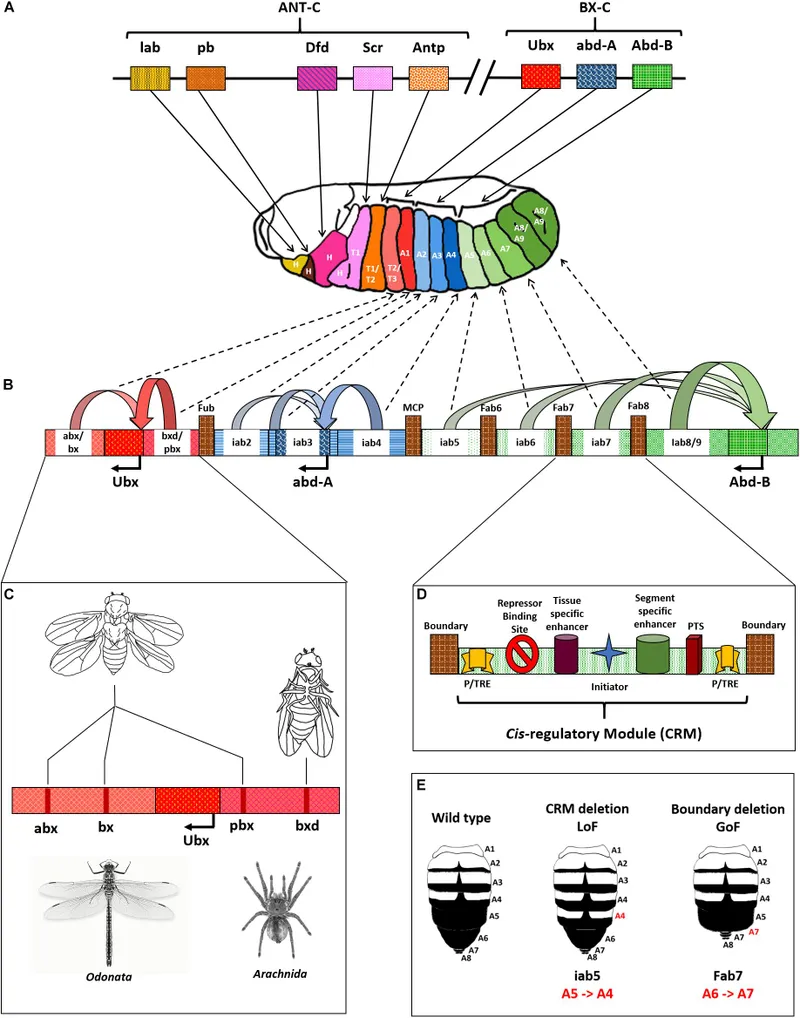
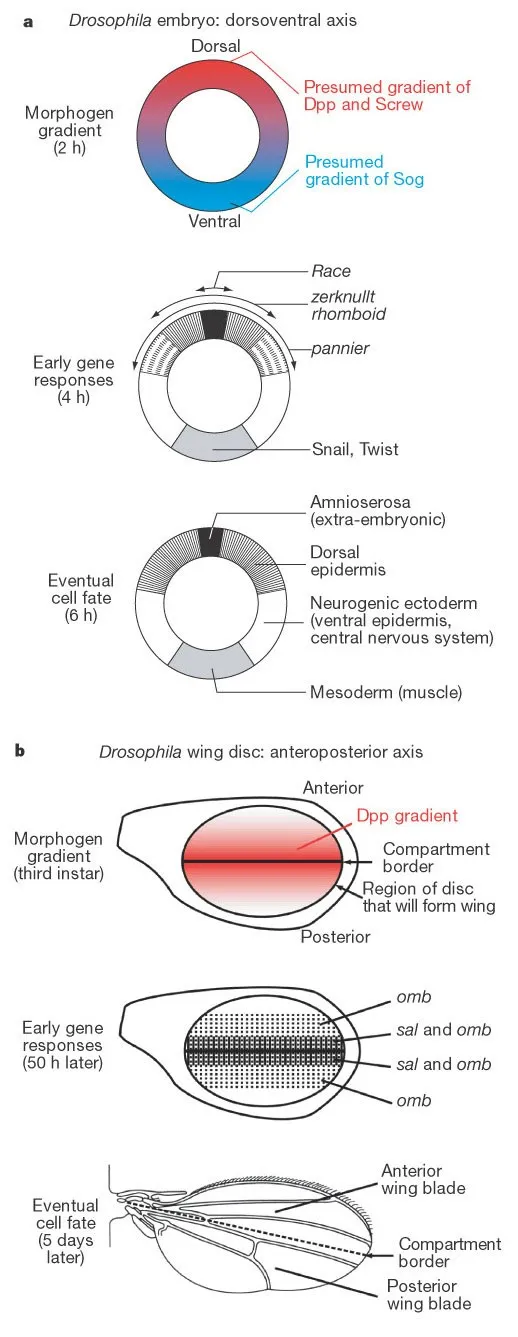
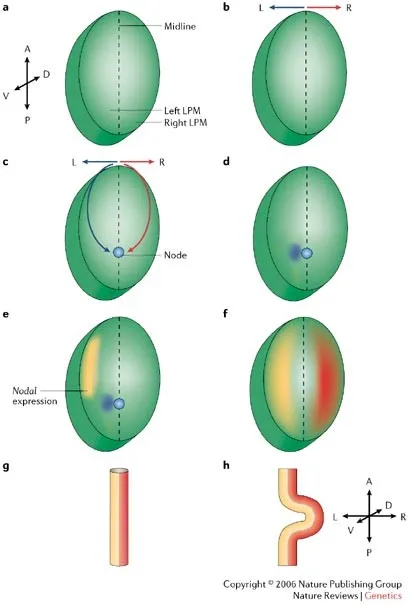 establishment with key molecular determinants like Hox genes, BMP, Nodal, Lefty, PITX2)