
Multifactorial Inheritance Disorders — Flashcards

What is the mode of inheritence of Joubert syndrome?_____
The findings in Edwards Syndrome may be remembered with PRINCE Edward: - P_____- Rocker-bottom feet- Intellectual disability- Nondisjunction- Clenched fists with overlapping fingers- low-set Ears
_____ is an autosomal trisomy that is associated with rocker-bottom feet and microphthalmia.
_____ is an autosomal trisomy that is associated with cleft lip (face) and cleft palate (face).
Persistent hyperplastic primary vitreous (PHPV) is associated with _____.
What is the most common cause of genetic mental retardation?
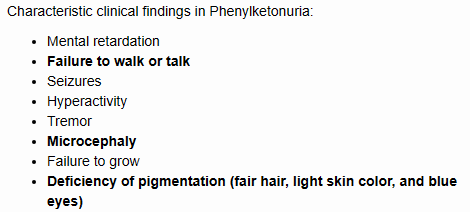
Characteristic clinical findings in Phenylketonuria: No answer _____
The abnormality of _____ syndrome is arterio-hepatic dysplasia
Type II tyrosinemia will present with features such as _____ and palmoplantar keratoderma/plaques
The majority of cases of _____ syndrome are caused by de novo mutations in meCP2
Multifactorial Inheritance Disorders Flashcards for USMLE
Study 10 flashcards on Multifactorial Inheritance Disorders for USMLE Psychiatry. These active recall cards cover the key concepts, clinical associations, and high-yield facts from this chapter of Genetic and Metabolic Disorders. Each card is designed to test your understanding rather than just recognition, building stronger and more durable memories for exam day.
For personalised spaced repetition scheduling and unlimited flashcards, download the Oncourse app.
Frequently Asked Questions
Are Multifactorial Inheritance Disorders flashcards free?
How many flashcards does this chapter have?
How should I use these flashcards for USMLE?
Are there more flashcards for Genetic and Metabolic Disorders?
Want unlimited flashcards?
Get full access to all flashcards, spaced repetition, and progress tracking.
Start For Free