In abdominal compartment syndrome, central venous pressure _____
#2
When should the central venous catheter be changed in a patient undergoing total parental nutrition?_____
#3
_____ is the best measure of organ perfusion and best monitor for adequacy of fluid resuscitation
#4
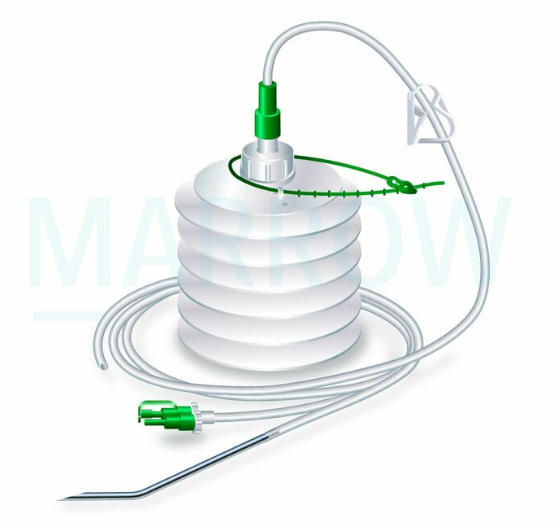
The Romo Vac drain, depicted in the image, is a _____ type of drain
#5
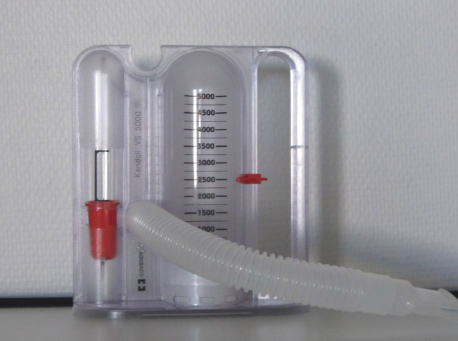
The purpose of incentive spirometry in a post-operative patient is to prevent _____.
#6
A foley's tube with a _____ coloured ring has size 16FR/CH
#7
A foley's tube with a _____ coloured ring has size 24FR/CH
#8
Tracheostomy is performed in an intubated patient after _____ weeks
#9
Which hormone levels usually decrease in the ebb phase of surgical stress?_____
#10
Which sites should be avoided for central access in patients requiring TPN who may potentially require dialysis later?_____
Enhanced Recovery After Surgery (ERAS) Protocols Indian Medical PG Flashcards - Medical Study Cards
Master Enhanced Recovery After Surgery (ERAS) Protocols with OnCourse flashcards. These spaced repetition flashcards are designed for medical students preparing for NEET PG, USMLE Step 1, USMLE Step 2, MBBS exams, and other medical licensing examinations.
Enhanced Recovery After Surgery (ERAS) Protocols Flashcard Deck - 10 Cards
Flashcard 1: In abdominal compartment syndrome, central venous pressure _____
Answer: increases
Flashcard 2: When should the central venous catheter be changed in a patient undergoing total parental nutrition?_____
Answer: Only if infected or blocked
Flashcard 3: _____ is the best measure of organ perfusion and best monitor for adequacy of fluid resuscitation
Answer: Urine output
Flashcard 4: The Romo Vac drain, depicted in the image, is a _____ type of drain
Answer: closed
Flashcard 5: The purpose of incentive spirometry in a post-operative patient is to prevent _____.
Answer: pulmonary atelectasis
Flashcard 6: A foley's tube with a _____ coloured ring has size 16FR/CH
Answer: orange
Flashcard 7: A foley's tube with a _____ coloured ring has size 24FR/CH
Answer: blue
Flashcard 8: Tracheostomy is performed in an intubated patient after _____ weeks
Answer: 2-3
Flashcard 9: Which hormone levels usually decrease in the ebb phase of surgical stress?_____
Answer: Insulin, IGF-1, Testosterone and T3
Flashcard 10: Which sites should be avoided for central access in patients requiring TPN who may potentially require dialysis later?_____
Answer: Subclavian veins
Keywords: Enhanced Recovery After Surgery (ERAS) Protocols flashcards, medical flashcards, NEET PG preparation, USMLE Step 1 flashcards, Anki alternative, spaced repetition medical, OnCourse flashcards
Enhanced Recovery After Surgery (ERAS) Protocols Flashcards for NEET-PG
Study 10 flashcards on Enhanced Recovery After Surgery (ERAS) Protocols for NEET-PG Surgery. These active recall cards cover the key concepts, clinical associations, and high-yield facts from this chapter of Preoperative and Postoperative Care. Each card is designed to test your understanding rather than just recognition, building stronger and more durable memories for exam day.
For personalised spaced repetition scheduling and unlimited flashcards, download the Oncourse app.
Frequently Asked Questions
Are Enhanced Recovery After Surgery (ERAS) Protocols flashcards free?
Yes, all flashcards on this page are completely free. You can study all 10 cards at no cost. For spaced repetition scheduling, download the Oncourse app.
How many flashcards does this chapter have?
There are 10 flashcards for Enhanced Recovery After Surgery (ERAS) Protocols, covering the key concepts, clinical correlations, and high-yield facts from this chapter of Preoperative and Postoperative Care.
How should I use these flashcards for NEET-PG?
Read through each prompt and try to answer before revealing the back of the card. This active recall approach builds stronger memories than passive reading. Combine flashcards with the study notes and MCQ practice for the best results.
Are there more flashcards for Preoperative and Postoperative Care?
Yes. This page covers one chapter of Preoperative and Postoperative Care. Visit the topic page to see all chapters and their flashcards under Surgery.
Want unlimited flashcards?
Get full access to all flashcards, spaced repetition, and progress tracking.
